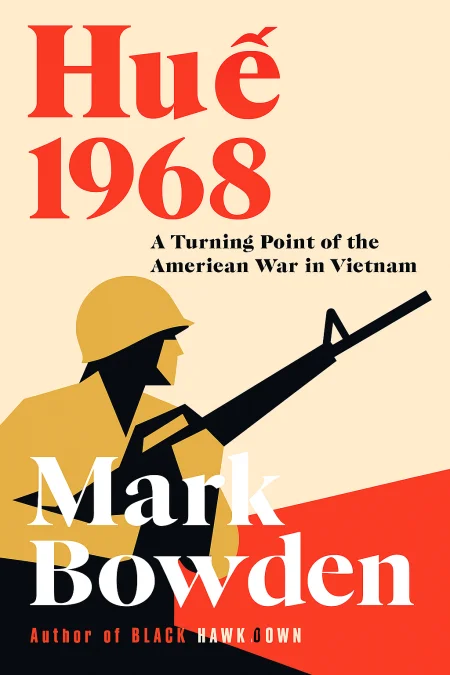
Hue 1968
A Turning Point of the American War in Vietnam
Book Edition Details
Summary
In the predawn shadows of January 31, 1968, Hue, Vietnam’s heart of culture and intellect, faced an invasion of historic proportions. Ten thousand National Liberation Front soldiers stormed the unsuspecting city, leaving American forces in disbelief as their small marine companies were outmatched against the enemy's formidable presence. With every street a battlefield, Lieutenant Colonel Ernie Cheatham devised a daring plan to reclaim Hue, inch by agonizing inch, in a brutal confrontation unparalleled since World War II. Mark Bowden’s "Hue 1968" immerses readers in the visceral chaos of this pivotal battle, drawing from exclusive war archives and personal testimonies from both sides. Spanning 24 days and claiming thousands of lives, this gripping narrative captures a moment that irrevocably shifted the Vietnam War’s course and transformed American public perception. Bowden’s account is not just history—it’s a vivid, human story of courage, strategy, and the haunting cost of war.
Introduction
In the pre-dawn darkness of January 31, 1968, as Vietnamese families celebrated the Lunar New Year with fireworks and festivities, nearly ten thousand Communist fighters emerged from hidden positions to seize Hue, South Vietnam's ancient imperial capital. What followed was twenty-six days of the most brutal urban warfare American forces had ever experienced, a battle that would transform a tactical military victory into a devastating political defeat that reshaped the entire trajectory of the Vietnam War. This pivotal moment reveals three crucial questions that continue to resonate in modern conflicts. First, how do military institutions maintain credibility when their optimistic assessments collide catastrophically with battlefield realities? The stark contrast between General Westmoreland's confident predictions of imminent victory and the televised images of marines fighting desperately through Hue's rubble exposed a credibility gap that would haunt American foreign policy for decades. Second, what happens when conventional military doctrine encounters unconventional warfare in complex urban environments where civilian populations become both shield and prize? Finally, how do democratic societies sustain military commitments when the human cost of achieving political objectives becomes visible and seemingly endless? This story speaks directly to military leaders grappling with counterinsurgency operations, policymakers weighing the costs of foreign interventions, journalists covering modern conflicts, and citizens seeking to understand how wars are truly won and lost not just on battlefields but in the court of public opinion. The lessons learned in Hue's ancient streets remain painfully relevant as democratic nations continue to struggle with the challenges of projecting power in an interconnected world where military actions face immediate scrutiny and political consequences.
The Communist Surprise: Hue Falls in One Night (January 31, 1968)
The Communist assault on Hue began with a deception so audacious it seemed impossible to American intelligence analysts. For months, North Vietnamese and Viet Cong operatives had infiltrated the ancient city, disguising weapons shipments as funeral processions and positioning fighters throughout the maze-like neighborhoods surrounding the imperial Citadel. When the coordinated attack commenced at 3:40 AM on January 31, it caught American and South Vietnamese forces completely unprepared, despite intercepted communications and prisoner interrogations that had hinted at major offensive preparations. The speed and precision of the initial assault revealed years of meticulous planning and intimate local knowledge. Communist forces simultaneously struck key targets across the city: the provincial headquarters, the prison, the radio station, and the MACV compound where American advisors worked. Most symbolically, they raised their red and blue flag with its yellow star over the ancient Citadel, the fortress that had housed Vietnamese emperors for centuries. Within hours, enemy forces controlled virtually the entire city except for two small enclaves of desperate defenders. The success of this surprise attack exposed fundamental flaws in American strategic thinking and intelligence analysis. Senior commanders, fixated on the remote marine base at Khe Sanh, had convinced themselves that any major enemy offensive would unfold there. This tunnel vision allowed thousands of Communist fighters to position themselves in and around South Vietnam's third-largest city while American attention focused elsewhere. The institutional arrogance that dismissed the possibility of large-scale urban attacks reflected a broader failure to understand the enemy's capabilities and intentions. The fall of Hue in a single night shattered the carefully constructed narrative of American progress in Vietnam. For three years, military and political leaders had assured the public that the war was being won, that enemy forces were weakening, and that victory was within sight. The sudden appearance of Communist flags flying over the imperial palace contradicted every optimistic assessment and marked the beginning of a credibility crisis that would ultimately reshape American politics and foreign policy.
Urban Warfare Hell: Marines Fight Block by Block (February 1-20)
The American response to Hue's capture revealed the military's complete unpreparedness for sustained urban combat. When the first marine companies rushed north from Phu Bai, they expected to face scattered snipers and restore order within hours. Instead, they encountered a sophisticated enemy defense that had transformed the ancient city into a fortress, with interlocking fields of fire and carefully prepared positions in every major building. Lieutenant Colonel Ernie Cheatham's marines discovered that urban warfare demanded entirely different tactics than jungle combat. Traditional flanking maneuvers became impossible when movement required crossing exposed intersections under direct observation from multiple enemy positions. The close-quarters nature of city fighting eliminated many American technological advantages, forcing marines to rely primarily on small arms and light weapons while enemy forces used buildings, sewers, and civilian areas for cover and concealment. The psychological impact on young American fighters was devastating. Marines like Private John Ligato, who had left his socks drying at base expecting to return by evening, found themselves trapped in a nightmare of constant danger that would last for weeks. The urban environment made combat intensely personal and terrifyingly random, where death could come from any direction at any moment. Heroes emerged from unlikely places, like Sergeant Alfredo Gonzalez, whose fearless leadership under fire would earn him the Medal of Honor posthumously. Each day brought new horrors as the battle evolved into a grinding test of endurance. Marine companies that began with over 150 men were reduced to fewer than 50 effective fighters within days. The enemy's flexible defense allowed them to hold each position as long as possible before falling back to prepared positions in the next block, maximizing American casualties while preserving their own forces. This methodical destruction of American units, broadcast nightly on television, began to undermine public support for the entire war effort.
Reclaiming the Ancient Capital: Victory's Hollow Price (February 21-24)
The final phase of the battle saw American forces employing increasingly destructive tactics to dislodge enemy defenders from Hue's ancient structures. Lieutenant Colonel Cheatham assembled an arsenal of Korean War-era bazookas, recoilless rifles, and flamethrowers that could punch through the thick masonry walls of French colonial buildings. His systematic approach transformed the chaotic early fighting into a methodical campaign to reclaim the city block by bloody block, but at an enormous cost in civilian casualties and cultural destruction. The human toll of this urban warfare was staggering and would reverberate far beyond Hue itself. Over 10,000 people died in the month-long struggle, including approximately 250 American servicemen, 450 South Vietnamese soldiers, and an estimated 8,000 civilians. The city's infrastructure lay in ruins, with over 80 percent of buildings damaged or destroyed. Mass graves contained the bodies of those executed by Communist forces during their occupation, while many more civilians died in the crossfire of liberation. The tactical victory achieved by February 24 felt hollow to the marines who had fought for it. They had recaptured the ancient capital, but the city they saved barely resembled the cultural treasure they had set out to protect. The sight of American flags flying over rubble-strewn courtyards and destroyed temples captured the fundamental contradiction of the entire Vietnam War: the necessity of destroying communities in order to save them from Communist control. The strategic implications of Hue's recapture extended far beyond the immediate military situation. Despite overwhelming firepower advantages and ultimate tactical success, American forces had required nearly a month to defeat an enemy that military leaders had consistently described as weak and demoralized. The prolonged nature of the fighting, broadcast into American living rooms night after night, provided visceral evidence that official assessments of the war's progress bore little resemblance to battlefield realities.
America's Turning Point: From Confidence to Credibility Crisis
The Battle of Hue marked the effective end of American public support for the Vietnam War, transforming a conflict that had once seemed winnable into a political liability that would destroy careers and reshape national politics. The stark contrast between official claims of progress and the televised reality of marines fighting desperately through ancient streets created a credibility gap that no amount of subsequent military success could bridge. Walter Cronkite's famous assessment that the war had become a stalemate, delivered partly from Hue's ruins, reflected a broader shift in elite opinion that would ultimately force fundamental policy changes. The battle had demonstrated that military superiority could not guarantee political success, that controlling territory meant little without winning hearts and minds, and that democratic societies could not sustain prolonged conflicts when official narratives diverged sharply from visible realities. President Lyndon Johnson's decision not to seek reelection, announced on March 31, demonstrated how completely the Tet Offensive had transformed American politics. The battle that began as a Communist gamble to trigger popular uprising had instead triggered a political earthquake in Washington, forcing the architect of American escalation to abandon his presidency. The young marines who had fought in Hue's streets had inadvertently become agents of political change that would reshape their own nation's trajectory. The legacy of Hue extended far beyond Vietnam policy, fundamentally altering the relationship between American citizens and their government. The erosion of institutional trust that began with the credibility gap over Vietnam would influence American politics for decades, contributing to the cynicism and polarization that continues to shape public discourse. The battle had taught a generation of Americans to question official pronouncements and demand accountability from leaders who wage wars in democracy's name.
Summary
The Battle of Hue crystallized the central paradox that would ultimately doom American efforts in Vietnam: the impossibility of achieving political objectives through military means when those objectives lacked popular legitimacy and when the costs of success exceeded what democratic societies were willing to bear. Despite overwhelming technological advantages and ultimate tactical victory, American forces discovered that military superiority could not resolve the complex political and social conflicts tearing Vietnam apart. Three enduring lessons emerge from this pivotal moment in military and political history. First, intelligence failures cascade rapidly in complex environments, making institutional humility and adaptability more valuable than technological superiority or firepower advantages. The American military's inability to anticipate the scale and coordination of the Tet Offensive reflected deeper problems with institutional culture and strategic thinking that continue to plague modern conflicts. Second, democratic societies cannot sustain military commitments when official narratives consistently diverge from observable realities, making truthful communication between leaders and citizens essential for maintaining the social contract that underlies democratic governance. Finally, the human cost of strategic miscalculations falls disproportionately on young people whose idealism and patriotism are exploited by leaders who have lost faith in their own policies. The marines who fought in Hue's streets paid the price for decisions made by officials who increasingly doubted the war's winnability but lacked the political courage to acknowledge their mistakes. Understanding these dynamics remains essential for citizens evaluating modern conflicts and holding leaders accountable for the wars they wage in democracy's name, ensuring that the tragic lessons learned in an ancient Vietnamese city are not forgotten or repeated.
Related Books
Download PDF & EPUB
To save this Black List summary for later, download the free PDF and EPUB. You can print it out, or read offline at your convenience.
By Mark Bowden
