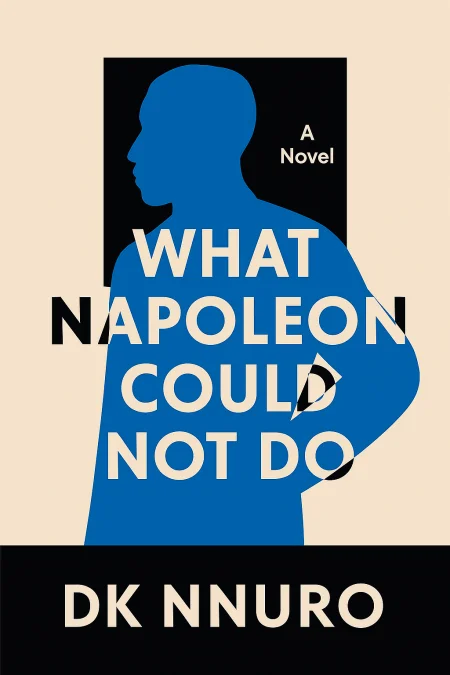
What Napoleon Could Not Do
A Novel
Book Edition Details
Summary
In the vibrant tapestry of aspiration and reality, "What Napoleon Could Not Do" intricately weaves the lives of Jacob and Belinda Nti against the backdrop of the American Dream. Growing up in Ghana, the siblings yearned for the possibilities promised by America. Yet, while Belinda conquers the land of opportunity by navigating its educational and social peaks, Jacob remains tethered by visa denials, his dreams stifled. Belinda's husband, Wilder, a successful Black businessman from Texas, offers a contrasting lens, revealing the harsh truths of racial strife. This novel masterfully unravels the bittersweet dance between ambition and disillusionment, as each character grapples with their own version of success and setback in a foreign land. A gripping exploration of identity and perseverance, it is an illuminating narrative on what it means to chase dreams across continents.
Introduction
In the sprawling landscape of modern migration, few systems reveal their cruelty as systematically as America's immigration bureaucracy. While millions around the world pin their hopes on visas, green cards, and the promise of legal residency, the reality unfolds as a high-stakes lottery where merit, love, and even marriage provide no guarantee of success. This intimate exploration follows one Ghanaian family's decade-long struggle with U.S. immigration policy, revealing how bureaucratic decisions ripple through lives, relationships, and entire communities across continents. The narrative exposes the hidden architecture of displacement in our interconnected world, where success and failure often depend less on individual worthiness than on arbitrary administrative decisions. Through deeply personal stories of rejection, waiting, and impossible choices, we witness how immigration policies transform ordinary people into strategic players in a game they can never fully understand or control. The psychological toll extends far beyond individual disappointment to fracture families, reshape relationships, and create new forms of intimacy and distance across oceans. For anyone seeking to understand the human cost of global migration policies, the complex psychology of displacement, or the ways that bureaucratic systems shape the most intimate aspects of human experience, this chronicle offers both mirror and roadmap. It illuminates not just the failures of American immigration policy, but the profound resilience of those who navigate its maze while maintaining their humanity, dignity, and hope for belonging.
The Visa Trap: Jacob's Decade of Rejections and Bureaucratic Cruelty (1998-2008)
Jacob Nti's journey into America's immigration labyrinth began with what seemed like a perfect solution. At forty, living in his father's house in Ghana with diminishing prospects, he watched his younger sister Belinda thrive in America while his own computer science degree gathered dust. When Belinda arranged his marriage to Patricia, a Ghanaian woman living in Virginia, Jacob glimpsed his pathway to the American dream. The marriage ceremony itself foreshadowed the entire relationship's surreal nature—Patricia existed only as a photograph, a haunting image of absence that would define their five-year union. The bureaucratic machinery of visa applications consumed Jacob's life with its demands for documentation, memorization, and performance. Patricia sent money for embassy fees, packages of American gifts, and detailed instructions for interviews, including the memorization of landmarks like Mount Rushmore. Yet when Jacob faced immigration officers, they asked entirely different questions, rendering his preparation useless. The arbitrary nature of these interactions revealed the first cruel truth about American immigration: preparation and worthiness mean nothing when decisions rest on the whims of individual officers operating within an opaque system. Two visa rejections shattered more than Jacob's immediate plans—they exposed the fundamental lottery nature of American immigration policy. Despite his genuine marriage, despite Patricia's financial support, despite his qualifications, the embassy stamped "denied" on his applications without meaningful explanation. Each rejection rippled through his extended family, creating shame, disappointment, and questions about his masculinity and drive. His father began to wonder if Jacob lacked the necessary ambition for success, while Jacob himself retreated into increasingly desperate schemes and private obsessions. The psychological toll of repeated rejection transformed Jacob from hopeful immigrant into a man trapped by his own dreams. The American fantasy, rather than liberating him, became a prison of perpetual hope and recurring humiliation. His story illuminates how immigration policies create not just individual suffering but generational trauma, as families invest their resources, hopes, and reputations in outcomes they cannot control or predict.
Liminal Lives: Belinda's Success and the Green Card Prison (2000-2010)
Belinda Nti embodied the supposed immigrant success story—brilliant, accomplished, and seemingly thriving in America. Her journey from Ghana to prestigious Hotchkiss School, then Williams College, and finally George Washington University Law School represented the meritocratic ideal that immigration advocates often celebrate. Yet her decade-long wait for a green card revealed how even the most accomplished immigrants remain perpetually vulnerable to America's capricious documentation system. Her marriage to Wilder Thomas, a wealthy Black American Vietnam veteran thirty years her senior, was supposed to solve her legal status but instead created new forms of uncertainty and dependence. Living in a Houston mansion, Belinda occupied a strange liminal space between privilege and precarity. Wilder's oil wealth provided material comfort that most immigrants could never imagine, yet it could not purchase the one thing she desperately needed: legal permanent residency. Each delayed application, each request for additional documentation, each bureaucratic excuse chipped away at her sense of security and belonging. The green card became more than a document—it represented the difference between conditional existence and full humanity in American society. The psychological toll of prolonged immigration uncertainty manifested most cruelly in Belinda's inability to return home, even for her mother's funeral. The fear of being denied re-entry to the United States kept her trapped in a golden cage, unable to grieve properly or maintain meaningful connections with her family in Ghana. Her success became hollow when measured against the basic human need for home, family, and the freedom to move between worlds without fear of permanent exile. Belinda's decade of waiting demonstrated that merit, wealth, and even marriage to a U.S. citizen cannot guarantee the security that citizenship provides. Her story reveals how America's immigration system creates a permanent underclass of highly educated, economically productive individuals who remain forever provisional, their achievements overshadowed by their precarious legal status and the constant anxiety it produces.
Love vs. Survival: Patricia's Choice and the Human Cost of Policy (2005-2015)
Patricia Ofori's transformation from devoted wife to pragmatic survivor represents perhaps the most heartbreaking consequence of America's immigration failures. For five years, she maintained her long-distance marriage to Jacob with remarkable dedication, sending money, gifts, and emotional support while working as a nursing assistant under a false name. Her commitment stemmed from genuine love but also from shared dreams of bringing Jacob to America and building the family she had always envisioned for their future together. The breaking point arrived when Patricia confronted two devastating realities: Jacob's visa prospects were hopeless, and her own biological clock was running out. At thirty-eight, facing the possibility of childlessness and continued illegal status, she made the agonizing decision to begin a relationship with Reginald, a Ghanaian-American Marine whose green card and military service offered the security that love alone could not provide. This choice represented not betrayal but survival—a calculated decision forced by a system that makes love and legal status mutually exclusive for too many immigrants. Patricia's pregnancy became the physical manifestation of her impossible choice, a visible commitment to her American future that made reconciliation with Jacob permanently impossible. Her decision to end the marriage through traditional Ghanaian divorce proceedings showed respect for cultural customs even as she shattered cultural expectations about marital fidelity and perseverance. The complexity of her situation defied simple moral judgments, revealing how immigration policy forces individuals into ethical dilemmas that no one should have to navigate. Her story illuminates the gendered dimensions of immigration struggle, where women's reproductive years become another deadline in the race against bureaucratic delays. Patricia genuinely loved Jacob but could not sacrifice her entire future for a relationship with no realistic prospect of physical reunion. Her pragmatic choice reflects the impossible decisions that America's immigration system forces on individuals and families, where love must compete with survival and dreams must yield to biological and legal realities.
Family Fractures: Divorce, Truth, and the Reckoning with Failed Dreams
The formal divorce ceremony brought together two families to dissolve what had never quite been a real marriage, revealing the broader social costs of immigration failure. Jacob's absence from his own divorce proceedings spoke volumes about his inability to face the collapse of his American dreams and the judgment of both families. His father and uncle were left to defend the family's honor while acknowledging the fundamental failure of their strategy for Jacob's advancement, a humiliation that extended far beyond individual disappointment. The ceremony exposed long-simmering tensions about worthiness, masculinity, and family responsibility that had been building throughout Jacob's decade of failures. Patricia's family questioned Jacob's ambition and drive, while Jacob's family defended his character against accusations of inadequacy and laziness. These exchanges revealed how immigration failures become family failures, creating shame and division that can persist for generations. The ritual exchange of schnapps that concluded the proceedings carried bitter irony—a celebration of ending rather than beginning, of acknowledged failure rather than hoped-for success. Jacob's retreat into alcohol and prostitutes after the divorce represented rock bottom, but also the beginning of potential redemption. His decision to start a computer training business with his friend Benjamin suggested a crucial psychological shift from dreaming about America to building something concrete in Ghana. This transition from external validation to local investment marked a possible path toward healing, though the scars of his immigration trauma would remain permanent reminders of dreams deferred and relationships destroyed. The family's reckoning extended beyond Jacob's failed marriage to broader questions about migration, success, and loyalty that affected every member. Belinda's continued absence from Ghana, her father's growing isolation, and the family's complex dependence on Wilder's American wealth all reflected the ways that migration dreams reshape family dynamics across generations, creating new forms of obligation, resentment, and interdependence that transcend national boundaries.
Summary
The central tragedy revealed through this family's decade-long ordeal is how America's immigration system transforms love into strategy, relationships into transactions, and dreams into sources of perpetual suffering. The Nti family's experience demonstrates that the American dream operates not as a meritocracy but as a lottery system where education, wealth, marriage, and even military service provide no guarantee of success. The arbitrary nature of visa decisions, the endless delays in green card processing, and the psychological toll of prolonged uncertainty create a form of institutional cruelty that destroys individuals and families while maintaining the fiction of fairness and opportunity. The narrative exposes three devastating truths about contemporary migration policy. First, America's immigration system creates the very desperation it claims to prevent by making legal immigration nearly impossible for those who need it most, forcing people into increasingly desperate strategies and ethically compromising situations. Second, the psychological costs of prolonged immigration uncertainty can destroy individuals and families even when material success is achieved, as the constant threat of deportation or denial makes genuine belonging impossible. Third, the pursuit of American dreams often requires the sacrifice of African realities, leaving migrants permanently displaced from both worlds and unable to find peace in either. For those currently navigating similar immigration challenges, the story suggests that survival requires both persistence and pragmatic flexibility—the willingness to pursue multiple strategies while maintaining the emotional resilience to accept failure and begin again. Perhaps most importantly, it reminds us that true success might lie not in conquering distant dreams but in building meaningful lives wherever we find ourselves, with whatever resources and relationships we possess, rather than sacrificing everything for promises that may never materialize.
Related Books
Download PDF & EPUB
To save this Black List summary for later, download the free PDF and EPUB. You can print it out, or read offline at your convenience.
By D.K. Nnuro
