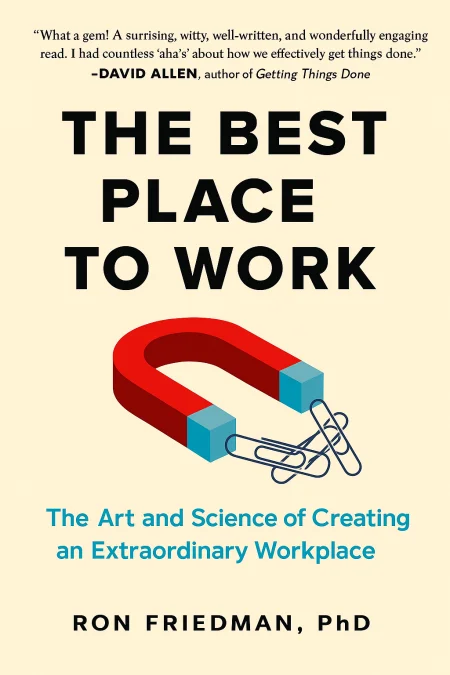
The Best Place to Work
The Art and Science of Creating an Extraordinary Workplace
Book Edition Details
Summary
Step into the labyrinth of workplace dynamics where Ron Friedman, Ph.D., an acclaimed psychologist, dissects the alchemy of success within organizations. "The Best Place to Work" is not just a manual but a revelation, blending captivating anecdotes with groundbreaking research from neuroscience and behavioral economics. Why might the road to triumph be paved with the lessons of failure? How do casinos inspire joy in the corporate sphere? Through this vivid exploration, discover how a fishbowl can be a catalyst for genius, or how a hostage negotiator’s tactics can transform office disputes. With narratives of a cubicle visionary, a crime-busting president, and a tennis-revolutionizing teen, Friedman's insights offer an invigorating path to elevate any workplace. Whether you're a leader or a team player, this book is a treasure trove of strategies to spark innovation, enhance performance, and nurture a thriving environment. Prepare to rethink the essence of success and revolutionize the way you work.
Introduction
Picture yourself walking into work tomorrow morning with the same anticipation you feel before meeting a close friend. Imagine an environment where your natural talents are not just recognized but actively cultivated, where challenges energize rather than drain you, and where Monday mornings feel like opportunities rather than obligations. This transformation isn't reserved for a fortunate few working at Silicon Valley startups or creative agencies. The science of human motivation reveals that any workplace can become a place where people flourish when we understand and address the fundamental psychological needs that drive us all. The most successful organizations of our time have discovered that creating environments where people thrive isn't just about being nice to employees, it's about unlocking human potential in ways that drive extraordinary results. When we align our workplaces with how people actually think, feel, and perform at their best, we don't just improve job satisfaction, we revolutionize what's possible for both individuals and organizations.
Fulfill Psychological Needs for True Engagement
True workplace engagement emerges when we address three fundamental human needs that drive intrinsic motivation: autonomy, competence, and meaningful connection. These aren't luxury desires but essential psychological requirements that, when fulfilled, transform ordinary employees into passionate contributors who bring their full creativity and energy to work. Warren Buffett has built one of the most successful companies in history by understanding this principle intuitively. When Berkshire Hathaway acquires companies, Buffett doesn't impose detailed oversight or micromanagement. Instead, he grants managers extraordinary independence, telling them simply to run their businesses as if they were the sole owners. This approach flies in the face of traditional corporate control structures, yet it consistently produces remarkable results. The transformation happens because autonomy unleashes human potential in ways that external control never can. When Charles Henry took over Johns Manville under Buffett's ownership, he felt genuinely trusted to make important decisions. This psychological freedom motivated him to take thoughtful risks, innovate boldly, and maintain the high standards that come from internal rather than external motivation. The company didn't just survive its challenges but emerged stronger, demonstrating how autonomy creates a virtuous cycle of engagement and performance. To implement this approach in your workplace, start by explaining the why behind assignments, helping people connect their tasks to meaningful outcomes. Offer flexibility in how and when work gets completed, focusing on results rather than rigid processes. Minimize reliance on external rewards and instead help people discover the inherent satisfaction in their contributions. Create genuine opportunities for people to make decisions about their work methods and priorities. Remember that autonomy isn't about abandoning accountability but about shifting from control to trust, allowing people to rise to meet the confidence you place in them.
Design Environments That Enhance Performance
The physical spaces where we work aren't neutral backdrops but active influences on our thinking, creativity, and performance. Our brains evolved in natural environments rich with variety and sensory input, and modern neuroscience reveals how thoughtful design can either enhance or diminish our cognitive abilities throughout the day. Robert Propst, a former fine arts professor turned workplace researcher, made this discovery in the 1950s when Herman Miller hired him to revolutionize office design. Propst spent months observing employees like an anthropologist, studying how information flowed between people and examining how different physical arrangements affected productivity and satisfaction. His conclusion was stark and revolutionary: traditional office layouts were actively undermining human potential, creating what he called wastelands that sapped vitality and blocked talent. Propst's solution became the Action Office, featuring flexible work surfaces, ergonomic seating, and customizable arrangements that gave employees control over their immediate environment. While his original vision was later corrupted into the dreaded cubicle farm, his core insight remains powerful: our physical surroundings profoundly impact our ability to think clearly, collaborate effectively, and perform at our best. Modern research confirms that elements like ceiling height influence abstract thinking, natural light boosts both mood and productivity, and even colors can enhance different types of cognitive performance. To create spaces that truly enhance performance, start by offering variety in your environment. Design different zones for different types of work: quiet areas for deep concentration, collaborative spaces for team projects, and informal gathering spots for spontaneous conversations. Incorporate natural elements wherever possible, from plants and natural light to views of the outdoors. Give people some control over their immediate workspace, allowing them to personalize and adjust their environment to match their needs and work styles. The goal isn't to create the perfect space but to provide choices that align with how our brains actually function throughout different tasks and times of day.
Build Authentic Connections and Communities
Workplace relationships aren't just pleasant additions to professional life but fundamental drivers of engagement, performance, and retention. When people form genuine friendships at work, they don't just feel happier, they become more focused, creative, and committed to delivering exceptional results for both their colleagues and their organization. Art Aron, a relationship researcher, discovered the power of structured connection through a fascinating experiment with complete strangers. He brought together pairs of people who had never met and guided them through conversations with gradually escalating levels of personal disclosure. Starting with surface-level questions like how they celebrated recent holidays, participants slowly moved toward deeper topics such as meaningful life experiences and personal challenges. By carefully managing this progression of vulnerability and reciprocity, Aron compressed a relationship-building process that typically takes months or years into a single conversation. The results were remarkable. Participants who engaged in this structured self-disclosure reported feeling significantly closer to their conversation partners than those who stuck to small talk. Many formed lasting friendships that extended far beyond the research setting. The key was creating safe opportunities for people to share increasingly personal information in a reciprocal manner, building trust through mutual vulnerability rather than leaving connection to chance. Apply this insight by reimagining how new team members are introduced and integrated. Share their interests, hobbies, and personal background, not just their professional credentials. Create structured opportunities for team members to tell their stories and learn about each other's experiences outside of work. Encourage activities that involve shared goals and meaningful collaboration, from volunteer projects to cross-functional challenges that require people to rely on each other's unique strengths. Remember that workplace friendships require proximity, familiarity, and opportunities for meaningful interaction. By intentionally creating these conditions, you're building the foundation for the kind of authentic community that transforms both individual satisfaction and collective performance.
Lead Through Autonomy and Meaningful Recognition
The most influential leaders aren't those who have all the answers but those who create conditions where others can discover their own solutions and feel genuinely valued for their unique contributions. This approach challenges traditional command-and-control models and points toward a more powerful form of leadership based on trust, curiosity, and authentic appreciation. Chuck Tracy, a hostage negotiator with the Yuba County Sheriff's Department, discovered this principle during one of the most challenging situations imaginable. When a gunman took eighty-five students hostage at Lindhurst High School, Tracy found himself in a four-hour conversation that would end with the peaceful surrender of the hostage-taker. His approach was revolutionary in its simplicity: he listened more than he spoke, asked questions that allowed the gunman to share his perspective, and expressed genuine empathy for the frustrations that had led to this desperate act. The negotiation succeeded because Tracy understood that people only change when they feel accepted for who they are, and that listening is the universal language of acceptance. By creating psychological safety through active attention and avoiding the urge to lecture or control, Tracy was able to influence someone in an impossible situation. The gunman felt heard and understood, which opened the door to a peaceful resolution that saved countless lives. Transform your leadership approach by practicing the principle of listening twice as much as you speak. Ask open-ended questions that begin with how, what, or why rather than questions that can be answered with simple yes or no responses. When disagreements arise, attend to the relationship first by using statements that show partnership, empathy, and respect before diving into problem-solving. Provide recognition that goes beyond generic praise to acknowledge specific behaviors and their meaningful impact on others. Make your appreciation timely, detailed, and connected to larger purposes that matter to both the individual and the organization. Remember that as a leader, your primary job isn't to have all the answers but to create an environment where the best answers can emerge from the collective wisdom and creativity of your team.
Summary
The workplace of the future won't be built by accident but by leaders who understand that human psychology, not just business strategy, drives organizational success. As the research consistently reveals, when we fulfill people's fundamental psychological needs for autonomy, competence, and connection, any work environment can become a place where people find genuine passion and purpose. The most powerful workplace transformations often require nothing more than a shift in perspective and approach, recognizing that investing in human potential isn't just the right thing to do but the smartest business strategy available. Start this week by choosing one insight from this exploration and putting it into practice: have a genuine conversation with a colleague about their interests and aspirations, offer someone meaningful choice in how they approach their work, or create one small environmental change that better supports human flourishing. These seemingly modest actions, when multiplied across an organization, create the foundation for workplaces where people don't just succeed but truly thrive.
Related Books
Download PDF & EPUB
To save this Black List summary for later, download the free PDF and EPUB. You can print it out, or read offline at your convenience.
By Ron Friedman
