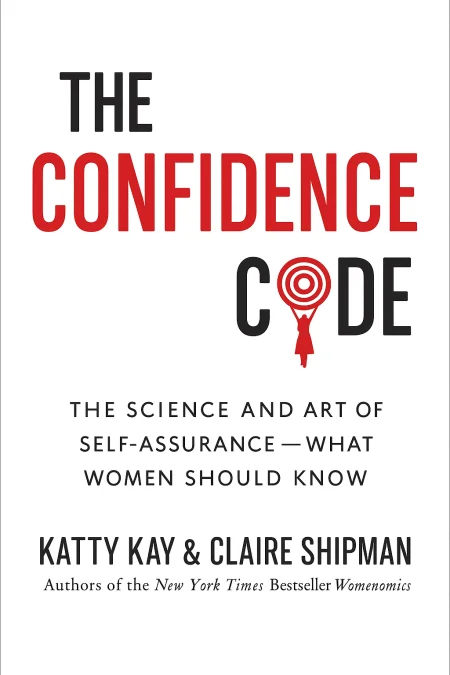
The Confidence Code
The Science and Art of Self-Assurance: What Women Should Know
Book Edition Details
Summary
Confidence, often the silent architect of success, takes center stage in "The Confidence Code" by Claire Shipman and Katty Kay. In a world where women are excelling academically and professionally yet find themselves trailing behind in corporate hierarchies, Shipman and Kay delve into a pivotal truth: confidence is the missing key. Through a riveting blend of personal anecdotes and groundbreaking research in fields like genetics and behavior, this book transcends mere empowerment slogans. It offers a blueprint for women to cultivate the confidence needed to bridge the gender gap in leadership roles. Whether you're a seasoned professional or just starting your career, "The Confidence Code" provides the insights and tools to unlock your full potential and claim the success you deserve.
Introduction
The phenomenon of competent, accomplished women who doubt their own abilities represents one of the most perplexing contradictions of modern professional life. Despite unprecedented educational achievements and workplace success, a troubling gap persists between what women can do and what they believe they can do. This disconnect manifests in countless ways: talented professionals who hesitate to speak in meetings, qualified candidates who don't apply for promotions, and capable leaders who attribute their success to luck rather than merit. The exploration of this confidence deficit reveals a complex interplay of biological, psychological, and social forces that have long remained hidden beneath surface explanations. By examining the neurological foundations of self-assurance, the genetic predispositions that influence our willingness to take risks, and the environmental factors that either nurture or undermine our belief in our capabilities, we can begin to understand why confidence appears to flow more naturally for some than others. The investigation draws upon cutting-edge research in neuroscience, behavioral psychology, and developmental biology to construct a comprehensive framework for understanding how confidence operates as both an inherited trait and a learnable skill. The journey through this analysis challenges conventional wisdom about the nature of self-assurance while providing practical pathways for its cultivation. Rather than accepting confidence as an immutable characteristic, the evidence suggests it can be deliberately developed through specific strategies that align with how our brains actually function and adapt.
The Confidence Gap: Understanding Women's Self-Assurance Deficit
The confidence disparity between men and women extends far beyond anecdotal observations to encompass measurable behavioral differences across professional, academic, and social contexts. Research consistently demonstrates that women systematically underestimate their abilities while men tend toward overconfidence, even when objective measures show comparable or superior female performance. This gap manifests in concrete ways: women negotiate for lower salaries, speak less in meetings when outnumbered by men, and require certainty of 100 percent qualification before applying for positions that men pursue with only 60 percent of requirements met. The phenomenon proves particularly striking in high-achievement environments where competence is clearly established. Female naval academy graduates, accomplished attorneys, and seasoned politicians all report persistent self-doubt despite objective evidence of their capabilities. Studies reveal that women attribute success to external factors like luck or timing, while men credit their own abilities. When facing setbacks, women internalize failure as proof of inadequacy, whereas men externalize it as circumstantial. The data reveals profound implications for career advancement and life satisfaction. Women who lack confidence in their abilities avoid challenges that could demonstrate their competence, creating a self-reinforcing cycle of limitation. The gap appears across cultures and professions, suggesting deep-rooted causes rather than temporary social conditions. Understanding this disparity requires examining both the external forces that shape women's self-perception and the internal mechanisms that govern confidence formation. The consequences extend beyond individual careers to organizational and societal levels, representing a significant underutilization of human potential and talent.
The Science Behind Confidence: Genetics, Neuroscience, and Psychology
Confidence emerges from a complex biological foundation involving genetic predispositions, neurochemical processes, and brain structure variations that influence how individuals assess their capabilities and respond to challenges. Genetic research reveals that approximately 25-50 percent of confidence may be inherited through variations in genes affecting neurotransmitter function. The serotonin transporter gene, which regulates mood and anxiety levels, significantly impacts an individual's baseline resilience and willingness to take risks. Similarly, variations in genes controlling dopamine and oxytocin affect motivation, social bonding, and stress response patterns. Neurological studies demonstrate that male and female brains process confidence-related information differently. Women typically exhibit more activity in brain regions associated with worry and self-reflection, while men show greater activity in areas linked to action and risk-taking. The female brain's enhanced connectivity between hemispheres facilitates complex reasoning but can also lead to overthinking and rumination. These structural differences help explain why women may experience more anxiety when facing uncertain situations, even when their analytical capabilities are superior. The revolutionary discovery of neuroplasticity reveals that brain structure and function can be modified throughout life through targeted mental exercises and behavioral changes. Meditation, cognitive behavioral therapy, and repeated exposure to challenging situations literally rewire neural pathways, shifting activity from fear-based regions to areas associated with calm reasoning and decision-making. This plasticity offers hope that genetic predispositions need not determine outcomes. Research on environmental influences shows how early experiences interact with genetic factors to either amplify or diminish natural confidence tendencies. The concept of "sensitivity genes" suggests that some individuals are more responsive to both positive and negative environmental influences, making supportive relationships and challenging experiences particularly impactful for confidence development.
Building Confidence: From Perfectionism to Authentic Action
The construction of genuine confidence requires abandoning the pursuit of perfection in favor of embracing action, risk-taking, and productive failure. Traditional approaches that emphasize self-esteem building through praise and positive thinking prove insufficient because they lack the experiential foundation necessary for lasting self-assurance. True confidence emerges through the accumulation of evidence that one can handle challenges, recover from setbacks, and learn from mistakes. The concept of "failing fast" provides a framework for confidence development through controlled risk-taking and rapid learning cycles. By attempting new challenges with the expectation that some will result in failure, individuals build resilience and diminish the paralyzing fear of imperfection. Each failure becomes data for improvement rather than evidence of inadequacy. This approach requires reframing mistakes as necessary components of growth rather than threats to self-worth. Mastery through deliberate practice forms the cornerstone of sustainable confidence. Unlike talent-based approaches that assume fixed abilities, mastery focuses on skill development through persistent effort and gradual improvement. The growth mindset recognizes that capabilities can be expanded through dedication and strategic practice. This perspective transforms challenges from threats to opportunities for demonstration of developing abilities. The elimination of negative automatic thoughts and rumination cycles proves essential for confidence building. Cognitive behavioral techniques help identify and challenge self-defeating thought patterns that undermine confidence before action can be taken. By developing awareness of mental habits that create doubt and anxiety, individuals can redirect their cognitive energy toward problem-solving and goal achievement. The practice of self-compassion provides emotional support during difficult periods while maintaining motivation for continued growth.
Redefining Confidence: Creating Authentic Female Leadership Models
Authentic confidence for women need not conform to traditional masculine models of aggressive self-promotion and competitive dominance. Research demonstrates that effective leadership and genuine self-assurance can manifest through collaborative approaches that emphasize listening, building consensus, and leveraging collective strengths. This alternative model recognizes that confidence can be expressed through quiet competence, thoughtful decision-making, and the ability to acknowledge uncertainty while still taking decisive action. The integration of vulnerability with strength creates a more sustainable and authentic form of confidence. Rather than projecting invulnerability, confident women can acknowledge limitations while maintaining faith in their ability to learn and adapt. This approach reduces the exhausting effort required to maintain a facade of perfection and allows for genuine connection with others. Studies show that leaders who demonstrate appropriate vulnerability while maintaining competence earn greater trust and respect than those who project artificial invincibility. Collaborative confidence leverages women's natural tendencies toward relationship-building and inclusive problem-solving. Instead of viewing these traits as weaknesses that must be overcome, this model treats them as strengths that can be consciously employed for effective leadership. The ability to synthesize multiple perspectives, build coalition support, and create sustainable solutions represents a sophisticated form of confidence that serves modern organizational needs. The development of authentic confidence requires alignment between internal values and external actions. When women operate according to their genuine principles and natural communication styles while still meeting professional demands, they experience less cognitive dissonance and greater energy for sustained performance. This authenticity reduces the psychological burden of maintaining artificial personas and creates a foundation for long-term confidence and effectiveness.
Summary
The journey toward authentic confidence emerges as both a scientific endeavor and an artistic expression of individual authenticity. Through rigorous examination of biological foundations, psychological mechanisms, and social influences, the path forward becomes clear: confidence is neither purely inherited nor entirely learned, but rather a dynamic quality that can be cultivated through understanding and deliberate practice. The evidence demonstrates that while genetic predispositions and brain structure influence our starting point, the remarkable plasticity of the human brain ensures that change remains possible throughout life. The transformation from doubt to self-assurance requires courage to abandon perfectionism, embrace productive failure, and develop mastery through consistent effort. Most importantly, it demands the recognition that confidence need not conform to external templates but can be expressed authentically according to individual values and natural strengths. The cultivation of genuine self-assurance ultimately serves not just individual fulfillment but contributes to a more diverse and effective leadership landscape that benefits society as a whole. This understanding transforms confidence from an elusive trait into an achievable goal, accessible to anyone willing to engage in the necessary work of growth and self-discovery.
Related Books
Download PDF & EPUB
To save this Black List summary for later, download the free PDF and EPUB. You can print it out, or read offline at your convenience.
By Katty Kay
