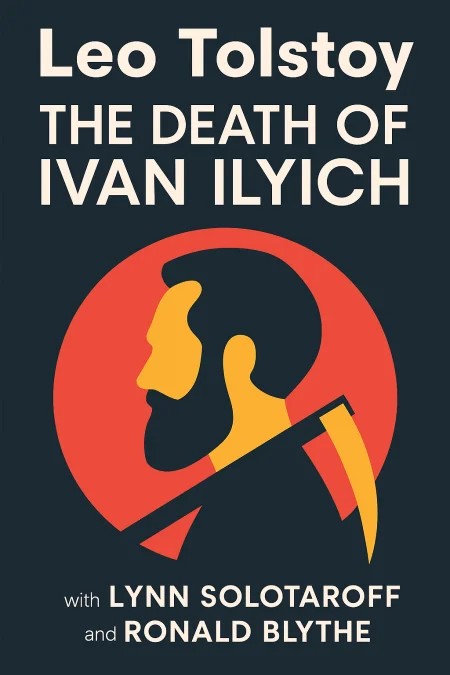
The Death of Ivan Ilyich
A Journey to Reckoning with Mortality
byLeo Tolstoy, Lynn Solotaroff, Ronald Blythe
Book Edition Details
Summary
In the stark confrontation between life’s superficialities and its inevitable end, "The Death of Ivan Ilyich" unfolds as a haunting narrative of existential awakening. Meet Ivan Ilyich, a distinguished judge who has glided through life with ease, never pausing to ponder its ultimate conclusion. When a fatal illness shatters his complacency, Ivan is thrust into a stark introspection, forced to grapple with the profound questions of his existence. This riveting novella, born from Tolstoy's own spiritual upheaval, explores the stark realities of mortality and the fleeting nature of societal success. It’s a poignant exploration of what it truly means to live, offering a glimpse into the possibility of spiritual redemption amidst life’s most daunting certainty. Prepare to be both unsettled and enlightened by a tale that resonates with the fundamental truths of human experience.
Introduction
In the drawing rooms of nineteenth-century Russian society, Ivan Ilyich Golovin epitomized success. A respected court official with an elegant home, a proper marriage, and all the social distinctions his peers admired, he seemed to have mastered the art of living well. Yet when death comes knocking at his door through a seemingly insignificant accident, this paragon of respectability finds himself confronting questions that his carefully constructed life had never prepared him to answer. What transforms an ordinary man's final illness into one of literature's most profound meditations on mortality and meaning? Through Ivan Ilyich's story, we witness how a life lived entirely according to external expectations can become a prison of the soul, and how the approach of death can strip away every pretense to reveal what truly matters. His journey from comfortable conformity to agonizing self-examination illuminates the universal human struggle between authenticity and social acceptance, between genuine living and mere existence. In following this man's path from career ambitions through domestic arrangements to his final confrontation with mortality, we discover timeless truths about the courage required to live honestly and the wisdom that sometimes comes only when it seems too late to use it.
The Ordinary Man: Career and Social Climbing
Ivan Ilyich entered the world as the perfect middle child, neither too ambitious like his elder brother nor too rebellious like his younger sibling. This position seemed to forecast his entire approach to life: a careful navigation between extremes, always seeking the safe harbor of social approval. From his earliest days at the School of Law, he demonstrated an uncanny ability to sense what was expected of him and deliver it with precision. He possessed that particular talent of knowing exactly how to behave in any situation, not through deep moral conviction, but through an instinctive understanding of what would earn him advancement and acceptance. His legal career unfolded like a carefully choreographed dance. Each position brought its own satisfactions, from the intoxicating power of his role as examining magistrate to the social prestige of higher appointments. Ivan Ilyich discovered that he could separate his official duties from his personal feelings with remarkable ease, treating his work like a game where the rules were clear and victory was measured in promotions and salary increases. He took particular pride in his ability to handle even the most complex cases by reducing them to their essential legal components, stripping away all human messiness to focus purely on procedure and precedent. The provincial postings that marked his early career taught him valuable lessons about adapting to different social circles while maintaining his essential character. Whether charming his superiors with just the right mixture of deference and competence, or managing his subordinates with calculated friendliness, he understood that success came not from being authentic but from being appropriate. His brief romantic entanglements and social adventures during these years were conducted with the same careful attention to propriety and appearances that governed his professional life. When the opportunity came to advance to a more prestigious position in a larger city, Ivan Ilyich seized it without hesitation. The move represented everything he had worked toward: higher status, better society, and the chance to establish himself among people who truly mattered. He approached this transition with the confidence of a man who had never seriously questioned whether the game he was playing was worth winning.
The Perfect Life: Marriage, Status and Material Success
Marriage to Praskovya Fedorovna appeared to complete Ivan Ilyich's transformation into a model citizen. She possessed all the qualities that made sense on paper: good family connections, pleasant appearance, and the kind of conventional correctness that would reflect well on an ambitious young official. Their courtship followed the prescribed patterns of their social class, and Ivan Ilyich convinced himself that this practical arrangement would enhance rather than complicate the agreeable life he had constructed. The early months of marriage seemed to confirm his judgment. The couple established routines that satisfied both social expectations and personal comfort: proper entertaining, suitable furnishings, and all the external markers of domestic success. Ivan Ilyich took pleasure in playing the role of devoted husband while maintaining the independence that his career demanded. He had discovered the secret of having both public respectability and private satisfaction, or so he believed. Yet even before the first child arrived, cracks began appearing in this carefully constructed facade. Praskovya Fedorovna's expectations of constant attention and emotional availability conflicted sharply with Ivan Ilyich's commitment to his professional advancement and social pleasures. Her jealousies and demands struck him as unreasonable intrusions into the smooth operation of their household. He responded by treating these domestic disturbances the same way he handled difficult legal cases: by establishing clear boundaries and retreating into the realm where he felt most competent and valued. The solution he devised was characteristically practical. His official duties would provide sanctuary from domestic turbulence, while his family life would supply the social legitimacy that career success required. This arrangement worked well enough for years, allowing him to advance steadily through the judicial ranks while maintaining the appearance of a stable family man. He took pride in his ability to compartmentalize, seeing it as evidence of his superior organizational skills rather than recognizing it as emotional avoidance. The birth of children, the demands of household management, and the increasing complexity of his professional responsibilities were all managed through this same systematic approach to life's challenges.
The Awakening: Illness and the Question of Meaning
The accident that would ultimately claim Ivan Ilyich's life began as the most trivial of incidents while arranging his perfect drawing room. A simple fall while adjusting curtains seemed hardly worth mentioning, yet something in that moment marked the beginning of his confrontation with mortality. The physical discomfort that followed was initially easy to dismiss as a temporary inconvenience, but it gradually evolved into something more persistent and troubling, introducing an element of uncertainty into his previously predictable existence. As the strange sensations in his side intensified, Ivan Ilyich found himself entering the alien world of medical consultations and conflicting diagnoses. The doctors he visited treated him with the same professional detachment he had always shown toward the accused men in his courtroom, and he began to understand how it felt to be reduced to a case study rather than recognized as a complete human being. Each specialist offered different explanations and treatments, but none could provide the reassurance he desperately sought that his condition was merely temporary and manageable. The progression of his illness forced Ivan Ilyich to confront aspects of life he had successfully avoided for decades. Physical vulnerability, dependence on others, and the prospect of losing control over his carefully ordered existence all challenged his fundamental assumptions about how life should be lived. He discovered that his professional skills, social connections, and material possessions offered no protection against the basic facts of bodily decay and mortality. The same systematic approach that had served him so well in career advancement proved utterly inadequate for navigating the chaos of serious illness. Most disturbing of all was his growing awareness that the people around him, including his own family, seemed to regard his illness as an inconvenience rather than a tragedy. Their continued focus on social obligations, career concerns, and daily routines felt like a betrayal of the gravity of his situation. Only Gerasim, a simple peasant servant, seemed to understand and accept the reality of what was happening. In this young man's straightforward compassion and physical care, Ivan Ilyich glimpsed a kind of authentic human connection that his sophisticated social circle had never provided.
The Final Truth: Death as Liberation and Enlightenment
In his final weeks, Ivan Ilyich's physical deterioration accelerated his spiritual awakening. Confined to his sofa and increasingly isolated from the normal activities of life, he began a painful process of reviewing his entire existence with new eyes. The memories that brought him the greatest joy were those from earliest childhood, before he had learned to shape himself according to others' expectations. Everything that had seemed so important in his adult life, all his achievements and acquisitions, now appeared hollow and meaningless when measured against the approaching reality of death. The most terrifying realization was not that he was dying, but that he might have never truly lived. The possibility that his entire adult existence had been a kind of elaborate performance, designed to win approval rather than express his authentic self, brought him to depths of despair he had never imagined possible. All his careful adherence to social conventions, his professional successes, and his material accumulations could not answer the fundamental question of whether his life had been worthwhile. The syllogism he remembered from his logic studies, that all men are mortal, had seemed to apply to everyone except himself, and now he understood how completely he had deceived himself about the nature of human existence. Yet in his final hours, as his family gathered around his deathbed, Ivan Ilyich experienced an unexpected transformation. The sight of his son's genuine grief and his wife's frightened sorrow suddenly awakened in him a capacity for compassion that had been buried under decades of social positioning. He realized that his family's pain was real, even if their earlier behavior had seemed selfish and inconsiderate. This recognition of their shared humanity allowed him to move beyond his bitterness and anger toward something approaching forgiveness and love. The light that Ivan Ilyich perceived in his final moments was not merely a hallucination of a dying brain, but the culmination of his spiritual journey from conformity to authenticity. He understood that while it was too late to live differently, it was not too late to die with dignity and compassion. His final act was not self-pity but concern for others, a desire to spare his family further suffering. In this last gesture, he achieved the genuine humanity that had eluded him throughout his carefully constructed life, finding in death the meaning that had been absent from his living.
Summary
Ivan Ilyich's story reveals that the most dangerous trap in human existence is not failure but the wrong kind of success, achieved at the cost of authentic selfhood and genuine connection with others. His journey from social conformity to spiritual awakening demonstrates that sometimes our greatest crisis can become our greatest opportunity for growth, even when that growth comes at life's end rather than its beginning. The tragedy is not that he died, but that he waited so long to truly live, spending decades pursuing external validation while neglecting the inner life that gives existence its deepest meaning. Yet his final transformation suggests that it is never too late for compassion and self-awareness, and that even the approach of death can become a teacher if we have the courage to listen. For readers navigating their own complex relationships with social expectations and personal authenticity, Ivan Ilyich's experience offers both warning and hope: the warning to examine our motivations before it becomes too late, and the hope that genuine understanding and love remain possible even in our darkest hours.
Related Books
Download PDF & EPUB
To save this Black List summary for later, download the free PDF and EPUB. You can print it out, or read offline at your convenience.
By Leo Tolstoy
