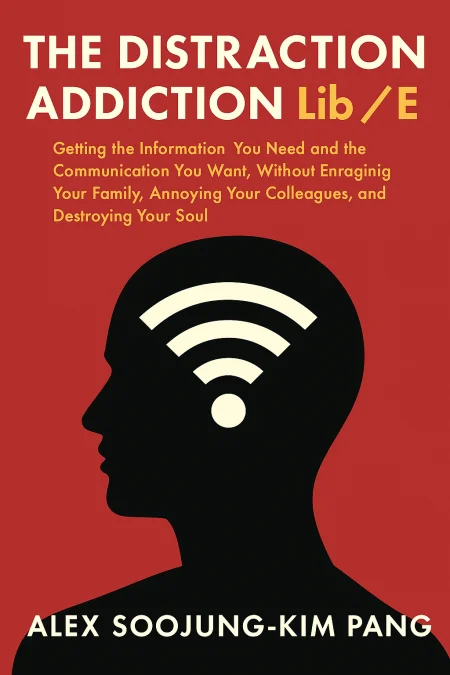
The Distraction Addiction
Getting the Information You Need and the Communication You Want, Without Enraging Your Family, Annoying Your Colleagues and Destroying Your Soul.
Book Edition Details
Summary
In a whirlwind era where screens dominate our every waking moment, Alex Soojung-Kim Pang's "The Distraction Addiction" stands as a beacon of hope and clarity. This insightful exploration dives headfirst into the chaos of digital noise, challenging the notion that connectivity must come at the cost of our cognitive well-being. Pang, a visionary technology expert, deftly blends cutting-edge research with timeless wisdom, offering readers practical tools to reclaim their focus amidst the digital deluge. Through captivating narratives and actionable insights, he illuminates a path where one can savor the benefits of the digital age without sacrificing mental acuity or emotional depth. Can you truly be present in a world pulling you in a thousand directions? Pang's compelling guide suggests you not only can, but must.
Introduction
Modern life presents an unprecedented challenge to human attention. Digital devices promise enhanced productivity and connection, yet many find themselves trapped in cycles of distraction, switching between screens and notifications with growing unease. The fundamental question emerges: can we maintain our essential human capacity for deep thought and meaningful engagement while embracing the technologies that increasingly define our world? Rather than accepting this apparent trade-off, a compelling alternative emerges through examining how humans have always engaged with tools and technologies. Throughout history, the most profound human achievements have emerged not from rejecting technological advancement, but from developing contemplative relationships with the tools at our disposal. The challenge lies not in the technology itself, but in our approach to it. This exploration reveals that distraction is not an inevitable consequence of digital life, but rather the result of unconscious habits and poorly designed interactions. By understanding how our minds naturally extend through our tools, we can reclaim agency over our attention and create more intentional relationships with technology. The path forward requires both ancient wisdom about contemplative practice and modern insights into human-computer interaction.
The Extended Mind: How Technology Becomes Part of Us
Humans possess a remarkable capacity for technological entanglement that extends far beyond conscious awareness. This entanglement represents not a modern phenomenon, but the continuation of a process that began with the first stone tools millions of years ago. When skilled practitioners use familiar instruments—whether ancient axes or modern computers—the boundary between user and tool begins to dissolve. The extended mind thesis challenges conventional notions of where thinking occurs. Rather than being confined to the brain, cognitive processes distribute across networks that include our bodies, tools, and environment. A musician's instrument becomes an extension of their expressive capacity; a writer's keyboard enables thoughts to flow directly into text; a smartphone functions as external memory storage. These extensions operate below the threshold of consciousness, becoming as natural as using one's own limbs. This entanglement manifests physically through changes in body schema—the unconscious mental map of where our body ends and the world begins. Brain imaging reveals that when people master tools, neural activity shifts from areas associated with tool use to regions governing body movement. The tool literally becomes incorporated into the user's sense of their physical self. Phantom vibrations from absent phones demonstrate how deeply these technological extensions penetrate our nervous system. Understanding entanglement reveals why poorly designed technologies feel so frustrating. When tools fail or behave unpredictably, users experience something akin to a malfunctioning limb—part of their extended self has become unreliable. This perspective shifts the focus from avoiding technological dependence to demanding better integration between human capabilities and technological design.
Digital Distraction: The Monkey Mind in the Machine Age
The Buddhist concept of the monkey mind—restless, chattering, constantly jumping from one thing to another—provides a precise description of consciousness under digital assault. This ancient metaphor captures the experience of minds pulled in countless directions by notifications, updates, and the endless stream of digital stimuli. The monkey mind thrives in environments of constant novelty and immediate gratification. Modern switch-tasking masquerades as productive multitasking while actually fragmenting attention across unrelated activities. True multitasking involves coordinating multiple cognitive streams toward a single goal—like a chef managing several dishes simultaneously. Switch-tasking, by contrast, forces the brain to repeatedly redirect attention between competing demands, creating cognitive overhead that depletes mental resources and impairs performance. The costs of chronic switch-tasking extend beyond mere inefficiency. Constant partial attention prevents the deep engagement necessary for creative insight and meaningful work. The brain, evolved to focus intensely on immediate threats or opportunities, struggles to maintain sustained attention on abstract tasks while managing peripheral digital demands. This creates a state of perpetual cognitive arousal without resolution. Technologies exploit natural human responses to uncertainty and social connection. The intermittent reinforcement of checking for new messages activates the same neural pathways as gambling. Social media platforms deliberately engineer features to capture and fragment attention, treating human focus as a resource to be harvested rather than respected. Recognizing these dynamics represents the first step toward developing more intentional relationships with digital tools.
Contemplative Practices: Ancient Wisdom for Modern Technologies
Contemplative traditions offer sophisticated frameworks for training attention that remain remarkably relevant to digital challenges. Meditation practices developed over millennia provide direct experience of how untrained minds operate—jumping between thoughts, seeking stimulation, avoiding difficulty—and demonstrate that focused attention represents a learnable skill rather than a fixed capacity. The practice of mindfulness reveals the gap between reactive and responsive modes of engagement. Rather than automatically following each mental impulse or external stimulus, practitioners learn to observe their thoughts and impulses with detached awareness. This creates space for conscious choice about where to direct attention and how to engage with both internal and external demands. Buddhist monastics who maintain extensive online presences demonstrate that contemplative awareness can transform digital interactions. They approach social media and email as opportunities to practice right speech, compassion, and mindful communication. Their key insight: distraction arises from internal mental conditions rather than external technologies. The solution lies not in avoiding technology but in bringing contemplative awareness to technological engagement. These practitioners reveal that the same mental training that enables sustained meditation can be applied to any activity requiring focused attention. The discipline developed through contemplative practice—the ability to notice when attention wanders and gently return focus to chosen objects—translates directly to more skillful engagement with digital tools. Contemplation becomes not an escape from technological life but a means of engaging more intentionally with it.
Redesigning Digital Life: Practical Steps Toward Mindful Computing
Transforming relationships with technology requires both inner work and outer design changes. Simple tools can create significant shifts in how people interact with digital systems. Programs that block internet access or strip away interface complexity help users rediscover their capacity for sustained focus. These tools work not by solving attention problems but by creating environments that support natural attentional abilities. The concept of digital sabbaths—regular periods of disconnection from electronic devices—provides structured opportunities to reset habitual patterns of engagement. These practices reveal how much mental energy goes toward managing digital stimuli and how different time feels when not fragmented by constant connectivity. The goal is not digital abstinence but rather periodic recalibration of technological relationships. Self-experimentation becomes essential for developing personalized approaches to technology use. Different people have different attentional capacities, different vulnerabilities to distraction, and different technological needs. By observing their own patterns of technology use and systematically testing alternatives, individuals can discover what combinations of tools and practices best support their goals. The most effective interventions often involve embracing rather than rejecting technology's potential for human enhancement. Voice recognition software can free writers from keyboard constraints; GPS navigation can free travelers from map reading; cloud storage can free workers from file management. The key lies in choosing technologies that genuinely extend human capabilities rather than creating new forms of dependence or distraction.
Summary
The path toward more contemplative computing emerges not from rejecting digital tools but from applying ancient wisdom about attention and awareness to modern technological challenges. By understanding how minds naturally extend through tools, recognizing the sources of digital distraction, cultivating contemplative awareness, and thoughtfully redesigning our technological environments, we can reclaim agency over our attention while embracing technology's genuine benefits. The goal is neither digital minimalism nor uncritical adoption, but rather the development of mature, intentional relationships with the tools that increasingly mediate our experience of the world. This approach offers hope for preserving human capacities for deep thought, meaningful connection, and sustained engagement in an age of unprecedented technological capability.
Related Books
Download PDF & EPUB
To save this Black List summary for later, download the free PDF and EPUB. You can print it out, or read offline at your convenience.
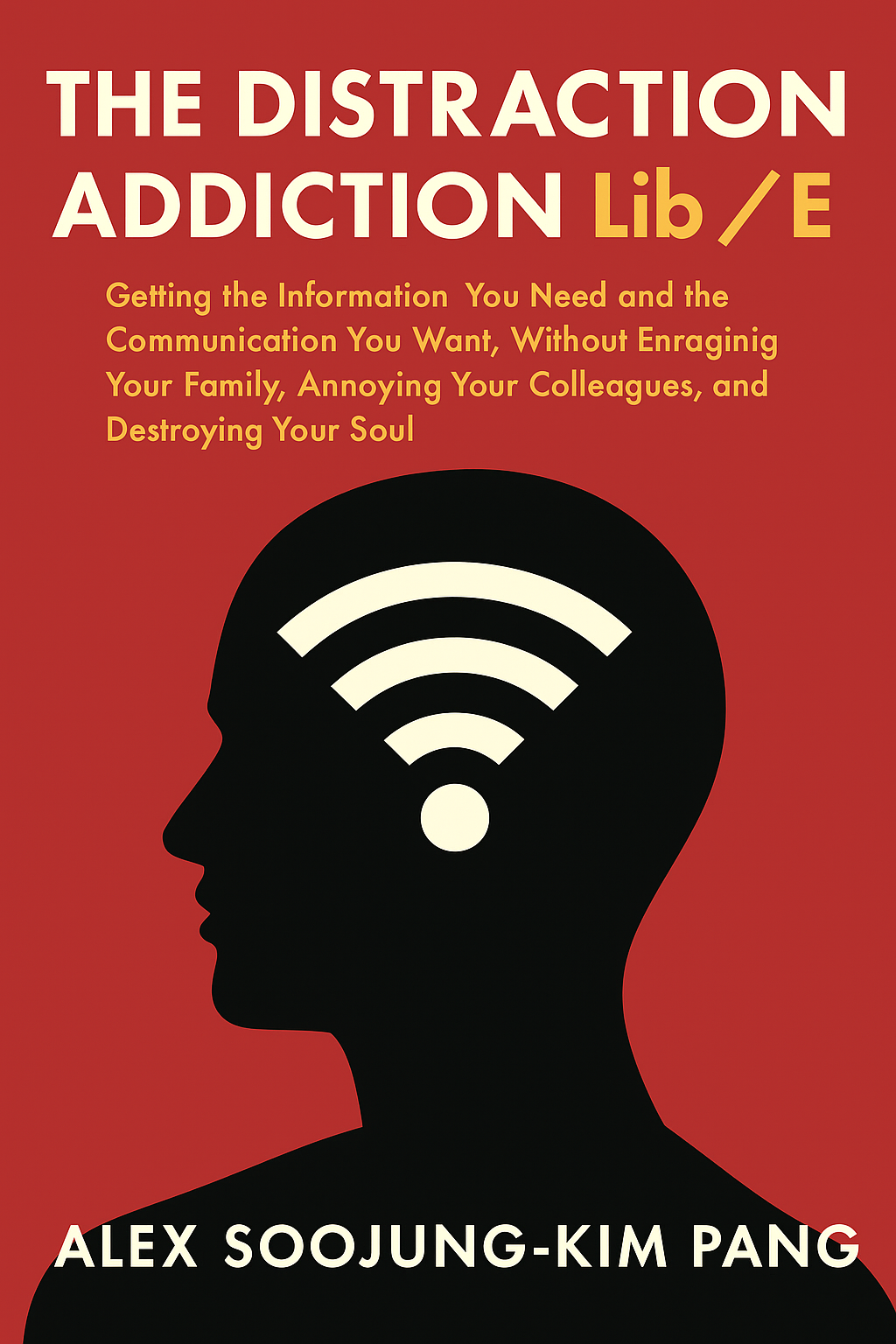
By Alex Soojung-Kim Pang
