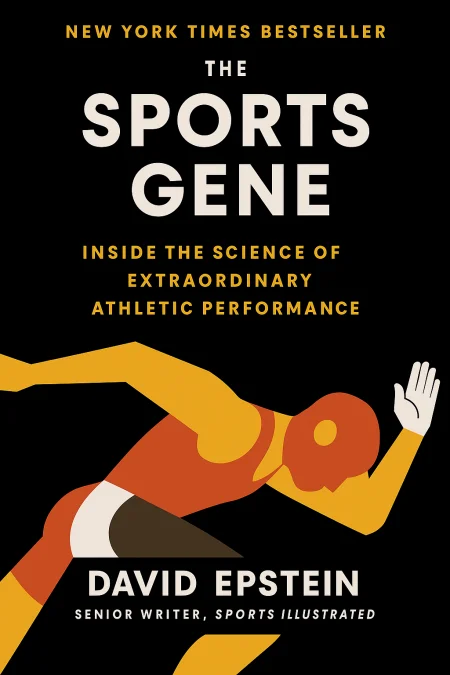
The Sports Gene
Inside the Science of Extraordinary Athletic Performance
Book Edition Details
Summary
Ever pondered the secret behind athletic prowess? In "The Sports Gene," David Epstein challenges our understanding of physical talent, navigating the murky waters of genetics versus hard-earned skill. High school heroes and Olympic legends alike raise a tantalizing question: is greatness born or forged? Epstein, a senior writer at Sports Illustrated, dives deep into the genetic code and training regimes that shape elite athletes. He unravels myths about innate ability and obsessive practice, revealing that the truth isn't as simple as nature versus nurture. From the blazing speed of Jamaican sprinters to the unparalleled endurance of Kenyan runners, Epstein uncovers the intricate dance between genes and determination. Through riveting narratives and scientific inquiry, "The Sports Gene" compels readers to rethink everything they know about the making of a champion.
Introduction
Picture a young boy standing at the edge of a track, watching his teammates disappear into the distance during his first cross-country practice. Jim Ryun could barely complete a mile without collapsing, finishing dead last in nearly every race. Yet within just two years, this same struggling runner would shatter the four-minute mile barrier as a high school student, becoming a global sensation and Olympic champion. His transformation seemed impossible, almost magical. This extraordinary journey raises profound questions that echo through every gymnasium, playing field, and training facility around the world. What separates the naturally gifted from those who struggle? Can anyone become elite with enough practice, or do our genes predetermine our athletic destiny? When we witness seemingly ordinary individuals achieve extraordinary feats, are we seeing the triumph of human will over biological limitations, or the awakening of dormant genetic potential? Through compelling stories of athletes who defy expectations and scientific discoveries that challenge our assumptions, this exploration reveals the intricate dance between nature and nurture in athletic performance. You'll discover why some people respond dramatically to training while others plateau despite identical effort, how body types have evolved to dominate specific sports, and what cutting-edge genetics tells us about human potential. Most importantly, you'll understand that the relationship between genes and greatness is far more nuanced and hopeful than simple determinism suggests.
Late Bloomers and Lightning Strikes: When Timing Transforms Talent
Dennis Rodman was sweeping floors at Dallas/Fort Worth International Airport, working the night shift at nineteen years old with no athletic future in sight. Standing just 5'9" and having quit his high school basketball team after warming the bench for half a season, he seemed destined for obscurity while his sisters dominated college basketball as All-Americans. Friends would tease him when he tagged along to their games, this awkward young man who couldn't make his own team. Then something extraordinary happened. In the span of two years, Rodman grew like kelp in the ocean, shooting up to 6'8". His body didn't just stretch upward; it transformed entirely. Suddenly, his gangly frame found grace, and basketball skills seemed to emerge from nowhere. "It was like I had a new body that knew how to do all this stuff the old one didn't," he would later recall. This miraculous transformation launched him from community college obscurity to NBA stardom, where he became one of the greatest rebounders in basketball history. Rodman's story mirrors those of his Chicago Bulls teammates Scottie Pippen and Michael Jordan. Pippen grew from 6'1" to 6'7" during his first two college years, transforming from a promising player into a future Hall of Famer. Jordan added six crucial inches in high school, evolving from a player suited for small colleges into a scholarship athlete at powerhouse North Carolina. These remarkable transformations reveal a fundamental truth about athletic excellence: timing matters as much as talent. The genetic lottery isn't just about what gifts you receive, but when you receive them. Late bloomers might never discover their potential in systems that cut players too early, while early developers might peak before learning to maximize their abilities. Champions are born not just from superior genetics, but from the perfect alignment of biological gifts, opportunity, and the wisdom to recognize potential even when it arrives fashionably late.
The Kalenjin Phenomenon: Genetics, Geography, and Running Dominance
In the mountains of Kenya's Rift Valley, young Evans Kiplagat runs six miles to reach the training track each morning, then completes a grueling workout alongside world champions before jogging six miles home. He survives on scraps of food and dreams of earning enough prize money to escape poverty. Yet despite this dedication, Kiplagat represents just one of thousands of Kalenjin runners pursuing the same dream in a region where the concentration of distance running talent defies statistical probability. The Kalenjin people, comprising just 12% of Kenya's population, produce over 75% of the country's elite distance runners. Their dominance extends far beyond their homeland: seventeen American men have run marathons faster than 2:10 in history, while thirty-two Kalenjin men achieved this feat in October 2011 alone. Danish scientists studying Kalenjin boys discovered they possess naturally superior "running economy," using less energy to maintain the same pace as European runners. Their legs are proportionally longer but significantly thinner in the lower portion, reducing the metabolic cost of each stride by an estimated 8% per kilometer. Yet genetics alone cannot explain this phenomenon. The same scientists found no differences in muscle fiber types or aerobic capacity between Kalenjin and European boys. Africa contains more genetic diversity than the rest of the world combined, meaning both the fastest and slowest potential runners might be found among people of African ancestry. The advantage lies not in genetic determinism but in the intersection of beneficial body proportions, high-altitude adaptation, and a culture that systematically identifies and develops running talent. The Kalenjin story illuminates how genetic advantages become meaningful only when combined with the right environment, training, and opportunity. Their success represents not the triumph of biology over effort, but the beautiful convergence of natural gifts with cultural dedication, geographic advantages, and the relentless pursuit of excellence that transforms potential into world-beating performance.
Training Paradox: Why Identical Effort Yields Different Results
In the laboratories of the HERITAGE Family Study, scientists made a discovery that shattered assumptions about fitness and training. After putting 742 family members through identical 20-week exercise programs, they found responses that varied dramatically: some participants improved their aerobic capacity by 40%, while others showed virtually no improvement despite following the same regimen perfectly. The difference wasn't effort or dedication, it was written in their genes. Among the most remarkable cases was a sedentary man who, without any training, possessed the aerobic capacity of a trained athlete. Meanwhile, some participants who trained religiously for months never reached his starting level. The study revealed that about 15% of people are "high responders" who gain fitness rapidly, while another 15% are "low responders" whose bodies resist adaptation despite their best efforts. At the University of Alabama, researchers found similar patterns in strength training, where muscle fiber growth ranged from 0% to 50% among participants following identical programs. These findings extend beyond laboratory walls to explain puzzling real-world phenomena. When Jennie Finch, the Olympic softball champion, struck out Albert Pujols and Barry Bonds at the Pepsi All-Star Game, she demonstrated that expertise isn't about superior reflexes but learned pattern recognition. Elite athletes develop vast mental databases of patterns, allowing them to "see" the future and react before conscious thought occurs. Yet this software requires the right hardware to run effectively. This research transforms our understanding of training and talent development, suggesting that personalized approaches based on individual genetic responses could revolutionize athletic development. More importantly, it offers hope to those who struggle with traditional methods: the key isn't working harder, but finding the approach that matches your unique genetic blueprint and biological strengths, recognizing that your journey to excellence may follow a completely different path than others.
Genetic Frontiers: From Superbaby to the Future of Athletics
In a small German hospital, doctors noticed something extraordinary about a newborn baby boy. His muscles bulged like a miniature bodybuilder's, his calves were chiseled, and his skin stretched taut over his quads. Ultrasound revealed muscle mass off the charts and body fat below measurable levels. The child, later dubbed "Superbaby" by the media, carried mutations in both copies of his myostatin gene, leaving him unable to produce the protein that normally tells muscles when to stop growing. This discovery opened a window into the future of human performance. The boy's mother, a professional sprinter with one normal and one mutant myostatin gene, demonstrated how genetic variations create a spectrum of athletic potential. Scientists have since found similar patterns in racing whippets, where 40% of top-tier competitors carry myostatin mutations that enhance speed, while those with two copies become too muscular to run effectively. Meanwhile, in the mountains of Finland, the Mäntyranta family's genetic legacy continued to unfold. Eero Mäntyranta, the Olympic cross-country skiing champion, carried a rare mutation that allowed his body to produce 50% more red blood cells than average. For decades, critics suspected doping, but the truth was more fascinating: he was born with a genetic advantage that no training could replicate. His nephew Pertti also carried the mutation and won Olympic gold, while family members without it remained recreational athletes despite identical training environments. As genetic testing becomes more accessible, we stand at the threshold of a new era in sports. The real promise lies not in predicting champions, but in understanding how to optimize training for each individual's genetic profile. Yet this knowledge brings profound ethical questions about fair competition and genetic advantages. The future of athletics will be shaped not just by scientific discoveries, but by how we choose to apply this knowledge while preserving the transformative power of sport to inspire us all.
Summary
The quest to understand athletic excellence reveals a truth both humbling and inspiring: we are all products of an intricate dance between the genes we inherit and the choices we make. From Jim Ryun's miraculous transformation to the Kalenjin runners' efficient stride, from Dennis Rodman's late growth spurt to the varying responses in training laboratories, we see that genetic gifts are just the opening notes of a much larger symphony. The most profound lesson isn't that some people are born with advantages, it's that these advantages mean nothing without the dedication to develop them. Genetic potential is like a seed: it contains possibilities, but requires the right soil, water, and sunlight to flourish. The Kenyan children who run to school, the Finnish skier training under the midnight sun, and the basketball player growing six inches in high school all remind us that champions are forged in the crucible of opportunity meeting preparation. This understanding should inspire rather than discourage us. While we cannot choose our genetic starting point, we can choose how to maximize whatever gifts we possess. The future belongs not to those who simply test their DNA, but to those who understand that greatness emerges from the relentless pursuit of excellence within our individual constraints. In sports, as in life, our genetic inheritance is not our destiny, it's merely our starting line, and the race is won by those who run it with the greatest heart, wisdom, and unwavering determination to become the best version of themselves.
Related Books
Download PDF & EPUB
To save this Black List summary for later, download the free PDF and EPUB. You can print it out, or read offline at your convenience.
By David Epstein
