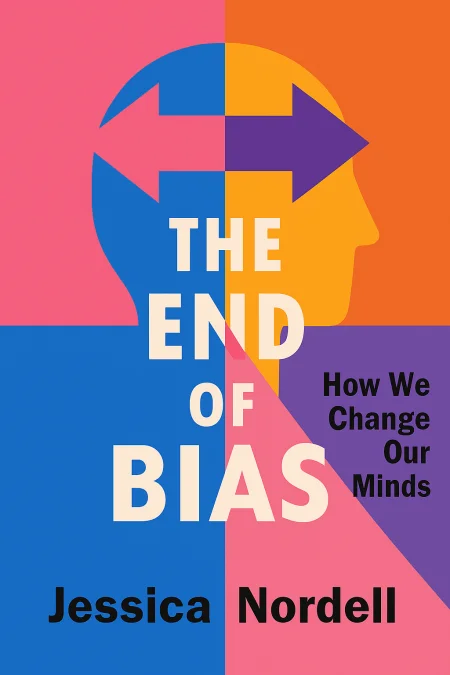
The End of Bias
How We Change Our Minds
Book Edition Details
Summary
Bias isn't just a shadow lurking in the corners of our minds—it's a silent architect shaping our world. In "The End of Bias: A Beginning," Jessica Nordell embarks on a captivating odyssey through the labyrinth of unconscious prejudice, weaving together vivid narratives and cutting-edge research. With a deft touch, she peels back the layers of discrimination ingrained in society, from the halls of medicine to the classrooms of Sweden. Nordell's ten-year exploration reveals a tapestry of hope: where innovative checklists reshape healthcare, mindfulness transforms policing, and gender stereotypes are dismantled at their roots. This book isn't just an exposé; it's a beacon lighting the path to change, showcasing tangible strategies to rewire our minds and reconstruct our world. For those ready to challenge the status quo, Nordell offers a blueprint for transformation, one story at a time.
Introduction
Human behavior reveals a troubling paradox between conscious intentions and actual actions. Individuals who genuinely believe in equality and fairness often make decisions that systematically disadvantage certain groups, while those who champion justice may unknowingly perpetuate the very inequalities they seek to eliminate. This contradiction exposes the profound influence of unconscious bias, a psychological phenomenon that operates beneath awareness yet shapes countless interactions across workplaces, institutions, and communities. The mechanisms of unconscious prejudice function through automatic mental processes that bypass deliberate thought, creating patterns of discrimination that persist despite legal protections and diversity initiatives. These hidden biases emerge from deeply embedded cultural associations absorbed throughout childhood and reinforced by environmental cues, media representations, and social structures. Unlike overt discrimination, unconscious bias presents a more insidious challenge because it contradicts the conscious values of those who perpetuate it. Addressing this challenge requires understanding both the psychological foundations of bias and the systemic structures that amplify its effects. The evidence reveals that meaningful change demands more than awareness or good intentions, instead requiring coordinated interventions that target individual cognition, interpersonal relationships, and institutional practices. The stakes extend far beyond academic interest, as these seemingly minor moments of bias accumulate into massive disparities that determine life outcomes across education, employment, healthcare, and criminal justice.
The Science of Implicit Bias and Its Pervasive Impact
Unconscious bias operates through predictable cognitive mechanisms that evolved to help humans process complex social information rapidly. The brain automatically categorizes people into groups based on visible characteristics, then applies learned associations to make split-second judgments about individuals. These mental shortcuts serve essential functions in navigating social environments efficiently, but become problematic when they systematically disadvantage certain groups based on irrelevant characteristics. Research demonstrates that these biases develop early in childhood through exposure to cultural messages, media representations, and social hierarchies that reinforce group-based stereotypes. Children as young as three years old begin showing preferences for their own groups while internalizing societal assumptions about others. Brain imaging studies reveal that exposure to faces from different racial groups can trigger automatic fear responses in the amygdala, even among individuals who consciously reject prejudicial attitudes. The persistence of unconscious bias reflects the brain's efficiency in pattern recognition combined with environmental reinforcement. People selectively notice information that confirms existing stereotypes while overlooking contradictory evidence, creating feedback loops that strengthen prejudicial associations over time. Media representations, residential segregation, and occupational clustering limit opportunities for meaningful contact across group boundaries, allowing stereotypes to persist unchallenged by direct experience. Computer simulations demonstrate how even small biases, applied consistently over time, generate dramatic inequalities in outcomes. When women receive slightly less credit for successes and slightly more blame for failures, these minor differences compound over years to create workplaces where men dominate leadership positions despite equal starting capabilities. The cumulative effect reveals how individual moments of bias aggregate into systematic disparities that shape entire institutions and communities.
Individual Interventions: Awareness, Motivation, and Behavioral Change
Changing biased behavior requires more than good intentions or traditional diversity training that focuses solely on raising awareness. Effective interventions must address three critical components: helping people recognize their capacity for bias, motivating them to change, and providing concrete strategies for interrupting automatic responses. The most promising approaches treat bias as a habit that can be broken through deliberate practice rather than as an immutable character flaw. Mindfulness-based interventions show particular effectiveness by helping individuals observe their mental processes without judgment, creating space between automatic reactions and behavioral responses. When people can pause and examine their initial impressions, they gain the opportunity to choose more thoughtful responses. This process requires ongoing practice rather than one-time training, as the cultural forces that create bias continue to operate throughout daily life. Perspective-taking exercises and empathy-building activities can reduce bias by encouraging individuals to consider situations from the viewpoint of marginalized group members. Virtual reality simulations that allow people to experience discrimination firsthand have shown remarkable promise in shifting attitudes and increasing motivation for behavioral change. These immersive experiences create emotional understanding that purely intellectual approaches often fail to achieve. However, individual change efforts face significant limitations when operating within biased institutional structures. Personal awareness and motivation must be reinforced by organizational policies and social norms that reward inclusive behavior and discourage discrimination. Without this broader support, even well-intentioned individuals may struggle to maintain new behaviors in environments that continue to reward biased decision-making through existing incentive systems and cultural expectations.
Systemic Solutions: Transforming Institutions and Relationships
Institutional transformation requires restructuring policies, procedures, and incentives to reduce opportunities for bias to influence outcomes while creating accountability for equitable treatment. Successful organizational interventions often focus on decision-making processes rather than trying to change hearts and minds. Structured hiring protocols that standardize evaluation criteria, blind review processes that remove identifying information, and diverse decision-making panels can significantly reduce the impact of unconscious bias. These approaches work by constraining the influence of automatic associations rather than trying to eliminate them entirely. Orchestra auditions conducted behind screens dramatically increased the representation of women musicians, while similar blind evaluation processes in academic and corporate settings have yielded comparable results. The key lies in removing opportunities for irrelevant characteristics to influence important decisions about hiring, promotion, healthcare, and other consequential domains. Accountability mechanisms create incentives for fair treatment by making bias visible and consequential. When decision-makers know their choices will be reviewed for patterns of discrimination, they tend to exercise greater care in evaluation processes. Data collection and analysis reveal disparities that might otherwise remain hidden, enabling targeted interventions where problems are most severe. Environmental design can also reduce bias by changing the context in which decisions occur through simple modifications to physical spaces, application processes, or organizational procedures. The most effective systemic changes address both formal policies and informal cultures that reinforce biased behavior. This requires sustained leadership commitment, ongoing measurement of outcomes, and willingness to confront uncomfortable truths about existing practices. Organizations that successfully reduce bias often discover that creating more inclusive environments benefits everyone, not just members of previously marginalized groups, by improving decision-making quality and organizational performance.
From Contact to Expertise: Building Meaningful Human Connections
Superficial interactions between different groups often reinforce rather than challenge existing stereotypes, but meaningful contact under specific conditions can dramatically reduce prejudice and discrimination. Contact theory suggests that prejudice diminishes when members of different groups interact as equals, work toward common goals, receive institutional support, and have opportunities for genuine friendship. The most effective interventions create structured environments where these conditions naturally emerge. When individuals develop genuine expertise about other groups through sustained, meaningful interaction, their ability to perceive individuals accurately rather than through stereotypical lenses increases dramatically. Police officers who spend years building relationships in specific communities learn to distinguish between actual threats and projected fears, leading to more appropriate responses and better outcomes for everyone involved. This expertise develops through repeated exposure that allows complex, individualized impressions to replace simplistic group-based assumptions. The process of serving others appears particularly powerful in changing attitudes and perceptions. When people invest time and effort in helping members of other groups, they experience cognitive dissonance if they simultaneously hold negative stereotypes about those groups. This internal conflict often resolves in favor of more positive perceptions, especially when the service relationship involves genuine interdependence and mutual respect rather than paternalistic charity. Successful contact interventions create what researchers call jigsaw conditions, where each participant contributes essential expertise or resources that others need to succeed. This structure ensures that all parties are valued for their unique contributions while working toward common objectives. The resulting relationships often extend beyond the original context, creating networks of understanding that can influence broader community dynamics and institutional cultures over time.
Summary
The challenge of unconscious bias reveals both the limitations of human judgment and the remarkable capacity for transformation when individuals and organizations commit to systematic change. Rather than representing fixed character flaws, biased behaviors emerge from learnable cultural patterns that can be unlearned through deliberate effort, supportive environments, and meaningful contact across group boundaries. The most effective approaches combine individual awareness and skill-building with institutional reforms that reduce opportunities for bias to influence outcomes, creating sustainable change that benefits entire communities rather than simply managing the symptoms of inequality. This comprehensive framework demonstrates that overcoming unconscious bias requires neither denial of human fallibility nor resignation to its inevitability, but rather sustained commitment to evidence-based interventions that address both psychological mechanisms and systemic structures.
Related Books
Download PDF & EPUB
To save this Black List summary for later, download the free PDF and EPUB. You can print it out, or read offline at your convenience.
By Jessica Nordell
