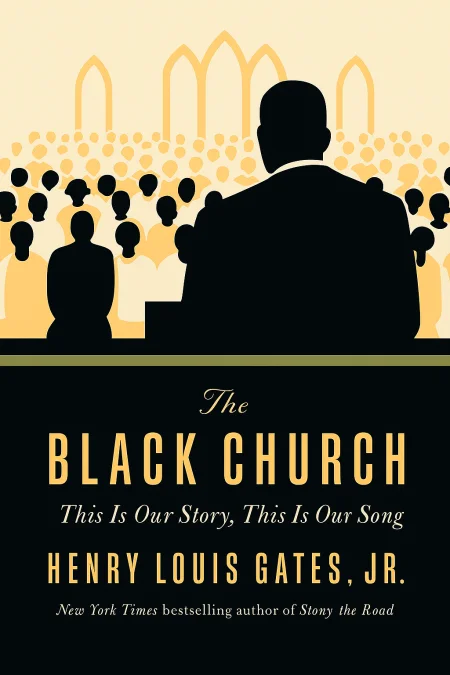
The Black Church
This Is Our Story, This Is Our Song
Book Edition Details
Summary
Henry Louis Gates, Jr. paints a vibrant mosaic of resilience and faith in "The Black Church," where he chronicles the indomitable spirit and profound influence of Black congregations throughout American history. From a small town in West Virginia to the sprawling canvas of a nation, Gates illuminates how these sacred spaces have served as beacons of hope, defiance, and cultural prowess amidst centuries of adversity. This narrative unveils the Black church as both sanctuary and battleground, a crucible for community dreams and a bulwark against systemic oppression. Traversing time, Gates deftly intertwines personal reflection with a sweeping historical lens, revealing how these hallowed halls have not only birthed civil rights icons but also fostered an enduring legacy of strength and unity. This compelling testament captures the heart and soul of a community’s enduring journey, making the Black church an indelible cornerstone of the American experience.
Introduction
In the sweltering heat of a summer evening in 1831, a Virginia preacher named Nat Turner gathered his followers in the woods outside Southampton County. As they knelt in prayer, Turner's voice rose with conviction, interpreting scripture not as a call for patient suffering, but as divine instruction for liberation. This moment captures the extraordinary paradox that would define African American religious experience for centuries: how the very religion used to justify enslavement became the most powerful force for freedom in American history. The story of the Black Church is fundamentally the story of a people who transformed the faith of their oppressors into an instrument of resistance, dignity, and hope. From the earliest days of slavery through the civil rights movement and into our contemporary struggles for justice, Black religious institutions have served as sanctuaries of the spirit and staging grounds for social revolution. This remarkable institution emerged from the fusion of African spiritual traditions with Christianity, creating something entirely new in the American religious landscape. This is a story for anyone seeking to understand the roots of American freedom movements, the power of faith to sustain communities through unimaginable hardship, and the ongoing struggle for racial justice in America. It reveals how enslaved people and their descendants built not just churches, but a parallel universe of meaning, community, and resistance that would ultimately help transform the nation itself. The Black Church represents perhaps the most successful example in human history of an oppressed people taking the master's tools and using them to build their own house of liberation.
From African Roots to Freedom Faith (1526-1865)
The first Africans to arrive in North America brought with them a rich tapestry of religious traditions spanning Islam, Christianity, and ancient ancestral practices. Long before the famous arrival of "20 and Odd Negroes" at Jamestown in 1619, enslaved Africans had been living in Spanish Florida since 1526, many of them already Christian converts from the Kingdom of Kongo, which had embraced Catholicism as early as 1491. These early believers found in Spanish colonial policy an unexpected pathway to freedom, as the Spanish crown decreed that escaped slaves could earn liberation through conversion to the Catholic faith. In the British colonies, however, the relationship between Christianity and bondage proved far more complex and contradictory. White planters initially resisted converting enslaved people, fearing that Christian brotherhood might undermine the racial hierarchy upon which their economic system depended. Virginia law in 1667 explicitly stated that baptism did not alter "the Condition of the slave as to his Bondage or freedome." This theological compromise allowed slavery and Christianity to coexist by making race, rather than religion, the determining factor in human bondage. The Great Awakening of the 1730s and 1740s dramatically altered this religious landscape. Evangelical preachers like George Whitefield brought a passionate, emotionally charged style of worship that resonated deeply with African spiritual traditions. In these revival meetings, enslaved and free Black people found space to express their faith through call-and-response singing, ecstatic dancing, and powerful testimonies. They began to hear in biblical stories of exodus and deliverance a divine promise that spoke directly to their own circumstances. From these encounters emerged the "invisible institution" of slave religion, practiced in brush arbors hidden deep in the woods, in slave quarters after the master's household had retired, and in the secret spaces of the human heart. Here, in defiance of laws prohibiting Black assembly and literacy, enslaved people created their own interpretation of Christianity. They sang spirituals that coded messages of resistance and hope, transformed Old Testament stories into prophecies of their own liberation, and maintained African practices like the ring shout within Christian worship. As Frederick Douglass would later observe, these sacred songs were "a testimony against slavery, and a prayer to God for deliverance from chains." This fusion of African traditions with Christian faith laid the foundation for independent Black churches that would emerge during and after the American Revolution. Leaders like Richard Allen and Absalom Jones, tired of discrimination in white Methodist churches, walked out to establish their own denominations where Black people could worship with dignity and develop their own religious and political leadership. By 1861, this religious foundation had proven its revolutionary potential when Nat Turner's rebellion demonstrated that the same Bible used to justify slavery could be interpreted as a divine mandate for violent resistance.
Building a Nation Within a Nation (1865-1920)
The end of the Civil War unleashed an unprecedented explosion of Black church building across the South. Freedpeople, no longer forced to worship in slave galleries or under white supervision, established thousands of independent congregations that became the cornerstone of Black community life. These churches served multiple functions that white institutions would never provide: they were schools where formerly enslaved people learned to read and write, banks where poor families pooled their resources, meeting halls where political strategies were planned, and sanctuaries where human dignity was affirmed against a hostile world. The architectural transformation was as dramatic as it was symbolic. Where once enslaved people had gathered in brush arbors or been relegated to church balconies, they now constructed magnificent edifices like Charleston's Emanuel African Methodist Episcopal Church. Built by the son of Denmark Vesey as architect, every nail driven by Black hands, Emanuel stood as a monument to freedom and a rebuke to those who had doubted Black capability. Similar churches rose across the South, often becoming the largest and most impressive buildings in their communities. These institutions quickly evolved into what W.E.B. Du Bois called "a nation within a nation." Black churches operated schools, published newspapers, organized mutual aid societies, and provided the only space where African Americans could exercise full citizenship rights. During Reconstruction, at least 243 ministers served in public office, including Richard Harvey Cain, who moved directly from the pulpit of Emanuel AME to the halls of Congress. The church provided the organizational structure and moral authority that made Black political participation possible during America's first experiment in interracial democracy. However, this religious renaissance also sparked internal conflicts that reflected broader tensions within Black communities. Northern missionaries, both Black and white, often clashed with Southern religious traditions they deemed too emotional or "African." Bishop Daniel Payne of the AME Church actively suppressed spirituals and the ring shout, dismissing them as "heathenish" practices that embarrassed the race. This struggle between respectability and authenticity, between assimilation and cultural preservation, would define Black church life for generations. The violent end of Reconstruction in 1877 intensified the church's importance as a refuge and organizing center. As white supremacists systematically stripped away Black political gains through violence and legal manipulation, churches became the only institutions that remained fully under African American control. Women like Nannie Helen Burroughs emerged as powerful leaders, challenging both racial and gender hierarchies while building organizations that "lifted as we climbed." By the early twentieth century, the Black Church had established itself as the most powerful institution in African American life, a sanctuary of dignity in an increasingly hostile world and the foundation upon which all future freedom movements would build.
From Great Migration to Civil Rights Revolution (1920-1968)
The massive population movement that brought six million African Americans from the rural South to Northern and Western cities fundamentally transformed Black religious life. Migrants carried their faith traditions northward, establishing storefront churches and massive urban congregations that adapted Southern spiritual practices to metropolitan needs. Churches like Abyssinian Baptist in Harlem grew to over ten thousand members, providing not just worship services but job placement, housing assistance, and community education programs for newcomers struggling to establish themselves in unfamiliar urban environments. This period witnessed the birth of gospel music as Thomas A. Dorsey, a former blues musician, fused sacred and secular musical traditions in ways that scandalized traditional church leaders but captivated congregations. Working with singers like Mahalia Jackson, Dorsey created a new sound that drew from blues, jazz, and traditional spirituals to produce music that was unmistakably modern yet deeply rooted in Black religious experience. The controversy over gospel music reflected broader tensions about how much the church should adapt to changing times while preserving its spiritual essence. The rise of recorded sermons brought charismatic preachers like C.L. Franklin into homes across Black America, creating a shared religious culture that transcended denominational boundaries. Radio broadcasts of dynamic preachers reached millions, while new religious movements like the Nation of Islam and various Pentecostal denominations offered alternative visions of Black spiritual identity. These developments created a more diverse and competitive religious landscape, forcing established churches to respond to changing community needs and expectations. The emergence of Martin Luther King Jr. as a national leader represented the culmination of decades of church-based organizing and theological development. Drawing on the intellectual traditions of Howard Thurman and Benjamin Mays, the oratorical legacy of Black preaching, and the organizational power of Southern churches, King transformed local protest movements into a national crusade for civil rights. His philosophy of nonviolent resistance, grounded in Christian love and Gandhi's methods, provided both moral authority and practical strategy for confronting segregation. Churches served as the infrastructure of the civil rights movement, providing meeting spaces, financial resources, and communications networks that made sustained protest possible. The freedom songs that emerged from this movement transformed traditional spirituals into anthems of resistance, while leaders like Mahalia Jackson used their artistic platforms to fund civil rights activities. When white supremacists bombed churches like Birmingham's Sixteenth Street Baptist Church, killing four young girls, they revealed both the central role of Black churches in the freedom struggle and their own understanding of where the movement's power truly resided. The passage of the Civil Rights Act of 1964 and the Voting Rights Act of 1965 represented the greatest legislative victories in the Black Church's history of political engagement. Yet even as these laws promised formal equality, King's expansion into issues of economic justice and opposition to the Vietnam War suggested that the church's prophetic mission was far from complete.
Modern Challenges and Continuing Legacy (1968-Present)
The assassination of Martin Luther King Jr. in 1968 marked both an ending and a beginning for Black religious life in America. While King's death devastated many who had seen the church as the primary vehicle for social change, it also opened space for new theological voices and approaches to emerge. James Cone's Black Liberation Theology revolutionized religious thinking by arguing that God was literally on the side of the oppressed and that true Christianity required active resistance to racism and injustice. The rise of Black Power movements created complex tensions within religious communities as some embraced more militant approaches while others maintained commitments to integration and nonviolence. Simultaneously, the growth of Pentecostal and prosperity-oriented churches reflected changing aspirations within expanding Black middle-class communities. Figures like T.D. Jakes built massive congregations around messages that emphasized individual empowerment and material blessing, creating debates about whether such approaches advanced or undermined collective liberation. The late twentieth century brought new challenges as hip-hop culture created generational divisions within religious communities, while the AIDS crisis forced churches to confront issues of sexuality and public health they had long avoided. Progressive congregations like Bishop Yvette Flunder's City of Refuge emerged to serve LGBTQ+ communities often rejected by traditional churches, while conservative denominations struggled to maintain relevance with younger generations increasingly critical of religious homophobia and sexism. Barack Obama's presidency illuminated both the continued power and internal contradictions of Black religious life. Obama's association with Jeremiah Wright revealed to many white Americans the prophetic tradition within Black churches that had long challenged American hypocrisy, while his support for marriage equality exposed conservative elements within religious communities that complicated assumptions about Black political solidarity. The Black Lives Matter movement has created new opportunities and challenges for religious leadership. While some clergy have joined protests against police violence and systemic racism, others have struggled to connect with younger activists who often organize outside traditional institutional structures. The COVID-19 pandemic's disproportionate impact on Black communities, combined with continued racial violence exemplified by George Floyd's murder, has reminded the world why prophetic voices from the Black Church remain essential to America's ongoing struggle for justice.
Summary
The five-century journey of the Black Church reveals the extraordinary capacity of oppressed people to transform the very instruments of their oppression into tools of liberation and community building. From the moment enslaved Africans first heard Christian gospel on American shores, they began the work of theological revolution, creating religious institutions that served simultaneously as sanctuaries of dignity, schools of leadership, and launching pads for social transformation. This story demonstrates that authentic religious faith, far from being an opiate for the masses, can become the most powerful force for human freedom when it speaks truthfully to the experiences of those society deems least valuable. The central tension running through this history illuminates a fundamental truth about American democracy itself: that the nation's highest ideals have consistently been most courageously proclaimed and defended not by those with the most power, but by those with the most to lose. From Nat Turner's rebellion through the civil rights movement to contemporary struggles against police violence, Black religious leaders have served as America's conscience, forcing the country to confront the gap between its stated values and lived reality. Their witness reveals that genuine patriotism sometimes requires the courage to say, as Jeremiah Wright did, that a nation failing to protect all its children deserves divine judgment rather than divine blessing. Today's struggles for racial justice, economic equality, and human dignity require the same prophetic courage and institutional commitment that sustained previous generations through slavery, segregation, and ongoing systemic oppression. We must support religious institutions that speak truth to power rather than comfort to privilege, build coalitions that bridge generational and ideological divides within communities seeking justice, and recognize that lasting social change requires both individual transformation and collective action sustained over decades rather than moments. The Black Church's greatest gift to America remains its insistence that a nation's soul is measured not by its rhetoric about freedom, but by its willingness to extend that freedom to those who need it most.
Related Books
Download PDF & EPUB
To save this Black List summary for later, download the free PDF and EPUB. You can print it out, or read offline at your convenience.
By Henry Louis Gates Jr.
