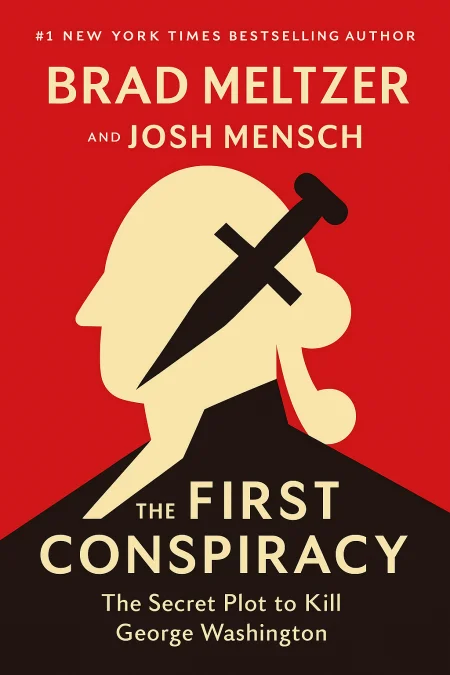
The First Conspiracy
The Secret Plot to Kill George Washington
Book Edition Details
Summary
In the crucible of 1776, where loyalties wavered like flickering candle flames, a shadowy conspiracy brewed beneath the cloak of trust surrounding General George Washington. His handpicked guard—stalwart, or so it seemed—concealed a treacherous undercurrent of betrayal. As the nation teetered on the precipice of revolution, a clandestine plot emerged, weaving together treasonous soldiers with the influential Governor of New York, William Tryon, and the cunning Mayor David Mathews. Their audacious scheme aimed at the heart of the burgeoning rebellion: Washington himself. "The First Conspiracy" unearths this forgotten tale of deceit and survival, offering a riveting glimpse into the nascent stages of American espionage, echoing through the corridors of history to the modern-day CIA. Here lies a narrative of peril and patriotism, where the fate of a nation rested on unmasking the wolves in its midst.
Introduction
In the sweltering summer of 1776, as Continental soldiers prepared to defend New York City against the world's most formidable naval force, a sinister plot unfolded within George Washington's innermost circle. While history celebrates this period for the Declaration of Independence, few realize how close America came to ending before it truly began—not through British cannons, but through the treachery of Washington's own trusted bodyguards. This forgotten chapter reveals the fragile nature of revolutionary loyalty and the birth of American counterintelligence. It exposes how British gold corrupted even the most elite Continental soldiers, turning protectors into potential assassins. The conspiracy's discovery triggered America's first major spy hunt, establishing precedents for national security that echo through centuries. Most remarkably, it shows us a vulnerable George Washington, betrayed by those sworn to protect him, yet finding strength to forge ahead despite the deepest personal betrayal imaginable. This story speaks to anyone fascinated by the untold dramas of America's founding, those who appreciate the complexity of human loyalty under extreme pressure, and readers seeking to understand how nations survive their most perilous beginnings. The lessons of trust, betrayal, and resilience that emerge remain startlingly relevant in our modern era of shifting allegiances and hidden threats.
Seeds of Betrayal: Tryon's Network and Revolutionary New York (1776)
New York City in early 1776 presented George Washington with his greatest challenge yet—a deeply divided population where Patriot and Loyalist neighbors eyed each other with suspicion, and allegiances shifted like morning fog over the harbor. Unlike Boston, where enemy lines were clearly drawn, Manhattan seethed with conflicting loyalties that made every street corner a potential battlefield of ideology and every tavern conversation a test of trust. From his floating headquarters aboard the Duchess of Gordon, exiled Royal Governor William Tryon orchestrated the most sophisticated subversion campaign America had yet witnessed. This was no desperate exile plotting revenge, but a methodical intelligence operation that stretched from Long Island farms to iron mills fifty miles inland. Tryon's agents moved through the countryside with British gold and promises of land grants, systematically identifying colonists wavering in their revolutionary commitment and building networks of secret supporters ready to rise when British forces arrived. The genius of Tryon's approach lay in his understanding that wars could be won through corruption as effectively as through superior firepower. His recruiters targeted the Continental Army's most vulnerable soldiers—those suffering from chronic lack of pay, terrible living conditions, and growing fears that they faced annihilation when the British fleet arrived. The promise of immediate cash payments and future security proved irresistible to men who had received little but hardship for their service to the revolutionary cause. What made this conspiracy particularly dangerous was its timing and scope. As Washington struggled to transform his ragtag army into an effective fighting force, Tryon's network was systematically undermining that effort from within. The plot revealed how fragile revolutionary fervor could be when tested by material hardship and genuine fear, setting the stage for betrayals that would reach into the very heart of Washington's command structure.
Enemies Within: Life Guards Turn Traitors as British Forces Approach
The most devastating blow to Washington's trust came with the discovery that his own Life Guards—the elite fifty-man unit handpicked to protect the Commander-in-Chief—had been penetrated by Tryon's conspiracy. These soldiers stood closest to Washington during his most vulnerable moments, guarded the army's war chest, and had access to the most sensitive military intelligence. If anyone embodied the ideals of honor and loyalty that Washington cherished, it should have been these men. Gilbert Forbes, a Manhattan gunsmith turned Loyalist recruiter, recognized the ultimate prize when he encountered Life Guards like Thomas Hickey and William Green drinking in New York taverns. Over shared meals and flowing ale, Forbes gradually drew these trusted protectors into Tryon's web, offering weekly cash payments and promises of British victory. The corruption spread like a contagion through the unit, with Green becoming a recruiter himself, administering secret oaths to fellow guards and expanding the conspiracy's reach. The mechanics of betrayal were chillingly simple yet devastatingly effective. The corrupted Life Guards planned to turn their weapons on Washington and his officers at the moment of British attack, potentially decapitating the Continental Army's leadership in a single coordinated strike. They discussed sabotaging key defensive positions, spiking cannons to render them useless, and coordinating their treachery with the expected British assault to maximize the chaos and ensure revolutionary defeat. Thomas Hickey emerged as the conspiracy's most visible face—an Irish-born former British soldier who had deserted to join the colonial cause, only to desert again when British gold proved more attractive than revolutionary ideals. His willingness to betray the man he was sworn to protect revealed how personal grievances, financial desperation, and political uncertainty could override even the most sacred military oaths. For Washington, who had built his entire identity around concepts of honor and duty, this betrayal cut deeper than any military defeat could have managed.
Justice and Independence: From Hickey's Execution to the Declaration
The conspiracy's unraveling began in the most unlikely location—a cramped jail cell beneath New York's City Hall, where counterfeiter Isaac Ketcham found himself sharing quarters with two Continental soldiers arrested for passing fake currency. As these men cursed their service and praised King George, Ketcham realized he was witnessing something far more significant than typical prisoner complaints. These were Life Guards describing a plot that reached to the highest levels of colonial government, and his decision to report what he heard would trigger America's first major counterintelligence operation. The investigation that followed showcased the remarkable capacity of colonial authorities to respond effectively under extreme pressure. John Jay's secret Committee on Conspiracies, working closely with Washington, pioneered techniques that would become standard in American intelligence work—systematic interrogation of suspects, careful cross-referencing of testimony, and the methodical unraveling of enemy networks. Within days, they had arrested dozens of conspirators, including New York Mayor David Mathews, and had begun mapping the full scope of Tryon's subversive network. Thomas Hickey's court-martial and public execution on June 28, 1776, served purposes far beyond simple justice. Nearly twenty thousand spectators witnessed the hanging, sending an unmistakable message about the consequences of betrayal while demonstrating the Continental Army's capacity to police its own ranks. The timing proved particularly significant—just days before the British fleet's arrival and the public reading of the Declaration of Independence—marking a crucial transition from defensive uncertainty to offensive commitment to independence. The conspiracy's exposure coincided with and perhaps influenced the final push toward complete independence from Britain. The revelation that internal enemies were actively working to destroy the revolutionary cause helped clarify the stakes involved and demonstrated that half-measures and continued reconciliation attempts were no longer viable. When Washington's troops heard the Declaration of Independence read aloud in New York just days after Hickey's execution, they were hearing not just inspiring words about freedom, but a direct response to the betrayal they had just witnessed firsthand.
Summary
The first conspiracy against George Washington illuminates the central paradox of revolutionary movements—that the greatest threats often emerge not from declared enemies, but from those within who exploit the uncertainty and division that revolution inevitably creates. Tryon's sophisticated operation, from strategic recruitment networks to the corruption of Washington's own bodyguards, demonstrates how fragile the revolutionary cause truly was and how easily it might have been destroyed through well-coordinated internal subversion rather than external military force. The successful investigation and resolution of this conspiracy established crucial precedents that would serve American governance for centuries. John Jay's committee work laid the foundation for American counterintelligence operations, while the swift yet fair justice administered to the conspirators proved that the emerging nation could protect itself from internal threats without sacrificing due process or democratic principles. These early lessons in balancing security needs with individual liberty would prove essential as America faced future challenges to its survival and core values. For modern readers, this historical episode offers three vital insights that remain strikingly relevant today. First, trust in institutions and leaders must be continuously earned through transparent action rather than assumed through position or rhetoric. Second, the price of preserving freedom includes eternal vigilance against those who would exploit democratic openness and tolerance for destructive purposes. Finally, moments of national crisis invariably reveal both the worst and best aspects of human nature, requiring leaders who can inspire genuine loyalty through personal example rather than mere authority or fear, transforming betrayal into renewed commitment to shared ideals.
Related Books
Download PDF & EPUB
To save this Black List summary for later, download the free PDF and EPUB. You can print it out, or read offline at your convenience.
By Brad Meltzer
