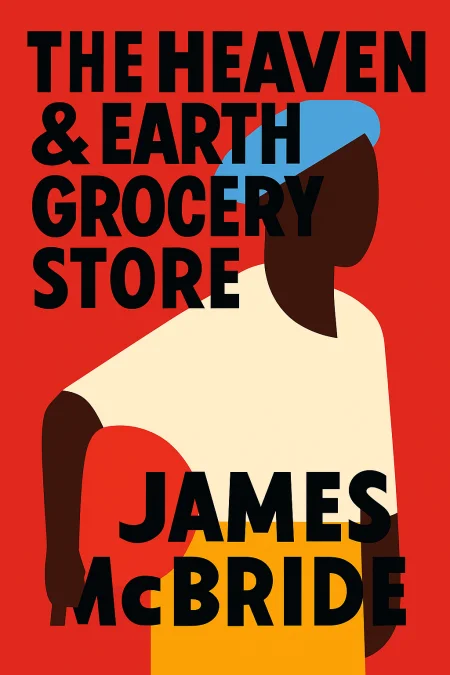
The Heaven & Earth Grocery Store
A Novel
Book Edition Details
Summary
Beneath the quiet streets of Pottstown, Pennsylvania, a secret lay waiting to be unearthed—one that would ripple through the tightly-knit community of Chicken Hill. In the 1920s and '30s, this neighborhood pulsed with the lives of immigrant Jews and African Americans, converging around the vibrant Heaven & Earth Grocery Store. Chona Ludlow, its indomitable owner, offered more than provisions; she provided sanctuary. When authorities threatened to institutionalize a vulnerable deaf boy, the residents, galvanized by Chona and a steadfast worker named Nate Timblin, rallied to protect him. Their story is one of resilience against the backdrop of societal prejudice and hidden truths. With a plot woven with love, intrigue, and a buried skeleton, this novel unveils the profound strength found in community and the enduring impact of compassion amidst adversity.
Introduction
In the heart of Depression-era Pennsylvania, on a muddy hill overlooked by mainstream society, an extraordinary experiment in American community was quietly unfolding. The 1930s brought together two groups fleeing persecution—Jewish immigrants escaping European pogroms and African Americans leaving behind the brutal realities of Jim Crow South—creating an unlikely alliance that would challenge everything we think we know about race, survival, and solidarity in one of America's most turbulent decades. This remarkable story illuminates three crucial aspects of American history often relegated to footnotes: how marginalized communities have consistently found strength through unexpected partnerships, how local power structures have systematically protected privilege while crushing dissent, and how ordinary people have summoned extraordinary courage when faced with impossible moral choices. The events that transpired reveal the complex web of relationships that existed between communities that history has too often portrayed as separate and antagonistic. These lessons speak directly to contemporary readers grappling with questions of community building, social justice, and collective responsibility. For anyone seeking to understand how grassroots movements emerge from crisis, how institutional power operates to maintain inequality, or how individual acts of conscience can spark broader social change, this narrative offers both inspiration and sobering realism about the true cost of standing up for what is right.
Building Bridges: The Unlikely Alliance on Chicken Hill (1920s-1936)
The 1920s and early 1930s witnessed a remarkable convergence on Chicken Hill, where economic necessity forged bonds that transcended the rigid racial and religious boundaries of American society. Jewish families, carrying the trauma of European persecution and the weight of ancient traditions, found themselves neighbors with African American families who had traveled north with their own dreams of freedom and dignity. Both communities discovered that survival in Protestant America required more than individual determination—it demanded the kind of mutual aid that mainstream society actively discouraged. At the center of this unlikely alliance stood figures like Chona and Moshe Ludlow, whose Heaven & Earth Grocery Store became far more than a commercial enterprise. Chona's willingness to extend credit to families with no money, to feed hungry children regardless of their ability to pay, and to create a space where the era's social hierarchies seemed temporarily suspended, established a model of community care that defied Depression-era economic logic. Her husband Moshe's theater brought together audiences that the broader society kept rigidly apart, creating moments of shared humanity that challenged prevailing assumptions about racial compatibility. The relationships that developed during this period were built not on idealistic notions of brotherhood, but on the practical recognition that marginalized communities shared common vulnerabilities. When Chona fell gravely ill, it was her African American neighbors who maintained vigil, understanding that her recovery represented more than personal healing—it symbolized the possibility of genuine human connection in a world designed to keep them divided. Characters like Nate Timblin and young Dodo demonstrated how individual relationships could flourish despite societal barriers, creating networks of care that would prove crucial when external forces threatened their carefully constructed world. This foundation of mutual dependence and shared struggle established precedents that would be tested in the crucible of crisis. The community's strength lay not in its perfection—tensions and prejudices certainly existed—but in its members' willingness to see beyond surface differences when survival was at stake. These bonds would soon face their greatest test, revealing both the power and the fragility of alliances forged in the margins of American society.
The Breaking Point: Violence, Injustice, and Community Response (1936)
The fragile equilibrium of Chicken Hill shattered in 1936 when Dr. Earl Roberts, representing the town's white establishment, entered the Heaven & Earth Grocery Store under the pretense of examining young Dodo. What transpired in those moments exposed the vulnerability of those who dared to challenge social boundaries and revealed how quickly respectability could mask predatory behavior. Roberts' assault on the helpless Chona demonstrated the brutal reality that law and justice were not synonymous for those deemed expendable by society. Dodo's desperate attempt to defend Chona transformed a twelve-year-old deaf boy into an unlikely symbol of resistance against institutional power. His actions, born from pure instinct to protect someone he loved, illustrated that heroism often emerges from the most unexpected sources. Yet his courage came at a devastating price—immediate criminalization and removal to Pennhurst State Hospital, where society warehoused those it considered unfit for mainstream life. The incident revealed how the powerful could rewrite narratives with frightening efficiency, transforming victims into perpetrators while protecting their own interests. The community's response to this crisis exposed both its capacity for solidarity and the harsh limitations of grassroots organizing when confronting entrenched power. While neighbors rallied to support the dying Chona and sought ways to protect Dodo, they discovered that their bonds of mutual aid had little power against bureaucratic indifference and legal systems designed to maintain existing hierarchies. The event forced residents to confront uncomfortable truths about their place in American society and the precarious nature of the safety they had constructed together. This breakdown of trust rippled through every relationship on the Hill, forcing individuals to choose between self-preservation and loyalty to their community. Some, like Reverend Spriggs, advocated accommodation with white authority, believing that gradual acceptance offered the safest path forward. Others recognized that meaningful change would require direct confrontation with systems of oppression, regardless of personal cost. The stage was set for a test of conscience that would define the community's character and determine Dodo's fate.
Underground Networks: Resistance and the Fight for Dodo's Freedom
The decision to rescue Dodo from Pennhurst required the activation of networks that stretched far beyond Chicken Hill, revealing the hidden connections that linked marginalized communities across Pennsylvania and beyond. The plan that emerged drew on the expertise of railroad workers who understood transportation systems, the knowledge of hospital employees who had witnessed institutional abuse, and the courage of individuals willing to risk everything for a child who was not their biological family but had become their collective responsibility. Nate Timblin's journey back to his roots among the Lowgods of Hemlock Row represented more than just a rescue mission—it was a reckoning with a past he had tried to leave behind and an acknowledgment that some bonds transcend time and distance. The Lowgods, with their own traditions of resistance and survival, possessed both the knowledge and the networks necessary to penetrate the fortress-like institution where Dodo was being held. Their involvement demonstrated how communities that appeared disconnected were actually part of larger webs of mutual support and shared struggle. The rescue operation revealed the intricate relationships that connected seemingly disparate groups across racial and ethnic lines. Jewish railroad workers, motivated by their own experiences of persecution, provided crucial logistical support. African American Pullman porters, with their knowledge of transportation networks, offered safe passage. Hospital workers who had witnessed the dehumanizing treatment of patients found ways to provide inside information. Each group brought their own skills and motivations to a common cause that transcended individual interests. The plan's success depended not just on careful coordination but on the willingness of ordinary people to take extraordinary risks for abstract principles of justice and human dignity. Community members contributed money and resources they could ill afford to lose. Participants faced the possibility of criminal prosecution, economic ruin, and social ostracism. Yet they understood instinctively that their own humanity depended on their willingness to protect the most vulnerable among them, establishing precedents for resistance that would echo through future generations.
Legacy of Courage: Transformation Through Collective Action
The successful extraction of Dodo from Pennhurst came at a cost that would reverberate through the community for decades. Nate's decision to return to the Low Country with the boy represented both salvation and exile, a recognition that some acts of justice require permanent sacrifice. The reunion with his ancestral community offered Dodo a chance at a life free from institutional horrors, but it also meant the dissolution of bonds that had sustained him through his darkest hours and the scattering of a network that had risked everything for his freedom. The aftermath of the rescue revealed the true price of resistance in Depression-era America. Those who had participated in the operation faced ongoing scrutiny from authorities who understood that their power depended on maintaining the fiction that institutions like Pennhurst served the public good. The community that had rallied to save one child found itself forever changed by the experience of collective action against seemingly insurmountable odds. Some members left Chicken Hill, seeking safety in anonymity elsewhere, while others remained to rebuild what had been damaged. The networks of cooperation and resistance that had been forged in crisis continued to operate long after the immediate danger had passed, providing assistance to other vulnerable community members and serving as a model for future organizing efforts. The story became part of the oral history of both Jewish and African American families, passed down as a reminder of what was possible when people chose solidarity over safety. The lessons learned about the necessity of cross-racial cooperation and the power of collective action would prove invaluable in later struggles for civil rights and social justice. Years later, as America grappled with the civil rights movement and other struggles for equality, the precedents established on Chicken Hill would prove prophetic. The community had demonstrated that meaningful change required not just individual courage but sustained collective action across racial and ethnic lines. They had shown that the most powerful weapon against institutional oppression was the simple act of people choosing to care for one another, regardless of personal cost or social disapproval.
Summary
The story of this forgotten alliance illuminates a fundamental truth about American social change: the most significant battles for justice have often been fought not in courtrooms or legislative halls, but in the everyday interactions of ordinary people choosing to do what is right despite overwhelming pressure to remain silent. The partnership between Jewish immigrants and African American families on Chicken Hill represented a form of resistance that challenged the very foundations of a society built on division and hierarchy, demonstrating that authentic community could transcend the artificial boundaries imposed by those in power. The events of 1936 reveal how quickly the veneer of civilization can be stripped away when established authority is threatened, but they also demonstrate the remarkable resilience of communities bound together by shared values rather than shared ancestry. The rescue of Dodo required participants to risk everything they had built in America, yet they understood instinctively that their humanity depended on their willingness to protect the most vulnerable among them. Their actions established precedents for collective resistance that would inspire future generations of activists and organizers. For contemporary readers, this narrative offers both inspiration and sobering realism about the cost of meaningful social change. It reminds us that progress is never guaranteed and that institutions we trust to protect the vulnerable can become instruments of oppression when left unchecked by active citizen engagement. The story challenges us to examine our own communities and ask whether we are building the kinds of relationships that can withstand crisis, whether we have the courage to act when action is required, and whether we understand that the choice between complicity and resistance is one that each generation must make anew.
Related Books
Download PDF & EPUB
To save this Black List summary for later, download the free PDF and EPUB. You can print it out, or read offline at your convenience.
By James McBride
