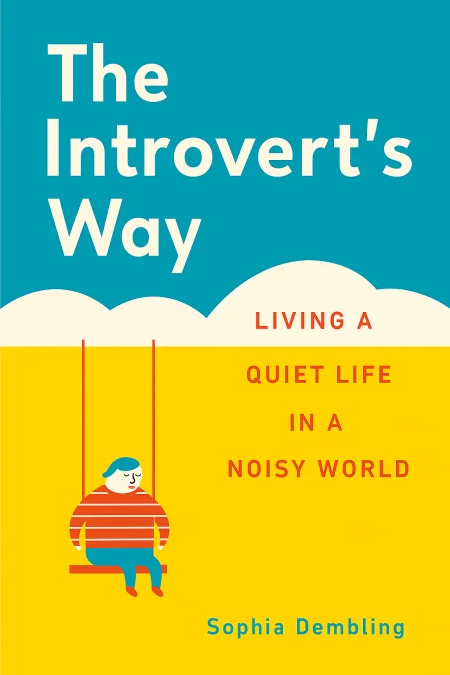
The Introvert's Way
Living a Quiet Life in a Noisy World
Book Edition Details
Summary
In a society that often celebrates the loudest voices, Sophia Dembling crafts a quiet manifesto for those who find power in the pause. "The Introvert's Way" isn't just a guide—it's a revelation for those who thrive in solitude and depth. Dembling shatters the misconception that introversion is a flaw, inviting readers to cherish the subtle strength of introspection. Through personal stories and psychological insights, she empowers introverts to embrace their nature without apology. You're not withdrawn; you're selectively connected. You're not aloof; you simply find richness in quiet reflection. With a tone that's both validating and revolutionary, this book redefines introversion as a valuable asset, inspiring a gentle rebellion against the extroverted norms that often overshadow the quieter soul. Here lies an invitation to honor your essence and navigate the world with newfound confidence and grace.
Introduction
Picture this: You're at a bustling party, surrounded by animated conversations and laughter, yet you find yourself gravitating toward a quiet corner with just one or two people, or perhaps stepping outside for a moment of peace. If this resonates with you, you're not alone, and more importantly, there's nothing wrong with you. In our extrovert-dominated society, introversion is often misunderstood as shyness, antisocial behavior, or even a character flaw that needs fixing. But what if we've been looking at it all wrong? This exploration reveals the truth about introversion: it's not about being broken or needing repair, but about understanding and embracing a fundamentally different way of processing the world. You'll discover that introversion isn't the absence of social skills or confidence, but rather a distinct neurological wiring that affects how you recharge your energy, process information, and engage with others. We'll uncover why the modern world's bias toward extroversion creates unnecessary pressure on introverts, and most importantly, how you can thrive authentically in your own quiet skin. The journey ahead offers both validation for introverts and valuable insights for anyone seeking to understand the rich inner lives of the more contemplative among us.
Understanding Introversion: Science vs Stereotypes
The greatest misconception about introversion isn't what people think introverts are, but what they think introversion actually means. Most people confuse introversion with shyness, but these are entirely different phenomena. Shyness is fear-based, a behavioral response to social anxiety, while introversion is simply a preference for how you direct your energy and attention. Think of it this way: shy people want to connect but are afraid to, while introverts may be perfectly capable of connecting but simply don't need or want to all the time. The real difference lies in what psychologists call "arousal preference." Introverts have naturally higher baseline arousal in their nervous systems, meaning they're already operating at a comfortable level of stimulation internally. Adding too much external stimulation, like loud parties or constant social interaction, pushes them past their optimal zone into overwhelm. Extroverts, conversely, have lower baseline arousal and need external stimulation to reach their comfort zone. This isn't about being better or worse; it's about different neurological wiring requiring different environmental conditions to function optimally. Modern neuroscience reveals fascinating differences in introvert and extrovert brains. Introverts show more activity in the prefrontal cortex, the area associated with internal processing, planning, and reflection. They also appear to be more sensitive to dopamine, the neurotransmitter associated with reward-seeking behavior, which explains why they don't need as much external stimulation to feel satisfied. Meanwhile, extroverts show higher activity in brain regions associated with sensory processing and seek out the dopamine hits that come from social interaction and novel experiences. Perhaps most importantly, research suggests that introverts process information more deeply and thoroughly. When presented with new information, introverts' brains show more activity across multiple regions, indicating they're making more connections and considering more angles. This deeper processing style means introverts often need more time to formulate responses and prefer to think before speaking. It's not that they're slow or lacking ideas; they're simply running their thoughts through a more comprehensive internal review process before sharing them with the world.
Energy Management and Social Survival Skills
Energy management represents the most crucial skill for introverts navigating a predominantly extroverted world. Unlike physical energy that depletes through activity, social energy for introverts depletes through interaction itself, regardless of whether that interaction is positive or negative. Imagine your social energy as a finite battery that drains with each conversation, group activity, or even just being around others. Understanding this metaphor helps explain why introverts can enjoy a party for two hours but feel completely drained afterward, while extroverts seem energized by the same experience. The key lies in recognizing your personal energy signals before you hit what many introverts call "the wall." Early warning signs might include increased irritability, difficulty concentrating, or feeling overwhelmed by sounds and stimuli that normally don't bother you. Some introverts describe feeling like their skin is crawling or experiencing a desperate need to escape. Learning to identify these signals allows you to take proactive steps, like stepping outside for fresh air, finding a quiet corner, or politely excusing yourself before you become unpleasant company. Strategic energy conservation involves planning ahead and building in recovery time. If you know you have a demanding social weekend ahead, you might spend Friday evening quietly recharging. If you must attend a large gathering, you might limit other social commitments that week. This isn't antisocial behavior; it's practical self-management that actually allows you to be more present and engaged when you do choose to socialize. Recovery techniques vary among introverts, but typically involve solitude and reduced stimulation. This might mean taking a long bath, reading in a quiet room, going for a solo walk, or simply sitting in silence. The key is finding activities that allow your nervous system to downshift from the heightened state that social interaction creates. Think of it as pressing a reset button that allows you to return to your baseline state of comfortable internal stimulation. Mastering these energy management techniques transforms socializing from an endurance test into a sustainable part of a balanced life.
Thriving in Extroverted Environments and Relationships
The modern workplace, with its open floor plans, brainstorming sessions, and emphasis on collaboration, can feel particularly challenging for introverts. However, thriving in these environments doesn't require changing your fundamental nature; it requires strategic adaptation and clear communication about your work style. Start by identifying your peak performance conditions and advocating for them professionally. This might mean requesting a quieter workspace, proposing to contribute ideas via email after meetings rather than thinking on the spot, or scheduling important conversations during times when you're most mentally fresh. In relationships, whether romantic, familial, or friendship-based, the key lies in education and boundary-setting. Many relationship conflicts attributed to personality differences are actually misunderstandings about needs and preferences. An extroverted partner might interpret your need for alone time as rejection, while you experience their constant desire for interaction as overwhelming. Open dialogue about these differences, ideally during calm moments rather than during conflict, can prevent years of misunderstanding and resentment. Successful introverts learn to distinguish between challenges worth adapting to and situations that are fundamentally incompatible with their nature. You can learn to network effectively at industry events by focusing on deeper one-on-one conversations rather than working the room. You can contribute meaningfully to team projects by leveraging your strengths in research, analysis, and written communication. However, trying to sustain a lifestyle or career that requires constant high-energy social performance will likely lead to burnout and dissatisfaction. The ultimate goal isn't to become more extroverted but to create a life structure that honors your introversion while still allowing you to pursue your goals and maintain meaningful connections. This might mean choosing friends who understand your communication style, finding work environments that value deep thinking over quick responses, or developing relationships where quality time doesn't always require constant conversation. When you stop trying to fit into an extroverted mold and instead build a life that works with your natural wiring, you often discover strengths and capabilities you didn't know you possessed.
Summary
The most liberating insight this exploration offers is that introversion isn't a limitation to overcome but a valid and valuable way of being human that comes with its own superpowers. Rather than viewing introversion as the absence of extroverted qualities, we can understand it as a distinct constellation of strengths including deep thinking, careful observation, meaningful connection, and the ability to find richness in solitude. The goal isn't to change introverts or force them into extroverted molds, but to create space in our society for different ways of contributing and connecting. As our world becomes increasingly noisy and stimulation-heavy, might we actually need introvert qualities more than ever? How might our communities, workplaces, and relationships improve if we valued listening as much as speaking, depth as much as breadth, and reflection as much as action? For anyone seeking to understand themselves or the introverts in their lives, this journey offers not just acceptance but celebration of the quiet strength that powers much of human creativity, innovation, and wisdom.
Related Books
Download PDF & EPUB
To save this Black List summary for later, download the free PDF and EPUB. You can print it out, or read offline at your convenience.
By Sophia Dembling
