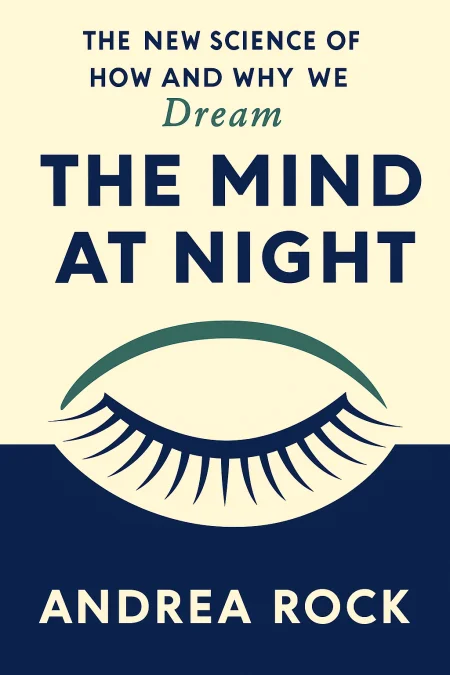
The Mind at Night
The New Science of How and Why We Dream
Book Edition Details
Summary
In the silent theater of our dreams, where reality blurs and imagination reigns, a hidden narrative unfolds—a narrative that science is only beginning to decipher. "The Mind at Night" by Andrea Rock delves into this enigmatic world, chronicling the evolution of dream research from its nascent stages in the 1950s to the cutting-edge discoveries of today. With the precision of a seasoned storyteller, Rock invites readers into the heart of modern sleep labs, where scientists unravel the mysteries of our slumbering minds. Why do our dreams echo with such vivid emotion? What secrets do they hold about our waking lives? Rock’s exploration is more than an academic pursuit; it's a journey into the essence of human consciousness, offering tantalizing insights into how our nightly odysseys shape our creativity, memory, and perhaps, our very selves. A thought-provoking and accessible read, this book casts an illuminating light on the dark, uncharted territory of the dreamscape.
Introduction
Every night, as we slip into sleep, our brains embark on one of nature's most extraordinary journeys. While our bodies rest, our minds create vivid worlds filled with impossible scenarios, forgotten faces, and emotions so intense they can affect our mood the next day. Yet for most of human history, dreams remained one of our greatest mysteries. What purpose could these bizarre nocturnal theaters serve? Why do we spend roughly six years of our lives in this strange altered state of consciousness? Modern neuroscience has begun to unlock these secrets, revealing that dreaming is far more than random neural noise or wishful thinking. Through sophisticated brain imaging and clever experiments, researchers have discovered that our sleeping minds are actually hard at work—consolidating memories, processing emotions, and even solving problems. Dreams turn out to be a window into consciousness itself, offering insights into how our brains construct reality, regulate our feelings, and prepare us for the challenges ahead. The revolution in dream science has fundamentally changed how we understand the relationship between mind and brain, sleep and wakefulness, and the very nature of human consciousness.
The Discovery of REM Sleep and Dream Research Revolution
In 1951, a desperate graduate student named Eugene Aserinsky made a discovery that would revolutionize our understanding of sleep and dreams. Wiring his eight-year-old son with electrodes in a basement laboratory at the University of Chicago, Aserinsky was initially just trying to complete his degree. But what he found would launch an entirely new field of science. Aserinsky observed that during certain periods of sleep, his subjects' eyes moved rapidly back and forth beneath closed lids, accompanied by brain waves that looked startlingly similar to those of waking consciousness. At first, he assumed his antiquated equipment was malfunctioning. How could a sleeping brain show such intense activity? The prevailing scientific wisdom held that sleep was simply a time when the brain powered down for maintenance. When Aserinsky awakened subjects during these periods of rapid eye movement, they almost invariably reported vivid, detailed dreams. When awakened during other sleep phases, dream recall was rare. This correlation was so consistent it seemed to solve one of psychology's oldest puzzles: researchers could now identify exactly when dreaming occurred. The discovery of REM sleep transformed neuroscience by revealing that the brain doesn't simply idle during sleep. Instead, it regularly shifts into a supercharged state that rivals waking consciousness in its complexity and intensity. This finding launched the golden age of dream research in the 1960s, as scientists from multiple disciplines rushed to explore questions that had fascinated humanity for millennia. They could finally study dreams scientifically, awakening subjects mid-dream to capture reports of these ephemeral mental movies as they unfolded.
How the Brain Creates Dreams: From Neurons to Narratives
Understanding how dreams are constructed requires looking inside the sleeping brain itself, and modern brain imaging has provided remarkable insights into this process. During REM sleep, the brain undergoes dramatic changes that create the perfect conditions for dreaming. The logical, reality-checking regions of the prefrontal cortex go offline, while the visual and emotional centers burst into hyperactivity. This altered neurochemical landscape is crucial to dream formation. The brain chemicals that keep us focused and logical during waking hours—serotonin and norepinephrine—virtually disappear during REM sleep. In their place, acetylcholine floods the brain, creating conditions ripe for free-flowing associations and vivid hallucinations. Without our usual mental filters, the brain makes connections that would be rejected by waking logic, explaining why dreams can be simultaneously bizarre and emotionally compelling. The dreaming brain essentially becomes an artist working without constraints. Visual association areas light up more intensely than during waking hours, crafting images that feel absolutely real despite having no input from our actual eyes. Meanwhile, the emotional centers, particularly the amygdala and limbic system, operate at peak intensity. This explains why dreams feel so emotionally authentic—fear, joy, or anxiety in dreams triggers the same neural responses as these emotions in waking life. What emerges is not random chaos but a sophisticated narrative construction process. The brain takes fragments of memory, current concerns, and emotional preoccupations and weaves them into stories. Like a master storyteller working with limited materials, the dreaming mind creates coherent narratives from disparate elements, though the logic may seem strange upon awakening. This creative process reveals something profound about consciousness itself: our waking perception of reality involves similar constructive processes, just anchored by sensory input from the external world.
Dreams as Memory Consolidators and Emotional Regulators
One of the most significant discoveries in modern dream research is that our sleeping minds are far from idle—they're actively working to process the day's experiences and prepare us for tomorrow's challenges. Dreams serve as a kind of overnight file management system, helping determine which memories to keep, which to discard, and how to integrate new experiences with existing knowledge. Scientists have observed this process directly by recording the brain activity of rats as they navigate mazes during the day, then monitoring the same neural circuits during sleep. Remarkably, the rats' brains replay the exact same firing patterns during REM sleep, as if mentally rehearsing their routes through the maze. When researchers can predict where in the maze a sleeping rat would be based on its brain activity, we see clear evidence that dreams help consolidate spatial and procedural memories. In humans, this memory consolidation process is even more sophisticated. Different sleep stages appear to handle different types of learning. Light sleep helps consolidate motor skills—explaining why musicians and athletes often find their performance improves after a good night's rest. Deep slow-wave sleep processes factual information, while REM sleep integrates complex procedural learning and emotional memories. Students who sleep after studying perform better than those who stay awake, and people learning new skills show dramatic improvement after sleeping. Perhaps most importantly, dreams serve as emotional regulators, helping us process difficult feelings and traumatic experiences. The brain's emotional centers are highly active during REM sleep, working through anxieties, fears, and unresolved conflicts. People going through divorce or other major life stresses show different dreaming patterns than healthy individuals, and those who recover from depression often have more emotionally sophisticated dreams that incorporate positive memories alongside negative ones. Dreams literally help us work through our feelings, serving as a form of overnight therapy that occurs whether we remember our dreams or not.
Lucid Dreaming and the Future of Consciousness Research
Perhaps the most extraordinary frontier in dream research involves lucid dreaming—the remarkable phenomenon where dreamers become aware they're dreaming while the dream is still in progress. This isn't science fiction but a well-documented state that roughly half of all people experience at least once, and that some individuals can learn to cultivate deliberately. Lucid dreamers can signal to researchers from within their dreams using pre-arranged eye movements, proving that consciousness persists even in this altered state. Brain imaging reveals that lucid dreaming involves a unique pattern of activation, with areas normally offline during REM—particularly regions associated with self-awareness and reflection—suddenly springing back to life. This creates a hybrid state where dreamers can observe and sometimes control their dream experiences while remaining physiologically asleep. The implications for consciousness research are profound. Lucid dreaming provides a natural laboratory for studying awareness itself, offering insights into how our sense of self emerges from brain activity. When dreamers realize they're dreaming, they're experiencing a form of meta-consciousness—awareness of their own awareness. This phenomenon challenges traditional boundaries between sleeping and waking states, suggesting consciousness exists on a spectrum rather than in discrete categories. Future research using advanced brain imaging techniques promises to reveal even more about how consciousness arises from neural activity. Scientists are working to identify the specific networks that create our sense of self-awareness, using dreams as a window into these fundamental processes. Some researchers believe that understanding dreaming consciousness may be key to solving the "hard problem" of consciousness—explaining how subjective experience emerges from objective brain matter. As we develop more sophisticated tools for studying the dreaming brain, we move closer to understanding not just why we dream, but what it truly means to be conscious.
Summary
The scientific revolution in dream research has revealed that our sleeping minds are far from the passive, disconnected state we once imagined, but rather represent a sophisticated form of consciousness actively engaged in memory consolidation, emotional processing, and creative problem-solving. Dreams emerge from a precisely orchestrated neurochemical dance that transforms our brains into narrative engines, weaving together fragments of experience into meaningful stories that help us navigate both our inner emotional landscape and outer reality. Rather than being mere entertainment or meaningless neural static, dreams serve crucial biological and psychological functions—from helping students learn new skills to enabling trauma survivors to process difficult experiences. This understanding raises fascinating questions about the nature of consciousness itself: If our dreaming minds can create experiences indistinguishable from reality, what does this tell us about the constructed nature of all conscious experience? How might we harness our growing knowledge of dream mechanisms to enhance learning, creativity, or emotional well-being? For readers intrigued by the mysteries of consciousness, neuroscience, or simply the remarkable capabilities of their own minds, this field offers a compelling glimpse into one of the most fundamental aspects of human experience—revealing that even in sleep, we remain gloriously, complexly, and mysteriously conscious beings.
Related Books
Download PDF & EPUB
To save this Black List summary for later, download the free PDF and EPUB. You can print it out, or read offline at your convenience.
By Andrea Rock
