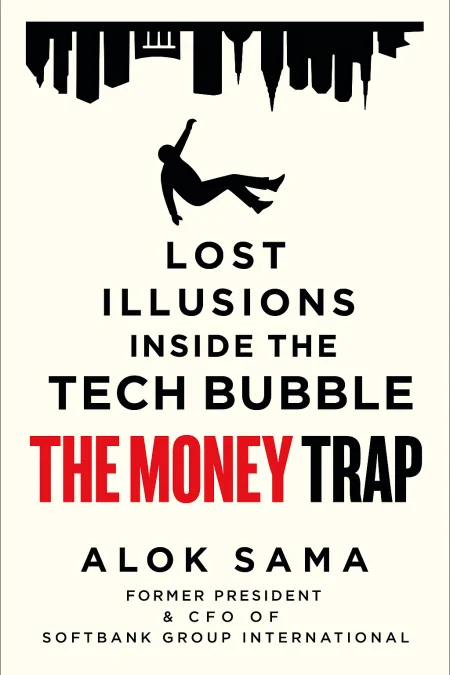
The Money Trap
Lost Illusions Inside the Tech Bubble
Book Edition Details
Summary
When the world of high-stakes technology investment collides with an unexpected twist of intrigue, the result is "The Money Trap," a memoir that reads like a pulse-pounding thriller. Journey into the whirlwind life of Alok Sama, who transitions from a seasoned Morgan Stanley banker to a key player at SoftBank, the enigmatic powerhouse backing some of the globe’s most transformative tech giants. Sama’s odyssey is colored by the eccentric brilliance of Masayoshi Son, a man whose bold investments seem guided by intuition rather than logic. As Sama navigates billion-dollar deals in opulent settings—from castle terraces to serene Japanese gardens—he faces a shadowy smear campaign that threatens his personal life. With razor-sharp wit and unyielding introspection, Sama unveils the tangled web of ambition, risk, and morality in a domain where money is not always the ultimate currency. This tale is not just an insider’s view but a reflective narrative on the true cost of chasing the future.
Introduction
In the gilded corridors of high finance and the innovation-obsessed valleys of Silicon Valley, few individuals have witnessed the spectacular rise and dramatic fall of the tech boom quite like Alok Sama. As the former president and CFO of SoftBank Group International, Sama found himself at the epicenter of one of the most audacious investment experiments in modern history—the $100 billion Vision Fund that sought to reshape the global technology landscape. His journey through the rarefied world of mega-deals, eccentric billionaires, and Silicon Valley's most ambitious dreamers offers a rare insider's perspective on how money, power, and unbridled ambition can create both extraordinary opportunities and devastating consequences. This remarkable story reveals the human drama behind headlines about billion-dollar investments and failed unicorns. From his early days as an immigrant banker climbing Wall Street's hierarchy to his front-row seat watching Masayoshi Son's visionary yet reckless pursuit of technological dominance, Sama's experiences illuminate the intoxicating nature of vast wealth and the personal costs of operating at the highest levels of global finance. Through his eyes, we discover not only the mechanics of how deals worth billions are struck in hotel suites and private jets, but also the profound questions about purpose, loyalty, and integrity that arise when the stakes become almost incomprehensibly high.
From Wall Street to SoftBank: The Making of a Deal Maker
Alok Sama's path to becoming one of Silicon Valley's most influential financiers began in the most unlikely of places—a cramped college café in Delhi, where a young mathematics student harbored dreams of solving Fermat's last theorem. The transition from aspiring academic to Wall Street deal maker reflects the classic immigrant journey of reinvention, but Sama's story carries the particular intensity of someone who refused to accept limitations imposed by background or circumstance. His early years at Morgan Stanley were a masterclass in financial apprenticeship during the era when investment banking was reaching new heights of influence and compensation. The culture was unforgiving—sixteen-hour workdays, constant travel, and the relentless pressure to generate fees in an environment where your worth was measured by your last deal. Yet Sama thrived in this crucible, developing the analytical rigor and negotiating skills that would later prove invaluable when dealing with visionary entrepreneurs and sovereign wealth funds managing hundreds of billions of dollars. The transformation from banker to technology investor represented more than a career change—it was an evolution in how Sama understood value creation itself. Where traditional banking focused on established companies and predictable cash flows, the technology world demanded comfort with uncertainty, the ability to spot trends years before they became obvious, and most challenging of all, the willingness to bet enormous sums on founders whose ideas seemed to border on science fiction. This shift in perspective would prove crucial when Sama eventually found himself evaluating investments in everything from pizza-making robots to artificial intelligence companies claiming they could reshape human consciousness. The decade preceding his arrival at SoftBank had been marked by both spectacular successes and humbling failures, experiences that taught him the difference between being smart about money and being wise about its power. His work across Asia, Europe, and America had shown him how financial markets could create and destroy fortunes with equal efficiency, but more importantly, how the pursuit of ever-larger returns could become an addiction that clouded judgment and corrupted relationships.
Inside the Vision Fund: Chasing Unicorns with Masa Son
The SoftBank Vision Fund represented something unprecedented in the investment world—a $100 billion vehicle designed to identify and accelerate the most transformative technologies of the next century. At its helm was Masayoshi Son, a figure whose combination of genuine technological insight and breathtaking risk appetite made him either a visionary genius or a spectacular gambler, depending on whom you asked. Sama's role as one of Son's key lieutenants provided him with an unparalleled view into how such massive capital deployment decisions were actually made. The fund's investment philosophy was deceptively simple: identify platform technologies that could benefit from "network effects," then flood them with enough capital to achieve market dominance before competitors could respond. This approach had worked brilliantly for Son's earlier investments in companies like Alibaba and Yahoo Japan, but scaling it to deploy $100 billion required a fundamentally different approach to due diligence, risk management, and portfolio construction. The pressure to put money to work at such unprecedented speed often meant that traditional investment safeguards were compressed or abandoned entirely. Sama watched as Son's magnetic personality and Apple Pencil presentations convinced founders to accept valuations that seemed divorced from any reasonable assessment of their businesses' fundamentals. The logic was that in winner-take-all technology markets, paying what appeared to be too much for the eventual winner was actually prudent, while being conservative meant missing out on the next Amazon or Google. This reasoning was seductive and, in some cases, proved prophetic—but it also led to spectacular misallocations of capital when applied to businesses that weren't actually technology companies at all. The human dynamics within the Vision Fund were as complex as the investment decisions themselves. Son's leadership style combined genuine warmth and intellectual curiosity with an almost childlike impatience when his vision wasn't immediately understood or embraced. Sama found himself serving not just as a financial analyst but as a cultural translator, helping founders understand Son's expectations while attempting to inject traditional risk management disciplines into an organization that saw such concerns as obstacles to revolutionary change. The tension between prudent stewardship and visionary ambition became a defining characteristic of Sama's entire SoftBank experience.
The Smear Campaign: When Success Becomes a Target
Success at the highest levels of finance inevitably attracts attention, not all of it welcome. For Sama and his colleague Nikesh Arora, their prominent roles in SoftBank's aggressive expansion made them targets of a sophisticated campaign designed to destroy their reputations and end their careers. The attacks came from multiple directions simultaneously—anonymous letters to board members, leaked documents to journalists, and even attempts at personal intimidation that extended to their families. The campaign's sophistication suggested professional coordination and substantial financial resources. Private investigators with expertise in corporate espionage were retained to dig into every aspect of Sama and Arora's personal and professional lives. Email accounts were hacked, financial records obtained illegally, and fabricated allegations circulated through networks of lawyers and journalists willing to amplify unsubstantiated claims. The goal was not merely to damage their standing within SoftBank, but to make them unemployable anywhere in the technology or financial services industries. What made the attacks particularly insidious was their combination of legitimate business criticism with personal character assassination. Questions about investment performance or corporate governance are fair game in any public company, but the smear campaign went far beyond such professional accountability. It sought to portray Sama and Arora as fundamentally corrupt individuals whose very presence endangered any organization foolish enough to employ them. The psychological toll of defending against such attacks while continuing to perform demanding executive roles cannot be overstated. The response required assembling a team that included former federal prosecutors, cybersecurity experts, and private investigators with experience in similar corporate sabotage cases. The process of fighting back revealed the disturbing ease with which reputations built over decades could be threatened by anonymous actors with sufficient resources and malicious intent. More troubling still was the discovery that several respected news organizations and law enforcement agencies could be manipulated into amplifying false narratives through the simple expedient of presenting lies with sufficient professional packaging.
Beyond the Money Trap: Reflections on Power and Purpose
The ultimate lesson of Sama's journey through the highest echelons of global finance concerns the relationship between money and meaning. Despite achieving wealth and influence that would have seemed impossible to his younger self, he found that success at this level brought its own form of existential emptiness. The constant pursuit of larger deals and higher returns had become a substitute for deeper questions about purpose and contribution, creating what he came to understand as the "money trap" of the title. The realization that his work, however financially rewarding, had become disconnected from activities that genuinely energized or fulfilled him represented a crisis that many successful professionals face but few have the courage to address honestly. The comfortable mythology of high finance suggests that sufficient compensation justifies any sacrifice of personal time, family relationships, or individual values, but Sama's experience demonstrated the hollowness of such bargains. Money amplifies existing character traits rather than creating new ones, and no amount of wealth can substitute for work that aligns with one's deeper values and interests. The decision to step away from SoftBank and pursue writing represented more than a career change—it was an acknowledgment that the skills that had made him successful in finance were not necessarily the ones that would allow him to create something lasting or meaningful. The discipline required to structure billion-dollar transactions could be repurposed for narrative construction, but the mindset had to shift from optimization to exploration, from certainty to curiosity, from competition to collaboration. Perhaps most significantly, Sama's story illustrates how the pursuit of wealth can become its own form of addiction, complete with tolerance effects that require ever-larger doses to achieve the same psychological satisfaction. Breaking free from this cycle requires not just financial independence, but the emotional maturity to recognize that accumulation of resources is a means to an end rather than an end in itself. The courage to walk away from extraordinary compensation in favor of work that offers intrinsic rather than merely extrinsic rewards represents a form of wisdom that few achieve and fewer still act upon.
Summary
Alok Sama's journey from immigrant mathematician to Silicon Valley power broker ultimately reveals that the most seductive trap in modern capitalism is not poverty, but the endless pursuit of wealth that becomes disconnected from any larger purpose. His front-row seat to one of the greatest misallocations of capital in financial history—the SoftBank Vision Fund's spectacular rise and fall—provides crucial insights into how intelligent people can make catastrophic decisions when the stakes become too large and the timelines too compressed. The story serves as both a cautionary tale about the dangers of unchecked ambition and a testament to the possibility of choosing meaning over money, even when that choice requires walking away from everything that society considers successful. The most profound lesson embedded in Sama's experience is that true wealth lies not in accumulating resources, but in understanding when enough is enough. His eventual decision to pursue writing over continued financial success demonstrates that the skills developed in high-stakes environments can be repurposed for creative endeavors that offer different but potentially more lasting forms of satisfaction. For readers navigating their own relationship with money, ambition, and purpose, Sama's story suggests that the most important investment decisions are not about where to put your money, but about where to put your time and attention.
Related Books
Download PDF & EPUB
To save this Black List summary for later, download the free PDF and EPUB. You can print it out, or read offline at your convenience.
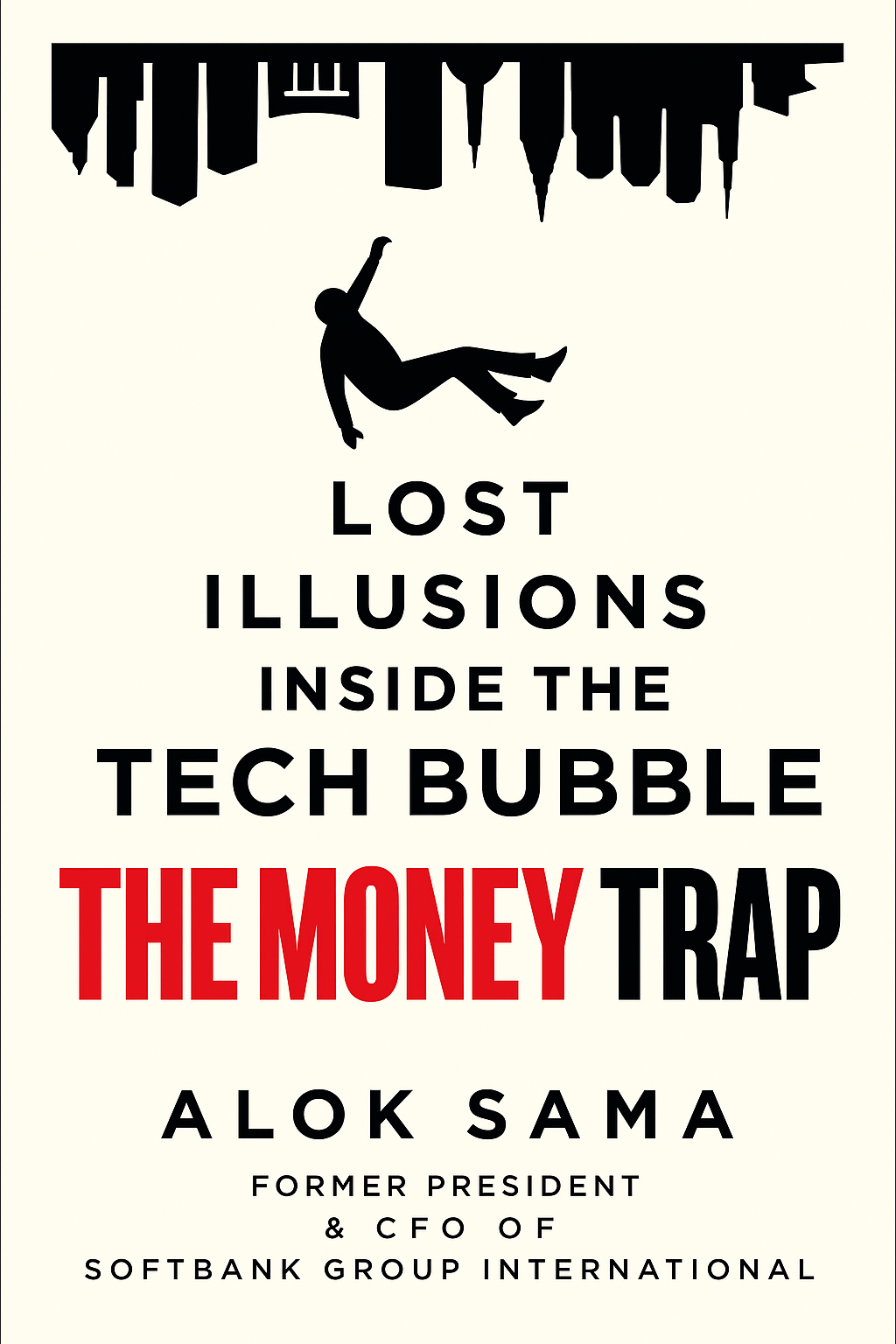
By Alok Sama
