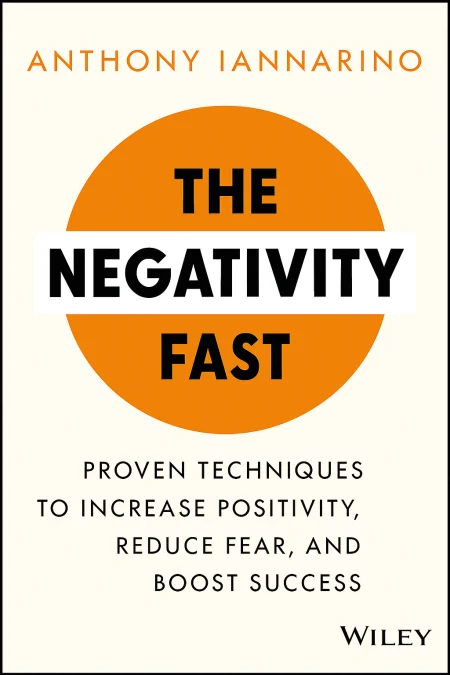
The Negativity Fast
Proven Techniques to Increase Positivity, Reduce Fear, and Boost Success
Book Edition Details
Summary
Amidst the tumultuous tides of life's challenges, "The Negativity Fast" by Anthony Iannarino emerges as a beacon of transformative insight. This compelling guide reshapes the ordinary narrative of self-help by flipping negativity on its head, harnessing it as a tool for growth and resilience. Iannarino, a seasoned sales strategist, invites readers to cultivate a mindset of positivity without dismissing their darker emotions. Through an innovative blend of gratitude and emotional intelligence, he reveals how to fortify one's mental framework against adversity. The book is not just about leading oneself; it's a manifesto for leaders seeking to inspire positivity in others. With concrete strategies and a refreshing perspective on personal development, "The Negativity Fast" offers a roadmap to not just surviving but thriving in the face of life's inevitable setbacks.
Introduction
Have you ever noticed how a single negative thought can derail your entire day? Perhaps you wake up feeling optimistic, only to find yourself spiraling into frustration after reading the news, encountering traffic, or dealing with a difficult person. You're not alone in this struggle. Modern life seems designed to trigger our worst impulses, feeding us a steady diet of anxiety, comparison, and discontent. Yet within this challenge lies an extraordinary opportunity for transformation. The human brain is naturally wired to focus on threats and problems, a survival mechanism that once kept our ancestors alive but now keeps us trapped in cycles of worry and negativity. This biological tendency, combined with the relentless pace of modern society, creates a perfect storm of stress and dissatisfaction. However, understanding this pattern is the first step toward breaking free from it. Through deliberate practice and strategic choices, you can rewire your mental habits and reclaim your natural capacity for joy, gratitude, and resilience.
Understanding Your Negativity: Biology, Psychology, and Society
Negativity isn't a character flaw or personal failing, it's a complex interplay of biological programming, psychological patterns, and social influences that shape our daily experience. At its core, negativity bias represents an evolutionary advantage that helped our ancestors survive by constantly scanning for danger. Your brain processes negative information faster and more thoroughly than positive information, a phenomenon scientists call the "negativity bias." Consider the story of Anthony, a successful business owner who found himself increasingly irritable and pessimistic despite his professional achievements. After experiencing a medical crisis that required brain surgery, he began to notice how his inner dialogue constantly catastrophized minor inconveniences. A delayed flight would trigger elaborate scenarios of missed meetings and ruined relationships. His brain, designed to protect him, was actually creating unnecessary suffering by treating every challenge as a life-threatening emergency. The transformation began when Anthony recognized that his negativity wasn't caused by external events but by his interpretation of them. A flight delay was just a flight delay, but his brain's commentary turned it into evidence of personal failure and universal chaos. This awareness became the foundation for change, allowing him to observe his thoughts without being controlled by them. The key insight is understanding that you're not experiencing reality directly, you're experiencing your brain's interpretation of reality. This interpretation is heavily influenced by your evolutionary programming, current stress levels, physical health, and social environment. When you recognize that your negativity often stems from ancient survival mechanisms rather than present-day threats, you can begin to respond rather than react. Start by simply noticing when your mind jumps to worst-case scenarios, then ask yourself whether this mental pattern is serving you or sabotaging your peace of mind.
Transform Your Inner Dialogue and Practice Empathy
The voice in your head isn't always your friend. That internal narrator, which psychologists call "chatter," often functions like a harsh critic rather than a supportive coach. This inner dialogue can transform minor setbacks into major catastrophes, turning everyday challenges into evidence of personal inadequacy or universal injustice. Anthony discovered this truth through a seemingly trivial incident at Chicago O'Hare Airport. When his flight was delayed, his inner voice immediately began its familiar routine of catastrophic predictions and self-recrimination. But when his wife asked him what he would do with two unexpected free hours, the entire narrative shifted. Instead of being trapped by circumstances, he was given the gift of unplanned time. The delay hadn't changed, but his relationship to it was completely transformed. This shift in perspective revealed a powerful principle: the activating event doesn't create your emotional response, your beliefs about the event do. Psychologist Albert Ellis developed a framework called ABC, where A represents the activating event, B represents your beliefs about the event, and C represents the consequences or your emotional response. Most people assume that A causes C, but the real power lies in B. When you change your beliefs and interpretations, you change your entire experience. The practice begins with awareness. Notice when your inner dialogue becomes destructive or unhelpful. Instead of accepting these thoughts as truth, treat them as one possible interpretation among many. When dealing with other people's difficult behavior, practice radical empathy by imagining positive motivations for their actions. Perhaps the slow driver is elderly or new to the area, rather than deliberately inconsiderate. This mental shift doesn't require you to be naive or passive, it simply frees you from the burden of constant irritation and judgment.
Stop Complaining and Cultivate Gratitude Daily
Complaining is like a drug that provides temporary relief while creating long-term dependence. Every complaint reinforces neural pathways that make future complaining more automatic and more intense. What begins as occasional venting can become a chronic condition that poisons your perspective and damages your relationships with others. The distinction between babies and adults illustrates this perfectly. Babies complain because they genuinely cannot solve their problems, they depend entirely on others for food, comfort, and safety. Adults, however, possess the capacity to address most of their challenges directly. Yet many continue to complain as if they were helpless infants, focusing on problems rather than solutions. Anthony's journey from chronic complainer to grateful optimist began with a simple recognition: most of his complaints were about things he could either fix or accept. The broken door in his office that had annoyed him for years required only two screws and five minutes to repair. The administrative tasks that triggered his frustration could be batched into a single weekly session called "Financial Friday." Once he began focusing on solutions rather than problems, his entire relationship with challenges transformed. The antidote to complaining is gratitude, but not the superficial kind often promoted in self-help circles. True gratitude emerges from recognizing the extraordinary nature of ordinary life. You live in an age of unprecedented safety, comfort, and opportunity. You have access to knowledge, entertainment, and connection that would seem magical to previous generations. Even your most difficult days contain elements worthy of appreciation. Start a gratitude practice by writing down three specific things you appreciated each day, following psychologist Martin Seligman's "Three Blessings" technique. Focus on why these experiences were meaningful rather than simply listing them. This practice literally rewires your brain to notice positive experiences with the same intensity it currently applies to problems and complaints.
Complete Your 90-Day Negativity Fast
The culmination of this journey is a structured 90-day period of deliberately avoiding negativity while consciously cultivating positivity. This isn't about suppressing legitimate concerns or maintaining toxic positivity, it's about breaking the addictive cycle of unnecessary negativity that diminishes your quality of life. Think of this fast as a digital detox for your mind. Just as processed foods can create cravings that lead to poor health, processed negativity creates mental habits that lead to chronic dissatisfaction. During your fast, you'll eliminate exposure to negative media, avoid engaging in complaint sessions with others, and redirect your attention toward constructive thoughts and activities. Anthony's first fast taught him that removing negativity wasn't enough, he had to replace it with deliberate positivity. He spent 60 days consuming only uplifting content: audiobooks by inspiring authors, podcasts focused on growth and possibility, and conversations with optimistic people. This "pressure hose of positivity" began to counteract years of negative mental conditioning. The process requires three key components: identification, substitution, and consistency. First, identify your specific triggers and negative inputs, from news consumption to toxic relationships. Second, replace these inputs with positive alternatives that inspire and energize you. Third, maintain this practice long enough for new neural pathways to become automatic, typically requiring at least 90 days of consistent effort. Remember that this journey isn't about perfection but about progress. You'll have challenging days when negativity feels overwhelming, and that's completely normal. The goal isn't to eliminate all negative emotions but to break free from unnecessary suffering caused by habitual negative thinking. When you slip back into old patterns, simply acknowledge it and return to your practice with compassion for yourself.
Summary
The path from chronic negativity to sustainable positivity isn't about changing your circumstances, it's about changing your relationship to your circumstances. As this journey reveals, "It's not the event, circumstances, or other people responsible for unhappiness or your complaints. The source of your complaining stems from what you believe about these things." This fundamental insight opens the door to genuine transformation. Your 90-day fast represents more than a temporary experiment, it's an investment in a completely different way of being in the world. By understanding the biological, psychological, and social forces that drive negativity, you gain the power to make conscious choices rather than being controlled by unconscious reactions. Through transforming your inner dialogue, practicing empathy, eliminating complaints, and cultivating gratitude, you create new mental habits that support lasting happiness and resilience. Begin today by choosing one small practice from this guide and committing to it for the next week. Whether it's starting a gratitude journal, questioning your negative assumptions, or simply noticing when you complain, this single step will begin rewiring your brain for greater positivity and joy.
Related Books
Download PDF & EPUB
To save this Black List summary for later, download the free PDF and EPUB. You can print it out, or read offline at your convenience.
By Anthony Iannarino
