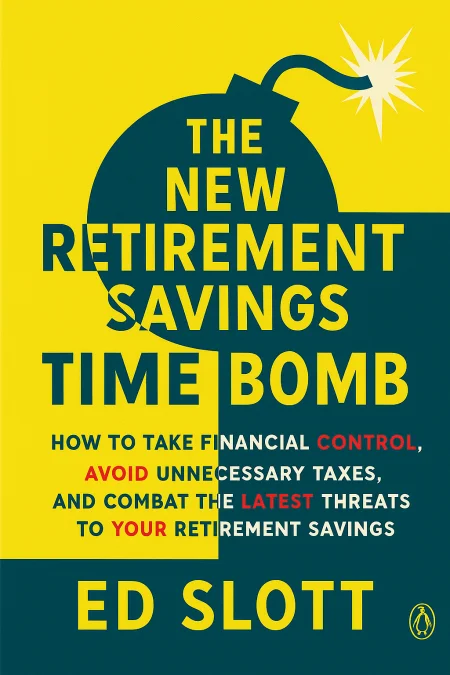
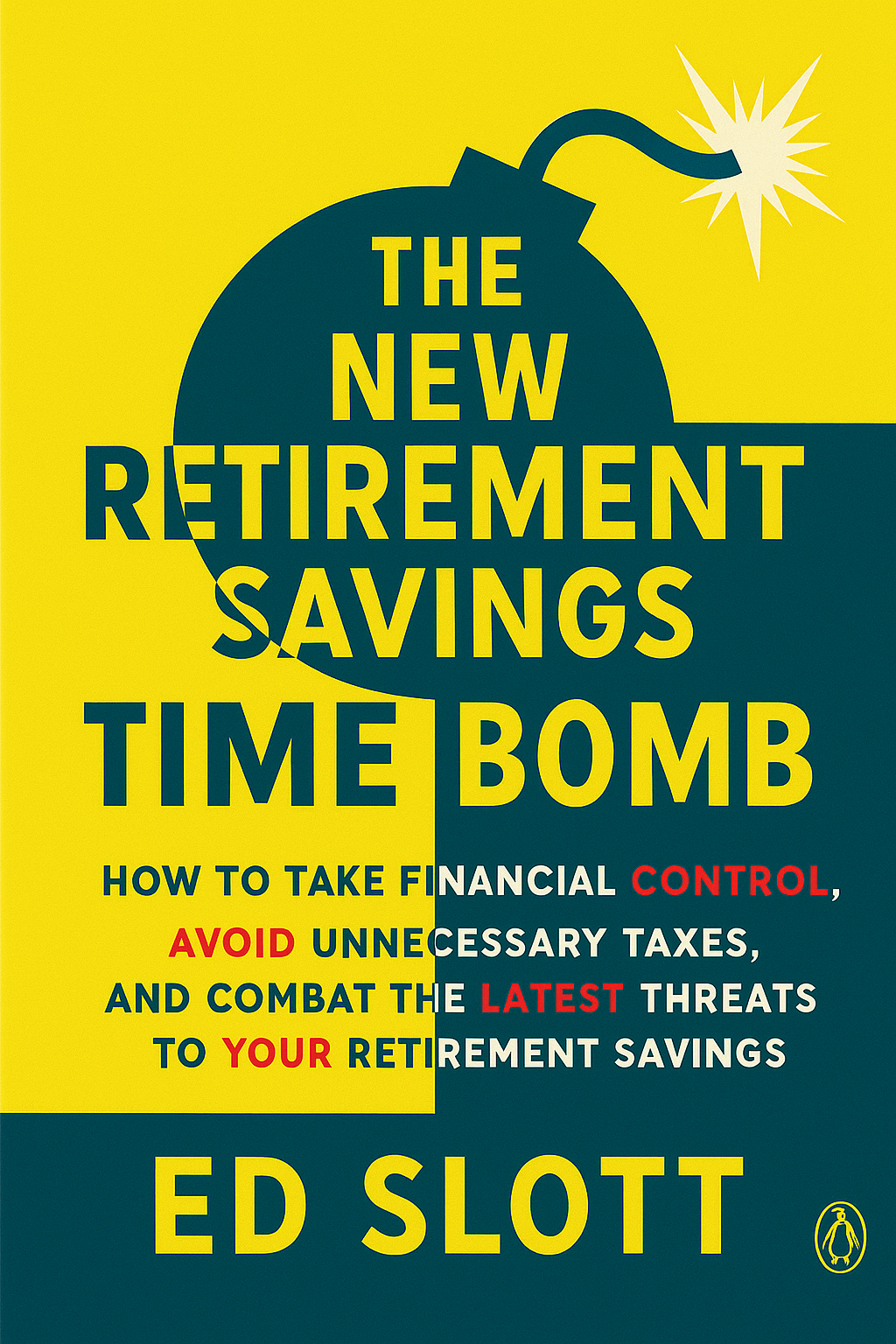
The New Retirement Savings Time Bomb
How to Take Financial Control, Avoid Unnecessary Taxes, and Combat the Latest Threats to Your Retirement Savings
byEd Slott
Book Edition Details
Summary
Tax traps lurk in the shadows of your retirement dreams, ready to snatch your hard-earned savings. Enter Ed Slott's "The New Retirement Savings Time Bomb," a life raft in a sea of fiscal uncertainty. With the clarity of a seasoned guide, Slott dissects the labyrinthine tax codes, revealing strategies to protect and grow your nest egg amidst shifting rules. This updated edition is not just a book—it's your financial lifeline, offering peace of mind and the assurance that your legacy will endure. Ideal for anyone determined to secure their financial future, this handbook transforms complex tax strategies into digestible, actionable insights. Prepare to safeguard your wealth and navigate the future with confidence.
Introduction
The retirement landscape has fundamentally shifted beneath our feet, and the strategies that worked for previous generations could now devastate your family's financial future. With the SECURE Act eliminating the stretch IRA and tax rates poised to climb dramatically, millions of Americans face a sobering reality where their carefully built nest eggs could shrink by 70, 80, or even 90 percent due to taxes and penalties. Yet within this challenge lies extraordinary opportunity for those willing to adapt and take decisive action. The key insight is that retirement planning isn't merely about accumulating wealth—it's about protecting and preserving what you've worked so hard to build while creating a lasting legacy for your loved ones. By mastering new distribution strategies, leveraging tax-free growth opportunities, and implementing sophisticated estate planning techniques, you can transform potential tax disasters into victories that secure both your retirement years and your family's prosperity for generations to come.
Master Your Distribution Strategy and Navigate New Rules
Understanding when and how to withdraw your retirement funds forms the cornerstone of wealth preservation in today's complex regulatory environment. This goes far beyond simply meeting IRS requirements—it's about orchestrating your distributions to minimize taxes while maximizing your financial security and flexibility throughout retirement. Robert's experience perfectly illustrates the critical importance of strategic timing. When he turned 72 in 2022, he faced his first required minimum distribution with considerable anxiety, uncertain whether to take it immediately or wait until the April deadline the following year. His financial advisor walked him through the mathematics, revealing that taking his first RMD by year-end would spread his tax burden across two separate years, while waiting would compress two distributions into a single tax year, potentially pushing him into a higher bracket and creating a much larger tax bill. Robert chose the immediate distribution strategy, and the transformation was remarkable. By spreading his RMDs across multiple tax years and coordinating them with his other income sources, he reduced his overall tax rate by nearly three percentage points. More importantly, he discovered the power of qualified charitable distributions, which allowed him to satisfy his RMD requirements while supporting his favorite causes, all while excluding the distribution from his taxable income entirely. To master your distribution strategy, start by calculating your required minimums accurately using the updated life expectancy tables well before your 72nd birthday. Coordinate your withdrawal timing with your overall tax situation, considering factors like Social Security taxation and Medicare premiums. Leverage special provisions like qualified charitable distributions when applicable, and remember that you can always withdraw more than the minimum but never less without facing severe penalties. Review your approach annually, adapting to changes in tax laws, your health, your beneficiaries' needs, and market conditions, because the goal isn't just compliance—it's optimization that serves your long-term wealth preservation objectives.
Convert to Tax-Free Growth for Maximum Protection
Roth conversions represent one of the most powerful wealth-building strategies available today, particularly given the SECURE Act's limitations and historically low tax rates. This approach transforms your tax-deferred retirement accounts into tax-free powerhouses that benefit both your retirement years and create a protected legacy for your beneficiaries. David and Linda's transformation demonstrates the profound impact of systematic conversion planning. This couple, both 65, held $800,000 in traditional IRAs and faced the prospect of large required minimum distributions beginning at age 72. Their advisor recommended moving $80,000 annually to Roth accounts over ten years, carefully managing the conversion amounts to stay within their current 22% tax bracket rather than facing potentially higher rates during their required distribution years. The results exceeded their expectations on multiple levels. Not only did they eliminate future RMDs on the converted amounts, providing greater control over their retirement income, but they also created a tax-free inheritance for their children. Under the SECURE Act's ten-year rule, their beneficiaries can now withdraw the Roth funds without any tax consequences, effectively doubling the after-tax value of their inheritance compared to traditional IRA distributions that would be fully taxable. Begin your conversion strategy by analyzing your current and projected tax brackets, considering factors like Social Security taxation, Medicare premiums, and state taxes. Convert during low-income years when possible, spreading conversions across multiple years to avoid bracket creep. Pay conversion taxes from non-retirement accounts to maximize the amount converted, and remember that conversions are permanent after the tax year ends. This permanence provides certainty and protection against future tax rate increases, making conversions particularly attractive in today's environment. Start with smaller amounts to test the tax impact, then scale up as you become comfortable with the process and see the benefits materializing in your overall financial plan.
Build Your Perfect Estate Plan with Insurance
Life insurance serves as the ultimate protection strategy for retirement wealth, providing tax-free death benefits that can replace the value lost to taxes while preserving your retirement accounts for optimal distribution to beneficiaries. This approach has become increasingly valuable as traditional stretch strategies have been eliminated and tax burdens on inherited accounts have intensified. Ralph and Sadie's story perfectly illustrates the transformative power of strategic insurance planning. Rather than following conventional wisdom and leaving his $1 million IRA directly to his wife Sadie, Ralph purchased a $1 million life insurance policy naming her as beneficiary while directing his IRA to their daughter Ruby. When Ralph died, Sadie received $1 million in tax-free life insurance proceeds that she could access without restrictions, required distributions, or tax consequences. The strategy's brilliance became even more apparent as it unfolded. Ruby inherited the IRA under the estate tax exemption, and the family received significantly more total value with superior tax treatment than they would have through traditional inheritance methods. Building on this success, Sadie used a portion of her tax-free insurance proceeds to purchase her own policy benefiting Ruby, creating a cascade of tax-free wealth transfer that ultimately provided the family with resources far exceeding the original IRA value. To implement this protection strategy effectively, begin by calculating the potential tax burden on your retirement accounts and overall estate. Purchase enough life insurance to cover at least the projected tax liability, and structure the ownership properly to keep proceeds outside your taxable estate when necessary. Consider using an irrevocable life insurance trust for larger policies to maximize estate tax benefits. Start this process while you're healthy and insurable, because waiting too long can make coverage impossible to obtain at reasonable rates. Work with qualified professionals who understand the intersection of retirement planning, tax law, and estate planning, as the complexity of modern wealth transfer strategies makes expert guidance essential for achieving optimal outcomes that truly serve your family's long-term interests.
Transform Tax Disasters into Tax-Free Victories
The elimination of the stretch IRA under the SECURE Act initially appeared to be a devastating blow to family wealth transfer strategies, but savvy planners have discovered how to transform this challenge into opportunities for even greater tax-free wealth creation. The key lies in understanding that the new ten-year distribution rule, while accelerating tax obligations, also creates planning opportunities when combined with proactive strategies. The story of Ann and her son Brian demonstrates this transformation perfectly. When Ann died, leaving her substantial IRA to Brian under the new SECURE Act rules, he initially felt overwhelmed by the requirement to withdraw everything within ten years. However, working with his advisor, Brian discovered that the ten-year rule provided flexibility in timing withdrawals during the distribution period, allowing him to coordinate distributions with his own tax situation strategically. Brian's breakthrough came when he realized he could take larger distributions in years when his regular income was lower and smaller amounts during high-earning periods. More importantly, his family had implemented a comprehensive strategy before Ann's death, systematically converting portions of her traditional IRA to Roth accounts and purchasing life insurance to replace the lost stretch benefits. This combination provided Brian with both tax-free insurance proceeds and Roth IRA distributions that carried no tax burden despite the accelerated timeline. To transform your own potential tax disasters into victories, start by reviewing your current beneficiary designations and modeling the tax impact under the ten-year rule. Implement systematic Roth conversion strategies during your lifetime, paying taxes at your potentially lower retirement rates rather than leaving the burden to beneficiaries during their peak earning years. Consider life insurance as a replacement for lost stretch benefits, creating larger, tax-free inheritances that more than compensate for the compressed distribution timeline. Educate your beneficiaries about their options under the new rules, including the flexibility to manage distributions strategically within the ten-year window. Remember that while the rules have changed, the fundamental goal remains the same: maximizing the after-tax wealth that reaches your family while maintaining control and flexibility throughout the process.
Summary
The path to retirement security has never been more complex, yet the rewards for those who navigate it successfully have never been greater. As one expert powerfully stated, "Where taxes are concerned, it's what you keep that counts!" This fundamental truth underlies every strategic decision you'll make about your retirement savings and legacy planning. The combination of mastering distribution strategies, leveraging tax-free growth opportunities, implementing protective insurance planning, and transforming regulatory challenges into advantages creates a comprehensive approach to wealth preservation that serves both your retirement needs and your family's future prosperity. Your immediate next step should be scheduling a comprehensive review of your current retirement accounts, beneficiary designations, and estate plan within the next thirty days to ensure they align with today's rules and tomorrow's opportunities, because the decisions you make now will determine whether your life's work truly serves your family's financial security for generations to come.
Related Books
Download PDF & EPUB
To save this Black List summary for later, download the free PDF and EPUB. You can print it out, or read offline at your convenience.
By Ed Slott
