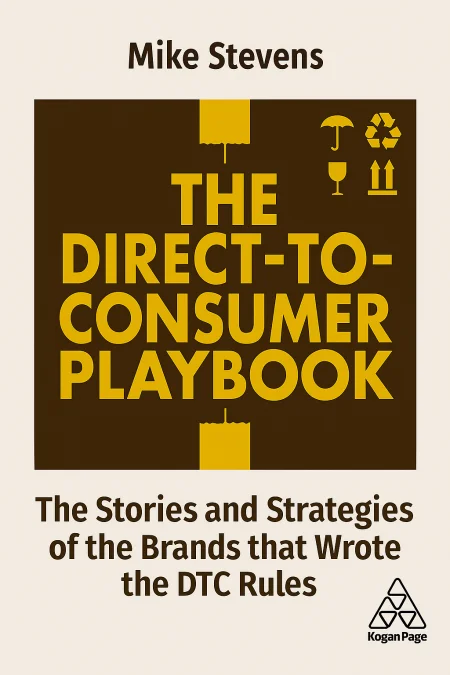
The Direct to Consumer Playbook
The Stories and Strategies of the Brands that Wrote the DTC Rules
Book Edition Details
Summary
In the dynamic realm of e-commerce, the path to building a triumphant direct-to-consumer (DTC) brand is littered with the lessons of those who dared to innovate. "The Direct to Consumer Playbook" invites you into the gritty, inspiring stories behind today's DTC trailblazers like Huel, graze, and Casper. Witness their humble beginnings, and learn from their triumphs and pitfalls. This book offers a treasure trove of insights—discover why community is king, how to leverage data like a pro, and when to expand your sales channels. More than just a manual, it's a masterclass in resilience, brand fortification, and navigating the labyrinth of modern business challenges. Whether you're an aspiring entrepreneur or a seasoned business mind, this collection of candid founder interviews will arm you with the strategies to carve your own success story in the competitive e-commerce arena.
Introduction
Picture this: A young entrepreneur sits in their cramped apartment, staring at a prototype they've spent months perfecting. Traditional retailers have turned them away, saying their product is "too niche" or "won't sell." Just a decade ago, this story would have ended in disappointment. Today, it's the beginning of countless success stories that have reshaped entire industries. The direct-to-consumer revolution didn't happen overnight. It emerged from the convergence of digital technology, changing consumer expectations, and the courage of entrepreneurs who dared to bypass traditional gatekeepers. These pioneers discovered something profound: when you remove the middleman, magic happens. You don't just save costs—you build relationships. You don't just sell products—you create communities. You don't just serve customers—you solve real problems in ways that matter. What started as a few maverick brands selling mattresses and razors online has evolved into a fundamental shift in how business operates. These companies didn't just create new products; they rewrote the rules of engagement between brands and consumers. They proved that with the right approach, a startup in someone's garage could compete with century-old giants, win hearts, and build billion-dollar businesses. This book captures the wisdom of these trailblazers—their breakthrough moments, their costly mistakes, and the hard-won lessons that can guide your own journey. Whether you're dreaming of launching your first product or seeking to transform an existing business, their stories offer a roadmap for navigating this brave new world of commerce.
Breaking Industry Rules: From Graze to Heights
When Graham Bosher left LoveFilm after its acquisition by Amazon, most people expected him to take a well-deserved break. Instead, he found himself obsessing over something seemingly mundane: snacks. But Graham saw what others missed. While people complained about unhealthy office vending machine options, no one had solved the fundamental problem of delivering variety, quality, and convenience directly to desks across the country. The idea seemed absurd to industry veterans. Snacks were impulse purchases, they argued. Delivery costs would eat profits alive. Who would subscribe to receive nuts and dried fruit in the mail? But Graham understood something profound about the digital age: data changes everything. Unlike traditional snack companies that guessed what people wanted, graze could know exactly what each customer loved, measure satisfaction in real-time, and continuously improve both products and experience. Meanwhile, Julian Hearn was building Huel from a similar insight. After selling his voucher code business, he found himself with time and money but lacking purpose. His journey into nutrition science revealed a startling truth: most people, despite having access to infinite food choices, were malnourished. They were either too busy to prepare proper meals or overwhelmed by conflicting dietary advice. Julian's solution was radical in its simplicity—complete nutrition in powder form, backed by science, delivered with absolute transparency. Dan Murray-Setter and Joel Freeman took a different path to similar revelations. Their previous startup had failed spectacularly, leaving them burned out and struggling with health issues that traditional medicine couldn't solve. When a nutritionist's simple supplement recommendation transformed Dan's chronic insomnia within days, they realized the supplement industry's dirty secret: most products contained ineffective doses of ingredients, designed to exploit rather than help consumers. These pioneers shared a crucial understanding: the internet had created an unprecedented opportunity to build trust through transparency, education, and genuine care for customer outcomes. They could bypass retailers who demanded lowest-common-denominator products and instead serve people who valued quality, authenticity, and results. Success came not from following industry playbooks, but from obsessing over solving real problems in ways that genuinely improved people's lives.
Community-Driven Growth: Building Beyond Products
The most successful direct-to-consumer brands discovered early that they weren't just selling products—they were building movements. Take the story of Snag Tights, which began with founder Brie Read's embarrassing moment on Edinburgh's George Street when her tights fell down to her knees in broad daylight. What could have remained a personal frustration became a revelation when Brie's data science background prompted her to survey 3,000 women across the UK. The results were staggering: 90% couldn't find tights that fit properly. But Brie's true genius wasn't in solving this problem—it was in how she engaged the women who shared her frustration. Instead of traditional marketing, she created conversations. She used social media not to broadcast but to listen, learn, and respond. When the COVID-19 pandemic threatened to bankrupt the company, it wasn't investors or banks that saved Snag—it was their community. Customers themselves suggested an innovative pre-order system that generated £1.25 million in just five days, turning a potential business failure into a testament to the power of genuine relationships. TRIBE took community building to an entirely different level. Founders Tom, Guy, and Rob weren't content to simply sell energy bars to runners. They organized races, created charitable causes, and turned their business into a platform for something larger than commerce. Their Ultra Run across Eastern Europe didn't just raise £250,000 for anti-slavery efforts—it created a tribe of people who saw buying TRIBE products as supporting a mission they believed in. Perhaps no brand exemplifies this approach better than Who Gives A Crap, which built its entire business model around community values. When founder Simon Griffiths sat on a toilet for 50 hours straight to crowdfund their first production run, he wasn't just creating publicity—he was demonstrating authentic commitment to the cause of global sanitation. Customers didn't just buy toilet paper; they joined a movement to bring toilets to the 2 billion people who lack access to proper sanitation. These brands understand something traditional businesses often miss: in an age of infinite choice and constant distraction, people crave connection and meaning. They want to support businesses that share their values and solve problems they care about. When you build a true community around shared purpose, customers become advocates, critics become collaborators, and transactions transform into relationships that sustain businesses through any challenge.
Scaling Challenges: From Startup Dreams to Market Reality
Success in the direct-to-consumer world often brings unexpected challenges. Casper's meteoric rise from mattress startup to billion-dollar company illustrates both the incredible potential and perilous pitfalls of rapid scaling. When co-founder Jeff Chapin and his team launched with a simple promise—a better mattress delivered in a box—they expected modest growth. Instead, they hit their entire first-year sales target in just 60 days. The early success was intoxicating. Customers loved the novelty of unboxing a compressed mattress that magically expanded. YouTube filled with videos of people sharing their "Casper unboxing experience." Investment dollars poured in from celebrity backers and prestigious VCs. But success attracted attention from competitors, and soon the "bed-in-a-box" market exploded from a few pioneers to over 175 competitors in the US alone. Digital advertising costs skyrocketed as brands bid against each other for the same customers. Casper's response was to double down on growth, expanding internationally, opening retail stores, and spending heavily on marketing to maintain their market-leading position. But when they went public in 2020, Wall Street's reception was ice-cold. Investors saw a company burning through cash in pursuit of growth, with profits seeming ever more elusive. The harsh market reaction revealed a fundamental tension in the DTC model: the very factors that enable rapid growth can also make sustainable profitability elusive. Oliver Bridge at Cornerstone learned similar lessons from a different angle. Initially riding the "golden age" of DTC when Facebook advertising was cheap and effective, his shaving subscription business seemed unstoppable. But when Harry's entered the UK market with hundreds of millions in funding, everything changed. Customer acquisition costs exploded while the addressable market proved smaller than anticipated. Oliver was forced to evolve rapidly, diversifying into products like hair loss treatments and erectile dysfunction medications—items that customers trusted Cornerstone to handle discretely and professionally. These stories reveal a crucial truth: in the DTC world, your biggest risk often comes disguised as your biggest opportunity. Rapid growth can mask underlying unit economics problems, and early success can attract well-funded competitors who change the entire landscape overnight. The brands that survive and thrive are those that build sustainable competitive advantages—whether through superior customer relationships, operational excellence, or authentic brand differentiation—rather than relying solely on favorable market conditions or first-mover advantages.
Summary
The direct-to-consumer revolution represents more than a shift in sales channels—it's a fundamental reimagining of how businesses can create value by putting genuine human connection at the center of commerce. These pioneering brands discovered that when you remove traditional intermediaries, you don't just improve margins; you gain the opportunity to build something far more valuable: trust, community, and authentic relationships with the people you serve. The most successful DTC brands share three essential characteristics. First, they solve real problems that people genuinely care about, often problems so obvious they've been hiding in plain sight. Second, they use technology not as an end in itself, but as a means to build deeper, more meaningful connections with their customers. Finally, they understand that sustainable success comes from creating value for everyone in their ecosystem—customers, employees, communities, and the planet itself. The path forward isn't about perfecting your product in isolation or optimizing advertising algorithms. It's about finding people who share your values, understanding their deepest needs, and building solutions that genuinely improve their lives. When you approach business this way, customers become advocates, challenges become opportunities for innovation, and your work becomes a force for positive change in the world. The tools and platforms will continue to evolve, but the fundamental human desire for connection, authenticity, and meaning will endure. Those who embrace this truth won't just build successful businesses—they'll create lasting impact that extends far beyond any single transaction.
Related Books
Download PDF & EPUB
To save this Black List summary for later, download the free PDF and EPUB. You can print it out, or read offline at your convenience.
By Mike Stevens
