
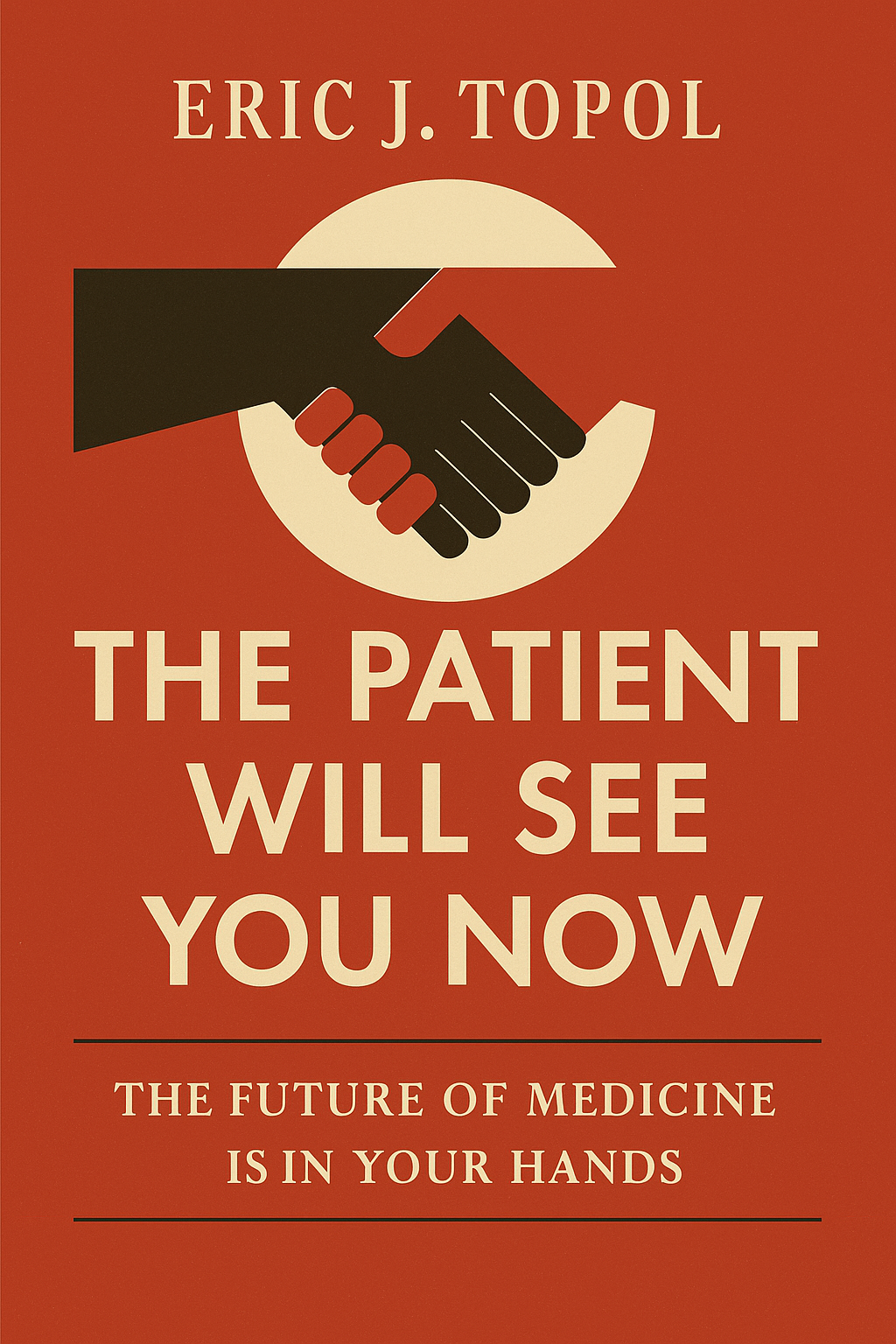
The Patient Will See You Now
The Future of Medicine is in Your Hands
Book Edition Details
Summary
In the labyrinthine corridors of modern healthcare, a seismic shift is brewing. "The Patient Will See You Now" by Eric Topol dares to dismantle the archaic, doctor-dominated paradigm, promising a future where power rests firmly in the patient's palm. Imagine a world where a single drop of blood, a smartphone, and artificial intelligence converge to redefine diagnosis—swift, precise, and profoundly personal. Topol, a visionary in medicine, heralds this transformation as a new Gutenberg moment, where technology liberates healthcare from its ivory tower. As digital tools democratize diagnostics, the book paints a bold vision of citizen medicine challenging the status quo. Yet, amid this thrilling evolution, it grapples with profound questions of privacy and resistance. A captivating manifesto, this book is an essential read for anyone yearning for healthcare that is truly theirs—empowered, accessible, and astoundingly human.
Introduction
Picture this: you wake up feeling slightly off, tap your smartphone to run a comprehensive blood panel from a single drop of blood, receive results in minutes, and video chat with a specialist who has instant access to your complete genetic profile and years of health data. This isn't a glimpse into some distant future—it's happening right now as digital technology dismantles the centuries-old fortress of medical paternalism. For generations, healthcare operated like a medieval guild system where doctors hoarded knowledge, patients waited passively for diagnoses, and medical information flowed in only one direction. Today's digital revolution is shattering these barriers by putting laboratory-grade diagnostic tools in our pockets, making our genetic blueprints as accessible as weather reports, and enabling artificial intelligence to spot diseases before symptoms even appear. This transformation goes far beyond mere convenience—it's fundamentally redistributing power in healthcare from institutions to individuals. As we explore this seismic shift, we'll discover how smartphones are becoming medical tricorders, why your genetic data might be more valuable than your financial records, and how artificial intelligence is creating a future where prevention trumps treatment, making healthcare more personal, predictive, and democratically accessible than ever before.
Breaking Down Medical Paternalism Through Digital Empowerment
For over two thousand years, medicine operated under what can only be described as benevolent dictatorship. Doctors, draped in the authority of Hippocrates himself, made decisions for patients rather than with them, often withholding diagnoses and treatment options under the paternalistic belief that patients couldn't handle the complexity of their own medical reality. This system created a profound information asymmetry where physicians possessed all the knowledge while patients remained passive recipients of care, expected to follow "doctor's orders" without question or understanding. The very language of medicine reinforced this hierarchy—patients were told to "comply" with treatments and "submit" to procedures, as if healthcare were a military operation rather than a collaborative effort. Digital technology is demolishing this paternalistic fortress brick by brick, creating what amounts to a medical reformation. Patients now have unprecedented access to the same medical literature that doctors consult, can interpret their own lab results through sophisticated apps, and can seek second opinions from specialists worldwide without leaving their homes. This democratization of medical knowledge transforms the traditional doctor-patient relationship from a hierarchical structure into a collaborative partnership where both parties contribute expertise—physicians bring clinical training and experience, while patients contribute intimate knowledge of their own bodies and life circumstances. The resistance to this transformation reveals just how threatening it is to established medical hierarchies. When patients arrive at appointments armed with research, genetic test results, and detailed health data from wearable devices, they challenge physicians to evolve from authoritarian decision-makers into collaborative guides and interpreters. The most successful healthcare providers are embracing this change, recognizing that empowered patients who understand their conditions often achieve better outcomes than those who blindly follow orders. This shift doesn't diminish medical expertise but redirects it toward education, personalized guidance, and shared decision-making. Perhaps most importantly, this empowerment extends beyond individual consultations to reshape entire healthcare ecosystems. Patients increasingly demand transparency in pricing, quality metrics, and treatment outcomes, shopping for healthcare services like informed consumers rather than accepting whatever their assigned providers offer. They participate in online communities where they share experiences, contribute to medical research, and even organize clinical trials around their specific conditions. The paternalistic era's "doctor knows best" mentality is giving way to "patient and doctor know best together," creating a more democratic and ultimately more effective approach to healthcare delivery that respects both professional expertise and individual autonomy.
Smartphone Medicine and Genomic Data Revolution
The convergence of smartphone technology and genomic sequencing is creating an unprecedented explosion of personal health data that's fundamentally transforming how we understand and manage human health. Modern smartphones have evolved far beyond communication devices into sophisticated medical laboratories capable of performing diagnostic tests that once required expensive hospital equipment and trained technicians. Through ingenious attachments and applications, these pocket-sized computers can analyze blood samples, detect heart arrhythmias, monitor blood pressure, and even identify skin cancers with accuracy matching dermatologists. Meanwhile, the cost of genome sequencing has plummeted from billions of dollars for the first human genome to under a thousand dollars today, making personalized genetic analysis accessible to millions of people worldwide. This data revolution creates what can be envisioned as a comprehensive "health GPS" system that layers multiple types of biological and environmental information to create detailed maps of individual health landscapes. Your smartphone continuously monitors activity levels, sleep patterns, heart rate variability, and stress indicators, while genetic testing reveals your predisposition to various diseases, optimal drug responses, and inherited traits that influence everything from metabolism to mental health. When combined with environmental data about air quality, weather patterns, and lifestyle factors, this multi-layered approach enables medicine to shift from reactive treatment of symptoms to predictive prevention of diseases before they manifest. The integration of this vast data through artificial intelligence and machine learning algorithms is revealing patterns and connections that were previously invisible to human analysis. When millions of data points are processed simultaneously, subtle correlations emerge between genetic variants, environmental exposures, lifestyle choices, and health outcomes. For example, combining genetic predisposition data with real-time physiological monitoring can predict heart attacks days before they occur, identify optimal medication dosages based on individual genetic profiles, or detect early signs of neurodegenerative diseases through changes in smartphone typing patterns or voice characteristics. Perhaps most revolutionary is how this technological convergence is democratizing access to advanced healthcare globally, transcending traditional barriers of geography and economics. A smartphone equipped with diagnostic applications and connected to cloud-based analysis systems can provide sophisticated medical insights in remote villages lacking traditional healthcare infrastructure. Genetic counseling can occur through video calls, laboratory results can be transmitted instantly across continents, and artificial intelligence can assist in diagnosis where specialist physicians aren't available. This democratization has the potential to eliminate many of the disparities that have historically limited access to quality healthcare, creating a more equitable global health system where advanced medical capabilities are available to anyone with a mobile device and internet connection.
AI-Driven Healthcare and the Future of Medical Practice
Artificial intelligence is orchestrating the most profound transformation in medical practice since the discovery of antibiotics, fundamentally reshaping how diseases are diagnosed, treatments are selected, and healthcare is delivered across the globe. Machine learning algorithms can now interpret medical images more accurately than radiologists, predict patient deterioration in intensive care units hours before human clinicians notice warning signs, and recommend personalized treatment protocols by analyzing vast databases of similar cases and outcomes. These AI systems aren't replacing physicians but rather augmenting their capabilities in ways that seemed like science fiction just a decade ago, enabling more accurate diagnoses, faster treatment decisions, and dramatically reduced medical errors. The shift from reactive to predictive medicine represents perhaps the most significant advancement in healthcare philosophy since the germ theory of disease. By analyzing patterns in genetic data, lifestyle factors, environmental exposures, and real-time physiological measurements, AI systems can identify individuals at risk for specific conditions weeks or months before traditional diagnosis would be possible. Imagine receiving an alert that your risk for a heart attack has increased based on subtle changes in your heart rate variability, sleep patterns, and stress levels—all detected automatically by devices you wear daily. This predictive capability enables targeted interventions before irreversible damage occurs, potentially preventing millions of deaths and reducing healthcare costs by orders of magnitude. The democratization of AI-powered healthcare is breaking down traditional barriers between patients and medical expertise, creating new models of care delivery that are more accessible, affordable, and personalized than ever before. Patients can now access AI diagnostic tools through smartphone apps, receive personalized health recommendations based on their unique genetic and lifestyle profiles, and participate in virtual consultations with specialists worldwide. This technological democratization is particularly transformative for underserved populations who have historically lacked access to advanced medical care, enabling rural clinics to provide sophisticated diagnostics and urban patients to avoid expensive emergency room visits through early intervention. Looking toward the future, AI-driven healthcare promises to transform medicine from a reactive, one-size-fits-all approach to a proactive, personalized system that treats each individual as a unique biological entity. Machine learning algorithms will continuously learn from millions of patient interactions, identifying new disease patterns, drug interactions, and treatment responses that would take human researchers decades to discover. Patients will become active participants in this learning process, contributing their data to collective intelligence systems that benefit everyone while receiving increasingly personalized and effective care. This vision of collaborative, AI-enhanced healthcare represents not just technological progress but a fundamental reimagining of medicine as a democratic, patient-centered endeavor where technology serves to amplify human expertise rather than replace it.
Summary
The digital revolution in healthcare represents far more than technological advancement—it's a fundamental redistribution of power from medical institutions to individuals, transforming patients from passive recipients of care into active partners in their own health management through unprecedented access to diagnostic tools, genetic information, and artificial intelligence-powered insights. This transformation dismantles centuries of medical paternalism while creating new possibilities for predictive, personalized, and democratically accessible healthcare that could eliminate many of the geographic, economic, and informational barriers that have historically limited quality medical care. As we navigate this profound shift, critical questions emerge about how traditional medical institutions will adapt to empowered patients who may arrive at appointments knowing more about their conditions than their doctors, and whether we can harness these powerful technologies to create more equitable healthcare systems rather than widening existing disparities. The convergence of smartphones, genomics, and artificial intelligence isn't just changing how we practice medicine—it's redefining the very relationship between technology, knowledge, and human health in ways that promise to benefit anyone willing to embrace the opportunities and responsibilities that come with being an active participant in their own healthcare journey.
Related Books
Download PDF & EPUB
To save this Black List summary for later, download the free PDF and EPUB. You can print it out, or read offline at your convenience.
By Eric J. Topol
