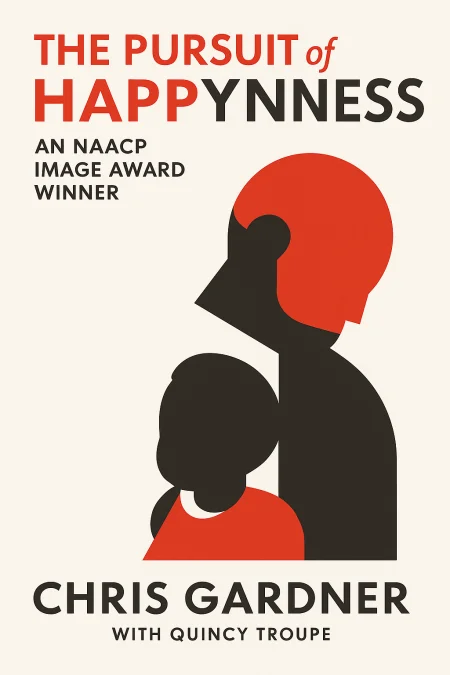
The Pursuit of Happyness
An NAACP Image Award Winner
byChris Gardner, Quincy Troupe
Book Edition Details
Summary
In the chaotic heart of San Francisco, a tale of grit and transformation unfolds. Chris Gardner, a young man with dreams as vast as the sky, steps off a Navy ship with ambitions of healing minds but finds himself navigating the treacherous waters of Wall Street instead. Stripped of everything but hope, Gardner faces a brutal reality: homelessness with his son, moving from shelter to shadowed subway corners. Yet, amid the city's indifferent roar, he clings fiercely to a vow — never to abandon his child. This unyielding resolve fuels his rise from invisible poverty to financial prestige. "The Pursuit of Happyness" is more than a memoir; it's a testament to the relentless pursuit of a dream and a father's unwavering love, echoing the profound resilience at the core of the American spirit.
Introduction
In a San Francisco hospital parking lot in the early 1980s, a chance encounter between a struggling medical equipment salesman and a Ferrari-driving stockbroker would spark one of America's most remarkable transformation stories. Chris Gardner, a young African American father facing mounting financial pressures, asked a simple question that would change his life forever: "What do you do?" The answer—stockbroker—opened a door to a world Gardner had never imagined entering, let alone conquering. Gardner's journey from the violence-torn streets of Milwaukee to the pinnacle of Wall Street success represents far more than a rags-to-riches tale. His story unfolds during the 1980s, a decade when economic opportunity seemed reserved for those with the right pedigree, connections, and educational credentials. As a man without a college degree, carrying the profound responsibility of single fatherhood while battling homelessness, Gardner faced obstacles that would have crushed most spirits. Yet it was precisely these challenges that forged his unbreakable character and sharpened his resolve to succeed against impossible odds. Through Gardner's extraordinary experiences, we discover the transformative power of a mother's unwavering belief in her child's potential, the strength that emerges from protecting those we love most, and the courage required to pursue dreams that others cannot see or understand. His story reveals how childhood trauma can forge unbreakable resilience, how the absence of a father can inspire exceptional dedication to fatherhood, and how the pursuit of happiness itself becomes a source of strength that sustains us through the darkest valleys on our way to the highest peaks of achievement.
From Trauma to Resilience: Childhood Foundations of Unbreakable Will
Chris Gardner's earliest memories were painted in shades of uncertainty and fear, yet within this chaos lay the seeds of extraordinary resilience. Born in Milwaukee in 1954, he spent his formative years navigating a household ruled by violence, where his stepfather Freddie Triplett's daily reminder that "I ain't your goddamn daddy" became the soundtrack of his childhood. The absence of his biological father created what Gardner would later call "the no-daddy blues," a profound longing that would shape every major decision in his adult life. The defining moment of Gardner's childhood came on a Halloween night when eight-year-old Chris discovered his mother unconscious on the floor, a two-by-four embedded in her skull, blood pooling beneath her head. Rather than freezing in panic, young Gardner found purpose in action, frantically cleaning their old stove before paramedics arrived. His prayer was not just for his mother's survival, but that the white emergency responders wouldn't judge their family as unworthy of help based on the condition of their home. This instinct to maintain dignity in chaos would become Gardner's signature response to crisis throughout his life. Despite the brutality surrounding him, Gardner's mother Bettye Jean became his beacon of hope and possibility. Her unwavering belief in his potential, expressed through words like "Son, if you want to, one day you could make a million dollars," planted seeds of ambition that would sustain him through decades of struggle. She taught him that circumstances, no matter how dire, were temporary conditions rather than permanent destinations. Her quiet strength in the face of abuse showed him that true power lay not in avoiding hardship but in how one responded to it. The violence and instability of his childhood could have shattered Gardner's spirit, but instead it forged an unshakeable resolve and a sacred promise that would guide his entire life: his own children would never experience the abandonment and uncertainty he had endured. The absence of a father became the foundation for his most important mission—to be the present, loving father he had never known. This childhood trauma, rather than limiting his potential, became the source of his greatest strength and clearest purpose.
Military Service and Medical Mastery: Building Professional Excellence
Gardner's escape from Milwaukee's chaos came through military service, though his romantic visions of seeing the world were quickly tempered by the reality of Navy boot camp in landlocked Orlando, Florida. Yet what might have disappointed others provided Gardner with something he had never experienced: clear guidelines for success and failure, and a system that rewarded performance regardless of background. His natural discipline, forged in the crucible of surviving unpredictable domestic violence, served him exceptionally well in military structure. Assignment to the Navy Regional Medical Center at Camp Lejeune proved transformative, placing Gardner under the mentorship of Lieutenant Commander Charlotte Gannon. Here he discovered an extraordinary aptitude for medical work, mastering everything from wound care to complex surgical procedures with an intensity that impressed seasoned physicians. His meticulous attention to detail and ability to remain calm under pressure earned him the nickname "Doc" and the respect of colleagues who began specifically requesting his assistance for challenging cases. Gardner's reputation grew rapidly as he became the medic everyone wanted, particularly for gunshot wounds and intricate procedures. His thorough chart notes and genuine care for patients transcended racial barriers that might have existed elsewhere. Hardened Marines who might have harbored prejudices found themselves saying, "No, I'll just wait for Doc." This transformation of biased patients through excellence taught Gardner a profound lesson that would serve him throughout his career: superior performance could overcome prejudice, and authentic service could change hearts and minds. The medical training Gardner received rivaled that of many medical school graduates, but more importantly, it instilled in him the power of focused learning and the critical importance of asking the right questions. When Dr. Robert Ellis offered him a research position in San Francisco, Gardner recognized an opportunity to build upon his medical foundation while exploring possibilities beyond familiar territories. His military service had given him more than technical skills—it had provided unshakeable confidence in his ability to master any field through dedication, discipline, and intelligent inquiry.
Wall Street Dreams: The High-Stakes Journey to Financial Success
The transition from medical research to high finance represented Gardner's greatest leap of faith, a decision that would test every ounce of his determination and resilience. Working as a medical research assistant in San Francisco, he had achieved professional respect and stability, co-authoring papers published in prestigious journals and training medical school interns. Yet the encounter with the Ferrari-driving stockbroker had planted a seed that refused to stop growing, pointing him toward a world where financial dreams could become reality for those bold enough to pursue them. Gardner's pursuit of a Wall Street career came at a devastating personal cost. With no experience in stocks or bonds, he convinced Dean Witter to accept him into their unpaid training program, requiring him to support his family on rapidly dwindling savings while mastering the complex language of finance. His relationship with Jackie, his son's mother, deteriorated under mounting financial pressure, leading to bitter custody battles and her eventual disappearance with their son Christopher. The man who had once trained doctors found himself homeless, sleeping in subway stations and airport bathrooms during the brief periods when he had custody of his child. The image of Gardner in a business suit, pushing a stroller through San Francisco's streets while carrying all their worldly possessions, became an iconic representation of determination against impossible odds. His ability to maintain professional composure during client meetings while privately struggling with homelessness demonstrated the power of his childhood training in survival. The stillness his mother had taught him, the capacity to endure any storm without breaking, now served him equally well in boardrooms and on park benches. Gardner's breakthrough came through relentless persistence and an absolute refusal to accept defeat. His natural gift for building relationships, combined with analytical skills honed in medical research and desperate hunger for success, eventually earned him a position at a major brokerage firm. As commissions began flowing and financial security returned, he regained custody of Christopher, fulfilling his sacred promise to be the father he had never had. The Ferrari he eventually purchased was not merely a symbol of material success, but a tangible reminder that the impossible could become possible through unwavering determination and unshakeable faith in oneself.
Legacy of Transformation: Breaking Cycles and Building Wealth
Gardner's ascent from homeless single father to Wall Street titan represents far more than personal achievement—it embodies the conscious breaking of generational cycles and the transformation of adversity into purpose. After establishing himself at major firms and later founding Gardner Rich & Company, he recognized that his unique background positioned him to serve markets traditional Wall Street had largely ignored. His focus on African American clients and institutions wasn't merely a business strategy; it was a mission to democratize access to financial services and investment opportunities for communities historically excluded from wealth-building. The establishment of his own firm marked not just professional success but the fulfillment of his deepest personal mission. The man who had grown up without a father became a devoted single parent, ensuring his children Christopher and Jacintha would never experience the abandonment that had defined his childhood. His wealth enabled him to provide not just financial security but emotional presence and stability—the very elements that had been absent from his own upbringing. This commitment to fatherhood became as central to his identity as his business achievements, proving that true success encompasses both professional accomplishment and personal integrity. Gardner's prosperity brought with it a profound sense of responsibility to give back to the communities that had supported him during his darkest hours. His substantial contributions to organizations like Glide Memorial Church, where he had once sought shelter and meals, demonstrated his understanding that success creates obligations to those still struggling. His philosophy of "conscious capitalism" reflected a belief that business achievement should generate positive social impact, not merely personal profit, guiding his investments in affordable housing and educational initiatives. Perhaps most significantly, Gardner's willingness to share his story openly, including the painful details of homelessness and family trauma, provided inspiration to countless individuals facing seemingly insurmountable obstacles. He proved that circumstances, regardless of their severity, need not determine destiny. His legacy extends far beyond financial success to encompass the lives transformed through his example, mentorship, and unwavering belief that anyone willing to pursue their dreams with sufficient determination can achieve them, breaking cycles of limitation and creating opportunities for future generations.
Summary
Chris Gardner's extraordinary journey from the streets of San Francisco to the pinnacle of Wall Street success demonstrates that our greatest victories often emerge from our deepest struggles, and that true wealth encompasses far more than financial achievement. His story proves that when we refuse to accept limitations imposed by circumstances, background, or others' expectations, we unlock the potential not only to transform our own lives but to create lasting positive change for future generations. Gardner's life offers profound lessons for anyone facing adversity: that persistence in the face of seemingly impossible odds can yield extraordinary results, and that our most challenging experiences often prepare us for our most meaningful contributions to the world. For individuals navigating career transitions, single parents confronting overwhelming challenges, or anyone told their dreams are unrealistic, Gardner's story provides both inspiration and practical wisdom. His emphasis on continuous learning, the importance of asking the right questions, and the power of maintaining dignity regardless of circumstances offers a roadmap for overcoming obstacles that seem insurmountable. Most importantly, his journey illustrates that the pursuit of happiness itself—not merely its attainment—can provide the strength necessary to endure hardship and ultimately achieve success. His legacy reminds us that every person possesses the potential to break cycles of limitation and create opportunities not just for themselves, but for others who will follow in their footsteps, transforming personal triumph into collective inspiration.
Related Books
Download PDF & EPUB
To save this Black List summary for later, download the free PDF and EPUB. You can print it out, or read offline at your convenience.
By Chris Gardner
