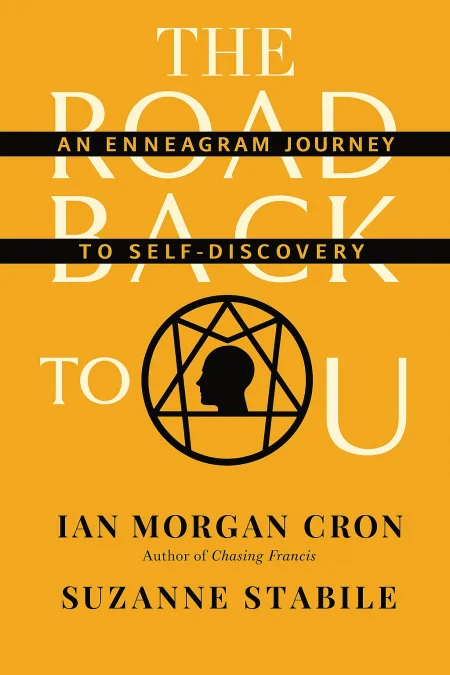
The Road Back to You
An Enneagram Journey to Self-Discovery
byIan Morgan Cron, Suzanne Stabile
Book Edition Details
Summary
What if the secret to understanding yourself and those around you lay hidden in an ancient map of human nature? "The Road Back to You" by Ian Morgan Cron and Suzanne Stabile offers just that—a deep dive into the Enneagram, a time-tested personality system that doesn't just describe who you are, but why you are. This insightful journey reveals the nine distinct ways people relate to the world, each with its own strengths and shadows. With warmth and wit, Cron and Stabile weave together storytelling and spirituality, guiding you through a transformative exploration of self-awareness. Discover the pathways that connect your heart, mind, and spirit, enabling richer relationships and a profound connection with the divine. Embrace the adventure of becoming more empathetic and spiritually attuned, as you uncover the layers of your true self and find the wisdom to navigate life's complexities with grace and compassion.
Introduction
Sarah stood in her kitchen at six in the morning, frantically packing three different lunch boxes while mentally rehearsing her presentation for the board meeting. Her eight-year-old son complained about his wrinkled shirt, her husband searched for his car keys, and her teenage daughter announced she needed twenty dollars for a field trip that was apparently happening today. In the midst of this beautiful chaos, Sarah felt a familiar knot in her stomach. She was doing everything right, checking all the boxes, yet something felt fundamentally off. She couldn't shake the feeling that she was living someone else's life, wearing a mask that had become so comfortable she'd forgotten what her real face looked like. This moment of recognition is where transformation begins. Deep within each of us lies a profound longing to understand who we truly are beneath the roles we play, the expectations we fulfill, and the patterns we've unconsciously adopted. We sense there's more to our story than the surface-level narrative we tell ourselves and others. The journey toward authentic self-discovery isn't just about personal growth; it's about uncovering the unique way we see and interact with the world, understanding why we react the way we do, and learning to extend compassion both to ourselves and others. This ancient wisdom offers us a mirror that reflects not just our shadows and struggles, but our deepest gifts and the particular way we're designed to contribute to the world's healing.
Discovering Your Type: The Nine Paths
When Brother Dave first introduced the concept of nine distinct personality patterns, it sounded almost too simple to be true. How could the infinite complexity of human nature be distilled into just nine types? The answer came during a weekend retreat where participants were asked to stand in different corners of the room based on their core motivations. What happened next was remarkable. As people began sharing their inner experiences, patterns emerged that were both startling and comforting. The woman standing with the Helpers spoke about an exhausting need to anticipate everyone's needs while neglecting her own. The man among the Challengers described a lifelong pattern of testing authority and protecting the vulnerable. The quiet observer in the Investigator corner revealed how overwhelming social interactions felt and how knowledge became her sanctuary. Each group discovered they weren't alone in their particular way of seeing and navigating the world. The businessman who thought his relentless drive for success made him unique found others who shared his deep fear that love was conditional on achievement. The artist who felt perpetually misunderstood met fellow souls who also experienced life through the lens of longing and intensity. What initially seemed like a oversimplification revealed itself as a profound map of human consciousness, showing how our childhood survival strategies had crystallized into adult personality patterns. The beauty of discovering your type isn't in the labeling itself, but in the sudden recognition of your own unconscious patterns. It's the moment when you realize that your particular way of moving through the world isn't the only way, that others operate from completely different motivations and see reality through entirely different lenses. This recognition becomes the foundation for both self-compassion and genuine understanding of others, opening doors to relationships and self-awareness that seemed locked before.
The Body Types: Eight, Nine, and One
Margaret ran the nonprofit with an iron fist wrapped in a velvet glove, and everyone knew she would move heaven and earth for the cause she believed in. When budget cuts threatened to eliminate services for homeless families, she stormed into the city council meeting with facts, passion, and an intensity that made grown politicians shift uncomfortably in their seats. Within an hour, she had secured emergency funding and commitments for long-term support. But back at the office, her assistant quietly mentioned that three staff members had asked about transferring to other departments. Margaret was confused and hurt. Didn't they understand she was fighting for something important? Didn't they see her dedication was for their benefit too? This scenario plays out daily in the lives of those driven by gut instinct and powered by anger energy. The Eight, Nine, and One types all share this connection to their body wisdom and their relationship with anger, though they express it in vastly different ways. Eights like Margaret externalize their anger, using it as fuel for justice and protection of others, though sometimes overwhelming people with their intensity. Nines internalize their anger so completely they often forget they have any, choosing harmony over honesty until resentment builds like pressure in a sealed container. Ones channel their anger into perfectionism and criticism, becoming the world's quality control department while struggling with an inner critic that never takes a day off. What unites these three types is their instinctual intelligence and their tendency to forget aspects of themselves in service to their survival strategies. They teach us that anger isn't always destructive; it can be the energy that drives positive change, the fuel that powers persistence, and the signal that something important needs attention. Understanding these patterns helps us recognize that behind every "difficult" person is often someone trying to make the world better in the only way they know how.
The Heart Types: Two, Three, and Four
David's career in sales made perfect sense to everyone who knew him. He could read a room instantly, mirror the energy of potential clients, and craft his presentation to match exactly what each audience wanted to hear. His LinkedIn profile showcased awards, accolades, and glowing testimonials. But late one night, alone in his hotel room after another successful conference, David stared at himself in the bathroom mirror and felt a disturbing emptiness. Who was he when he wasn't performing? What did he actually want, versus what he thought others expected him to want? The face looking back at him felt like a stranger wearing a very convincing mask. This identity crisis strikes at the heart of those who live in the feeling realm, where image and emotion intertwine in complex ways. Twos, Threes, and Fours all struggle with the fundamental question of whether they can be loved for who they truly are, leading them to present carefully crafted versions of themselves to the world. Twos project an image of selfless giving while secretly keeping score of their generosity. Threes like David become chameleons of success, shape-shifting to match what they believe others value. Fours cultivate an aura of uniqueness and depth, often feeling simultaneously superior to and excluded from the ordinary world around them. The tragedy and beauty of the heart types lies in their deep capacity for connection paired with their fear of authentic vulnerability. They teach us about the universal human longing to be seen and accepted, and how our strategies for earning love can sometimes be the very things that prevent us from receiving it. Their journey toward wholeness involves the courageous work of removing their masks and trusting that their authentic selves are worthy of the love they've been seeking all along.
The Head Types: Five, Six, and Seven
When the technology company announced mandatory team-building exercises, reactions varied dramatically across the office. Emma immediately began researching worst-case scenarios and preparing contingency plans, her anxiety spiking at the thought of unknown variables and potential group dynamics disasters. Marcus quietly calculated how much energy the activities would require and whether he could find a way to observe rather than participate, already feeling drained by the prospect of forced social interaction. Meanwhile, Jessica started brainstorming ways to make the exercises more fun and began planning an after-party, her mind racing with possibilities to transform what others saw as an obligation into an adventure. These three responses illustrate the different survival strategies of the head types, all united by their relationship with fear and their tendency to live primarily in the realm of thought. Sixes like Emma are hypervigilant for danger, constantly scanning the environment for threats and seeking security through careful preparation and loyal connections. Fives like Marcus retreat into their minds, minimizing their needs and conserving energy while building protective walls of knowledge and privacy. Sevens like Jessica escape into mental stimulation and future possibilities, using optimism and constant activity to avoid sitting still long enough for anxiety or pain to catch up. What connects these thinking types is their shared challenge of trusting their inner knowing while managing the mental chatter that keeps them spinning. They show us how intelligence can be both a gift and a prison, how the very strategies we use to feel safe can sometimes keep us from engaging fully with life. Their path to growth involves learning to quiet their overactive minds enough to access the wisdom of their hearts and bodies, discovering that security comes not from perfect planning or endless possibilities, but from a deep trust in their ability to handle whatever life brings.
Summary
The ancient wisdom revealed in these nine patterns offers us something our modern world desperately needs: a roadmap back to our authentic selves and a bridge toward genuine understanding of others. Through story after story, we see that what often appears as difficult or confusing behavior in ourselves and others is actually a logical response to early life experiences and unconscious survival strategies. The executive who can't slow down, the friend who always needs reassurance, the family member who seems perpetually critical—each is simply trying to navigate the world through the lens they developed to stay safe and find love. This understanding transforms everything. When we realize that our way of seeing isn't the only way, that our motivations aren't universal, and that our defensive strategies are both our greatest strengths and our most limiting patterns, we can begin to choose our responses rather than simply react from unconscious programming. The mother who recognizes her tendency to merge with others' needs can practice stating her own preferences. The perfectionist can learn to celebrate progress over perfection. The people-pleaser can experiment with saying no without elaborate justifications. Perhaps most importantly, this journey teaches us that growth isn't about fixing what's wrong with us or becoming someone entirely different. It's about coming home to who we've always been beneath the protective strategies we developed along the way. When we can look at ourselves and others with this kind of compassionate understanding, we create space for the transformation that happens not through force or willpower, but through the gentle recognition of our shared humanity and the courage to show up authentically in the world.
Related Books
Download PDF & EPUB
To save this Black List summary for later, download the free PDF and EPUB. You can print it out, or read offline at your convenience.
By Ian Morgan Cron
