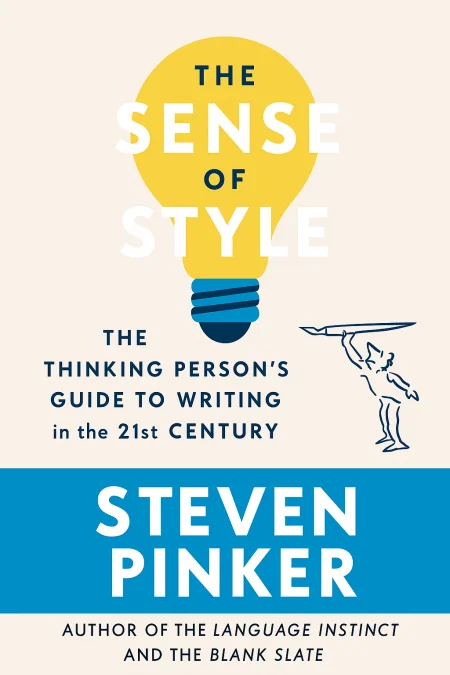
The Sense of Style
The Thinking Person’s Guide to Writing in the 21st Century
Book Edition Details
Summary
In a world where words can either dazzle or dishearten, Steven Pinker, the celebrated cognitive scientist and New York Times bestselling author, offers a refreshing oasis in "The Sense of Style." Here, Pinker navigates the choppy waters of modern writing with the precision of a seasoned linguist. He lifts the veil on the art of eloquence, transforming the notion of style from a rigid set of rules into a flexible framework fueled by creativity and insight. Pinker challenges the bleak narrative of linguistic decay, showing instead how writing can be a joyful and intellectually engaging craft. Packed with lively examples and devoid of the usual grammatical hand-wringing, this book reimagines the classic style guide as a vibrant companion for anyone eager to elevate their prose. With his distinctive blend of empathy and expertise, Pinker invites you to savor the magic of words, rekindling the love for writing in the digital age.
Introduction
Writing remains one of humanity's most challenging intellectual endeavors, yet most guidance on the craft relies on outdated rules and folk wisdom rather than scientific understanding. The persistent problems plaguing modern prose—from academic jargon to bureaucratic opacity—stem not from moral decay or technological corruption, but from fundamental misunderstandings about how language actually works in the human mind. This exploration challenges the conventional wisdom that dominates writing instruction, replacing dogmatic prescriptions with evidence-based insights from cognitive science and linguistics. Rather than simply cataloging dos and don'ts, it reveals the psychological mechanisms underlying effective communication, showing how readers process information, build mental representations, and navigate complex ideas through text. The journey ahead dismantles persistent myths about grammar, style, and usage while constructing a new framework grounded in how the mind actually encounters and comprehends written language. By understanding these cognitive realities, writers can move beyond mechanical rule-following to develop genuine stylistic intuition, crafting prose that not only follows conventions but actively facilitates understanding and engagement.
Classic Style: Writing as Transparent Communication of Truth
Classic style operates on a deceptively simple premise: writing should function as a transparent window through which readers can observe the world directly. This approach treats the act of writing as a conversation between equals, where the writer has noticed something interesting and guides the reader's attention to see it for themselves. The metaphor of seeing proves central to this conception, assuming that truth exists independently of language and can be perceived by any reasonable observer given the proper vantage point. The writer's task becomes not to argue or persuade through rhetorical flourishes, but simply to position the reader where the evidence speaks for itself. This stance fundamentally differs from other approaches to prose. Unlike academic writing, which often foregrounds methodology and qualifications, classic style confidently presents discoveries without extensive throat-clearing about limitations. Unlike practical writing, which serves immediate functional needs, classic style takes whatever space necessary to illuminate its subject fully. The elegance of classic style lies in its concealment of effort. Like a master chef who presents a perfect soufflé without revealing the failed attempts, the classic writer creates an illusion of effortless clarity while hiding the substantial intellectual labor required to achieve such apparent simplicity. This approach manifests in concrete choices about sentence structure, word selection, and organization, favoring active voice over passive, concrete nouns over abstract nominalizations, and straightforward syntax over convoluted constructions. The power of this style emerges from its ability to make difficult concepts accessible without dumbing them down. By removing unnecessary obstacles between reader and subject matter, it allows ideas to speak for themselves with maximum clarity and impact, creating prose that feels both authoritative and approachable.
The Curse of Knowledge: Why Expert Writers Fail Readers
The primary obstacle to clear writing stems from a cognitive bias that afflicts experts in every field: the inability to imagine what it feels like not to know something you know. This curse of knowledge explains why brilliant scholars produce impenetrable prose, why technical manuals confuse their intended users, and why instructions that seem perfectly clear to their writers leave readers baffled. The phenomenon operates through two related mechanisms that systematically distort expert communication. First, as people develop expertise, they unconsciously compress complex ideas into mental chunks, forgetting how much cognitive work originally went into understanding these concepts. A physicist discussing quantum entanglement may forget that this phrase requires extensive unpacking for most readers. Second, experts begin thinking about familiar concepts in terms of their function rather than their appearance, referring to concrete realities through abstract labels that make sense only within their specialized community. Research in cognitive psychology reveals that this problem is universal and predictable. Even when explicitly instructed to consider their audience's perspective, people consistently overestimate others' knowledge and underestimate the difficulty of their own explanations. The curse manifests throughout the writing process as writers use technical jargon without definition, omit necessary background information, or organize material according to their own mental categories rather than the logical sequence a newcomer would need. The solution involves more than simply trying harder to imagine the reader's perspective. Writers must actively seek feedback from genuine novices, systematically revise their work after time has passed, and cultivate sensitivity to the specific ways that expertise distorts communication. Only by acknowledging the curse's pervasive influence and building safeguards against it can writers bridge the gap between expert understanding and reader comprehension.
Syntactic Structure and Coherence: Building Reader-Friendly Prose
Language operates according to invisible rules that govern how words combine into meaningful phrases and sentences, and understanding these syntactic principles allows writers to construct prose that flows naturally while guiding readers smoothly through complex ideas. When syntax works well, it becomes invisible; when it fails, it creates confusion and forces readers to struggle with form rather than focus on content. The key insight is that readers parse sentences by building mental tree structures that reveal relationships between different parts. Ambiguous constructions arise when multiple tree structures are possible, forcing readers to backtrack and reinterpret. Skilled writers learn to anticipate these parsing difficulties and structure their sentences to minimize cognitive load. This requires understanding not just the rules of grammar, but the deeper principles of how human minds process connected discourse and build understanding incrementally. Coherence extends beyond individual sentences to encompass the logical connections between ideas throughout a text. Readers need clear signals about how each new sentence relates to what came before: whether it provides an example, introduces a contrast, explains a cause, or develops a consequence. These relationships can be marked explicitly through transitional phrases, or implicitly through careful ordering and parallel structure. The most effective prose creates multiple layers of coherence simultaneously. Individual sentences flow smoothly from one to the next, paragraphs develop unified themes, and the overall argument unfolds in a logical sequence that readers can follow without getting lost. This architectural approach to coherence ensures that readers never lose sight of where they are or where they're heading, creating pathways through complex material that feel both natural and inevitable.
Usage Rules: Separating Linguistic Science from Grammar Folklore
The landscape of English usage contains both legitimate conventions that facilitate communication and arbitrary prohibitions that serve no useful purpose. Distinguishing between these categories requires understanding how language actually functions rather than accepting inherited folklore about correctness. Many supposed errors represent nothing more than the prejudices of eighteenth-century grammarians who tried to force English into Latin patterns, or the pet peeves of individual critics who mistook their personal preferences for universal principles. Genuine usage rules typically serve specific functions: they maintain grammatical consistency that readers rely on to parse complex sentences, preserve meaningful distinctions between similar words or constructions, or signal that a writer has invested care in crafting their prose. These rules emerge from the collective practices of skilled writers and editors, not from the pronouncements of self-appointed authorities. The prohibition against split infinitives exemplifies the arbitrary category, having no basis in English grammar and being routinely violated by accomplished writers throughout history. Traditional grammar instruction often confuses different types of rules. Some reflect genuine constraints of the language system that all native speakers follow unconsciously. Others represent conventions of formal written English that serve important social and communicative functions. Still others are invented preferences based on misguided attempts to impose foreign grammatical patterns or prevent natural language change. The key to navigating usage questions lies in consulting authoritative sources that base their recommendations on actual evidence rather than received wisdom. Modern dictionaries and usage guides increasingly distinguish between genuine errors that impede communication and stylistic choices that may be inappropriate in certain contexts but are not inherently wrong. Writers who understand this distinction can make informed decisions about when to follow conventional rules and when to prioritize clarity and natural expression over arbitrary prescriptions.
Summary
Clear, effective writing emerges not from rigid adherence to arbitrary rules, but from understanding how language works in the human mind and using that knowledge to guide readers smoothly through complex ideas. The most persistent problems in contemporary prose stem from cognitive biases that prevent writers from seeing their work through readers' eyes, combined with misguided attempts to follow prescriptive rules that often contradict the natural patterns of English. By grounding writing advice in scientific evidence rather than traditional folklore, writers can develop genuine stylistic intuition that serves them across diverse contexts and purposes. This approach reveals writing as both a cognitive skill that can be systematically improved and an art form that rewards careful attention to the subtle ways that language shapes thought and perception. The transformation from rule-following to principled understanding offers writers a more reliable foundation for crafting prose that truly serves its fundamental purpose of conveying ideas with clarity, grace, and intellectual honesty.
Related Books
Download PDF & EPUB
To save this Black List summary for later, download the free PDF and EPUB. You can print it out, or read offline at your convenience.
By Steven Pinker
