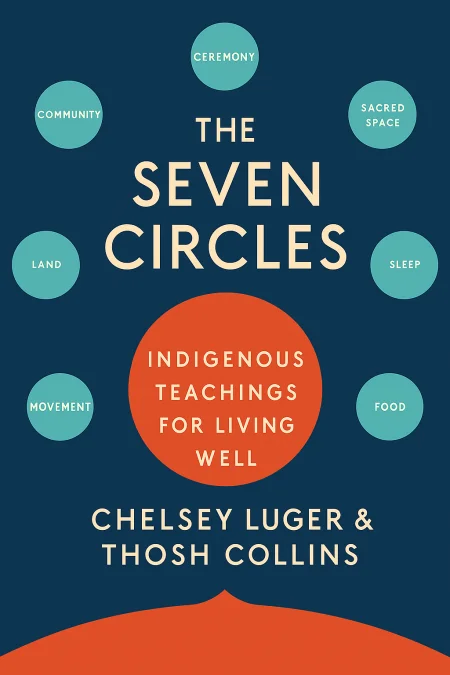
The Seven Circles
Indigenous Teachings for Living Well
byChelsey Luger, Thosh Collins
Book Edition Details
Summary
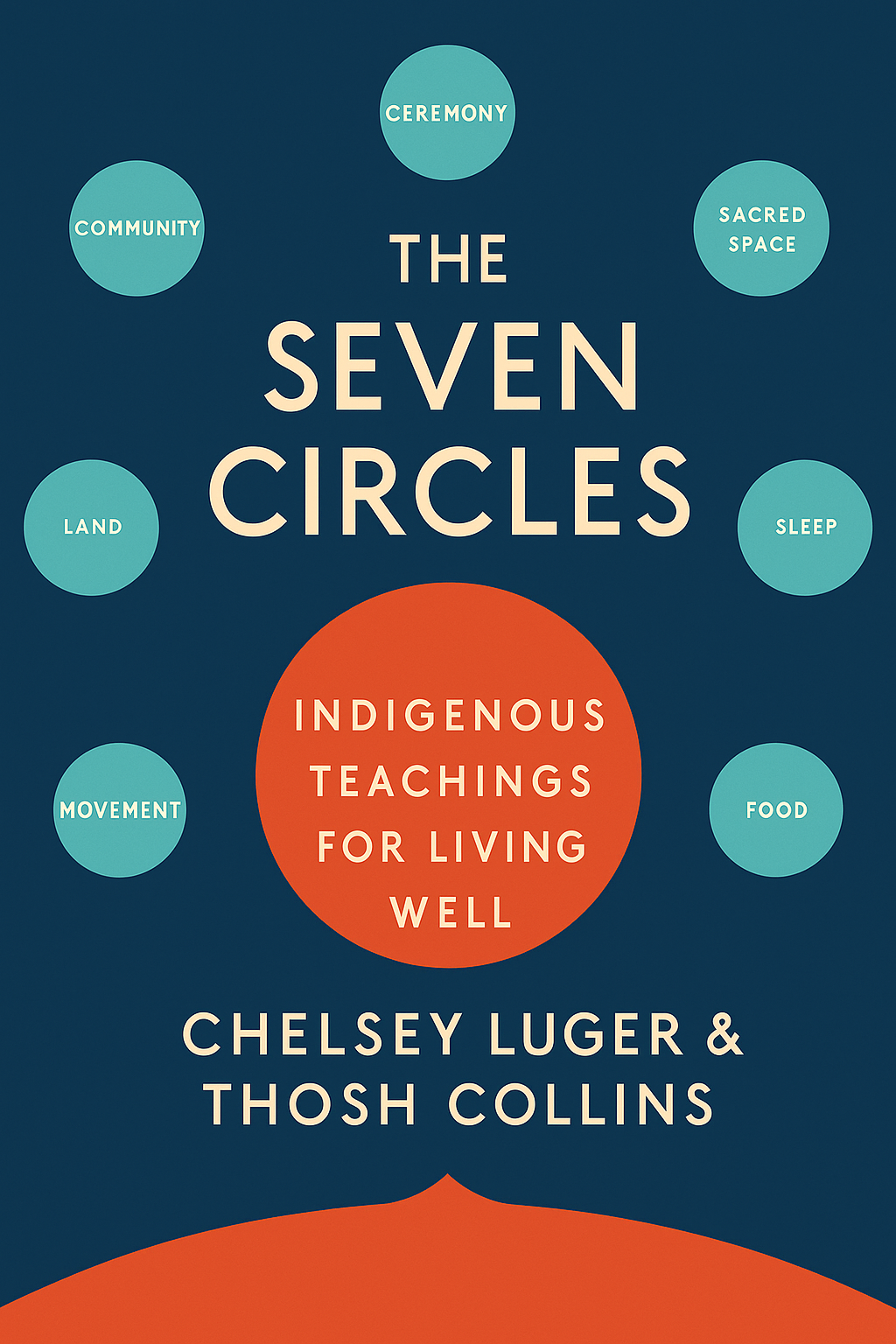
In a world echoing with ancient whispers, "The Seven Circles" by Chelsey Luger and Thosh Collins invites readers to rediscover balance and harmony through Indigenous wisdom. This guide is a tapestry woven with the threads of spiritual, physical, and emotional well-being, crafted by two voices who are both guardians and innovators of their heritage. Luger and Collins share the Seven Circles model—a holistic framework that interlaces food, movement, sleep, ceremony, sacred space, land, and community into a symphony of life. Their stories, rooted in tribal traditions and personal journeys, challenge us to honor these teachings while respecting their origins. With each page, they gently guide us towards a life illuminated by ancestral knowledge, where healing and connection flourish. A journey enriched with 75 evocative photographs, this book is not just read—it is experienced, offering a vision of wellness that is both timeless and timely.
Introduction
On a cool evening in Mohawk territory, a baby girl and her mom are gathering wild herbs. They walk up to the water to make a medicine offering, to reciprocate their harvest. The little girl, familiar with their ritual, digs into her mom's basket to find a bag of tobacco. Her tiny fingers pinch the plant, and she places it gently on the shore. They step into the lake and watch the water ripple outward as they wash the herbs, a reminder that they are closely connected to the world around them. This intimate moment captures the essence of Indigenous wisdom that has sustained communities for thousands of years. In a world increasingly dominated by quick fixes and disconnected approaches to wellness, ancestral teachings offer us something profound: a holistic understanding of health that encompasses not just our physical bodies, but our relationships with the land, our communities, our spiritual practices, and the spaces we inhabit. Through seven interconnected circles of wellness, we discover that true healing cannot be compartmentalized or rushed. It requires us to remember what our ancestors always knew: that movement is medicine, that the land teaches us, that community holds us, that ceremony grounds us, that sacred spaces nurture us, that rest restores us, and that food is our first relationship with the world. These ancient teachings offer a path back to balance in our complicated, noisy modern world, showing us that living well is not about perfection, but about returning again and again to the wisdom that has always been within our reach.
Reclaiming Our Bodies: Movement as Cultural Medicine
Five years into parenthood with two daughters, the authors discovered that staying active as a family became their culture once again. Every day, they weave movement into their schedules, no matter what else is on the agenda. They include their kids in their movement practices, rather than waiting for "me-time." Between answering emails and taking conference calls, they are changing diapers and negotiating screen time. Meanwhile, they keep exercise mats and open space in every room so they can stretch or work in sets of push-ups as their kids play with their toys. Instead of using their garage for cars or storage, they turned it into their gym. Their children have their own mini yoga mats and tiny plastic kettlebells, playing and dancing as their parents hit the heavy bag or lift weights. This integration reflects something profound that Western fitness culture has forgotten: movement was never meant to be separate from life. Indigenous ancestors could not have imagined a life spent behind a desk or setting aside time for exercise as an extracurricular activity. For them, movement was woven into every aspect of daily existence, from building structures to harvesting food, from traveling to trade to participating in ceremonies. They understood that movement is not just about physical appearance or recreation, but an all-encompassing medicine that benefits us mentally, physically, spiritually, and emotionally. When we return to viewing movement as our culture rather than our chore, we rediscover the joy and healing power that comes from honoring our bodies as sacred gifts meant to be celebrated, not punished.
Sacred Relationships: Land, Community and Ceremony
In a small desert community, young boys were initiated into a spiritual running ceremony that would carry them seventeen miles from Red Mountain to the heart of the reservation. For four days before the run, they could drink only water and eat only fruit, giving up all processed and comfort foods as a form of sacrifice. The fasting wasn't punishment but preparation, teaching them that giving up comfort for a greater cause is how one serves others. The purpose of their run was to honor ancestors whose remains had been uncovered at a construction site, carrying the spiritual energy of their prayers across the land as they moved. What emerges from this story is the interconnected nature of Indigenous wellness. The ceremony connected the runners not just to their own health through movement, but to their ancestors, their land, their community, and their spiritual beliefs all at once. They learned that personal wellness is never truly personal, that our individual healing ripples outward to affect our families, our communities, and future generations. In Indigenous understanding, we don't exercise for ourselves alone or eat well in isolation. We become strong so we can carry others, we tend our sacred spaces so they can nurture our families, we honor ceremony so we can remain connected to something larger than ourselves. This recognition transforms wellness from a selfish pursuit into a generous offering, reminding us that healthy people make healthy families, healthy families make healthy communities, and healthy communities create a better world for all.
Creating Sanctuary: Sacred Space, Sleep and Nourishment
When expecting their first child, the authors felt called to transform their tiny apartment from the haphazard space of traveling freelancers into a home fit for a sacred baby. The nesting instinct proved powerful and purposeful. They emptied closets and cabinets, donated what was usable, threw out what wasn't, and refolded everything that remained. They chose landscape photos and meaningful art for their walls, brought in houseplants to cleanse the air, and replaced chemical cleaners with nontoxic options. For their baby's corner, they carefully selected wall hooks with blue stone detail for swaddle blankets and placed sacred medicines nearby for smudging as a family. This transformation reveals how our environment shapes our wellbeing in ways we rarely consider. Indigenous ancestors understood that homes are extensions of our health, sacred spaces that should facilitate movement, nourish our spirits, and support our rest. They knew that everything from the light entering our windows to the sounds filling our airspace affects our ability to heal and thrive. In our digital age, we must also tend to our virtual spaces with the same reverence, recognizing that what we allow into our physical and online environments either supports our journey toward balance or pulls us further from it. Creating sanctuary isn't about perfection or expense, but about intention and respect for the spaces that hold our most important moments.
Summary
Through stories of children learning to honor the sun at dawn, families weaving movement into daily life, and communities gathering to run in ceremony, we discover that Indigenous wisdom offers us a revolutionary return to wholeness. These seven circles remind us that our ancestors never compartmentalized health into separate boxes labeled diet, exercise, and stress management. Instead, they lived with the understanding that everything is connected: our relationship with our bodies, our communities, the land beneath our feet, the spaces we create, the ceremonies that ground us, the rest that restores us, and the food that nourishes us. The path forward isn't about perfection or dramatically overhauling our lives overnight. It's about remembering that balance is a daily practice of returning again and again to what nurtures us. When we integrate ancestral wisdom into our modern lives, we don't just improve our personal health metrics. We begin to heal the disconnect that leaves so many feeling isolated, anxious, and spiritually malnourished. We remember that wellness is both ancient and futuristic, both deeply personal and profoundly communal. Most importantly, we discover that the tools for living well have always been within our reach, waiting patiently for us to remember that we are worthy of the same reverence and care our ancestors knew we deserved.
Related Books
Download PDF & EPUB
To save this Black List summary for later, download the free PDF and EPUB. You can print it out, or read offline at your convenience.
By Chelsey Luger
