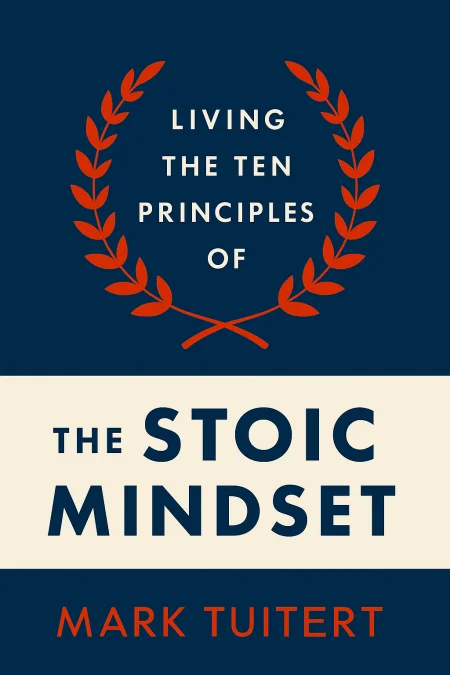
The Stoic Mindset
Living the Ten Principles of Stoicism
Book Edition Details
Summary
When life’s challenges feel insurmountable, what if the answer lay in wisdom passed down through millennia? Olympic champion and entrepreneur Mark Tuitert has harnessed the timeless teachings of Stoicism to triumph on the world stage and navigate personal hurdles. "The Stoic Mindset" distills his journey into ten actionable steps, offering readers a transformative path to mental resilience and personal growth. Drawing from the profound insights of Stoic sages like Marcus Aurelius, Seneca, and Epictetus, Tuitert presents a modern interpretation that demystifies complex philosophies into practical tools for today’s unpredictable world. Each chapter serves as a beacon, guiding readers toward inner tranquility and unwavering focus amidst chaos. Through Tuitert’s eyes, discover the power of a calm and centered mindset, empowering you to achieve your own gold-medal life.
Introduction
Picture yourself standing at the starting line of the most important moment of your career. Twelve years of training have led to this single race that will last less than two minutes. The weight of expectations presses down as thousands of spectators fill the arena, cameras capture every breath, and your heart pounds with the knowledge that this might be your only chance at Olympic glory. This is exactly where Mark Tuitert found himself in Vancouver 2010, carrying the dreams of an entire nation and the burden of two previous Olympic disappointments. What transformed this moment from paralyzing fear into triumphant gold wasn't just physical preparation, but a profound shift in mindset discovered through ancient Stoic philosophy. In those crucial weeks before competition, while grappling with questions that torment every high performer, Tuitert encountered wisdom from philosophers like Marcus Aurelius, Seneca, and Epictetus that would revolutionize not just his athletic performance, but his entire approach to life's challenges. This journey reveals how timeless Stoic principles can unlock extraordinary performance under pressure while maintaining inner peace. Whether you're facing a career-defining presentation, navigating relationship struggles, building a business, or simply trying to find meaning in daily chaos, the same mental framework that guided Roman emperors and Olympic champions can transform your relationship with success, failure, and everything in between. The path ahead promises not just better results, but a deeper sense of fulfillment and unshakeable confidence that no external circumstance can destroy.
From Burnout to Breakthrough: Learning Through Setbacks
At twenty-one, Mark Tuitert embodied pure ambition incarnate. As the Netherlands' youngest and most promising speed skater, he meticulously planned his future triumphs, writing victories on his calendar with the confidence of someone who believed failure was simply not an option. His sponsor negotiations reflected this swagger, landing a lucrative contract based on the achievements he guaranteed to deliver. To honor these promises, he eliminated rest days entirely, always doing more than required. If practice called for ten laps, he skated eleven. If training camps lasted three weeks, he stayed an extra three days. Working harder meant skating faster, right? But the young athlete's relentless drive became his downfall. His body began rebelling with mysterious illnesses and overwhelming fatigue. Each time he recovered, he compensated by intensifying his training schedule, creating a vicious cycle that culminated in complete physical breakdown just three months before the 2002 Salt Lake City Olympics. While his teammates claimed eight Olympic medals, Tuitert watched from his couch at home, barely able to turn on the television. The commentators whispered that his career was finished, and the terrifying truth was they might be right. This devastating setback introduced him to a profound realization that would reshape his entire philosophy. Stoicism, he discovered, was born from similar adversity. Zeno of Citium, the school's founder, lost everything in a shipwreck near Athens around 300 BC, yet declared afterward that his misfortune had set him on "a good journey." Like a fire that grows stronger when fuel is thrown upon it rather than being extinguished, true champions learn to transform their greatest obstacles into stepping stones toward unprecedented growth.
The Inner Game: Mastering Emotions and Focus Under Pressure
During his parents' bitter divorce, young Tuitert experienced the raw power of uncontrolled emotions. Witnessing his father's anger and confusion, he made a harsh judgment, choosing sides and ultimately cutting all contact. For five years, this decision felt righteous and necessary, protecting him from what seemed like purely negative energy. He convinced himself that eliminating this emotional turmoil would help him focus entirely on skating, but something crucial was missing from his performance puzzle. As his athletic career stagnated despite having world-class coaching and training, Tuitert realized his biggest opponent wasn't on the ice but within his own mind. The Stoic teaching that emotions result from our judgments, not from events themselves, became his breakthrough insight. Standing beside a training rink, he finally called his father, expecting anger or sadness but finding instead genuine happiness and relief. The conversation revealed that his years of resentment had been based on a snap judgment made in emotional chaos, never revised or questioned. This reconciliation unlocked something profound in Tuitert's performance. By understanding that his anger stemmed from unrealistic expectations about what fathers should be rather than accepting his father's human struggles, he freed enormous mental energy previously trapped in maintaining resentment. Four years later, during his Olympic victory in Vancouver, his father cheered from the stands, witnessing not just athletic triumph but the completion of an emotional journey that had transformed both their relationship and the athlete's capacity for peak performance. The Stoics teach us that we cannot control our first emotional impressions, but we absolutely control what we do with them. Like a sailor who feels the same fear as panicked passengers during a storm but maintains composure through conscious choice, mastery lies not in suppressing feelings but in refusing to let them dictate our actions and judgments.
Beyond Victory: Finding Purpose and Character in Competition
The moment Tuitert stepped onto the Olympic ice in Vancouver, he faced the ultimate test of Stoic philosophy under the most intense pressure imaginable. Twelve years of preparation condensed into less than two minutes, with the world watching and his entire legacy hanging in the balance. Every fear imaginable flooded his mind—what if he fell, finished last, or spent the rest of his life regretting this moment? These natural human terrors could have paralyzed him completely. Instead, he applied Epictetus's fundamental teaching about control, shrinking his world down to only what lay within his power. The ice conditions, his competitors' performances, even the final result—all of these existed outside his influence. What remained was his courage, his technique, and his commitment to giving everything he had in those opening strides. By releasing attachment to winning gold and focusing entirely on executing perfectly what he could control, he paradoxically created the conditions for his greatest victory. This shift from outcome to process revealed a profound truth about human excellence. When we chase external validation through results, we become slaves to circumstances beyond our control, creating anxiety and tension that actually diminish performance. But when we focus on becoming the best archer we can be rather than hitting the bull's-eye, we find both peace and precision. Tuitert's gold medal was not the goal but the natural consequence of this inner transformation. The Stoic approach to competition extends far beyond athletics to every area where we strive for excellence. Whether building a business, raising children, or developing our careers, the same principle applies—we achieve our highest potential when we release desperate attachment to specific outcomes and instead commit fully to the process of becoming who we're capable of being.
Living the Philosophy: From Athletic Excellence to Life Mastery
After hanging up his Olympic skates, Tuitert faced a challenge no amount of athletic training had prepared him for—discovering who he was beyond the identity that had defined him for fifteen years. Like a ship without a compass, he wandered through various career attempts, from corporate sales jobs to organizing bike races, searching for the clear direction that had guided his athletic career. The transition from having a precise four-year Olympic cycle to having no roadmap whatsoever left him feeling completely lost. The solution came through applying Stoic principles to life design rather than just athletic performance. Instead of following others' paths or accepting conventional definitions of success, he developed his own compass using three coordinates that aligned with his nature: autonomy, sports, and philosophy. This triangle became his guide for every decision, ensuring that whatever he pursued would energize rather than drain him. Like his brother who combined music, games, and technology into interactive playground design, Tuitert found fulfillment by honoring what made him uniquely himself. This process revealed a crucial distinction between having a map and having a compass. Maps show predetermined routes that others have traveled, but life rarely unfolds according to existing blueprints. A compass, however, provides direction while allowing for the inevitable detours, setbacks, and discoveries that make each journey unique. By staying true to his core coordinates while remaining flexible about the specific path, Tuitert built a business around caffeine chewing gum, launched a successful podcast, and became a sought-after speaker and author. The Stoic emphasis on character development over external achievement created a foundation that transcended any single career or identity. Whether facing his mother's tragic death, navigating entrepreneurial challenges, or raising his children, the same principles that guided his Olympic triumph continued to provide clarity and strength. True mastery lies not in perfecting one domain but in developing the wisdom, courage, temperance, and justice that enable us to flourish regardless of life's changing circumstances.
Summary
The journey from Olympic burnout to golden triumph illuminates a timeless truth about human potential—our greatest victories emerge not from forcing outcomes but from aligning our actions with principles that transcend any single moment or achievement. Through embracing Stoic wisdom, we discover that the very obstacles we most fear can become the raw materials for unprecedented growth, like a fire that burns brighter when challenged by wind and fuel. This ancient philosophy offers three revolutionary insights for modern high achievers. First, true strength comes from focusing exclusively on what lies within our control while releasing attachment to results, creating the paradoxical condition where peak performance becomes possible precisely because we stop desperately chasing it. Second, emotional mastery emerges not from suppressing feelings but from understanding the judgments that create them, allowing us to respond from wisdom rather than react from first impressions. Finally, lasting fulfillment comes from developing character and living according to our deepest nature rather than pursuing external validation or following others' predetermined paths. The Stoic champion understands that every setback contains seeds of breakthrough, every pressure-filled moment offers an opportunity for grace under fire, and every day presents a chance to build the unshakeable inner foundation that no external circumstance can destroy. Whether you're facing your own Olympic moment or simply trying to navigate the daily challenges of modern life, these timeless principles offer both the compass and the courage needed to transform ordinary potential into extraordinary achievement while maintaining the peace of mind that makes victory truly meaningful.
Related Books
Download PDF & EPUB
To save this Black List summary for later, download the free PDF and EPUB. You can print it out, or read offline at your convenience.
By Mark Tuitert
