
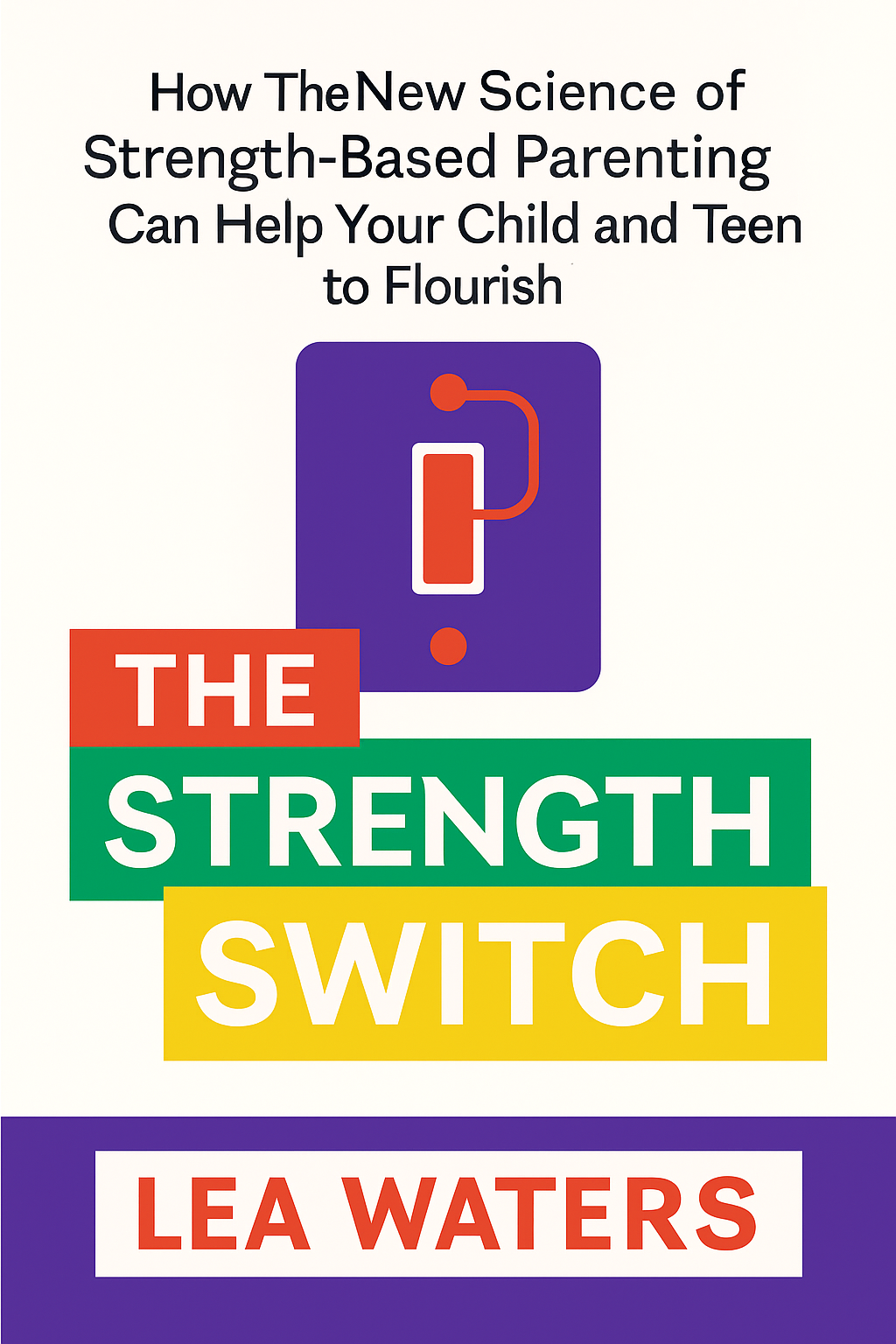
The Strength Switch
How The New Science of Strength-Based Parenting Can Help Your Child and Your Teen to Flourish
Book Edition Details
Summary
Picture a world where the spotlight shines on what our children do best, where their innate strengths are the guiding stars in their journey to resilience and happiness. In "The Strength Switch," Lea Waters challenges parents to redefine their approach, swapping criticism for a celebration of strengths. This transformative guide taps into over two decades of research, revealing a path to nurture confidence and joy in children and teenagers alike. Waters arms parents with tools to uncover hidden talents, harness positive emotions, and tackle challenges with grace. As you turn each page, discover how a small shift in focus can unlock a future bright with potential, shielding our children from the shadows of anxiety and depression. Dive into a revolution of parenting that promises to uplift not only the young but their mentors as well.
Introduction
Picture this moment: your child walks through the door after school, shoulders slumped, muttering about another difficult day. Your parental instincts immediately kick in, ready to dive into problem-solving mode, asking what went wrong and how to fix it. But what if there's a completely different approach that could transform not just this single moment, but your entire relationship with your child? What if instead of focusing on what's broken, you could unlock a hidden world of capabilities that's been waiting to be discovered and celebrated all along? Every child possesses a unique constellation of strengths, natural talents that energize them, and character traits that shine when given the opportunity to flourish. Yet in our well-meaning efforts to help our children succeed, we often fall into the trap of weakness obsession, spending countless hours trying to fix what's wrong rather than building what's right. This approach not only exhausts both parent and child but also misses the profound opportunity to raise truly resilient, optimistic young people who understand their worth and can navigate life's challenges from a place of inner strength. The journey begins with a simple but revolutionary shift in perspective: instead of asking "What's wrong with my child?" we learn to ask "What's right with my child?"
Flip Your Strength Switch to See What's Right
The Strength Switch represents a fundamental mental tool that helps parents redirect their attention from what children do wrong to what they do right. Our brains are naturally wired for survival, programmed to spot problems and threats faster than they notice positives. This negativity bias served our ancestors well when avoiding danger, but in modern parenting, it can blind us to our children's remarkable capabilities. Consider Nick, an eight-year-old who consistently left his bicycle leaning against the front door instead of storing it in the designated spot. Day after day, his mother would arrive home from work, see the misplaced bike, and feel her frustration mount. After yet another reminder about the bike, she watched Nick's welcoming smile fade into disappointment, and she realized something had to change. The next day, instead of immediately focusing on the bike problem, she took a moment to flip her Strength Switch. She noticed that Nick had unpacked his lunchbox, put away his school shoes, and was greeting her with genuine warmth and excitement. She praised these organizational skills and kindly asked him to add bike storage to his growing list of responsibilities. Within weeks, the bike problem resolved itself as Nick began to see himself as someone who was good at organizing and taking care of his belongings. The transformation happened because his mother chose to approach the challenge from a foundation of what was working rather than what was broken. To develop your own Strength Switch, start by practicing mindful awareness of your thoughts when challenges arise with your child. Notice the story you're telling yourself, acknowledge any frustration without judgment, then actively search for evidence of your child's capabilities in the situation. The Strength Switch involves three simple steps: pause when you notice negative thoughts arising, consciously look for strengths in the situation, and speak to those strengths while addressing any necessary corrections. Remember that strengths are always present, even when they're hidden beneath surface behaviors that need adjustment.
Build Attention and Mindfulness for Better Self-Control
True strength development requires the ability to focus attention deliberately and sustain effort over time. Most adults can only maintain focused attention for twenty to thirty minutes, while children's capacity ranges from just a few minutes in early childhood to about twenty minutes in their teens. Understanding these limitations helps us set realistic expectations while building our children's attentional muscles through enjoyable, strength-based activities. Emily's morning routine perfectly illustrates this challenge. Every day, nine-year-old Emily would agree to put on her shoes before school, genuinely intending to follow through. But within moments, her attention would drift elsewhere, leaving her barefoot and her mother frustrated. Instead of viewing this as defiance, her mother began to see it as an opportunity for attention training. She would say, "Emmy, now's the time to show me how strong your attention muscle is getting. Can you put your shoes on without getting distracted? Let's time how fast you can do it!" This playful approach transformed a daily struggle into a strength-building exercise. Emily began to see herself as someone developing focus and cooperation skills, rather than someone who "never listens." The key was connecting the task to her natural strengths of service and desire to please, while making attention-building feel like a game rather than a chore. Her mother discovered that when children learn to notice their thoughts and feelings without judgment, they gain the mental space needed to choose their responses rather than simply reacting to impulses. Start building your child's attention and mindfulness through activities they already enjoy. If your child loves music, try mindful listening exercises where they focus on different instruments in a song. If they're drawn to movement, explore walking meditation or mindful sports practice. Simple practices like mindful breathing, paying attention to physical sensations, or noticing emotions as they arise help children develop the self-awareness that underlies all strength development. The goal isn't to add more tasks to their day but to bring conscious awareness to activities that naturally engage their strengths and interests.
Use Strength-Based Communication and Discipline
The way we speak to our children literally shapes their developing brains and sense of identity. Research shows that children whose parents use high levels of positive communication develop enhanced capacity for learning, decision-making, and emotional functioning. This doesn't mean false praise or ignoring problems, but rather learning to communicate in ways that acknowledge both challenges and capabilities while helping children understand how to use their strengths more effectively. When ten-year-old Jamie was struggling with exclusion from his friendship group, his teacher didn't just offer comfort or traditional discipline. She helped him identify kindness as one of his core strengths, then worked with him and his friends to understand how that kindness could sometimes feel overwhelming to others. Through honest, caring conversations about how strengths can be overused or misdirected, Jamie learned to calibrate his natural kindness more effectively. His friends appreciated his genuine care while helping him understand appropriate boundaries. Rather than trying to change who he was, Jamie learned to use his strength more skillfully, and his relationships improved dramatically. The teacher's approach demonstrated that strength-based discipline views challenging behavior as an opportunity to help children reconnect with their capabilities and develop better self-regulation skills, rather than simply focusing on what went wrong. Begin implementing strength-based communication by spending one week simply noticing and naming the strengths you observe in your child's daily activities. Instead of generic praise like "good job," try connecting their actions to specific strengths: "I see how you used your organizational skills to create such a peaceful space" or "your curiosity and persistence really paid off when you kept asking questions until you understood that concept." This shift in language helps children internalize their capabilities and learn to draw upon them consciously, building authentic self-confidence from the inside out.
Apply Strengths to Real-World Challenges and Growth
The real test of strength-based parenting comes when children face genuine difficulties, setbacks, or areas of weakness. Here, the approach isn't to ignore problems but to help children apply their strengths to address challenges effectively. When children learn to navigate real-world difficulties by drawing upon their natural capabilities, they develop resilience and confidence that serves them throughout their lives. The story of how one parent helped their child with math struggles illustrates this beautifully. Instead of focusing solely on the academic weakness, they helped their child identify their strength of persistence and creativity. Together, they discovered that breaking math problems into smaller steps allowed the child's natural determination to shine through, while using visual and creative approaches helped concepts click in ways that traditional methods hadn't achieved. The child began to see themselves not as "bad at math" but as someone who could use their unique strengths to master challenging material. This approach extends beyond academic challenges to social situations, emotional regulation, and character development. When children understand their strengths, they can apply them strategically to overcome obstacles and create positive outcomes. They learn that their natural talents aren't just nice-to-have qualities but powerful tools for navigating life's complexities and contributing meaningfully to their communities. To apply this approach with your own child, help them identify specific challenges they're facing and explore how their unique strengths might be part of the solution. Encourage them to experiment with different ways of using their strengths, and support them in learning from both successes and setbacks. Remember that the goal isn't perfection, but growth and self-awareness. Celebrate moments when your child successfully draws upon their strengths to handle difficulties, and help them reflect on what they learned from the experience. This builds the foundation for lifelong resilience and authentic achievement.
Summary
When we choose to see and nurture our children's strengths, we're not just improving their performance or boosting their self-esteem. We're fundamentally changing how they see themselves and their place in the world. Children who grow up knowing their strengths develop authentic self-confidence, the deep-rooted belief that they have valuable resources within themselves to handle whatever life brings their way. As one parent discovered through this approach, "The most responsible, the most challenging, and, in the sense of being true to yourself, the most honorable thing to do is face up to the strength potential inherent in your talents and then find ways to realize it." The ripple effects extend far beyond individual families, creating communities of people who recognize and nurture strengths in others rather than focusing primarily on deficits and problems. Children raised with strength awareness become adults who bring out the best in their colleagues, friends, and future families. Start today by having a simple conversation with your child about one strength you've noticed them using recently, asking them how it felt to use that strength and where else they might apply it. This single conversation could be the beginning of a transformation that shapes not just your child's future, but the future of everyone whose life they'll touch.
Related Books
Download PDF & EPUB
To save this Black List summary for later, download the free PDF and EPUB. You can print it out, or read offline at your convenience.
By Lea Waters
