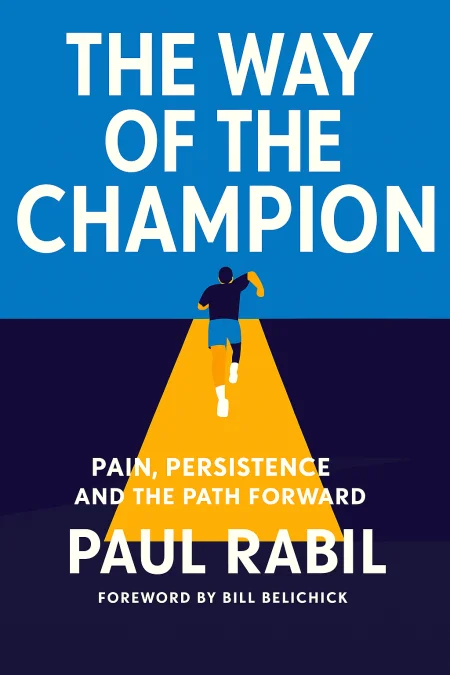
The Way of the Champion
Pain, Persistence, and the Path Forward
Book Edition Details
Summary
In a realm where legends are forged, Paul Rabil stands as a beacon of excellence—not just in lacrosse, but across every field he touches. "The Way of the Champion" isn’t merely an account of triumph; it’s a blueprint for mastering life's arenas with the same fierce determination that drove Rabil to the pinnacle of his sport. Drawing wisdom from titans like Bill Belichick, Steph Curry, and Sue Bird, Rabil distills their insights alongside his own battles of grit and tenacity. This book is an invitation to step into the mindset of a true champion, where strategy meets philosophy, and resilience molds greatness. Whether you’re navigating the boardroom or the playing field, Rabil’s manual illuminates the path to cultivating a winning mentality, inviting readers to transcend their limits and redefine what it means to achieve.
Introduction
In 2008, a young lacrosse player named Paul Rabil faced a choice that would define not just his career, but the future of an entire sport. Fresh out of Johns Hopkins University as the number one draft pick, he could have settled for the traditional path of professional lacrosse—modest salaries, limited exposure, and playing in obscurity. Instead, he chose to revolutionize the game from within, becoming lacrosse's first millionaire player and eventually co-founding the Premier Lacrosse League. Rabil's journey from a twelve-year-old who whiffed his first shot to becoming what The New York Times called "the LeBron James of Lacrosse" offers profound insights into the nature of athletic excellence and entrepreneurial vision. His story reveals the relentless dedication required to master any craft, the courage needed to challenge established systems, and the wisdom to transform personal success into lasting impact. Through Rabil's experiences, we discover how true champions are forged not just through talent, but through an unwavering commitment to excellence and the vision to see possibilities where others see limitations.
From Amateur Dreams to Professional Reality
Paul Rabil's transformation from amateur enthusiast to professional athlete began with a simple piece of advice that would shape two decades of his life. At a lacrosse camp during his freshman year of high school, legendary coach Tony Seaman delivered what seemed like an impossible promise: shoot one hundred shots every single day from that moment through senior year, and earn a full scholarship to any Division I college. The catch was absolute consistency—no holidays, no rain days, no excuses. For most teenagers, this would have been a fleeting moment of inspiration. For Rabil, it became a sacred ritual that he would maintain for twenty years. The daily discipline of those hundred shots taught Rabil more than technique; it taught him the fundamental truth that champions are made in moments when no one is watching. Whether practicing in his Maryland backyard or finding walls to throw against during family vacations across multiple continents, he never missed a day. This obsessive commitment to craft became his defining characteristic, separating him from equally talented players who relied solely on natural ability. The routine wasn't just about muscle memory—it was about building the mental fortitude that would later allow him to perform under the most intense pressure. As Rabil progressed through high school and college, his amateur foundation proved unshakeable. At Johns Hopkins, playing under coach Dave Pietramala, he learned that greatness required more than individual excellence. The program's emphasis on doing "the little things" resonated deeply with someone who had already internalized the value of daily discipline. His college years weren't just about accumulating statistics or winning championships; they were about understanding that true professionals never stop being students of their craft. The transition from amateur to professional status came not with his draft selection, but with a moment of personal commitment. When Major League Lacrosse offered him a modest $6,000 salary, Rabil faced another defining choice. He could treat professional lacrosse as a side pursuit while building a traditional career, or he could bet everything on his ability to elevate both his performance and the sport itself. By choosing to go all in, he transformed from someone who played lacrosse professionally into a true professional athlete—someone whose every decision was filtered through the lens of maximizing his potential and impact on the game.
Mastering the Game: Championships and Legacy
The pursuit of mastery in any field requires more than talent—it demands an almost obsessive relationship with perfection that borders on the irrational. For Rabil, this manifested in his approach to shooting accuracy and game preparation. While other players might focus on spectacular plays or highlight-reel moments, he became fixated on the fundamentals. His shooting regimen evolved from the simple hundred shots of his youth into sophisticated training that mimicked game conditions. He practiced shots while exhausted, under pressure, and from uncomfortable positions because he understood that games are won in moments when technique must override fatigue and stress. Championship success came through this relentless attention to detail, but it also taught Rabil profound lessons about failure and resilience. The devastating loss to Canada in the 2014 World Championships, where he registered zero goals and zero assists in front of a home crowd, could have ended his career. Instead, it became a catalyst for growth. Working with sports psychologist John Eliot, he learned to separate his identity from his performance, understanding that true champions don't avoid failure—they metabolize it. The ability to transform crushing defeats into fuel for future success became one of his greatest strengths. His mastery wasn't limited to physical skills but extended to mental preparation and strategic thinking. Rabil studied opponents obsessively, often knowing their tendencies better than they knew themselves. This preparation allowed him to anticipate plays and position himself advantageously, turning athletic contests into chess matches where superior preparation trumped raw athleticism. His coaches recognized this quality early, with Bill Belichick noting that Rabil's coachability—his ability to absorb instruction and implement improvements—set him apart from more naturally gifted but less disciplined athletes. The true measure of Rabil's mastery wasn't his individual statistics or MVP awards, but his ability to elevate the performance of everyone around him. Great athletes make themselves better; champions make their teammates better. Throughout his career, Rabil demonstrated that leadership in sports isn't about being the loudest voice in the room, but about setting standards through example and creating an environment where excellence becomes contagious. His legacy in mastering the game lies not just in what he accomplished, but in how he raised the ceiling for what was possible in professional lacrosse.
Beyond the Field: Building an Empire
The transition from professional athlete to entrepreneur required Rabil to apply the same principles that made him successful on the field to the vastly different world of business and media. His early recognition of social media's potential wasn't born from marketing genius, but from the simple understanding that authentic connection with fans could create value. Starting with basic posts about his training routines and favorite meals, he built a following that eventually matched the audience of his college championship game. This wasn't accidental—it was the same methodical approach he applied to his hundred daily shots, but focused on building relationships and brand equity. The creation of the Premier Lacrosse League with his brother Mike represented the ultimate expression of Rabil's champion mindset applied beyond athletics. Rather than accepting the limitations of existing professional lacrosse, they chose to reimagine the entire structure of the sport. This required the same type of vision that allowed him to see improvements in his shooting technique—the ability to envision what didn't yet exist and work systematically toward making it reality. The PLL wasn't just a business venture; it was an attempt to create the professional league that Rabil wished had existed when he started his career. Building the league required skills that couldn't be learned on a lacrosse field, forcing Rabil to become a student again in areas like media rights, player equity, and investor relations. The discipline that once went into perfecting his left-handed shot was redirected toward understanding complex business models and negotiating with network executives. This adaptability—the ability to transfer excellence from one domain to another—represents perhaps the most valuable skill any champion can develop. Success in athletics provided credibility, but success in business required entirely new competencies. The ultimate goal of Rabil's entrepreneurial efforts extends beyond personal success to fundamentally changing how lacrosse players can make a living from their sport. By securing higher wages, health insurance, and equity stakes for players, the PLL represents his attempt to solve the same financial challenges he faced as a young professional. His business empire isn't built solely for profit, but as a platform for elevating an entire sport and the athletes who dedicate their lives to it. This transformation from individual achievement to systemic change marks the evolution from successful athlete to true champion—someone whose impact extends far beyond their own performance to create lasting change for future generations.
Summary
Paul Rabil's journey from a twelve-year-old who missed his first lacrosse shot to becoming the architect of a professional league revolution demonstrates that true champions are defined not by their natural gifts, but by their willingness to commit completely to excellence in every aspect of their lives. His story reveals that mastery is built through daily discipline, that setbacks can become springboards for growth, and that the highest form of success comes from using individual achievement as a platform for lifting others. From his unwavering commitment to shooting one hundred balls daily to his vision of transforming professional lacrosse through the Premier Lacrosse League, Rabil exemplifies how champions think beyond their own careers to create lasting impact. His life offers two profound lessons for anyone pursuing excellence: first, that consistency in small actions compounds into extraordinary results over time, and second, that true leadership means using your success to expand possibilities for others rather than simply accumulating personal accolades. For athletes, entrepreneurs, and anyone seeking to maximize their potential, Rabil's path demonstrates that the way of the champion is not a destination but a daily choice to pursue excellence while building something greater than yourself.
Related Books
Download PDF & EPUB
To save this Black List summary for later, download the free PDF and EPUB. You can print it out, or read offline at your convenience.
By Paul Rabil
