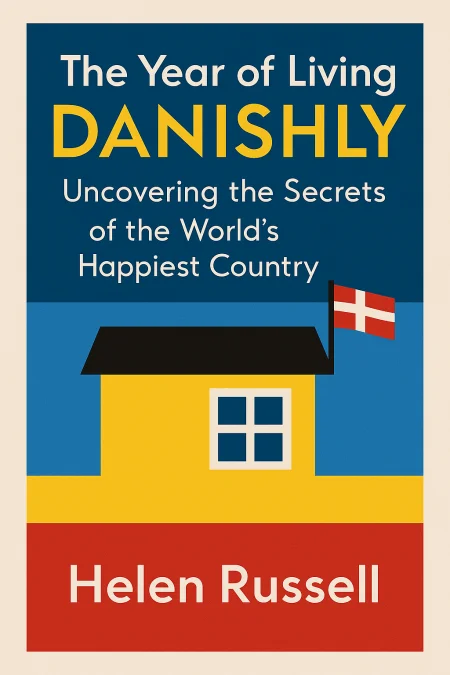
The Year of Living Danishly
Uncovering the Secrets of the World’s Happiest Country
Book Edition Details
Summary
In the heart of rural Jutland, Helen Russell embarks on a curious quest: to unlock the enigma behind Denmark's crown as the planet's happiest realm. With a keen eye and a dash of humor, she navigates through the quirks of Danish life—from the embrace of hygge to the challenge of enduring endless winter nights. "A Year of Living Danishly" is a captivating exploration of cultural contrasts and unexpected joys. Can the secrets of Danish contentment withstand the test of foreign eyes, or will pickled herring and relentless darkness thwart her pursuit? This delightful narrative offers a fresh lens on happiness, inviting readers to ponder if a touch of Danish lifestyle might just brighten their own world.
Introduction
Imagine stepping off a plane into a world where strangers trust you with their house keys, where babies sleep peacefully in strollers outside busy cafes while parents dine inside, and where leaving work at 4 PM to have dinner with your family is not just accepted but expected. This isn't a utopian fantasy—it's everyday life in Denmark, a small Scandinavian nation that consistently ranks as one of the world's happiest countries. When a British family decided to uproot their hectic London life and immerse themselves in Danish culture for an entire year, they embarked on more than just a geographical relocation. They began a profound experiment in living differently, discovering the hidden mechanisms behind a society that has mastered the art of collective contentment. Through winter's hygge rituals and summer's community celebrations, through workplace sing-alongs and revolutionary parenting approaches, they uncovered the practical wisdom that transforms ordinary moments into sources of deep satisfaction. Their journey reveals that Danish happiness isn't about having perfect lives or unlimited resources. Instead, it's about creating systems and mindsets that prioritize human flourishing over individual achievement, community connection over personal competition, and genuine well-being over material accumulation. These aren't just Scandinavian curiosities—they're transferable insights that can transform how we approach work, relationships, and the pursuit of a meaningful life, regardless of where we call home.
Trust and Hygge: Discovering Denmark's Social Foundation
The first winter evening in their new Danish village brought an unexpected revelation. As darkness fell at 3 PM, their neighbor appeared at the door with a spare key, explaining matter-of-factly that she'd water their plants whenever they traveled. No background checks, no lengthy conversations about responsibility—just an assumption of trustworthiness that felt both foreign and deeply moving. This wasn't an isolated incident but a glimpse into Denmark's most fundamental characteristic: a society built on radical trust. This trust manifests in countless daily interactions that would seem impossible elsewhere. Bank managers casually transfer customers' money to better accounts without permission, simply because it benefits the client. Expensive bicycles lean unlocked against buildings for hours. Parents leave babies sleeping in strollers outside restaurants while they enjoy leisurely meals inside, trusting that their community will watch over their most precious possessions. This isn't naivety but sophisticated social engineering that eliminates the constant vigilance and anxiety that plague less trusting societies. From this foundation of security emerges hygge, Denmark's famous but untranslatable concept of intentional coziness. When you truly trust your neighbors, government, and social systems, you can genuinely relax. Hygge becomes possible not just as an aesthetic choice but as a state of being. Danes light more candles per capita than any other nation because they've created conditions where people can actually slow down and savor simple pleasures without fear or worry. The deeper revelation is that trust and hygge work together to create a virtuous cycle of contentment. When basic security is guaranteed through social systems and community bonds, people can invest their emotional energy in connection and joy rather than protection and accumulation. This transforms everyday moments—sharing coffee with a colleague, reading to children before bed, gathering with friends on a winter evening—into sources of profound satisfaction that no amount of individual achievement could match.
Work, Family, and Gender: The Nordic Balance Revolution
The morning her husband arrived home at 4:30 PM with stories of office birthday celebrations involving elaborate flag ceremonies and mandatory cake, it became clear that Danish work culture operated on entirely different principles. This wasn't a country where staying late earned respect or where weekend emails demonstrated dedication. Instead, Danish workplaces had revolutionized the relationship between productivity and well-being, creating environments where both could flourish simultaneously. The concept of arbejdsglæde—literally "happiness at work"—exists nowhere else in the world linguistically, and for good reason. Danish offices incorporate drumming sessions into meetings, celebrate every birthday with ceremonial flags, and operate under the principle of "Lego over ego." Employees are expected to leave promptly to collect children from daycare, take their full vacation allowances, and prioritize family dinners over professional networking. This isn't corporate frivolity but systematic recognition that happy workers are productive workers, and that productivity without happiness is ultimately unsustainable. This workplace revolution is supported by genuine gender equality that extends far beyond policy into daily practice. Danish fathers routinely take months of paternity leave, learning to navigate sleepless nights and diaper changes alongside their partners. Children grow up seeing both parents as caregivers and breadwinners, breaking generational cycles of gendered expectations. The result is a society where women pursue careers without guilt and men engage in domestic life without embarrassment, creating partnerships based on shared responsibility rather than traditional roles. Yet this progress isn't without complexity. Some Danish women report feeling pressured to return to work quickly after childbirth, while others face subtle judgment for choosing to stay home. The country's surprisingly high rates of domestic violence suggest that progressive policies don't automatically eliminate deeper cultural problems. However, Denmark's approach to these challenges differs markedly from other nations—problems are acknowledged openly rather than hidden, and solutions are pursued collectively rather than individually, creating a culture where imperfection is met with community commitment to improvement rather than individual shame.
Education, Health, and Welfare: Building Happiness Infrastructure
The sight of Danish kindergarteners embarking on a field trip to a local tractor dealership—simply because one child had expressed curiosity about farm equipment—revealed an educational philosophy that prioritizes wonder over standardization. Teachers address students by first names, encourage questioning of authority, and design curricula around children's natural interests rather than predetermined academic benchmarks. The goal isn't to create compliant workers but critical thinkers who can challenge systems when necessary and find joy in lifelong learning. This educational approach extends through university, where students receive stipends to pursue their studies and can explore different fields without financial pressure. A typical Dane might spend their twenties traveling, volunteering, and experimenting with various careers before settling into their chosen profession. This creates a workforce of people who genuinely enjoy their jobs because they've had the freedom to discover their authentic interests and develop their unique talents without the constraint of economic desperation. The healthcare system operates on similar principles of collective investment and individual dignity. Patients access their complete medical records online, participate actively in treatment decisions, and receive comprehensive preventive care designed to maintain wellness rather than merely treat illness. Mental health support is readily available without stigma, addiction is treated as a medical issue rather than a moral failing, and end-of-life care emphasizes comfort and family connection over expensive interventions that merely prolong suffering. This comprehensive welfare model faces real challenges, including an aging population that strains resources and concerns that generous benefits might create complacency among some citizens. Yet the system succeeds because it's built on Denmark's unique combination of high social trust, cultural commitment to collective responsibility, and shared understanding that individual flourishing depends on community investment. The Danish model demonstrates that when societies prioritize human development over economic efficiency, they create conditions where both individuals and communities can thrive in ways that pure market mechanisms cannot achieve.
Traditions and Contentment: The Art of Living Enough
The elaborate preparation for Danish Christmas, beginning in November and extending through New Year, revealed a culture that understands celebration as community investment rather than individual indulgence. Every workplace hosts traditional holiday parties where colleagues bond over ritualized activities and shared foods, strengthening social connections that sustain people through the dark winter months. These aren't obligatory corporate events but genuine celebrations of collective achievement and mutual appreciation. Danish flag etiquette, taken so seriously that improper display can result in fines, initially seemed like excessive nationalism but proved to represent something deeper—collective pride in shared accomplishments. When Danes wave flags at birthday parties, community events, and national holidays, they're celebrating their success in creating a society that works for everyone. This pride is earned through measurable outcomes like low inequality, high social mobility, and genuine democratic participation rather than inherited through accident of birth or military conquest. The Danish approach to tradition balances reverence for the past with openness to necessary change. Ancient customs like Midsummer bonfires coexist comfortably with modern innovations like state-funded drug consumption rooms and progressive immigration policies. This flexibility allows Danish culture to evolve while maintaining its core values of equality, trust, and collective responsibility, creating stability without stagnation. Perhaps most importantly, Danish culture teaches the revolutionary art of being satisfied with "enough." While other societies chase endless growth and accumulation, Danes have learned to find joy in sufficiency. They work reasonable hours, take long vacations, prioritize relationships over career advancement, and measure success through well-being rather than wealth. This isn't laziness but wisdom—the recognition that happiness comes from balance rather than maximization, from depth rather than breadth, from connection rather than achievement. In a world obsessed with more, Denmark offers a compelling vision of better.
Summary
The Danish happiness experiment reveals that contentment isn't a mysterious quality possessed by lucky individuals but a systematic approach to organizing society around human flourishing rather than economic optimization. Through radical trust, Danes eliminate countless daily anxieties that plague other cultures. Through genuine equality, they create opportunities for everyone to contribute their unique gifts. Through collective investment in education, healthcare, and social support, they free individuals to pursue meaningful lives rather than mere survival. Yet Denmark's greatest lessons extend beyond policy prescriptions to fundamental shifts in perspective. Their commitment to hygge teaches us to find profound joy in simple pleasures and authentic connections. Their revolutionary work-life balance demonstrates that productivity and well-being aren't opposing forces but complementary goals that strengthen each other. Their approach to tradition shows how communities can honor their past while embracing necessary change, creating stability without stagnation. Most profoundly, Danish culture offers a radically different definition of success itself. Rather than measuring progress through individual achievement or material accumulation, Danes evaluate their society's health through collective well-being and shared prosperity. This transformation—from competition to cooperation, from scarcity thinking to sufficiency, from individual triumph to community flourishing—represents their greatest gift to our increasingly divided world. The Danish model reminds us that happiness isn't a luxury for the fortunate few but a choice available to any society willing to prioritize what truly matters: the simple, revolutionary act of caring for each other.
Related Books
Download PDF & EPUB
To save this Black List summary for later, download the free PDF and EPUB. You can print it out, or read offline at your convenience.
By Helen Russell
