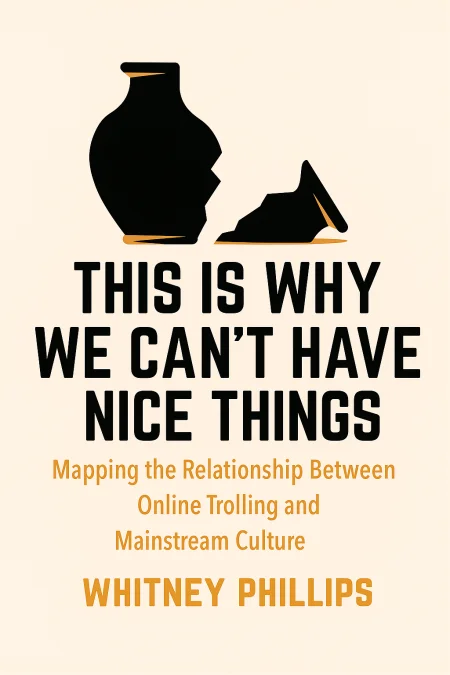
This is Why We Can’t Have Nice Things
Mapping the Relationship Between Online Trolling and Mainstream Culture
Book Edition Details
Summary
In the chaotic carnival of the online world, trolls are the jesters who revel in outrage and offense. Whitney Phillips takes us beyond the surface spectacle to reveal an unsettling truth: trolling is not an isolated anomaly but a mirror reflecting the dark corners of our digital culture. In "This Is Why We Can't Have Nice Things," she dissects the symbiotic relationship between trolls and mainstream media, showing how both thrive on sensationalism and exploitation. Here, malicious online antics are not mere disruptions but potent commentaries on societal norms and media complicity. This book challenges us to confront a cultural malaise that extends beyond the screens, urging readers to see trolls not just as digital mischief-makers but as unsettling manifestations of a wider cultural dysfunction.
Introduction
The conventional understanding of internet trolling as deviant behavior perpetrated by antisocial outliers fundamentally misrepresents the phenomenon and obscures its deeper cultural significance. Rather than existing as aberrant exceptions to civilized discourse, trolling behaviors emerge as concentrated expressions of values, practices, and power dynamics that pervade mainstream American society. This uncomfortable reality challenges prevailing assumptions about the nature of online harassment and forces a confrontation with the ways supposedly legitimate institutions mirror and amplify the very behaviors they publicly condemn. The analysis reveals how corporate media outlets, political discourse, and cultural institutions create symbiotic relationships with trolling culture, profiting from and perpetuating the spectacle they claim to oppose. Through careful examination of the cultural origins, media dynamics, and ideological foundations underlying trolling behaviors, a disturbing pattern emerges that exposes the hypocrisies and contradictions embedded within contemporary digital culture. The investigation employs a diagnostic approach that treats trolling as a cultural symptom rather than an individual pathology, tracing how technological platforms amplify existing social tensions while providing new venues for expressing pre-existing hierarchies and prejudices.
Trolling Behaviors Mirror Dominant Cultural Values and Practices
The pursuit of lulz that motivates trolling behavior operates according to the same spectacle-driven logic that animates mainstream media coverage of tragedy and personal suffering. When trolls exploit grief for entertainment, they replicate mechanisms employed by news organizations that transform private pain into public commodity through sensationalized reporting and advertising revenue generation. The psychological distance created by digital mediation enables the same callous detachment that characterizes corporate responses to human suffering, revealing shared underlying attitudes toward the commodification of emotion and trauma. Trolling emerges from technological affordances that amplify existing cultural tendencies toward emotional detachment and fetishistic consumption of others' misfortune. Social media platforms encourage selective engagement and filter bubble mentality that trolls exploit to extreme degrees, while mass mediation creates the psychological distance necessary for dehumanizing humor. These same digital tools that allow users to curate comfortable online experiences enable trolls to compartmentalize their targets into objects of amusement, reflecting broader cultural patterns of selective empathy and strategic ignorance. The entitled attitude trolls display toward online spaces directly parallels broader American assumptions about territorial acquisition and resource exploitation. When trolls declare virtual territories their personal playgrounds, they enact digital versions of manifest destiny that mirror historical patterns of colonization and cultural domination. This ideological framework treats available spaces as legitimate targets for extraction and exploitation, regardless of existing communities or established norms. The adversarial methods that characterize trolling behavior reflect foundational Western philosophical and rhetorical traditions that prioritize victory over truth-seeking. The emphasis on rational detachment, strategic manipulation, and dominance over opponents mirrors techniques celebrated in academic discourse, legal advocacy, and business negotiation. Trolls demonstrate mastery of approaches taught as intellectual ideals while exposing their potential for cruelty when divorced from ethical constraints.
Media-Troll Symbiosis Creates Mutually Profitable Exploitation Cycles
Corporate media outlets and trolling culture maintain fundamentally symbiotic rather than adversarial relationships, with each party providing exactly what the other requires for sustained operation. Media organizations need sensational content to capture audience attention and generate advertising revenue, while trolls depend on media amplification to achieve maximum impact and visibility for their provocations. This mutually beneficial arrangement becomes particularly evident in cases where trolls successfully manipulate news cycles by providing content too sensational for outlets to ignore, regardless of accuracy or social consequences. The mechanics of media-troll symbiosis expose shared priorities that prioritize spectacle over accuracy, emotional manipulation over substantive analysis, and audience engagement over ethical responsibility. When news outlets breathlessly report on trolling incidents, they provide validation and branding opportunities for perpetrators while generating the moral panic that drives viewership and revenue. This dynamic creates hypocritical situations where media organizations condemn behaviors that mirror their own practices, revealing arbitrary moral boundaries in landscapes driven primarily by commercial rather than ethical considerations. The feedback loop between trolls and mainstream media produces increasingly extreme content as each party attempts to outdo previous provocations. Media coverage patterns follow predictable formulas that maximize emotional impact through dramatic headlines, selective evidence presentation, and framing that treats isolated incidents as representative trends. These editorial choices transform relatively small-scale disruptions into major news events, providing trolls with platforms while generating profitable outrage for media companies. The economic incentives driving this relationship ensure its persistence despite public condemnation of trolling behaviors. High engagement rates from trolling stories translate directly into advertising revenue, creating little incentive for nuanced coverage that might reduce emotional intensity. The result is systematic amplification of harmful behaviors disguised as moral opposition, normalizing cruelty and exploitation while claiming to condemn them.
The False Binary Between Trolls and Normal Society
The conventional distinction between trolls and ordinary internet users obscures the extent to which trolling behaviors exist on a continuum with everyday online practices rather than representing categorical departures from normal digital engagement. Social media platforms reward attention-seeking behaviors, emotional manipulation, and strategic outrage deployment through gamification elements including like systems, sharing metrics, and algorithmic amplification. These incentive structures naturally encourage trolling-adjacent behaviors among all users, revealing how platform design makes such conduct inevitable rather than aberrant. Rhetorical strategies employed by trolls directly parallel those used in mainstream political discourse, academic debate, and corporate communication. The adversarial method underlying Western philosophical and legal traditions emphasizes winning over truth-seeking, prioritizes rational detachment over emotional engagement, and treats discourse as competitive arenas where dominance must be established. Trolls simply apply these principles more explicitly and with fewer social constraints, revealing the inherently aggressive and hierarchical nature of supposedly civilized debate practices. Targeting patterns exhibited by trolls reflect broader social hierarchies and power structures rather than representing random cruelty. Trolls consistently focus attention on individuals and groups occupying marginalized positions within existing social arrangements, employing stereotypes and prejudices that circulate throughout mainstream culture. The difference lies not in underlying attitudes but in the degree of social permission granted for expressing these views openly, with trolls operating in spaces where such expressions face fewer immediate consequences. Moral outrage directed toward trolling often serves as psychological displacement that allows individuals and institutions to disavow their own participation in similar dynamics. By constructing trolls as fundamentally different from normal people, society avoids confronting how everyday practices contribute to the same harmful outcomes that trolling produces. This false binary prevents meaningful examination of how mainstream institutions and cultural norms create conditions that make trolling both possible and appealing.
Addressing Root Causes Rather Than Surface Symptoms
Effective responses to harmful online behaviors must address cultural and structural conditions that generate trolling rather than focusing exclusively on individual actors or technological fixes. The most persistent and damaging forms of trolling emerge from and amplify existing social tensions, power imbalances, and institutional failures. Solutions that ignore underlying dynamics while attempting to modify surface behaviors prove ineffective because they fail to address root causes that make trolling attractive and sustainable for participants. The relationship between trolling and mainstream media practices suggests that meaningful change requires examining how supposedly legitimate institutions contribute to problems they claim to oppose. Media organizations that profit from sensationalizing trolling incidents while employing similar tactics in their own coverage cannot credibly position themselves as neutral observers or moral authorities. Similarly, political figures and cultural commentators who engage in trolling-like behaviors while condemning online harassment reveal how the problem extends far beyond digital platforms. Legal and regulatory approaches must distinguish between behaviors causing lasting harm and those representing temporary disruptions, while avoiding overly broad definitions that could criminalize legitimate dissent or criticism. The most effective interventions focus on persistent harassment campaigns that threaten individuals' ability to participate in public life, rather than attempting to eliminate all forms of online antagonism. This targeted approach recognizes that some degree of conflict and disagreement is inherent to democratic discourse while protecting vulnerable individuals from systematic abuse. Long-term reduction of harmful trolling behaviors requires cultural changes addressing underlying values and incentive structures that make such activities appealing. This includes reconsidering how digital platforms are designed and monetized, examining media coverage roles in amplifying harmful behaviors, and acknowledging ways mainstream institutions model and reward tactics they condemn when employed by trolls. Without addressing these systemic factors, efforts to combat trolling remain reactive and ineffective, treating symptoms while ignoring the disease.
Summary
Internet trolling reveals itself not as aberrant departure from normal social behavior but as intensified expression of competitive, hierarchical, and exploitative dynamics characterizing contemporary digital culture and broader societal structures. Trolls function as unwitting cultural diagnosticians, exposing contradictions and hypocrisies embedded within systems that simultaneously condemn their behaviors while rewarding similar tactics when employed by more socially acceptable actors. The symbiotic relationship between trolling culture and mainstream institutions demonstrates how supposedly oppositional forces actually reinforce each other through cycles of mutual exploitation, with media organizations profiting from sensationalizing the very behaviors they claim to oppose. Understanding trolling as cultural symptom rather than individual pathology opens possibilities for more effective responses addressing root causes rather than surface manifestations, while challenging examination of complicity in systems that make such behaviors both possible and profitable. The persistence and predictability of these patterns indicate that meaningful change requires confronting the fundamental values, institutions, and power structures that produce trolling as inevitable outcome rather than unfortunate exception.
Related Books
Download PDF & EPUB
To save this Black List summary for later, download the free PDF and EPUB. You can print it out, or read offline at your convenience.
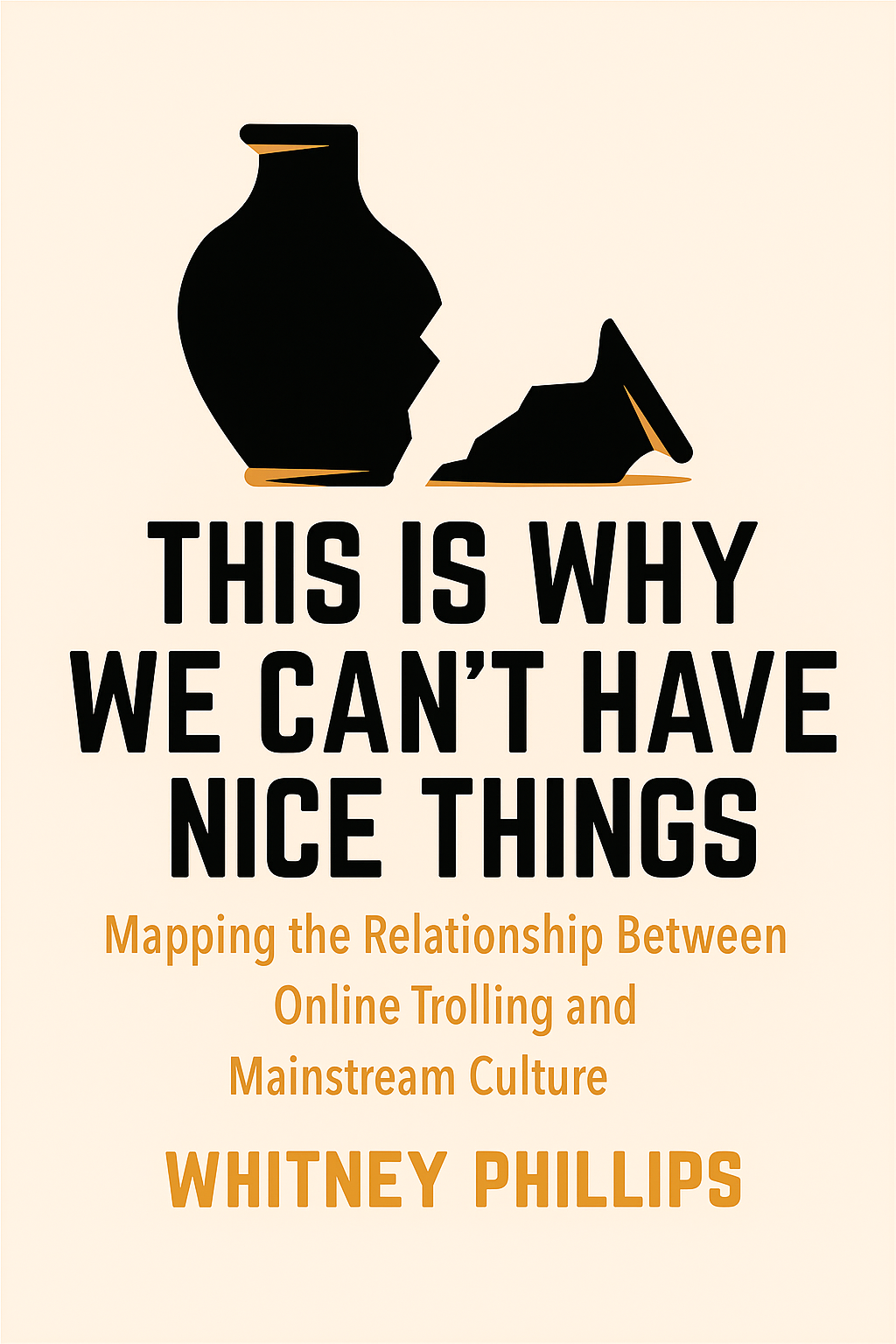
By Whitney Phillips
