
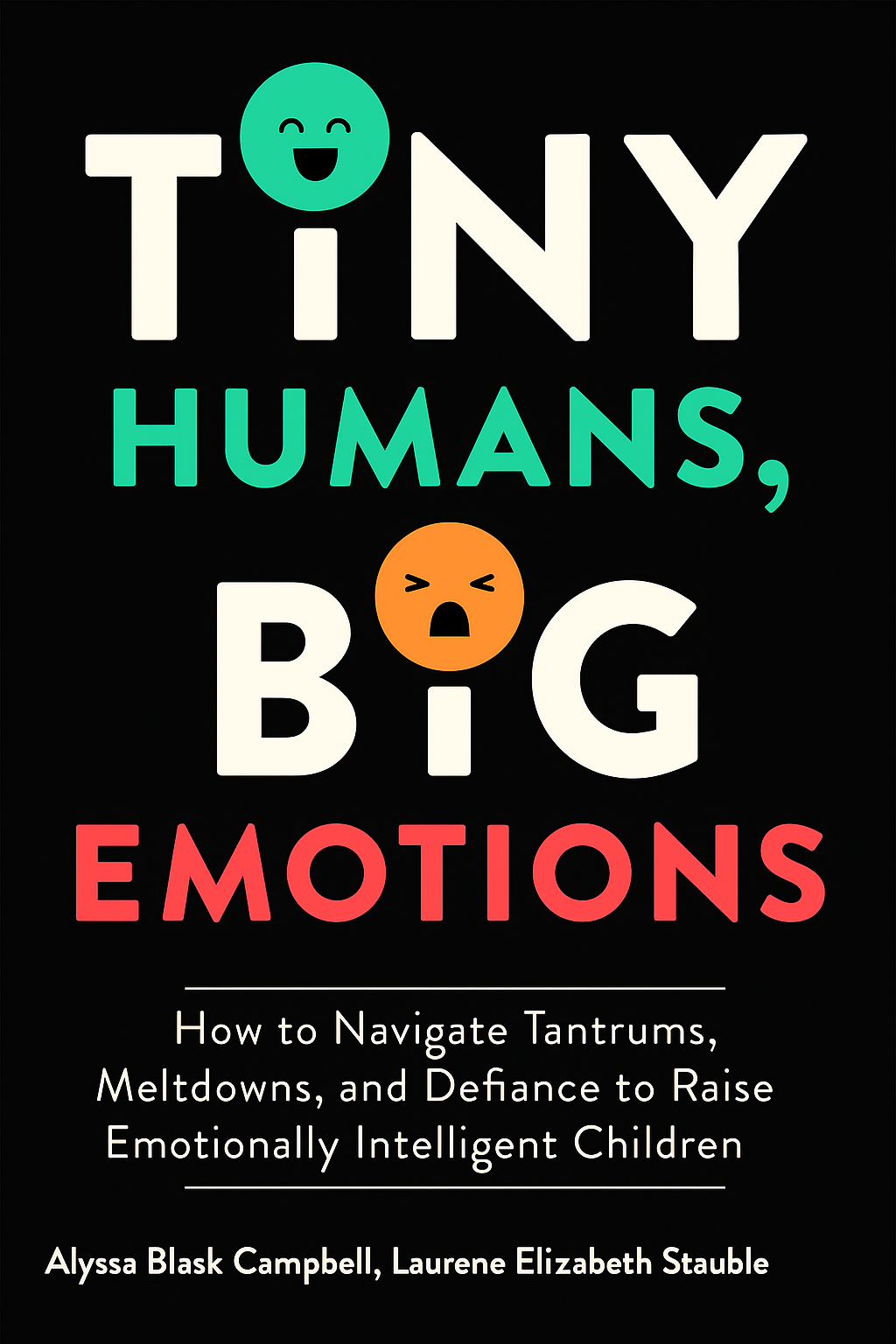
Tiny Humans, Big Emotions
How to Navigate Tantrums, Meltdowns, and Defiance to Raise Emotionally Intelligent Children
byAlyssa Blask Campbell, Lauren Elizabeth Stauble
Book Edition Details
Summary
In a world where parenting norms are shifting like never before, Alyssa Blask Campbell and Lauren Stauble present a groundbreaking blueprint for nurturing emotionally intelligent children. "Tiny Humans, Big Emotions" doesn't just scratch the surface; it dives deep into the heart of emotional development, offering parents and caregivers a revolutionary method to engage with their children's feelings. With their pioneering Collaborative Emotion Processing (CEP) approach, these experts provide practical scripts and actionable strategies to transform tantrums and meltdowns into opportunities for growth and understanding. As parents, you'll learn to anticipate and defuse emotional storms before they hit, all while strengthening the precious bond with your child. This guide is an indispensable tool for anyone caring for children from birth to age eight, packed with insights that foster emotional resilience and empathy. Equip yourself with the knowledge to help tiny humans navigate their big emotions, setting them up for a lifetime of well-being and empathetic interactions.
Introduction
Every parent has been there—standing in the grocery store while their toddler melts down over the wrong color cup, or watching their preschooler dissolve into tears because their tower of blocks fell over. In these moments, we often feel helpless, wondering if we're doing something wrong or if our child will ever learn to handle their emotions. The truth is, these challenging moments aren't signs of failure—they're opportunities for profound growth and connection. Children experience emotions with an intensity that can feel overwhelming, both for them and for us. Their developing brains are still learning how to process feelings, communicate needs, and navigate the complex world of human relationships. When we understand that big emotions are a normal part of development rather than problems to be fixed, we can shift from trying to stop the feelings to helping our children learn from them. This journey requires patience, understanding, and practical tools that honor both the child's emotional experience and our role as their guides.
Understanding Your Child's Emotional World
Your role in your child's emotional development goes far deeper than managing behavior in the moment. You are essentially their emotional co-pilot, helping them make sense of the complex world of feelings while they develop the neural pathways that will serve them throughout life. This means recognizing that your own emotional history and attachment patterns directly influence how you respond to your child's big feelings. Consider Alyssa's childhood memory of being denied a doughnut after crawling under church pews despite her father's warning. When she melted down on the bakery floor, the adults around her focused on stopping the behavior rather than understanding the disappointment and confusion driving it. This experience shaped her understanding of how emotions were handled in her family system. Years later, as an educator, she noticed herself perpetuating similar patterns until she began questioning whether emotions actually had something to tell us. The transformation began when Alyssa started viewing children's emotional expressions not as problems to solve but as communications to understand. Instead of rushing to stop tears or tantrums, she learned to stay present with children during their big feelings. This shift required her to first become comfortable with her own emotional landscape, recognizing her triggers and developing tools for self-regulation. Your primary job is to remain emotionally available and regulated when your child is dysregulated. This means practicing mindfulness to notice your own reactions, building self-awareness about your emotional patterns, and developing coping strategies that help you stay calm in the storm. When you can hold space for your child's emotions without being overwhelmed by them, you teach them that feelings are safe to have and that they won't be alone in processing them.
The Collaborative Emotion Processing Method
Collaborative Emotion Processing unfolds through five distinct phases that guide both you and your child through emotional experiences. This isn't about rushing through feelings to get back to calm, but about fully experiencing and integrating emotions together. The process begins with your own regulation and extends into teaching your child essential life skills. Watch this method in action with four-year-old Amaya, who erupted in frustration when she opened her snack container to find a broken granola bar. Instead of immediately problem-solving or dismissing her feelings, her teacher first allowed the emotion to exist, saying "You didn't want your mom to send a bar and she sent it anyway! Ugh, that's so frustrating!" This validation helped Amaya feel seen and understood. The teacher then moved through recognizing the emotion by reflecting back what she observed: "I see your shoulders up by your ears and your tight fists. I hear your loud voice. I hear your frustration. It makes sense." Only after Amaya showed signs of feeling understood did they move to coping strategies, doing ten big jumps together followed by a regulating hug. The final phase involved collaborative problem-solving once Amaya was regulated, presenting the reality while empowering her choice: "There's three minutes left for snack. You don't have to eat it. I trust you to listen to your body." Begin practicing these phases by first noticing your own urge to rush through or fix your child's emotions. Instead, pause and ask yourself: "Is this a moment for calming or teaching?" When children are dysregulated, focus on co-regulation first. When they're calm, you can explore what happened and brainstorm different responses for next time. Remember that processing emotions collaboratively builds trust and teaches children they can handle difficult feelings.
Practical Strategies for Daily Emotional Challenges
Understanding what happens in your child's brain and body during emotional moments transforms how you respond to them. When children experience big feelings, their nervous system activates just like ours does, but they lack the developed prefrontal cortex needed for self-regulation. This means their survival brain takes over, making logical reasoning temporarily impossible. Lauren observed this clearly with two-year-old Simon whose block castle was knocked down by his crawling sister. Her first instinct was to say "That's okay, you can build it again," until she remembered her own frustration when her freshly folded laundry was scattered by her baby. That visceral understanding of disappointment helped her empathize with Simon's rage rather than dismiss it. The key insight is distinguishing between sensory regulation and emotional regulation. When children are dysregulated, they first need help calming their nervous system before they can process emotions or learn new skills. This might involve deep pressure like hugs, proprioceptive input like jumping, or simply your calm presence helping to co-regulate their system. Practice recognizing the signs of dysregulation versus distress in your child. Dysregulation might look like defiance, silliness, or meltdowns, while distress involves uncontrollable sobbing or complete disconnection. Both require your regulated presence, but distress needs immediate soothing while dysregulation can include some emotion processing work. Start incorporating "sensory snacks" throughout your day: twenty-second hugs, brief movement breaks, or moments of deep breathing together to prevent overwhelm before it begins.
Summary
The journey of raising emotionally intelligent children isn't about achieving perfection or eliminating all difficult moments. It's about creating a foundation of trust, understanding, and connection that will serve your child throughout their life. As one wise parent discovered, "Every time we weather the storm of inner emotional discomfort together, we are quite literally reprogramming our minds, rewiring our brains toward more stability, well-being, and confidence." When we embrace the messiness of emotional development and trust in our children's innate capacity for growth, we create space for authentic connection and learning. Every tantrum becomes an opportunity to practice patience, every conflict a chance to model problem-solving, and every tear a moment to demonstrate that all feelings are welcome and manageable. The skills we build together become the tools our children will carry into their relationships, their work, and their own parenting journey. Begin today by choosing one moment when your child has a big feeling to practice simply being present without trying to change anything, offering your calm presence as a gift that transforms your family's relationship with emotions.
Related Books
Download PDF & EPUB
To save this Black List summary for later, download the free PDF and EPUB. You can print it out, or read offline at your convenience.
By Alyssa Blask Campbell
