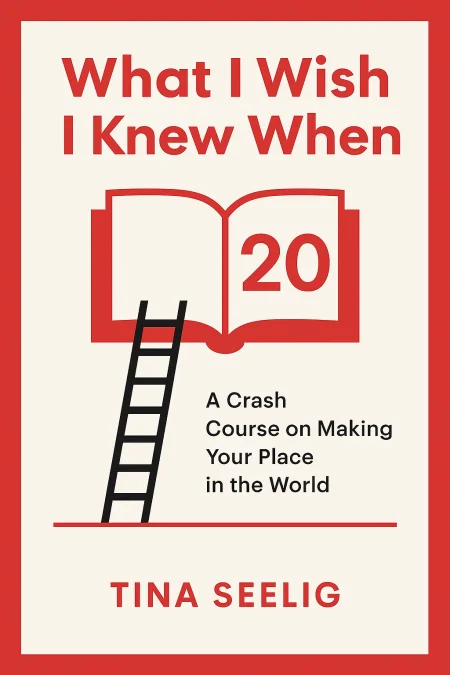
What I Wish I Knew When I Was 20
A Crash Course on Making Your Place in the World
Book Edition Details
Summary
Navigating the choppy waters of adulthood can be daunting—an uncharted ocean where choices loom like shadowy leviathans. In "What I Wish I Knew When I Was 20," Stanford's own Tina Seelig stands at the helm, sharing tales from her classroom to the corporate world, turning fear into fuel and obstacles into opportunities. This newly updated edition brims with fresh insights and Seelig's signature blend of humor and humility. With a sharp eye for the unseen potential in failure, she reimagines the road to success, challenging us to toss aside old maps and embrace the chaos with courage. Whether you're stepping out of academia or simply seeking a life less ordinary, this audiobook offers the compass you need to chart your own daring course.
Introduction
Life has a peculiar way of presenting us with what appear to be roadblocks, setbacks, and impossible challenges. Yet what if the very obstacles standing in your path are actually doorways to extraordinary possibilities? The most successful individuals throughout history share a common trait: they possess the remarkable ability to see beyond the surface of any problem and discover the hidden opportunities within. This perspective isn't just optimistic thinking—it's a learnable skill that can transform how you navigate every aspect of your personal and professional journey. When you develop this mindset, you begin to realize that constraints often spark creativity, failures provide valuable data, and limitations can become launching pads for innovation. The world around you is filled with problems waiting to be solved, and each one represents a potential pathway to success, fulfillment, and meaningful impact.
See Opportunities Where Others See Problems
The art of opportunity recognition begins with a fundamental shift in perspective—moving from seeing problems as obstacles to viewing them as puzzles waiting to be solved. Most people encounter difficulties and immediately focus on what's wrong, what's missing, or what cannot be done. However, true innovators train themselves to ask different questions: What possibilities does this challenge reveal? What needs are being exposed? How might this difficulty point toward a valuable solution? Consider the Stanford students who were given just five dollars and two hours to generate as much money as possible. While many initially thought about conventional approaches like car washes or lemonade stands, the winning teams recognized that their most valuable asset wasn't the money at all—it was their three-minute presentation time to a room full of talented students. They sold this time slot to a company wanting to recruit from the class, earning over six hundred dollars. This breakthrough came from reframing the entire problem and identifying resources that others had overlooked. The transformation happened when these students stopped focusing on the constraints and started examining their complete inventory of assets. They discovered that problems often contain multiple layers of opportunity, and the most valuable solutions frequently emerge from the least obvious resources. This approach applies far beyond academic exercises—it's the foundation of entrepreneurial thinking in any context. To develop this skill, start by conducting regular "opportunity audits" of the challenges in your life. When you encounter a problem, pause and ask yourself three questions: What assumptions am I making about this situation? What resources do I have that I haven't considered? Who else might benefit from solving this challenge? Practice this consistently, and you'll begin to see possibilities where others see only problems. The key insight is that problems are simply unmet needs waiting for creative solutions. The bigger the problem, the greater the potential opportunity. Every significant innovation in history began with someone choosing to see possibility instead of impossibility in a challenging situation.
Challenge Assumptions and Break Rules Boldly
The invisible barriers that limit our potential are often self-imposed assumptions masquerading as unchangeable rules. These assumptions operate like blinders, preventing us from seeing the full landscape of possibilities available to us. The most remarkable breakthroughs occur when individuals have the courage to question what everyone else accepts as "just the way things are." Guy Laliberté demonstrated this principle when he created Cirque du Soleil during the 1980s, a time when the traditional circus industry was declining. Instead of accepting that circuses were destined to fail, he systematically challenged every assumption about what a circus should be. While traditional circuses featured animals, multiple acts, and affordable family entertainment, Laliberté envisioned expensive tickets, no animals, sophisticated music, and a single artistic performance. Each assumption he challenged opened new creative possibilities. The transformation of his vision into a global phenomenon happened because he treated assumptions as hypotheses to be tested rather than facts to be accepted. By deliberately inverting each traditional element, he created space for innovation. The result was an entirely new form of entertainment that attracted audiences who had never been interested in traditional circuses. This approach can revolutionize any area of your life. Begin by identifying the assumptions governing your current situation—about your career, relationships, or personal capabilities. Write them down explicitly, then systematically challenge each one by asking: "What if the opposite were true?" "Who has succeeded by breaking this rule?" "What would be possible if this constraint didn't exist?" Remember that rules often represent the minimum standard for those who don't know better, while the most rewarding paths frequently lie just beyond the boundaries of conventional wisdom. The goal isn't to break rules recklessly, but to distinguish between true limitations and artificial constraints that limit your potential.
Embrace Failure as Your Greatest Teacher
Failure carries an undeserved stigma in most cultures, yet it serves as one of the most powerful learning mechanisms available to human beings. The fear of failure often prevents us from taking the very risks that could lead to our greatest achievements. Successful individuals understand that failure isn't the opposite of success—it's an essential component of the learning process that makes success possible. Consider the Stanford students who were tasked with creating a "Wishing Tree" using rubber bands. Despite extensive promotion and creative marketing efforts, people simply weren't interested in posting their wishes on the tree. While a nearby team's "Web of Secrets" attracted hundreds of participants, their tree remained nearly empty. Rather than hiding this disappointment, the team created a powerful three-minute video documenting their failure, comparing their approach to the successful project, and extracting valuable insights about what makes ideas "sticky." The transformation occurred when they reframed their failure as valuable data rather than a personal defeat. Their honest analysis of what went wrong provided insights that proved invaluable for future projects. In fact, this same team later won the Stanford business plan competition, applying the lessons they learned from their initial failure. This approach requires developing what could be called a "scientist's mindset" toward failure. Scientists expect most experiments to produce unexpected results, and they treat each outcome as useful information that guides their next iteration. You can adopt this same perspective by maintaining a "failure resume" alongside your traditional accomplishments, documenting what you learned from each setback. When failure occurs, resist the urge to rationalize or hide the experience. Instead, conduct a thorough analysis: What assumptions proved incorrect? What would you do differently? What unexpected insights emerged from the experience? This systematic approach transforms failure from a source of shame into a competitive advantage. The ultimate goal is to fail fast, learn quickly, and iterate continuously. In a rapidly changing world, the ability to recover from setbacks and apply those lessons immediately becomes more valuable than never failing at all.
Create Your Own Luck Through Action
Luck isn't a mysterious force that randomly favors certain people—it's the predictable result of specific behaviors and attitudes that increase the probability of positive outcomes. People who appear "lucky" consistently take actions that expand their opportunities, build valuable relationships, and position themselves to benefit from unexpected possibilities. The story of a chance encounter at a Beijing hotel perfectly illustrates this principle. A traveler struggling to arrange a sunrise trip to the Great Wall struck up a conversation with a teenage English student. Instead of simply asking for directions, the traveler discovered the student was applying to colleges and needed recommendation letters. They created an immediate value exchange: the student would arrange transportation and serve as translator, while the traveler would write college recommendation letters. This spontaneous collaboration solved both of their challenges while creating an ongoing relationship. The transformation happened because the traveler approached the interaction with curiosity and generosity rather than just focusing on his immediate need. He listened for opportunities to provide value while solving his own problem. This mindset turned a random encounter into a mutually beneficial partnership that extended far beyond the original request. You can systematically increase your luck by adopting specific behaviors. Always approach conversations with genuine curiosity about the other person's challenges and interests. Offer help before asking for it. Follow up on connections and maintain relationships over time. Most importantly, say yes to opportunities that seem interesting, even when you can't predict exactly where they'll lead. The physics of luck operate on the principle that value attracts value. When you consistently look for ways to help others succeed, opportunities naturally flow back to you. This isn't karma—it's a practical recognition that successful people prefer to work with individuals who make their lives easier and more successful. Start viewing every interaction as a potential investment in future possibilities. The person you help today might become tomorrow's business partner, customer, or source of your next great opportunity.
Summary
The power to transform problems into opportunities lies within your mindset and approach to challenges. As demonstrated throughout these principles, every obstacle contains the seeds of possibility when viewed through the right lens. The students who turned five dollars into hundreds of dollars, the circus that revolutionized an entire industry, and the countless individuals who created luck through intentional action all share a common thread: they refused to accept limitations as permanent realities. "Problems are abundant opportunities in disguise, and the bigger the problem, the bigger the opportunity." This fundamental truth should guide your approach to every challenge you encounter. Your next breakthrough is waiting within your current biggest frustration. Begin today by identifying one problem in your life and applying these four principles simultaneously. Question your assumptions about what's possible, look for the hidden opportunity within the challenge, treat any setbacks as valuable data, and take concrete action to create positive momentum. Your transformation from problem-focused to opportunity-driven thinking starts with this single intentional choice.
Related Books
Download PDF & EPUB
To save this Black List summary for later, download the free PDF and EPUB. You can print it out, or read offline at your convenience.
By Tina Seelig
