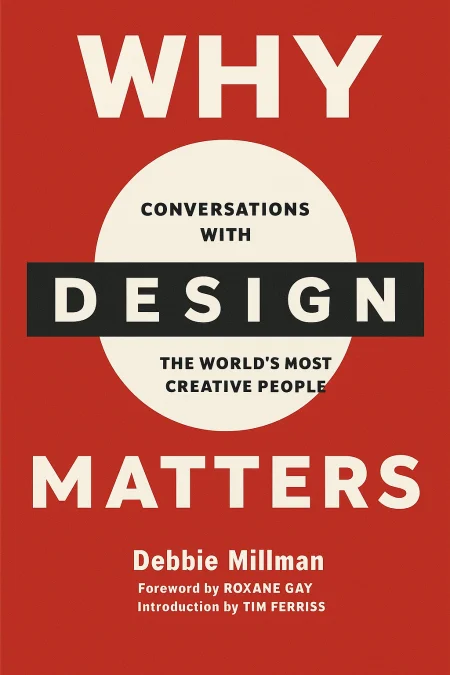
Why Design Matters
Conversations with the World’s Most Creative People
Book Edition Details
Summary
In the vibrant tapestry of human creativity, Debbie Millman weaves a collection that crackles with the electricity of genius and vulnerability. "Why Design Matters" is not merely a book; it's an odyssey through the minds of our era's most profound thinkers and visionaries. With her deft touch, Millman transforms her beloved podcast into an eloquent anthology, curating conversations that transcend the ordinary. Each interview, a gem polished by her insightful commentary, unveils the alchemy of living a designed life. From legends to trailblazers, the dialogues resonate with authenticity and wisdom, offering a rare glimpse into the soul of innovation. Illustrated with Millman’s artistic flair, this book is a testament to the enduring power of design in shaping our world and ourselves. For anyone yearning to understand the intersection of creativity and life’s grand narrative, this collection is both a guide and an inspiration.
Introduction
Picture a young designer sitting in her first job interview, portfolio trembling in her hands as she faces the legendary Milton Glaser. The walls around her showcase decades of iconic work—the I ♥ NY logo, the Bob Dylan poster with its psychedelic hair, magazine covers that defined entire eras. She expects to discuss technique, software, or design theory. Instead, Glaser leans forward and asks a single question that will reshape her understanding of creative work: "What story are you trying to tell?" In that moment, she realizes that design isn't about making things look beautiful—it's about creating bridges between human hearts and minds. This scene captures the essence of what happens when creative professionals move beyond the mechanics of their craft to discover its deeper purpose. Through intimate conversations with designers, artists, writers, and cultural innovators, we encounter individuals who have learned that their greatest work emerges not from technical mastery alone, but from their willingness to be vulnerable, authentic, and deeply human in their creative expression. These voices reveal that the path to meaningful creative work is rarely straightforward, filled with rejection, self-doubt, and moments of profound uncertainty. Yet within these struggles lies a transformative truth: our creative work becomes most powerful when it serves as a conduit for genuine human connection. Whether designing a poster, writing a book, or building a business, the creators who leave lasting impact are those who understand that their role extends far beyond problem-solving to encompass something more essential—the ancient human need to be seen, understood, and reminded that we are not alone in our experiences.
From Rejection to Recognition: Stories of Creative Persistence
When Paula Scher walked into Pentagram as their first female partner, she carried with her a portfolio of album covers that had defined the visual language of popular music. Yet success hadn't come easily. Years earlier, she had faced a creative crisis that nearly ended her career. After producing hundreds of album covers, she found herself trapped by her own expertise, creating work that felt hollow and repetitive. The music industry praised her consistency, but Scher knew something essential was missing—the spark of genuine discovery that had originally drawn her to design. The breakthrough came through an unexpected commission that most designers would have dismissed as beneath their talents. Asked to create a poster for the Public Theater, Scher decided to abandon everything she thought she knew about proper design. Instead of sleek, contemporary typography, she reached back to historical letterforms, mixing Victorian wood type with bold contemporary colors. The result was chaotic, exuberant, and completely unlike anything in her previous work. Critics initially dismissed it as amateur, but audiences responded with unprecedented enthusiasm. The poster became a cultural phenomenon, spawning countless imitations and establishing an entirely new visual vocabulary for cultural institutions. Debbie Millman's journey followed a similar pattern of persistence through apparent failure. After years of creating packaging design that she describes as "perfectly adequate," she found herself questioning whether she had chosen the right career. Her work was technically competent but emotionally vacant, serving corporate needs without touching anything deeper in herself or her audience. The transformation began when she started interviewing other designers for a radio show, initially as a way to understand what she might be missing in her own practice. Through these conversations, Millman discovered that the designers she most admired shared a common trait: they had all learned to integrate their personal struggles and authentic voice into their professional work. This revelation led her to completely reimagine her approach to design, moving from a service provider who executed other people's visions to a creative leader who brought her full self to every project. The shift wasn't immediate or easy, requiring her to develop new skills and take risks that felt terrifying. But the work that emerged from this transformation possessed a depth and resonance that her earlier, more "professional" designs had lacked. These stories illuminate a crucial truth about creative persistence: it's not about grinding through obstacles with sheer willpower, but about remaining open to transformation even when that change feels uncomfortable or risky. The most successful creators learn to see rejection and failure not as verdicts on their worth, but as invitations to dig deeper and discover what they're really trying to say.
Truth Through Vulnerability: Personal Struggles and Artistic Vision
Cheryl Strayed spent years hiding behind a carefully constructed professional persona, writing book reviews and essays that showcased her intellectual capabilities while revealing nothing of her inner turmoil. Beneath the polished exterior, she was struggling with grief over her mother's death, the dissolution of her marriage, and a profound sense of being lost in her own life. The idea of exposing these struggles in her writing felt both terrifying and impossible—surely readers wanted expertise and wisdom, not raw emotional honesty. The shift came when she began writing an advice column under the pseudonym "Dear Sugar." The anonymity initially felt like protection, allowing her to respond to readers' questions with unprecedented honesty about her own failures and struggles. She wrote about infidelity, addiction, financial ruin, and the messy reality of trying to rebuild a life after it falls apart. The response was immediate and overwhelming. Readers didn't want perfect advice from someone who had figured everything out—they wanted authentic connection from someone who understood what it felt like to be lost. This experience taught Strayed that vulnerability isn't weakness disguised as strength—it's actually the most courageous thing a creator can offer. When she eventually revealed her identity and wrote "Wild," her memoir about hiking the Pacific Crest Trail alone, she brought the same unflinching honesty to her personal story. The book's success wasn't due to her hiking expertise or literary technique, but to her willingness to show readers that transformation is possible even when you feel completely broken. Brené Brown's research on shame and vulnerability began as an academic exercise, a way to study human connection from the safe distance of scholarly analysis. She could discuss courage and authenticity in theoretical terms without ever having to demonstrate these qualities herself. This approach worked well until she was invited to give a TEDx talk about her findings. Standing on that stage, she faced a choice: she could present her data objectively, or she could embody the very vulnerability she had been studying. The decision to share her own story of breakdown and recovery transformed not only her career but her understanding of what it means to live authentically. The talk went viral not because of her research methodology, but because she had demonstrated that vulnerability is not about oversharing or emotional exhibitionism—it's about having the courage to show up as your full self, even when you can't control the outcome. This moment of authentic sharing became the foundation for work that has helped millions of people understand that their struggles don't disqualify them from connection—they're actually the very things that make genuine connection possible.
Breaking Boundaries: Innovation in Art, Business and Society
When Stefan Sagmeister decided to take a year-long sabbatical every seven years, his clients thought he had lost his mind. The design industry operates on relentless deadlines and constant availability—stepping away for an entire year seemed like professional suicide. But Sagmeister had observed something troubling in his own work and that of his peers: after years of solving other people's problems, many designers had lost touch with their own creative curiosity. They had become skilled technicians but had forgotten how to be artists. The first sabbatical took him to Sri Lanka, where he spent months creating work with no commercial purpose or client approval process. Away from the familiar pressures of New York's design scene, he rediscovered the joy of experimentation and play that had originally drawn him to creative work. The projects that emerged from this period—installations, films, and design experiments—possessed a freedom and authenticity that his commercial work had lacked. More importantly, this creative renewal energized all his subsequent client work, bringing fresh perspectives to familiar challenges. The sabbatical model challenged fundamental assumptions about professional success and creative sustainability. Rather than viewing time away from paid work as lost opportunity, Sagmeister demonstrated that strategic renewal could actually enhance both creativity and business success. His willingness to prioritize long-term creative health over short-term financial gain inspired countless other designers to reconsider their own relationship with work and rest. Thelma Golden's transformation of the Studio Museum in Harlem represents another form of boundary-breaking, this time in the institutional art world. When she became director, the museum was respected but relatively small, serving primarily as a showcase for established African American artists. Golden envisioned something more ambitious: a space that would not only display art but actively shape conversations about race, identity, and cultural representation in contemporary America. Under her leadership, the museum became a laboratory for emerging artists and a platform for challenging conventional narratives about who gets to be considered a serious artist. Golden coined the term "post-black" to describe artists who refused to be limited by others' expectations about what Black art should look like or address. This wasn't about abandoning racial identity, but about expanding the possibilities for how that identity could be expressed and understood. The museum's exhibitions began attracting international attention not just for the quality of the work displayed, but for the institution's willingness to tackle complex, sometimes uncomfortable questions about art, race, and power. Golden had transformed a small Harlem museum into a major force in the global art world by refusing to accept limitations on what the institution could become or whom it could serve.
Summary
The conversations woven throughout these pages reveal that creative fulfillment isn't about achieving perfect technique or universal recognition—it's about developing the courage to bring your authentic self to your work, even when that feels risky or uncomfortable. Whether navigating rejection, embracing vulnerability, or challenging established boundaries, the most compelling creators share a willingness to let their work serve as a bridge between their inner experience and the broader human community. The path forward requires abandoning the myth that creativity is a solitary genius activity and embracing the more complex truth that our best work emerges from genuine connection—with ourselves, with others, and with the larger questions that shape our time. This means learning to see our struggles not as obstacles to overcome but as raw materials to be transformed into something meaningful. It means developing the discernment to know when to persist and when to pivot, when to follow established paths and when to create entirely new ones. Most importantly, it means remembering that creativity is ultimately an act of service, a way of contributing something valuable to the ongoing human conversation about what it means to live a meaningful life. The stories of these creators remind us that our most authentic work emerges not when we have all the answers, but when we find the courage to share our questions with honesty, compassion, and hope.
Related Books
Download PDF & EPUB
To save this Black List summary for later, download the free PDF and EPUB. You can print it out, or read offline at your convenience.
By Debbie Millman
