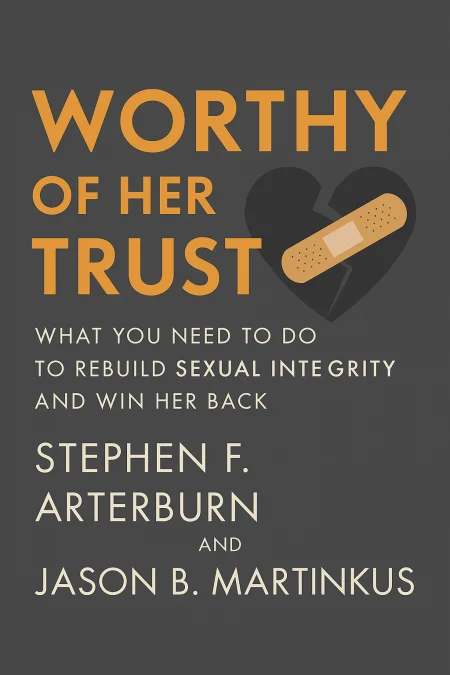
Worthy of Her Trust
What You Need to Do to Rebuild Sexual Integrity and Win Her Back
byStephen F. Arterburn, Jason B. Martinkus
Book Edition Details
Summary
Mending the shattered tapestry of trust in marriage is a daunting endeavor, yet one worth every ounce of effort. In "Worthy of Her Trust," Jason Martinkus bares his soul, recounting the turbulent journey of rekindling his wife's faith after grappling with the shadows of sexual addiction. Joined by Stephen Arterburn, Jason unfolds a tapestry of hope and redemption through insightful exercises and strategies grounded in therapeutic wisdom. Dive into the heart of rebuilding—from the raw honesty of true transparency to the tender art of forgiveness. This guide empowers men to confront myths, navigate digital and workplace temptations, and embrace the transformative power of daily trust-building rituals. With heartfelt contributions from Jason's wife, Shelley, this book is an invitation to transform brokenness into a testament of enduring love.
Introduction
The phone call came at 2:47 AM. Sarah stared at the unfamiliar number on her husband's cell phone, her heart pounding as she realized this was the moment she had been dreading. The woman on the other end confirmed what Sarah had suspected for months - her husband of twelve years had been living a double life. In that instant, everything she thought she knew about her marriage crumbled. The trust that had taken years to build was shattered in a single conversation, leaving behind a devastating question that would echo through countless sleepless nights: "How can I ever trust you again?" This scenario plays out in homes across the world, where spouses discover that the person they pledged their life to has been betraying that sacred bond through sexual misconduct. The aftermath isn't just about the betrayal itself - it's about the seemingly impossible task of rebuilding something as fragile and precious as trust. Through personal experience and professional counseling, we learn that while trust can be broken in an instant, rebuilding it requires intentional, consistent effort over months and years. Yet hope exists for those willing to do the hard work of restoration. The journey from betrayal to redemption is neither quick nor easy, but it is possible. Couples who navigate this painful path discover that the trust they rebuild, though different from naive trust, can actually become deeper and more meaningful than what existed before. This book offers a roadmap for that reconstruction, providing practical tools and honest guidance for those brave enough to fight for their marriages.
When Trust Lies Shattered
Jason sat in his truck outside his house, engine running, unable to bring himself to walk through the front door. Inside, his wife Shelley waited with printed evidence of his online affairs - conversations he thought he had deleted forever. For months, he had perfected the art of compartmentalization, keeping his secret life separate from his family life like items in carefully labeled boxes on a closet shelf. When he was with his family, he genuinely loved them and felt like a devoted husband and father. When he was acting out online, that family box was sealed shut, completely disconnected from his momentary reality. The discovery shattered this elaborate mental filing system. Shelley had spent hours on the phone with one of his affair partners, learning details that made her feel like she was married to a complete stranger. The man she thought she knew - the one who led family devotions and coached their son's baseball team - had been methodically deceiving her for years. As Jason finally forced himself to walk through that door, he encountered a wife who looked at him with the eyes of someone seeing an alien creature. The confrontation that followed revealed a harsh truth about betrayal: it's not just the sexual misconduct that destroys trust, but the elaborate web of lies that sustains it. Every reassurance Jason had given Shelley during her moments of suspicion, every explanation for his distant behavior, every promise that nothing was wrong - all of it was exposed as calculated deception. The violation wasn't merely sexual; it was a complete breach of the partnership that marriage represents. What makes rebuilding trust so challenging is that betrayed spouses lose faith not only in their partner's fidelity, but in their own ability to discern reality. They begin questioning every memory, wondering what else might have been fabricated. The foundation of their world - the belief that they knew and were known by their spouse - crumbles beneath them, leaving them grasping for solid ground in a relationship that suddenly feels completely foreign.
The Nonnegotiables of Restoration
Mike thought a simple apology and promise to change would be enough. He had ended his affairs, deleted his social media accounts, and even agreed to counseling - surely that demonstrated sufficient commitment to restoration. But his wife Karen remained skeptical, almost cold, despite his efforts. During one particularly tense conversation, she explained something that changed his entire perspective: "I don't need you to promise you'll be different. I need to see that you already are different." This distinction between promising change and demonstrating change represents one of the fundamental nonnegotiables of trust restoration. Betrayed spouses have heard promises before - often many times. What they need now is evidence of transformation, not just good intentions. This evidence must be visible in multiple areas simultaneously: spiritual commitment, radical honesty, complete transparency, authentic intimacy, consistent accountability, and genuine humility. The spiritual component often surprises men who see their struggle as primarily behavioral. But wives understand intuitively that lasting character change requires divine intervention. They need to see their husband's relationship with God become vibrant and authentic, not just a Sunday performance. When a wife observes her husband genuinely seeking God's heart through prayer, scripture, and spiritual disciplines, she recognizes that he's drawing strength from a source greater than his own willpower. Honesty extends far beyond ending deceptive behavior to embracing what one husband called "preemptive truth-telling." Instead of waiting for his wife to ask probing questions, he began volunteering information about his day, his struggles, his temptations, and his victories. He learned to view any withholding of relevant information as a form of lying, recognizing that his wife's radar for deception had been permanently heightened by his past betrayals. The nonnegotiables aren't suggestions or ideals - they're requirements for anyone serious about restoration. Attempting to rebuild trust while cutting corners in any of these areas is like trying to construct a building while skipping the foundation work. The structure might appear stable initially, but it will inevitably collapse under pressure. True restoration demands the complete abandonment of self-preservation in favor of radical vulnerability and authentic change.
Making Amends for the Past
David discovered that his wife's triggers weren't random emotional outbursts but predictable responses to specific reminders of his betrayal. When they drove past the hotel where he had met affair partners, when he received flowers delivered to her office, when business trips were mentioned - each scenario transported her back to moments of devastating discovery. Rather than hoping these triggers would simply fade with time, David learned to anticipate them and use them as opportunities for healing through a process called making amends. The amends matrix involves seven specific steps that transform painful triggers into healing conversations. First, David learned to identify the connection between present circumstances and past wounds. Instead of pretending not to notice his wife's discomfort when they passed that hotel, he would acknowledge it directly. Then he would revisit the specific betrayals that location represented, taking full responsibility without making excuses or shifting blame. The crucial element was empathy - David had to genuinely understand and articulate his wife's emotional experience. This wasn't about saying what he thought she wanted to hear, but about truly seeing the situation through her eyes and feeling the depth of pain his choices had caused. He learned to describe not just what he had done wrong, but how those actions must have felt to someone who loved and trusted him completely. The process culminated in vision casting - painting a picture of how different their relationship could be in the future. David would describe his hopes for their marriage, explaining how he wanted his wife to feel in similar situations going forward, and committing to specific behaviors that would create that reality. These weren't empty promises but detailed action plans backed by demonstrated change. Making amends isn't a one-time event but an ongoing process. Each trigger became an opportunity to demonstrate growth, to show empathy, and to rebuild trust one conversation at a time. Wives who experience this kind of intentional healing often describe feeling known and understood in ways they never had before, even in the early days of their marriage. The scar tissue of restored trust, while different from original innocence, can actually become stronger and more resilient than what existed previously.
Tools for Building Tomorrow
The GPS tracker on Mark's phone showed his exact location at any given moment, but his wife Lisa knew that technology alone couldn't rebuild trust. What mattered more was Mark's attitude about accountability - he had suggested the tracking himself and regularly initiated conversations about his whereabouts without being asked. The tools were important, but the heart behind their use made all the difference. Trust-building requires both systematic accountability and genuine character change. The five-minute phone rule meant Mark was always reachable, ready to answer his wife's calls immediately and explain his circumstances without defensiveness. The detailed time journal documented his activities in thirty-minute increments, not to prove his innocence but to demonstrate his commitment to complete transparency. Financial accountability meant Lisa had access to all accounts and spending records, with Mark proactively reviewing transactions together rather than waiting to be questioned. These practical measures served multiple purposes beyond verification. They provided structure during a chaotic time, gave Lisa tangible evidence of Mark's commitment, and helped him develop new patterns of openness and honesty. More importantly, they allowed Lisa to begin relaxing her hypervigilance, knowing that systems were in place to alert her to any problems. The most powerful tool, however, was Mark's willingness to sacrifice his independence for the sake of restoration. He voluntarily eliminated business travel, deleted all social media accounts, and restructured his work environment to minimize temptation and triggers. These weren't punishments imposed by an angry wife but choices made by a repentant husband who valued his marriage more than his convenience. Over time, as trust was gradually rebuilt, some of these measures became less necessary. But the principles behind them - transparency, accountability, and putting his wife's security above his own preferences - became permanent features of their renewed relationship. The tools had served their purpose in creating space for genuine healing and transformation to take root.
Summary
The journey from betrayal to restored trust is neither quick nor guaranteed, but it is possible for couples willing to embrace radical change and patient perseverance. Through real stories of marriages nearly destroyed by sexual betrayal, we learn that rebuilding trust requires more than good intentions or simple behavior modification - it demands a complete transformation of character, communication, and commitment. The process involves dismantling the compartmentalized thinking that enabled deception, embracing unprecedented levels of transparency and accountability, and developing the capacity for genuine empathy and authentic intimacy. Trust, once rebuilt, looks different than naive trust - it is earned daily through consistent actions rather than assumed based on promises. This new trust is actually deeper and more resilient because it has been tested and proven rather than simply inherited. The couples who successfully navigate this difficult path discover that their restored marriages often become stronger than they ever were before the crisis, built on a foundation of truth rather than assumption. The choice to rebuild rather than abandon a broken marriage represents one of the most challenging yet potentially rewarding decisions a couple can make. It requires both partners to grow in ways they never imagined necessary, to extend and receive grace beyond their natural capacity, and to trust in a redemptive process larger than themselves. While the journey is long and often painful, those who persist discover that some of life's most beautiful stories emerge from its most broken chapters.
Related Books
Download PDF & EPUB
To save this Black List summary for later, download the free PDF and EPUB. You can print it out, or read offline at your convenience.
By Stephen F. Arterburn
