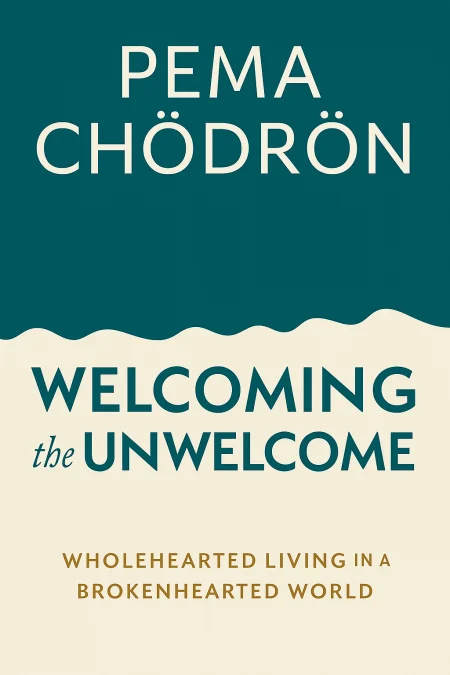
Welcoming the Unwelcome
Wholehearted Living in a Brokenhearted World
Book Edition Details
Summary
In the midst of life's chaos and division, Pema Chödrön extends an invitation to embrace discomfort with grace and humor. Her latest offering, "Welcoming the Unwelcome," acts as a spiritual compass for those navigating an increasingly divided world. With her gentle wisdom, Chödrön shares personal stories and straightforward practices designed to cultivate compassion and connection, even amidst disagreement. Here, the timeless principles of Buddhism are distilled into everyday guidance, equipping readers to transform challenges into opportunities for growth and understanding. This book isn't merely a manual for personal peace; it's a call to build a more inclusive community through empathy and shared humanity.
Introduction
Sarah sat in her car outside the hospital, gripping the steering wheel as tears streamed down her face. The diagnosis had just shattered her carefully constructed world—her husband's cancer was more advanced than they'd feared. In that moment, every plan they'd made, every future they'd imagined, seemed to crumble into dust. Yet somehow, in the depths of her despair, she remembered something her meditation teacher had once said about welcoming the unwelcome. This profound teaching speaks to one of our most fundamental human struggles: how do we find peace when life delivers exactly what we don't want? How do we remain open-hearted when everything in us wants to close down? The wisdom explored here doesn't offer false comfort or easy answers. Instead, it presents a radical approach to life's inevitable difficulties—one that transforms our relationship with suffering itself. Rather than teaching us to avoid pain or pretend it doesn't exist, these insights invite us to discover something remarkable: our deepest wounds can become doorways to genuine compassion and unshakeable inner strength. This isn't about passive acceptance or spiritual bypassing. It's about learning to stay present with our raw, vulnerable hearts even when—especially when—life breaks us open. Through this courageous practice, we don't just survive our difficulties; we allow them to awaken our most authentic and powerful selves.
When Life Falls Apart: Beginning with Brokenness
Maria had built what seemed like a perfect life—successful career, loving family, beautiful home. Then, in the span of six months, everything unraveled. Her company downsized, eliminating her position. Her teenage daughter was struggling with addiction. Her marriage, strained by these pressures, began to fracture. Standing in her kitchen one morning, surrounded by unopened bills and unanswered calls, she felt completely shattered. What Maria discovered in those dark months was something counterintuitive: her brokenness became her greatest teacher. Instead of trying to immediately fix everything or numb the pain, she learned to sit with her raw vulnerability. She began to notice that beneath her fear and shame lay something unexpected—a tenderness toward others who were also struggling. Her broken heart, rather than making her weak, was actually opening her to a deeper capacity for love and understanding. This journey into brokenness reveals a profound truth about human resilience. When we stop running from our pain and learn to hold our wounded places with compassion, we discover that our suffering connects us to the universal human experience. Our personal struggles become a bridge to understanding others' pain, and our healing becomes inseparable from our desire to help heal the world. The very experiences that seem to destroy us can become the foundation for a more authentic and meaningful life.
The Practice of Non-Rejection: Embracing Our Shadows
David had always prided himself on being the calm, rational one in his family. So when waves of inexplicable rage began surfacing during his meditation practice, he was horrified. These weren't just fleeting moments of irritation—they were deep, primal fury that seemed to come from nowhere. His first instinct was to push these feelings away, to return to being the peaceful person he believed himself to be. But his teacher offered a different approach: instead of rejecting these uncomfortable emotions, what if he could learn to welcome them as honored guests? This seemed impossible at first. How could he embrace feelings that felt so ugly and frightening? Gradually, David learned to breathe with his anger, to give it space without acting on it. As he stopped fighting these emotions, something remarkable happened—they began to transform. The anger revealed itself as grief over past hurts he'd never acknowledged. His rage became a gateway to understanding his own pain and, eventually, to genuine compassion for others who struggled with similar hidden wounds. This practice of non-rejection challenges everything we've been taught about dealing with difficult emotions. Instead of seeing our anger, fear, or sadness as problems to be solved, we can learn to meet them with curiosity and kindness. When we stop waging war against parts of ourselves, we discover that even our most challenging emotions carry wisdom and energy that can be transformed into genuine healing and growth.
Beyond Comfort Zones: Learning from Teachers and Challenges
Jennifer had been studying meditation for years, attending retreats and reading countless books about spiritual growth. She felt she had made real progress in developing patience and compassion. Then life presented her with an unexpected teacher: her elderly mother, who came to live with her after a stroke. Within weeks, Jennifer found herself losing her temper daily, frustrated by her mother's confusion and demands. Her spiritual practice seemed to evaporate under the pressure of this relentless, unglamorous challenge. Her meditation instructor pointed out that this situation was actually perfect curriculum for her spiritual development. Her mother wasn't an obstacle to her practice—she was the practice. Every moment of irritation, every surge of impatience, every instance of loving care despite exhaustion was an opportunity to deepen her understanding of what it means to love unconditionally. The comfortable retreat center had been preparation for this real-world laboratory of the heart. This experience illuminated a crucial truth about genuine spiritual growth: our greatest teachers often come disguised as our most difficult circumstances. The people who trigger us most intensely, the situations that push us beyond our comfort zones, these become the very conditions that can accelerate our awakening. When we recognize that life itself is our teacher, every challenge becomes an invitation to expand our capacity for presence, patience, and love.
Living Without Ego: The Impossible Mission of Awakening
After decades of spiritual practice, Robert thought he understood the concept of selflessness. He had moments of deep peace during meditation where his sense of separate self seemed to dissolve. But it wasn't until he received a terminal cancer diagnosis that he began to truly grasp what it might mean to live without ego. Facing death, his usual concerns about his reputation, his achievements, his image in others' eyes began to seem irrelevant. What remained was simply awareness itself, experiencing each moment without the constant commentary of "I" and "me." In his final months, Robert discovered an extraordinary freedom. Without the burden of maintaining a carefully constructed identity, he could respond to each situation with fresh openness. His conversations became more authentic, his relationships deeper, his appreciation for simple moments more vivid. He wasn't trying to be anyone in particular—he was simply being, moment by moment, with whatever arose. This profound shift reveals the ultimate possibility that spiritual practice points toward: a way of being that is fully engaged with life while not being imprisoned by our limited sense of self. It's not that we disappear or become passive, but rather that we discover a more fluid, responsive way of existing. When we release our desperate grip on who we think we should be, we can finally discover who we actually are beneath all the layers of conditioning and fear.
Summary
The journey of welcoming the unwelcome reveals itself as perhaps the most radical and transformative practice we can undertake. Through embracing our brokenness, we discover unexpected strength. By learning to accept rather than reject our difficult emotions, we find they contain wisdom we never imagined. When we allow our challenges to become our teachers, every moment becomes an opportunity for growth. And in releasing our tight grip on who we think we should be, we finally discover the freedom of simply being present with what is. This path requires immense courage—the courage to feel our pain without immediately trying to fix it, to stay open when everything in us wants to close down, to love even when our hearts are breaking. Yet this very courage becomes the source of genuine compassion, both for ourselves and for all beings who share this vulnerable human experience. The unwelcome circumstances of our lives, when met with presence and acceptance rather than resistance, become the very conditions that awaken our deepest wisdom and most authentic love. In learning to welcome what we once rejected, we discover that nothing in our experience needs to be wasted, and everything can become a doorway to greater freedom and joy.
Related Books
Download PDF & EPUB
To save this Black List summary for later, download the free PDF and EPUB. You can print it out, or read offline at your convenience.
By Pema Chödrön
