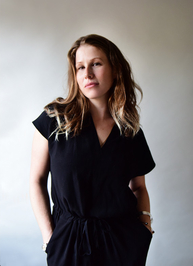
Caroline Criado Pérez
Caroline Criado Pérez, a British author and feminist campaigner, has emerged as a formidable voice advocating for gender equality in contemporary society. Born in Brazil to an Anglo-Argentine father and a British mother, Pérez spent her formative years traversing different cultural landscapes, an experience that undoubtedly enriched her perspective on social issues. She pursued her education at the University of Oxford, where she studied English, and later earned a Master’s degree in Gender Studies from the London School of Economics. Her activism has been instrumental in instigating significant societal changes, such as her successful campaign to include a woman on British banknotes and the installation of the first statue of a woman in Parliament Square. These efforts underscore her commitment to challenging systemic biases and amplifying women's voices. Her critically acclaimed book, "Invisible Women: Exposing Data Bias in a World Designed for Men," catapulted Pérez into the international spotlight. This groundbreaking work meticulously dissects the pervasive gender data gap and its profound impact on women's lives. Through rigorous analysis and compelling storytelling, Pérez unveils how the absence of gender-specific data in various sectors—ranging from healthcare to urban planning—perpetuates inequality. The book has garnered numerous accolades, including the prestigious Royal Society Science Book Prize in 2019, and has been lauded for its incisive exploration of an often-overlooked issue, making it a seminal contribution to feminist literature and data science discourse. Pérez’s writing is characterized by its clarity, precision, and a palpable sense of urgency. Her eloquent prose, coupled with a robust analytical approach, invites readers to engage deeply with the systemic structures that underpin gender inequality. By intertwining personal anecdotes with empirical evidence, she crafts narratives that are both accessible and intellectually rigorous. Caroline Criado Pérez has not only enriched feminist discourse but also challenged the broader literary and academic communities to reckon with the enduring impact of gender bias, establishing herself as a leading voice in the fight for equality.


by Paul J. Zak
by Rory Vaden
by Robert C. Solomon, Fernando Flores
by Brett Gardner
by Dennis S. Reina
by Julian Baggini
by Larry Downes, Omar Abbosh, Paul Nunes
by Jacqueline Woodson
by Kevin Oakes
by Lindsey Pollak, Kimberly B. Cummings, Kimberly Brown
