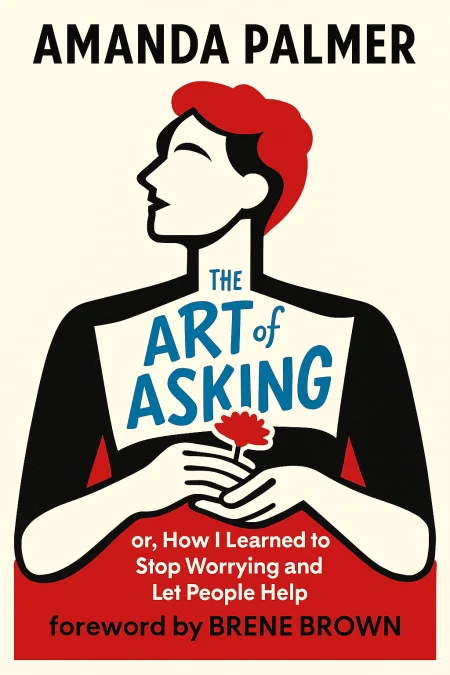
The Art of Asking
or How I Learned to Stop Worrying and Let People Help
Book Edition Details
Summary
Rock star Amanda Palmer has turned the simple act of asking into an electrifying art form. In "The Art of Asking," she shares her transformative journey from a silent street performer soliciting coins to a pioneering musician who harnesses the power of vulnerability and community. Fearless and introspective, Palmer delves into the barriers that prevent us from seeking help, weaving her personal stories with insights into human connection. Her narrative challenges the conventional rules of exchange, urging readers to embrace the courage to ask and the grace to receive. This isn't just a book—it's a call to reimagine how we engage with the world and each other, as artists, as partners, and as individuals unafraid to reach out.
Introduction
Picture a young woman standing motionless on a milk crate in Harvard Square, painted white from head to toe, dressed as an eight-foot bride. For hours, she remains frozen like a statue, waiting for passersby to drop a dollar in her hat. When they do, she comes alive for just a moment, looks them directly in the eyes, and hands them a single flower. This simple exchange—money for connection, vulnerability for trust—would become the foundation for understanding one of life's most fundamental yet terrifying acts: asking for help. In a world that celebrates independence and self-reliance, we've somehow forgotten that human beings are wired for connection and mutual support. We've been taught that asking makes us weak, that needing help is shameful, that true success means doing it all alone. But what if everything we've been told about asking is wrong? What if the very act of reaching out, of making ourselves vulnerable, of trusting others to catch us when we fall, is actually the secret to building meaningful relationships, creating authentic art, and living a life of genuine fulfillment? This exploration reveals how the courage to ask—whether for a tampon in a bathroom, support for a creative project, or simply for love—can transform not just our own lives, but the lives of everyone around us. Through stories of street performance, crowdfunding success, and the messy beauty of human connection, we discover that asking isn't about taking from others—it's about giving them the gift of being needed, trusted, and valued.
The Eight-Foot Bride: Learning Vulnerability on Harvard Square
Standing on that milk crate for the first time, painted white and trembling with fear, she had no idea she was about to receive a master class in human nature. The first few minutes were excruciating—the vulnerability of being stared at, judged, ignored. But then something magical happened. A five-year-old boy approached cautiously, dropped a dollar in her hat, and when she handed him a flower, his face lit up with pure delight. In that moment, she understood something profound: people don't just want to be entertained—they want to connect. Day after day, she returned to her post, learning to read the subtle language of human interaction. The businessman who walked by every morning eventually started timing his route to see her. The homeless man who gave her his last dollar, understanding better than anyone the courage it takes to ask. The tourists who posed for photos but walked away without taking their flower, missing the point entirely. Each encounter taught her something new about the delicate dance between asking and giving. The street became her laboratory for studying trust. She discovered that when you make yourself genuinely vulnerable, when you ask without shame or manipulation, people respond with surprising generosity. They don't just give money—they give attention, care, and a piece of themselves. The flower wasn't really the transaction; the transaction was the moment of recognition, the brief acknowledgment that we're all human beings seeking connection in a world that often feels cold and indifferent. What she learned on that street corner would later revolutionize how she thought about art, business, and relationships. The willingness to be seen, to be vulnerable, to trust in the fundamental goodness of strangers—these weren't just performance skills. They were life skills that would serve her far beyond Harvard Square, teaching her that asking isn't about taking from others, but about creating opportunities for mutual generosity and genuine human connection.
Building Community Through Authentic Connection and Trust
When she started her band, The Dresden Dolls, the lessons from the street came with her. Instead of maintaining the traditional distance between performer and audience, she broke down every barrier she could find. After shows, she would sit at a table and sign anything people brought—CDs, body parts, random household objects—talking with each person for as long as they wanted. What started as simple politeness evolved into something much deeper: a genuine community built on mutual care and authentic connection. The signing line became a sacred space where strangers shared their deepest secrets, their struggles, their triumphs. A teenager would confess their battle with depression. A parent would talk about their child's illness. A young artist would shyly share their own creative dreams. She found herself becoming an unofficial therapist, sin-eater, and spiritual guide, absorbing people's pain and transforming it into compassion. These weren't just fans buying her music—they were human beings seeking to be seen and understood. Through her blog and early social media, she continued building these relationships in digital space. When she shared her own vulnerabilities—her struggles with body image, her relationship challenges, her creative doubts—thousands of people responded with their own stories. The community began supporting each other, not just her. Fans would offer each other couches to sleep on, rides to shows, comfort during difficult times. The network of connection grew stronger with each authentic exchange. This approach baffled the music industry professionals who worked with her. They couldn't understand why she spent so much time and energy on individual relationships when she could be focusing on reaching larger audiences. But she understood something they didn't: real success isn't measured in units sold or charts climbed. It's measured in the depth of connection, the strength of community, and the knowledge that you've made a genuine difference in people's lives. The foundation of trust she built through countless small acts of vulnerability and care would prove invaluable when she later needed to ask for something big.
From Crowdfunding Success to Personal Relationships
After years of battling with record labels who didn't understand her approach to building community, she found herself dropped and free to experiment. When Kickstarter emerged as a new way for artists to fund their projects directly through their audiences, she saw an opportunity to put everything she'd learned about asking and trust to the ultimate test. Her campaign goal was ambitious: $100,000 to record and release a new album. What happened next shocked everyone, including herself. Within hours of launching, the campaign had exceeded its goal. By the end, nearly 25,000 people had contributed over $1.2 million, making it the most successful music project in crowdfunding history at that time. But the numbers only told part of the story. People weren't just buying an album—they were investing in a relationship, supporting an artist they trusted, and participating in something that felt revolutionary. The campaign became a celebration of the community they had built together over years of authentic connection. The success triggered a massive backlash from critics who accused her of digital panhandling and taking advantage of her fans. The attacks were vicious and personal, questioning everything from her worthiness to her methods. But something remarkable happened: her community rallied around her, defending not just her right to ask, but the beauty of the exchange itself. They understood what the critics didn't—that this wasn't about taking money from people, but about creating a new model where artists and audiences could support each other directly. Even with all her experience asking strangers for help, she found herself completely paralyzed when it came to asking her own husband for financial support. Despite being married to a successful writer who offered freely to help bridge a temporary cash flow gap, she spent sleepless nights in anxiety rather than accept his assistance. The woman who could crowdfund over a million dollars from thousands of strangers couldn't bring herself to borrow a few thousand from the man she loved most, revealing that the deepest challenges of asking often come not from strangers, but from those closest to our hearts.
Crisis, Intimacy, and the Courage to Receive
The internal battle with accepting help from her husband revealed the deepest layers of her relationship with asking. It was one thing to ask from a position of strength, offering art and connection in return. It was entirely different to ask from a position of need, feeling vulnerable and potentially indebted. The fear of being seen as weak, of losing her independence, of being judged by others for "taking advantage" of her husband's success, nearly drove her to panic attacks. She realized that all her growth in learning to ask had been in professional contexts—the personal realm remained terrifyingly difficult. When her best friend Anthony was diagnosed with cancer, everything changed. Faced with the possibility of losing someone she loved deeply, her resistance to accepting help crumbled. She needed to cancel tours, stay close to home, and support Anthony through his treatment. The financial implications were enormous, but for the first time, asking her husband for help felt not shameful but necessary. The crisis had finally hurt enough to overcome her pride. Through conversations with friends and painful self-examination, she began to understand that her resistance wasn't really about money—it was about control, identity, and deeply ingrained cultural messages about self-reliance. Society had taught her that asking for help was a sign of failure, especially for a strong, independent woman. But marriage, she realized, was supposed to be about mutual support, about sharing both struggles and resources. Her husband wasn't offering charity; he was offering partnership. The breakthrough came when she recognized that accepting help wasn't about weakness—it was about trust. Just as her fans trusted her enough to support her art, she needed to trust her husband enough to accept his support. Taking help doesn't diminish our achievements; it acknowledges our humanity and creates opportunities for others to express their love and care. In learning to receive gracefully, she discovered that vulnerability in intimate relationships isn't a sign of failure—it's the foundation of true connection and the courage that makes love possible.
Summary
The journey from street performer to crowdfunding pioneer reveals a fundamental truth about human nature: we are not meant to go through life alone, asking for nothing, giving nothing, maintaining perfect independence. The art of asking is really the art of connecting, of building trust through vulnerability, and of creating communities where everyone has something to offer and everyone has something to receive. The lessons learned on that milk crate in Harvard Square—that genuine vulnerability invites genuine generosity, that trust must be built through countless small interactions, that asking without shame creates connection while asking with manipulation destroys it—apply far beyond the world of street performance or crowdfunding. They speak to how we build relationships, raise families, create businesses, and navigate the complex web of human interdependence that makes life meaningful. Perhaps most importantly, this exploration challenges us to examine our own relationship with asking and receiving. Where in our lives are we suffering in silence rather than reaching out for help? What opportunities for connection are we missing because we're too proud or too afraid to be vulnerable? The courage to ask—whether for creative support, emotional comfort, or simple human connection—isn't just about getting what we need. It's about giving others the gift of being needed, trusted, and valued. In a world that often feels disconnected and cold, the simple act of asking can be revolutionary, transforming not just our own lives but the lives of everyone around us.
Related Books
Download PDF & EPUB
To save this Black List summary for later, download the free PDF and EPUB. You can print it out, or read offline at your convenience.
By Brené Brown
