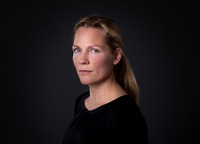
Åsne Seierstad
Åsne Seierstad, a distinguished Norwegian journalist and author, has established herself as a formidable chronicler of contemporary events through her penetrating narratives and journalistic prowess. Born on February 10, 1970, in Oslo, Norway, Seierstad's career has been significantly shaped by her experiences as a correspondent in war-torn regions including the Balkans, Russia, and Afghanistan. Her upbringing in a politically engaged family, with her father being a politician and her mother a teacher, undoubtedly influenced her keen interest in sociopolitical dynamics and human stories, which she deftly weaves into her works. Her education in Russian, Spanish, and history at the University of Oslo has further enriched her worldview, enabling her to navigate complex geopolitical landscapes with nuance and insight. Among Seierstad's oeuvre, "One of Us: The Story of Anders Breivik and the Massacre in Norway" stands as a poignant exploration of the 2011 Norway attacks, a tragedy that left the nation and the world reeling. This meticulously researched narrative delves into the psyche of Anders Breivik, the perpetrator, while also giving voice to the victims and survivors, offering a multifaceted examination of the incident's impact on Norwegian society. Her earlier work, "The Bookseller of Kabul," catapulted her to international acclaim, shedding light on the lives of Afghan citizens in the aftermath of the Taliban's fall. These books not only garnered critical acclaim but also sparked conversations about cultural understanding and the repercussions of extremism. Seierstad's writing is characterized by its journalistic rigor and empathetic storytelling, which together create a compelling blend of reportage and narrative. Her works often explore themes of conflict, identity, and resilience, painting vivid portraits of individuals caught in the throes of history. Through her incisive prose and unwavering commitment to truth, Seierstad has made an indelible contribution to contemporary nonfiction, positioning herself as a leading voice in the realm of literary journalism. Her ability to humanize complex issues and bring distant realities into sharp focus has earned her a place among the most influential writers of her generation.


by Paul J. Zak
by Rory Vaden
by Robert C. Solomon, Fernando Flores
by Brett Gardner
by Dennis S. Reina
by Julian Baggini
by Larry Downes, Omar Abbosh, Paul Nunes
by Jacqueline Woodson
by Kevin Oakes
by Lindsey Pollak, Kimberly B. Cummings, Kimberly Brown
