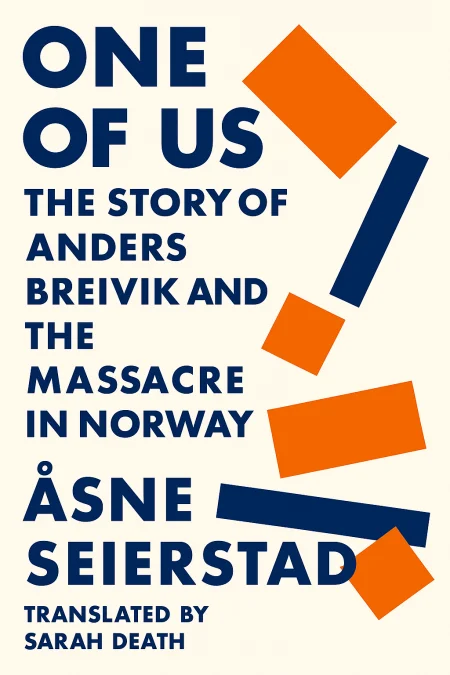
One of Us
The Story of Anders Breivik and the Massacre in Norway
Book Edition Details
Summary
The calm facade of a serene Nordic society shatters on a fateful July day, when the unthinkable becomes reality. Åsne Seierstad's "The Island" weaves a chilling tapestry from the threads of Anders Behring Breivik’s life, revealing the transformation of a seemingly ordinary boy into a harbinger of terror. Through her piercing lens, Seierstad unveils a complex portrait: Breivik, the hip-hop lover turned zealot, and the vibrant youths whose dreams and destinies were cruelly extinguished. What drives a nation celebrated for peace to its knees, and how does it rise again? Seierstad delves beyond the headlines, exploring Norway's soul in turmoil and the resilience that follows. This is not merely a recounting; it’s an intimate exploration of vulnerability, tragedy, and the quest for healing in the aftermath of horror.
Introduction
On July 22, 2011, Norway experienced its darkest day since World War II when a single individual shattered the nation's peaceful existence through calculated acts of terror. Anders Behring Breivik, a 32-year-old Norwegian citizen, detonated a bomb in Oslo's government quarter before systematically hunting down young people at a political summer camp on Utøya island. In the span of a few hours, he claimed 77 lives and forever changed how the world viewed both domestic terrorism and the vulnerability of open societies. What made this tragedy particularly haunting was not just its scale, but the fact that the perpetrator was not a foreign extremist but one of Norway's own—a seemingly ordinary man who had transformed into something monstrous. Through examining Breivik's journey from a troubled child to a mass murderer, we gain crucial insights into the psychology of radicalization, the dangerous power of online echo chambers, and the warning signs that can precede acts of unthinkable violence. His story serves as both a cautionary tale about the seeds of extremism that can grow in isolation and a testament to how personal grievances, when left to fester, can metastasize into ideological hatred with devastating consequences.
Fractured Foundations: Childhood Isolation and Early Warning Signs
Anders Behring Breivik's path to becoming Norway's most notorious terrorist began in the seemingly comfortable surroundings of his middle-class Oslo childhood. Born in 1979 to parents whose marriage was already fracturing, he entered a world where emotional distance and maternal ambivalence would shape his earliest experiences. His mother Wenche had considered abortion during pregnancy and struggled with feelings of rejection toward her son even after his birth, sometimes telling the young boy she wished he were dead. When his parents divorced before his second birthday, his father essentially vanished from his life, leaving Anders to navigate childhood without consistent paternal guidance or love. Child welfare authorities became concerned about the toxic dynamic between mother and son when Anders was just four years old. Psychiatrists who evaluated him found a boy who showed little joy, spontaneity, or imagination—a child who seemed unable to engage naturally with the world around him. The professionals recommended removing Anders from his mother's care, warning that their "profoundly pathological relationship" threatened his psychological development. However, bureaucratic delays and legal complications prevented intervention, leaving him trapped in an environment of emotional neglect and unpredictable maternal moods. As Anders grew older, his desperate need for attention and acceptance manifested in increasingly troubling ways. Neighbors knew him as a disturbed child who tortured animals and bullied smaller children, behaviors that served as early warning signs of his capacity for cruelty. His attempts to gain recognition often backfired, leaving him feeling more isolated and resentful. The wounds inflicted during these formative years—the absence of unconditional love, the experience of being unwanted, and the learned pattern of seeking attention through negative behavior—would never properly heal. These childhood experiences established patterns that would define Anders throughout his life: an insatiable need for recognition, a tendency to blame others for his failures, and an inability to form genuine emotional connections. The foundation of his personality was built on a bedrock of rejection and emotional deprivation, creating vulnerabilities that would later make him susceptible to extremist ideologies that promised both belonging and significance.
Digital Descent: Online Radicalization and Extremist Transformation
Following a series of humiliating failures in his attempts to achieve recognition through graffiti culture and local politics, Anders Breivik retreated into his mother's apartment at age 27, beginning a five-year period of isolation that would prove catastrophic. Initially presenting this withdrawal as temporary, he gradually became a prisoner of his own making, spending up to sixteen hours a day in front of computer screens while his worried mother watched her son disappear into virtual worlds. His refuge became the online gaming community, particularly World of Warcraft, where he could finally achieve the status and respect that eluded him in real life as leader of the guild "Virtue." Yet even digital success eventually soured when Anders moved to more competitive gaming environments and faced rejection from the elite players he desperately wanted to impress. This pattern of initial achievement followed by crushing disappointment became a recurring theme that deepened his sense of grievance against a world that refused to recognize his specialness. As his gaming obsession waned, he began consuming increasingly extreme political content online, discovering a network of anti-Islamic websites and blogs that would fundamentally reshape his worldview. The transformation from disappointed gamer to extremist ideologue occurred gradually through his immersion in sites like Gates of Vienna, Jihad Watch, and the writings of the mysterious blogger "Fjordman." These platforms provided Anders with both a sense of community and a grand narrative that reframed his personal failures as part of a cosmic struggle between Western civilization and Islamic invasion. The more he consumed this content, the more isolated he became from real-world relationships, creating a dangerous feedback loop where his radical thoughts could metastasize without the moderating influence of genuine human connection. During this period of digital descent, Anders began constructing elaborate fantasies about belonging to a secret organization called the Knights Templar, complete with ranks, rituals, and a mission to save European civilization. His online persona gradually shifted from passive consumer to active producer of extremist content, as he started posting on Norwegian websites and developing his twisted ideology. The combination of social isolation, constant exposure to hate-filled content, and his desperate need for significance created the perfect conditions for radicalization, transforming a lonely, rejected man into someone capable of justifying mass murder in service of his delusional cause.
July 22nd: The Day Norway Lost Its Innocence
On the morning of July 22, 2011, Anders Breivik put his meticulously planned operation into motion, beginning with the detonation of a massive car bomb outside Oslo's government buildings at 3:25 PM. The explosion, created from nearly a ton of fertilizer-based explosives, killed eight people and wounded hundreds more while sending shockwaves through the heart of Norwegian democracy. As emergency services rushed to respond and the nation reeled from what appeared to be an attack by foreign terrorists, Breivik was already driving toward his primary target, disguised as a police officer and armed with automatic weapons. The second phase of his attack unfolded on Utøya island, where 564 young people were attending the Labour Party's annual summer camp. His police uniform and authoritative demeanor initially fooled both security personnel and campers, who believed he had come to provide protection following the Oslo bombing. This cruel deception proved tragically effective, allowing him to begin his massacre before anyone realized the true nature of the threat they faced. For over an hour, Breivik systematically hunted the young people across the small island, showing no mercy as he shot anyone he encountered. Many victims were teenagers experiencing their first taste of political engagement, gathered to discuss democracy, social justice, and their hopes for Norway's future. Some were killed while trying to help wounded friends, others while attempting to swim to safety in the frigid waters surrounding the island. The methodical nature of the killings revealed both the depth of his preparation and the complete absence of human empathy in his actions. When police finally arrived and arrested him, Breivik surrendered without resistance, proud of what he had accomplished and eager to explain his actions to the world. Sixty-nine people lay dead on Utøya, with the youngest victim just 14 years old. As Norway struggled to comprehend the magnitude of the tragedy, it became clear that the nation had lost not just 77 innocent lives, but also its sense of security and innocence. The attacks represented a fundamental assault on Norwegian values of openness, trust, and democratic participation, carried out by someone who had grown up among them but had chosen to become their enemy.
Trial and Legacy: Justice, Memory, and Democratic Resilience
The trial of Anders Breivik, which began in April 2012, became a defining moment for Norwegian democracy as the nation grappled with how to respond to unprecedented evil while maintaining its commitment to justice and human rights. The central question was not Breivik's guilt, which he readily admitted, but whether he was mentally competent to stand trial and receive punishment. Two psychiatric evaluations reached opposite conclusions, creating a legal and philosophical dilemma that captivated international attention and forced Norway to confront fundamental questions about responsibility, sanity, and justice. Throughout the ten-week proceedings, Breivik used the courtroom as a platform to promote his extremist ideology, delivering lengthy manifestos while showing no genuine remorse for his victims. His cold demeanor and political rhetoric stood in stark contrast to the emotional testimony of survivors and bereaved families, who courageously faced their tormentor to ensure their stories were heard. The trial became a powerful demonstration of democratic values in action, proving that even the most heinous criminal would be afforded due process and the right to defend himself, no matter how repugnant his actions or beliefs. The court's ultimate ruling that Breivik was sane and criminally responsible validated the need for accountability while rejecting attempts to excuse his actions as mere mental illness. His sentence of 21 years in prison with the possibility of extension reflected Norway's commitment to rehabilitation over retribution, even in the face of unthinkable crimes. This measured response embodied Prime Minister Jens Stoltenberg's promise that Norway would answer terror with "more democracy, more openness, more humanity, but never naivety." The legacy of July 22nd extends far beyond Norway's borders, serving as a stark reminder that terrorism can emerge from within seemingly stable societies and that the threat of far-right extremism requires serious attention from security services worldwide. The courage shown by survivors, the dignity of victims' families, and Norway's collective refusal to abandon its values in the face of hatred continue to inspire those working to prevent similar tragedies and build more inclusive societies.
Summary
The transformation of Anders Breivik from a troubled child into Norway's deadliest terrorist illuminates the dangerous intersection of personal grievance, social isolation, and extremist ideology that can produce unthinkable violence in the heart of peaceful societies. His journey reveals how individual pathology, when combined with online radicalization and years of festering resentment, can metastasize into calculated evil that targets the very foundations of democratic life. Yet equally powerful is the story of Norway's response to this tragedy, demonstrating that open societies can face their darkest moments while maintaining their commitment to justice, human dignity, and the values that make them worth defending. The resilience shown by survivors and the nation's refusal to let fear triumph over freedom offer crucial lessons for recognizing the warning signs of radicalization and building communities strong enough to prevent such horrors from recurring. For anyone seeking to understand the roots of modern domestic terrorism or the strength required to preserve democratic institutions under attack, this examination provides both sobering warnings about the monsters that can emerge from our midst and inspiring examples of the human capacity to choose hope over hatred in the aftermath of unimaginable loss.
Related Books
Download PDF & EPUB
To save this Black List summary for later, download the free PDF and EPUB. You can print it out, or read offline at your convenience.
By Åsne Seierstad
