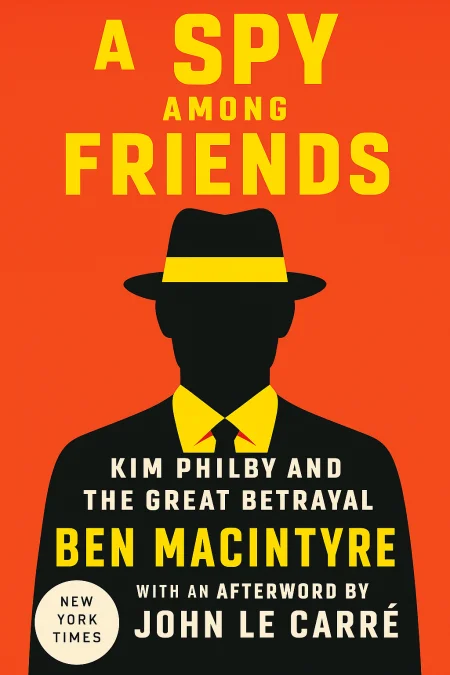
A Spy Among Friends
Philby and the Great Betrayal
byBen Macintyre, John Le Carré
Book Edition Details
Summary
In the shadowy corridors of espionage, where trust is as elusive as truth, Ben Macintyre unveils the gripping tale of Kim Philby, the man who danced dangerously on the tightrope of dual allegiance. Philby, a charismatic master of deception, ascended to the pinnacle of British intelligence, weaving a web of intrigue that ensnared even his closest allies. Among them were Nicholas Elliott and James Jesus Angleton, whose camaraderie with Philby became the very conduit of betrayal. As Philby fed their secrets to the Soviet machine, the stakes soared to perilous heights, threatening the fragile balance of Cold War power. This narrative, alive with tension and psychological nuance, peels back the layers of loyalty, friendship, and treachery, revealing the devastating impact of a spy who played both sides with deadly precision. A Spy Among Friends stands as a testament to Macintyre’s unparalleled storytelling, offering a vivid portrait of espionage’s most legendary double agent.
Introduction
In the smoky gentlemen's clubs of London and the corridors of power in Washington, three men forged friendships that would reshape the course of the Cold War. Kim Philby, Nicholas Elliott, and James Angleton moved through the same elite circles, shared the same secrets, and trusted each other with their lives. Yet beneath the veneer of old school ties and shared martinis lay one of history's most devastating betrayals. This remarkable story reveals how personal relationships became the battleground for ideological warfare, where loyalty to friends clashed with loyalty to country. Through intimate portraits of these three spies, we witness the human drama behind the headlines of the Cold War, exploring how charm, trust, and friendship could be weaponized with lethal consequences. The tale illuminates not just the mechanics of espionage, but the deeper questions of identity, belonging, and the price of conviction in an age of competing ideologies. For anyone fascinated by the hidden history of the twentieth century, this narrative offers unprecedented insight into how the most successful spy operation in modern history unfolded through the bonds of friendship and the devastating power of betrayal. It demonstrates how institutional blind spots, class privilege, and personal loyalty can create vulnerabilities that adversaries will inevitably exploit, providing lessons that remain painfully relevant in our current age of information warfare.
Wartime Bonds: The Making of Three Spies (1939-1945)
The Second World War created an unlikely brotherhood among three young men who would define Cold War espionage for decades to come. Nicholas Elliott, the charming Old Etonian with a talent for friendship, stumbled into MI6 through the time-honored tradition of knowing the right people at the right clubs. His entry into the secret world was almost comically casual, secured over champagne at Ascot races through his father's connections. Kim Philby's recruitment followed a similar path of privilege and patronage, though his motivations ran far deeper than Elliott suspected. While Elliott saw the war as a clear-cut battle between civilization and barbarism, Philby had already chosen his side years earlier in the ideological struggles of 1930s Cambridge. His charm was legendary, his dedication to the cause absolute, and his secret allegiance to Soviet communism perfectly concealed beneath the persona of the perfect English gentleman. Across the Atlantic, James Angleton brought a different sensibility to the intelligence world. Part Mexican, part Apache, educated at an English public school, he embodied the complexity of America's emerging role in global espionage. His aesthetic sensibilities and intellectual intensity masked a growing obsession with the Byzantine world of counter-intelligence, where nothing was ever quite what it seemed. The war forged these three men into a tight-knit fraternity, bound by shared secrets and mutual admiration. Elliott's successful extraction of German defectors, Philby's brilliant analysis of enemy intelligence, and Angleton's penetration of fascist networks established their reputations as rising stars. Yet even as they collaborated against the Nazi threat, the seeds of future betrayal were already planted. The very trust that made them so effective would later become the weapon that nearly destroyed Western intelligence.
Cold War Deception: Philby's Double Game in Washington (1946-1951)
The transition from world war to Cold War found the three friends at the pinnacle of their respective intelligence services, perfectly positioned to shape the new conflict against Soviet communism. Elliott established himself as Britain's master spy in Switzerland, cultivating networks and hunting communist agents with the same enthusiasm he had once directed against the Nazis. Angleton rose rapidly through the ranks of the newly formed CIA, his paranoid brilliance making him the perfect counter-intelligence chief for an age of suspicion and betrayal. But it was Philby who achieved the most spectacular success, landing the coveted position of MI6 liaison chief in Washington. His appointment represented the ultimate triumph of the old boy network, a testament to his wartime achievements and personal charm. American intelligence officers competed to wine and dine this sophisticated Englishman who seemed to embody everything they admired about their British allies. The reality was far more sinister. From his comfortable office in the British Embassy, Philby systematically betrayed every Western intelligence operation he could access. The Albanian insurgents dropped behind enemy lines, the Ukrainian resistance fighters parachuted into Soviet territory, the carefully planned infiltrations into communist Eastern Europe – all were doomed before they began, their coordinates and timing passed to Moscow through Philby's secret channels. Perhaps most tragically, Philby's closest friendship became his most valuable intelligence asset. His regular lunches with Angleton at Harvey's restaurant were exercises in professional seduction, each man believing he was manipulating the other. Over lobster and bourbon, Angleton shared the crown jewels of American intelligence, never suspecting that his trusted friend was methodically betraying every secret. The human cost was staggering – hundreds of brave men and women died because of information passed across those starched tablecloths, establishing a pattern of betrayal that would haunt Western intelligence for decades.
The Unraveling: Exposure and Escape to Moscow (1951-1963)
The first cracks in Philby's perfect deception appeared with the Venona decrypts, the breakthrough that allowed Western codebreakers to read wartime Soviet intelligence traffic. The intercepts revealed the existence of high-level Soviet spies within the British government, including one codenamed "Homer" who had operated from the Washington embassy. Philby knew immediately that Homer was Donald Maclean, his fellow Cambridge spy, and that the investigation would eventually lead to his own exposure. The crisis deepened when Guy Burgess, the most unstable member of the Cambridge ring, arrived in Washington as Philby's houseguest. Burgess's outrageous behavior – his drunken scenes, his open homosexuality, his deliberate provocations – created a scandal that threatened to engulf everyone associated with him. When the net finally closed around Maclean in 1951, Burgess fled to Moscow with him, creating an immediate crisis for Philby. Elliott found himself in the impossible position of investigating his dearest friend. The evidence was circumstantial but damning, and Philby's explanations, while plausible, failed to fully convince his interrogators. After months of investigation, Philby was quietly forced to resign from MI6, though he escaped prosecution due to lack of concrete proof. He retreated to Beirut as a journalist, maintaining his innocence while secretly remaining in contact with Soviet intelligence. The final confrontation came in 1963, when Elliott traveled to Beirut armed with new evidence of Philby's guilt. Their last meeting was a masterpiece of English understatement, two old friends discussing betrayal over afternoon tea while hidden microphones recorded every word. Elliott offered Philby immunity in exchange for a full confession, hoping to salvage something from the wreckage of their friendship. Instead, Philby used the warning to plan his escape, disappearing from Beirut on a Soviet freighter bound for Moscow, leaving behind a devastated Elliott and a Western intelligence community forever changed.
Legacy of Betrayal: Trust Shattered in the Intelligence World
The Philby affair transformed the culture of Western intelligence in ways that persist to this day. The revelation that the most trusted, most charming, most quintessentially English of spies had been working for Moscow shattered the comfortable assumptions that had governed the intelligence world. The old boy network that had seemed like a strength – the shared schools, clubs, and social connections that bound the intelligence elite together – was revealed as a fatal vulnerability. Angleton's reaction was perhaps the most extreme and consequential. The discovery that his closest friend had been systematically betraying him for years triggered a paranoid obsession that would define his career for the next two decades. As head of CIA counter-intelligence, he launched an increasingly frantic hunt for Soviet moles that paralyzed American intelligence operations and destroyed the careers of innocent officers. His conviction that the KGB had achieved total penetration of Western intelligence created a climate of suspicion that made effective espionage almost impossible. Elliott's response was more measured but no less profound. The man who had built his career on the ability to judge character and inspire trust found himself questioning every relationship, every friendship, every professional bond. The easy camaraderie that had characterized wartime intelligence gave way to formal procedures, security checks, and institutional barriers designed to prevent another Philby from emerging. The broader implications extended far beyond the intelligence services. The Philby case became a symbol of the moral ambiguities of the Cold War, raising uncomfortable questions about loyalty, patriotism, and the nature of betrayal. It demonstrated how personal relationships could be weaponized in ideological conflict, and how the very qualities that make someone trustworthy – charm, intelligence, social connections – could be turned into instruments of deception. The legacy continues to shape intelligence operations today, serving as a permanent reminder that the most dangerous enemy may be the friend sitting across from you at dinner.
Summary
The story of Philby, Elliott, and Angleton reveals the central paradox of modern espionage: the very human connections that make intelligence work possible also create its greatest vulnerabilities. Their tale demonstrates how personal loyalty and ideological conviction can become fatally intertwined, creating betrayals that echo across generations. The Cambridge spy ring succeeded not through sophisticated technology or elaborate schemes, but through the simple exploitation of friendship and trust. The historical lessons remain painfully relevant in our current age of information warfare and cyber espionage. First, institutional safeguards can never fully compensate for human judgment, and the most rigorous security procedures are worthless if they're implemented by people who've already been compromised. Second, the greatest threats often come not from obvious enemies but from trusted insiders who've been turned by ideology, money, or coercion. Finally, the damage from successful penetration extends far beyond the immediate intelligence losses, creating a culture of suspicion that can paralyze an organization for decades. Perhaps most importantly, this story reminds us that behind every great historical event lie individual human choices, personal relationships, and moral decisions that shape the course of nations. Understanding these human dimensions of history helps us recognize similar patterns in our own time and make better decisions about whom to trust and how to protect the institutions that defend our freedoms.
Related Books
Download PDF & EPUB
To save this Black List summary for later, download the free PDF and EPUB. You can print it out, or read offline at your convenience.
By Ben Macintyre
