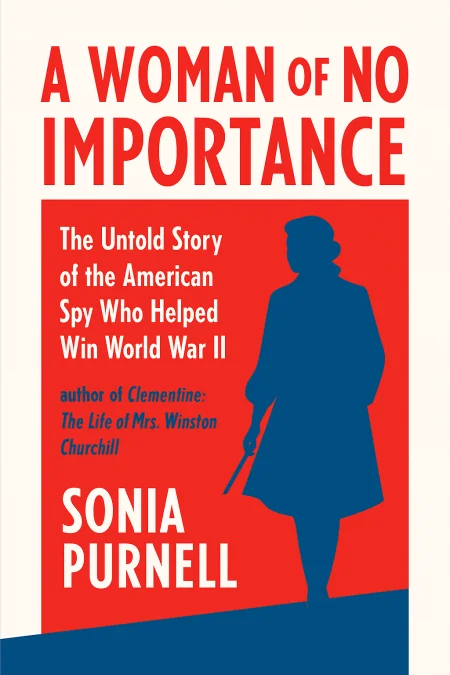
A Woman of No Importance
The Untold Story of the American Spy Who Helped Win World War II
Book Edition Details
Summary
1942, the world trembles under the dark shadow of war. Amidst this chaos, a singular figure, Virginia Hall, emerges with unyielding resolve and a daring spirit that defies convention and enemy forces alike. Rejected by her own country’s foreign service for her gender and prosthetic leg, Hall infiltrates the clandestine web of espionage, becoming a linchpin in Churchill’s "ministry of ungentlemanly warfare." Her prowess in occupied France earns her the Gestapo's ominous title: the most dangerous Allied spy. Sonia Purnell's "A Woman of No Importance" paints an electrifying portrait of this enigmatic woman—known as the "Madonna of the Resistance"—who orchestrated acts of sabotage and masterminded guerrilla networks, even as her face adorned WANTED posters across Europe. This riveting account of courage and tenacity is a testament to the extraordinary feats one woman achieved against insurmountable odds, altering the course of history and proving the indomitable power of the human spirit.
Introduction
In the shadowy corridors of World War II espionage, few names struck as much fear into Nazi hearts as Virginia Hall, an American woman with a prosthetic leg who became the Gestapo's most wanted Allied spy. Operating behind enemy lines in occupied France, she transformed from a rejected diplomatic applicant into the backbone of French Resistance operations, orchestrating prison breaks, coordinating sabotage missions, and building networks that proved crucial to Allied victory. Her wooden leg, nicknamed "Cuthbert," became both her greatest vulnerability and an unexpected asset in a deadly game of deception that spanned continents and changed the course of history. What makes Virginia's story extraordinary is not merely her wartime heroics, but the remarkable journey of personal transformation that brought her to those pivotal moments. Through her experiences, readers discover how institutional rejection and physical disability can be transformed into sources of unshakeable determination and strategic advantage. Her tale reveals the intricate psychology of resistance work, where survival depended on reading people correctly and building trust across cultural divides while living under constant threat of torture and death. Most profoundly, her legacy demonstrates how one person's refusal to accept limitations imposed by others can unlock potential that reshapes not only individual destiny but the fate of nations themselves.
From Rejection to Resistance: Finding Purpose in War
Virginia Hall's transformation into one of history's most effective spies began with a series of devastating rejections that would have crushed a lesser spirit. Born into Baltimore society in 1906, she possessed every advantage her privileged background could provide: excellent education, fluency in multiple languages, and extensive European experience. Yet when she applied to join the U.S. Foreign Service in the 1930s, she encountered an impenetrable wall of institutional sexism that relegated her to clerical positions despite her obvious qualifications for diplomatic work. The defining moment came in 1933 during a hunting accident in Turkey that cost her left leg below the knee. The prosthetic limb she received, which she nicknamed "Cuthbert," might have ended the ambitions of someone less determined. Instead, Hall used her recovery period to deepen her understanding of European politics and languages, sensing the growing fascist threat across the continent. The State Department's continued rejection of her applications, now citing her disability as an additional disqualification, only strengthened her resolve to serve her country in whatever capacity would accept her talents. When World War II erupted and France fell to Nazi forces in 1940, Hall faced a choice that would define her legacy. She could flee to safety like most Americans, or remain and fight against the occupation. Her decision to stay and eventually join Britain's Special Operations Executive marked the beginning of an extraordinary metamorphosis. The woman deemed unsuitable for diplomatic service was about to become one of the most feared intelligence operatives in Nazi-occupied Europe. Her early experiences with rejection and adversity had forged a character of remarkable resilience and adaptability. These qualities, combined with her intimate knowledge of French culture and her ability to move seamlessly between social circles, made her uniquely suited for the dangerous work ahead. The very institutions that had dismissed her capabilities would soon depend on her success for their survival.
Building Networks: The Universal Aunt of French Resistance
Virginia's arrival in Lyon in 1941 under journalistic cover marked the beginning of one of the war's most successful intelligence operations. Her apartment quickly became what colleagues called "the nerve center of the Resistance," a hub where agents, escaped prisoners, and local recruits converged for assistance, coordination, and hope. Her genius lay not in dramatic gestures but in patient relationship-building that transcended all social boundaries, creating networks that included everyone from aristocrats to prostitutes, priests to Communist railway workers. Her approach to recruitment was methodical yet intuitive, based on an almost supernatural ability to identify trustworthy individuals regardless of their background. She organized her contacts into small, compartmentalized cells where members knew only what they needed to know, protecting the broader organization when individuals were captured and tortured. Virginia provided her recruits with false papers, ration cards, money, and most importantly, a sense that their sacrifices served a larger purpose that would ultimately triumph over Nazi oppression. The scale of Virginia's network was unprecedented for a single agent. By 1942, she was coordinating with over twenty-five SOE-trained organizers and six wireless operators across France, managing parachute drops of weapons and supplies while maintaining operational security that kept her one step ahead of increasingly sophisticated German counterintelligence efforts. Her intelligence reports reached Winston Churchill himself, providing crucial information about German troop movements, Vichy collaboration, and the evolving mood of the French people under occupation. Her success earned her the affectionate nickname "the universal aunt" among SOE agents, reflecting her ability to provide whatever assistance was needed while maintaining the warm, nurturing relationships that kept her network functioning under extreme pressure. She had transformed from a frustrated diplomatic applicant into the linchpin of Allied intelligence operations across occupied Europe, proving that effectiveness often matters more than official recognition or institutional approval.
Escape Artist: Prison Breaks and Dangerous Rescues
Virginia's reputation as a master escape artist reached its pinnacle with the audacious Mauzac prison break, one of the war's most successful rescue operations. When twelve SOE agents were captured and imprisoned, Virginia refused to abandon them to their fate. Working with allies including Gaby Bloch, wife of one of the prisoners, she orchestrated a complex operation that moved the men to a more accessible facility and then engineered their spectacular escape through a combination of bribery, deception, and split-second timing. The Mauzac operation showcased Virginia's meticulous planning abilities and talent for coordinating multiple moving parts simultaneously. She recruited sympathetic guards, arranged for tools to be smuggled inside through food parcels, and even had wireless radio equipment delivered hidden in a priest's artificial legs. The escape itself was timed to the second, with prisoners crawling through barbed wire in just twelve minutes while friendly guards looked the other way, followed by a carefully orchestrated series of safe houses and transportation to Spain. Her rescue operations extended far beyond single dramatic events to encompass a systematic approach to extracting captured agents before they could be broken under torture. Virginia maintained relationships with sympathetic prison officials, judges, and police officers who could be persuaded to arrange hospital transfers where escapes could be staged more easily. Her success rate was remarkable in an era when capture by the Gestapo typically meant certain death, earning her fierce loyalty from fellow agents who knew she would never abandon those under her care. These operations required not just physical courage but exceptional psychological insight and organizational skills. Virginia had to assess which officials could be trusted, determine which prisoners were strong enough to attempt escape, and coordinate complex operations while maintaining her own security and cover identity. Her willingness to risk everything for captured colleagues established her reputation as someone whose word could be trusted absolutely, a quality that proved invaluable in building the relationships that sustained her networks through the darkest periods of the war.
Final Operations: Evading the Gestapo's Closing Net
By late 1942, Virginia had become the Gestapo's most wanted Allied agent in France, known to German security services as "the limping lady" whose capture had become their highest priority. The Nazi intelligence apparatus had begun penetrating her network through double agents and increasingly sophisticated radio detection equipment, forcing her to operate under conditions of extreme danger while maintaining the complex web of relationships that kept the Resistance functioning across hundreds of miles of occupied territory. The situation became critical when Operation Donar flooded the Free Zone with German agents posing as French citizens, while her wireless operators were being tracked and arrested one by one. The capture and torture of several key associates brought the Gestapo dangerously close to her location, yet Virginia continued coordinating operations even as the net tightened around her. Her transformation during this period from intelligence coordinator to hardened operative willing to authorize lethal force against traitors reflected the brutal realities of clandestine warfare. Virginia's final months in France demonstrated her evolution into a ruthless professional who understood that sentiment could not override operational security. She authorized the elimination of double agents whose betrayals had cost lives, while simultaneously planning her own escape route across the Pyrenees mountains. Her decision to evacuate came not from personal fear but from strategic necessity, as her capture would have compromised networks spanning the entire country and cost hundreds of lives. Her winter escape across the Pyrenees in November 1942, despite her prosthetic leg and pursuing German agents, marked the end of fifteen months behind enemy lines. She had spent longer in occupied territory than almost any other Allied agent, fundamentally changing how intelligence services conducted clandestine warfare while proving that determination and skill could triumph over the Reich's most sophisticated security apparatus. Her legacy would influence intelligence operations for decades to come, though her greatest satisfaction came from knowing that the networks she built continued fighting until liberation arrived.
Summary
Virginia Hall's extraordinary journey from rejected diplomat to legendary spy demonstrates that true heroism emerges when personal adversity intersects with historical necessity, transforming individual limitations into sources of unprecedented strength and effectiveness. Her refusal to accept the boundaries imposed by institutional prejudice and physical disability created opportunities that reshaped the landscape of intelligence warfare while saving countless lives and contributing decisively to Allied victory. Her legacy extends far beyond her wartime achievements to encompass a profound understanding of leadership, courage, and the power of human connection under the most extreme circumstances. The lessons from Virginia's experience remain profoundly relevant for anyone facing seemingly impossible challenges or institutional resistance to their ambitions. Her ability to build trust across cultural and social boundaries, maintain hope and purpose under extreme pressure, and adapt continuously to changing circumstances provides a template for effective leadership in any context. Her story reminds us that the most important battles are often fought by individuals whose contributions remain hidden from public view, and that effectiveness and moral courage matter more than recognition or official approval. For readers interested in intelligence history, women's roles in warfare, or simply the triumph of human determination over adversity, Virginia Hall's life offers both inspiration and practical wisdom about the courage required to serve causes greater than ourselves.
Related Books
Download PDF & EPUB
To save this Black List summary for later, download the free PDF and EPUB. You can print it out, or read offline at your convenience.
By Sonia Purnell
