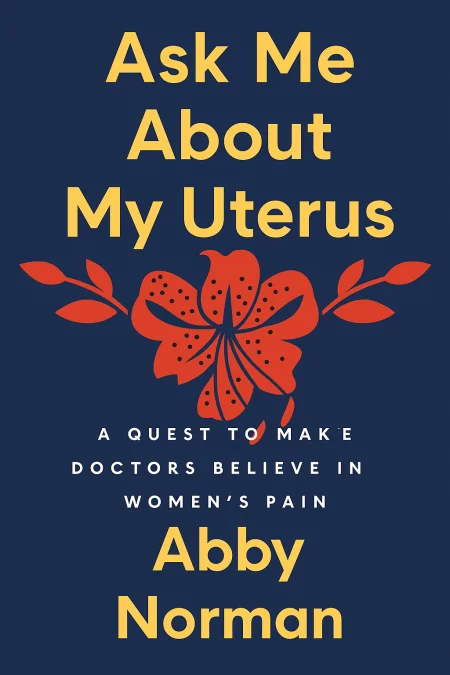
Ask Me About My Uterus
A Quest to Make Doctors Believe in Women's Pain
Book Edition Details
Summary
The year 2010 marked a pivotal moment for Abby Norman, when her vibrant dancer's body betrayed her, shedding weight and sprouting grays as relentless pain became her constant companion. Yet, the medical world dismissed her agony with a wave of antibiotics and shrugged-off diagnoses. Driven by desperation and the refusal to be sidelined, Abby began an extraordinary quest for truth, arming herself with knowledge gleaned during hospital shifts and medical library interludes. In "Ask Me About My Uterus," she recounts this journey with raw authenticity, exposing the often-overlooked plight of women battling endometriosis amidst a healthcare system steeped in bias. Norman's narrative fiercely challenges the silencing of female pain and reclaims the narrative of women's bodies as more than just battlegrounds in an ongoing struggle for recognition and respect. This memoir is a clarion call for empathy, understanding, and change—a testament to resilience against a backdrop of systemic indifference.
Introduction
In the sterile corridors of modern medicine, where technology promises answers and expertise commands reverence, one young woman's journey reveals the profound gaps that still exist in our understanding of the female body. Abby Norman's story begins not in a laboratory or lecture hall, but in a college dormitory shower, where a moment of excruciating pain would forever alter the trajectory of her life. What followed was not just a medical mystery, but a decade-long odyssey through a healthcare system that too often dismisses women's pain as psychological rather than physical. Norman's experience illuminates a troubling reality that countless women face: the struggle to be believed, to be heard, and to be treated with the same urgency and respect afforded to male patients. Her transformation from a promising dance student at Sarah Lawrence College to a self-taught medical researcher represents both personal tragedy and triumph. Through her journey, readers will discover the historical roots of medical bias against women, the power of patient advocacy in an imperfect system, and the extraordinary resilience required to fight for one's own survival when traditional medicine falls short. This is ultimately a story about the courage to question authority, the determination to seek truth, and the profound impact one voice can have in challenging centuries of medical orthodoxy.
The Collapse: From Dreams to Diagnosis
The autumn of 2010 should have marked the beginning of Abby Norman's sophomore year at Sarah Lawrence College, where she had found her intellectual and creative home as a dance student. Instead, it became the moment when her carefully constructed future began to unravel. The pain that struck her in that dormitory shower was unlike anything she had ever experienced, a searing agony that would not relent despite multiple emergency room visits and countless medical consultations. What made Norman's situation particularly devastating was not just the physical suffering, but the complete upheaval of her identity and aspirations. She had fought her way to Sarah Lawrence from a troubled childhood, viewing education as her pathway to freedom and self-determination. The college represented everything she had worked toward, a place where her intellectual curiosity was celebrated and her artistic expression could flourish. To lose this sanctuary to an invisible illness felt like a cruel cosmic joke. The medical establishment's initial response was frustratingly familiar to many women: suggestions that her symptoms were stress-related, that she was perhaps too ambitious, too driven, too something. The dismissive attitudes she encountered reflected a long history of medical professionals attributing women's physical complaints to psychological causes. Norman found herself caught in a web of medical gaslighting, where her own experience of her body was consistently questioned and minimized. As months turned to years, Norman was forced to abandon not just her studies but her entire conception of who she was meant to become. The promising young woman who had danced for hours each day, who had devoured literature and philosophy with equal passion, was replaced by someone whose daily existence revolved around managing pain and navigating an increasingly complex medical maze. This collapse of her former self would ultimately become the foundation for her emergence as a powerful advocate for women's health.
Navigating the Medical Maze: Self-Advocacy in Crisis
Faced with a healthcare system that seemed determined to dismiss her suffering, Norman made a decision that would define the next phase of her life: she would become her own advocate, researcher, and detective. Working in a hospital's medical records department provided her with unprecedented access to medical literature and terminology, transforming her from patient to student of her own condition. She spent countless hours poring over journals, learning the language of medicine, and developing the analytical skills that would eventually save her life. Norman's self-directed medical education revealed the shocking extent to which women's health issues have been understudied and misunderstood throughout history. She discovered that endometriosis, the condition that would eventually be identified as the source of much of her suffering, affects millions of women worldwide yet remains poorly understood by many physicians. The average time to diagnosis is seven to twelve years, a statistic that reflects not just the complexity of the condition but the systemic bias that treats women's pain as less credible than men's. The process of advocating for herself required Norman to develop a thick skin and an unwavering determination. She learned to document everything, to research extensively before appointments, and to present her case with the precision of a medical professional. This approach sometimes backfired, with doctors dismissing her as a hypochondriac who had spent too much time on the internet. The irony was not lost on her that the very knowledge that made her a more effective advocate also made some physicians less likely to take her seriously. Through trial and error, Norman discovered that effective self-advocacy required not just medical knowledge but strategic thinking about how to communicate with healthcare providers. She learned to speak their language, to present symptoms objectively rather than emotionally, and to persist even when faced with condescension or outright dismissal. Her experience highlighted the unfortunate reality that patients, particularly women, often need to become experts in their own conditions to receive appropriate care.
Breaking the Silence: From Patient to Advocate
Norman's transformation from isolated patient to public advocate began with the simple act of sharing her story online. What started as a personal blog became a platform for thousands of women who recognized their own experiences in her words. The response was overwhelming, with messages pouring in from women around the world who had faced similar dismissals, delays, and medical gaslighting. This outpouring revealed the scope of a problem that had remained largely hidden in the private spaces of examination rooms and personal suffering. The power of Norman's advocacy lay not just in her personal story but in her ability to contextualize individual experiences within broader patterns of medical bias and historical discrimination. She connected the dots between centuries of hysteria diagnoses and contemporary dismissals of women's pain, showing how deeply rooted prejudices continue to shape medical practice. Her writing combined rigorous research with accessible storytelling, making complex medical and social issues understandable to general audiences. Norman's work challenged the medical establishment to confront uncomfortable truths about gender bias in healthcare. She highlighted research showing that women wait longer for pain medication, are more likely to be prescribed sedatives instead of analgesics, and are often assumed to be exaggerating their symptoms. Her advocacy helped bring these issues into public discourse, contributing to a growing movement demanding better healthcare for women and marginalized communities. Perhaps most importantly, Norman's advocacy provided validation and hope to countless women who had been made to feel that their pain was imaginary or unimportant. By sharing her story and amplifying the voices of others, she created a community of support and solidarity that transcended geographical boundaries. Her work demonstrated that individual stories, when shared courageously and authentically, have the power to challenge systemic injustices and create meaningful change.
Summary
Abby Norman's journey from dismissed patient to powerful advocate illustrates the profound courage required to challenge medical authority and fight for one's own survival in an imperfect healthcare system. Her story reveals that the most important medical breakthroughs sometimes come not from laboratories or clinical trials, but from patients who refuse to accept inadequate care and who have the determination to seek answers when the system fails them. Norman's experience demonstrates that effective advocacy requires not just passion but knowledge, strategy, and an unwavering commitment to truth. Her legacy offers two crucial lessons for anyone navigating healthcare challenges: first, that patients must be prepared to become active participants in their own care, armed with knowledge and persistence; and second, that individual stories, when shared with courage and authenticity, have the power to expose systemic problems and create change that benefits countless others. Norman's work is particularly valuable for women, people with chronic illnesses, and anyone who has felt dismissed or marginalized by the medical establishment, showing that it is possible to transform personal suffering into meaningful advocacy that improves healthcare for all.
Related Books
Download PDF & EPUB
To save this Black List summary for later, download the free PDF and EPUB. You can print it out, or read offline at your convenience.
By Abby Norman
