
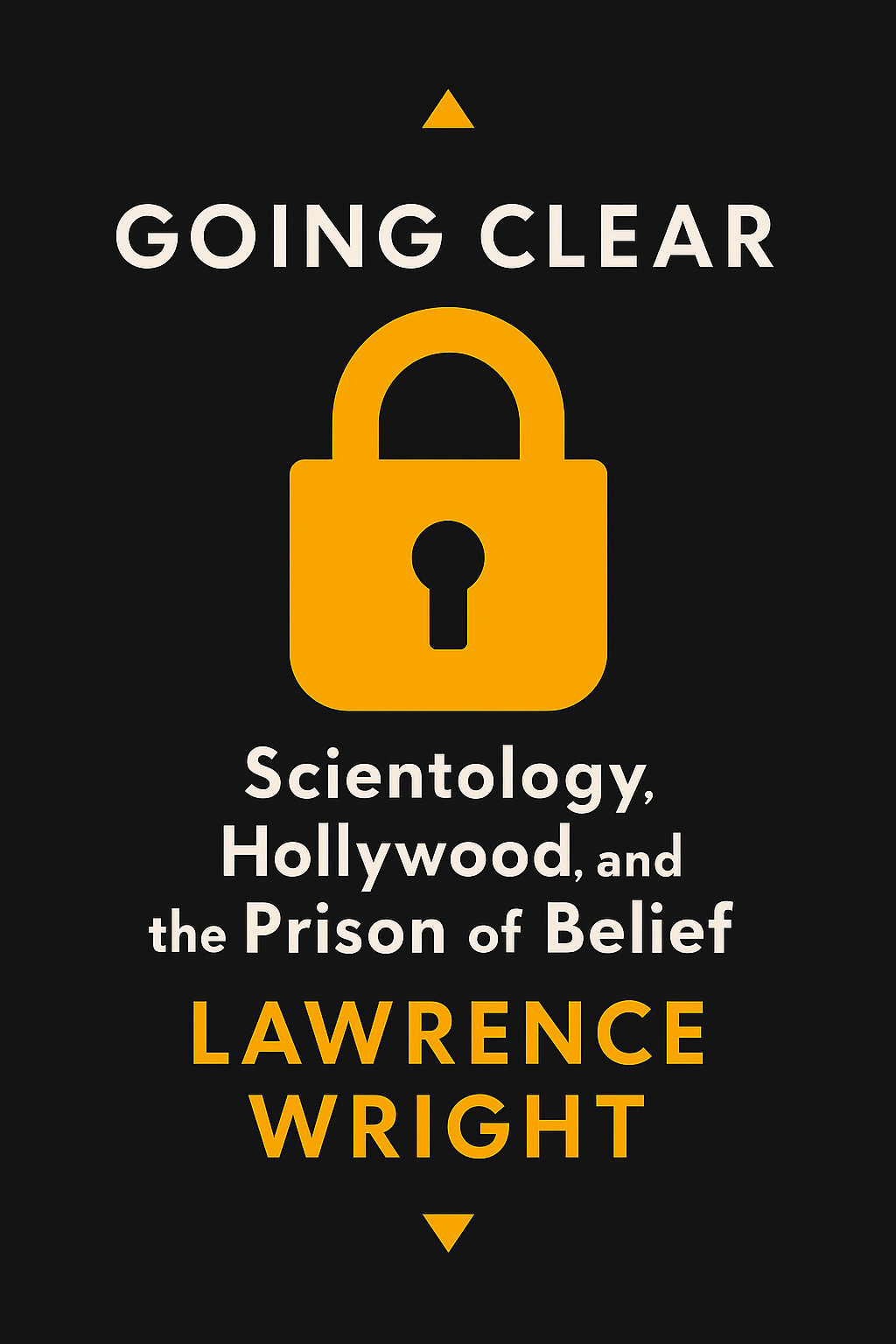
Going Clear
Scientology, Hollywood and the Prison of Belief
Book Edition Details
Summary
Shrouded in mystery and controversy, the enigmatic world of Scientology unfolds through the piercing lens of Pulitzer Prize-winner Lawrence Wright. In "Going Clear," Wright meticulously peels back the layers of this elusive institution, offering a riveting exposé that blends exhaustive research with vivid storytelling. At its heart lies the creation of a religion by the mercurial L. Ron Hubbard and the relentless drive of his successor, David Miscavige. With a deft narrative touch, Wright navigates through clandestine operations, celebrity allure, and the zeal of youthful adherents pledging lifetimes of devotion. This is more than an investigation; it’s a profound inquiry into the nature of belief, power, and what it means to be a faith in modern America. Prepare to be captivated by tales of ambition, secrecy, and the struggle for legitimacy, as the curtain is pulled back on one of the most fascinating religious movements of our time.
Introduction
In the turbulent decades following World War II, as America grappled with unprecedented prosperity alongside existential uncertainty, a remarkable transformation unfolded in the realm of spiritual seeking. From the cramped apartment of a struggling science fiction writer emerged what would become one of the most controversial and influential religious movements of the modern era, forever altering our understanding of faith, celebrity, and institutional power in democratic societies. This extraordinary journey reveals how personal ambition and spiritual yearning could evolve into a global organization wielding immense influence over thousands of lives while accumulating vast wealth and celebrity endorsements. The story illuminates fundamental questions about the nature of religious authority in the modern world, the dangerous intersection of charismatic leadership with unchecked power, and the complex dynamics through which new spiritual movements gain legitimacy and influence in contemporary culture. For students of religious studies, sociology, and American cultural history, this analysis offers crucial insights into how alternative spiritual movements emerge and evolve within democratic frameworks. It speaks directly to anyone seeking to understand the mechanisms of institutional control, the role of celebrity culture in shaping religious movements, and the eternal human tension between the quest for transcendence and the reality of organizational corruption. Most importantly, it provides essential lessons for recognizing the warning signs when spiritual promise becomes entangled with authoritarian control.
Foundation and Early Evolution: L. Ron Hubbard's Vision (1911-1950)
Lafayette Ronald Hubbard's early life unfolded against the backdrop of early twentieth-century American expansion and technological optimism, shaping a personality that would later prove capable of extraordinary reinvention. Born in Nebraska in 1911, he spent his formative years moving through the American West as his father pursued a naval career, developing both a restless wanderlust and an early fascination with storytelling that would prove crucial to his later endeavors. His claimed travels to Asia during his youth, though likely embellished, introduced him to alternative spiritual concepts that would eventually find their way into his religious doctrines. The 1930s and 1940s witnessed Hubbard's emergence as a prolific pulp fiction writer, producing millions of words across every conceivable genre from westerns to science fiction. This intensive creative period taught him invaluable lessons about capturing and maintaining audience attention, crafting compelling narratives, and understanding the psychological triggers that motivated people to believe in extraordinary possibilities. His brief involvement with occult circles in California, particularly his association with rocket scientist Jack Parsons, exposed him to ritual practices and the transformative power of belief systems operating outside mainstream religious traditions. The pivotal transformation began in the late 1940s when Hubbard channeled his storytelling abilities and psychological insights into developing what would become Dianetics. Presenting his system as a revolutionary approach to mental health that combined scientific precision with therapeutic effectiveness, he tapped into post-war America's hunger for both technological progress and personal transformation. The 1950 publication of "Dianetics: The Modern Science of Mental Health" became an unexpected bestseller, promising readers they could achieve a state called "Clear" and eliminate psychosomatic illness through systematic mental archaeology. This foundational period established enduring patterns that would define the movement's future development: the blending of scientific-sounding terminology with spiritual concepts, the promise of superhuman abilities through prescribed practices, and the central role of charismatic authority in validating extraordinary claims. Hubbard's successful transition from struggling writer to spiritual innovator demonstrated how individual creativity and ambition could evolve into institutional power when combined with effective communication and a sophisticated understanding of human psychological needs and cultural anxieties.
Expansion and Institutionalization: Sea Organization Era (1950-1986)
The transformation from therapeutic methodology to comprehensive religious organization required both visionary leadership and systematic institutional development, challenges that Hubbard addressed through increasingly sophisticated organizational structures and strategic positioning. The establishment of the Sea Organization in 1967 represented a crucial evolutionary leap, creating a core of utterly committed members who signed billion-year contracts symbolizing their eternal dedication to the movement's cosmic mission. This maritime period allowed Hubbard to operate beyond government oversight while developing the hierarchical systems and advanced spiritual practices that would define the organization's future character. Operating from a small fleet of ships in international waters, Hubbard created a unique laboratory for testing the limits of human dedication and the possibilities of total institutional control. The flagship Apollo became both sanctuary and experimental community, where every aspect of daily life served the dual purposes of spiritual advancement and organizational efficiency. During these sea years, Hubbard revealed increasingly complex cosmological doctrines, including the controversial story of Xenu and ancient galactic civilizations that represented his boldest leap from self-help psychology into science fiction spirituality. The period simultaneously witnessed the movement's systematic courtship of celebrities, recognizing that famous endorsements could provide legitimacy and attract new members more effectively than traditional religious outreach. The establishment of Celebrity Centres created specialized environments where entertainment industry figures could explore spiritual development while receiving the special attention and recognition their status demanded. This strategy proved remarkably successful, drawing notable figures from Hollywood who became powerful advocates for the organization's teachings and practices. Behind the scenes, the organization developed increasingly sophisticated intelligence and legal operations designed to protect itself from external threats and internal dissent. The Guardian's Office coordinated extensive campaigns to infiltrate government agencies, discredit critics, and maintain the founder's reputation against mounting scrutiny from journalists and former members. These activities demonstrated how a religious movement could adopt techniques typically associated with intelligence agencies when it perceived its survival to be at stake. By the mid-1980s, what had begun as a small therapeutic practice had evolved into a global organization with significant financial resources, celebrity endorsements, and sophisticated operational capabilities. However, this expansion also brought increased government attention, costly legal challenges, and internal tensions that would ultimately necessitate a major transition in leadership and organizational structure following Hubbard's death in 1986.
Corporate Consolidation and Celebrity Culture: The Miscavige Era (1986-2000s)
The death of the founder in 1986 precipitated a dramatic succession crisis that ultimately resulted in the emergence of David Miscavige as the organization's undisputed leader, despite his youth and relatively recent entry into the movement's hierarchy. Miscavige's consolidation of power demonstrated remarkable political acumen, systematically eliminating rivals and centralizing all decision-making authority in his own hands while maintaining the fiction that he was merely implementing the founder's established policies. His rise illustrated how institutional succession in charismatic movements often depends more on organizational skill and ruthless determination than on spiritual authority or popular support among the membership. Under Miscavige's leadership, the organization achieved its most significant legal victory by securing tax-exempt religious status from the Internal Revenue Service in 1993, ending decades of costly litigation and legitimizing its operations in the eyes of government authorities. This triumph required sophisticated legal strategies, extensive documentation of religious practices, and persistent negotiation with federal officials who had long viewed the organization with suspicion. The achievement represented both a masterclass in institutional persistence and a demonstration of how legal expertise could fundamentally transform an organization's standing within existing governmental frameworks. The Miscavige era witnessed an unprecedented focus on celebrity recruitment and retention, with particular attention paid to maintaining the loyalty of high-profile members whose defection could damage the organization's carefully cultivated public image. The relationship with Tom Cruise became especially significant, with the organization reportedly providing extensive personal services and support to ensure his continued enthusiastic endorsement. This celebrity-focused strategy reflected a sophisticated understanding of modern media dynamics and the crucial role of famous personalities in shaping public opinion about religious and spiritual movements. However, this period of external success also generated increasing internal controversy as former members began speaking publicly about alleged abuses, coercive practices, and authoritarian control within the organization's leadership ranks. Accounts of physical violence, family separation, and psychological manipulation created a powerful counter-narrative that challenged the organization's public image of spiritual advancement and personal empowerment. The emergence of the internet provided unprecedented platforms for critics to share their experiences and organize opposition, creating new challenges for an organization long accustomed to controlling information flow and managing its public reputation through traditional media channels.
Modern Controversies and Public Scrutiny: Defections and Accountability
The twenty-first century brought unprecedented challenges to the organization's carefully constructed public image as high-ranking defectors began speaking out with detailed accounts of abuse and corruption within the leadership ranks. These weren't disgruntled outsiders or failed recruits, but longtime executives who had devoted decades of their lives to the movement and risen to positions of significant responsibility within its hierarchy. Their testimonies carried particular weight precisely because they came from true believers who had sacrificed everything for their faith, only to discover that the organization they served had systematically betrayed its own stated principles. The defection of figures like Marty Rathbun and Mike Rinder sent shockwaves through the organization's ranks while providing journalists and investigators with unprecedented access to the inner workings of the movement's most secretive operations. These former executives could speak knowledgeably about the organization's most confidential practices and provide documentary evidence to support their increasingly damaging allegations. Their accounts revealed systematic patterns of abuse, financial irregularities, and authoritarian control that painted a picture of an organization far removed from its stated mission of spiritual liberation and human empowerment. The rise of the internet and social media created new challenges for an organization that had long depended on controlling information and limiting outside scrutiny of its practices and doctrines. Anonymous hackers launched coordinated attacks on the organization's websites and operations, while former members created online communities that provided support and resources for those seeking to leave. The movement's traditional tactics of intimidation, litigation, and character assassination proved less effective in the digital age, where information could be shared instantly and anonymously across global networks beyond any single institution's control. Perhaps most significantly, this period saw the emergence of a new generation of critics who had grown up within the organization but chose to speak out about their experiences rather than remain silent. These second-generation members could describe the human cost of total institutional commitment in ways that resonated with broader audiences, showing how children had been separated from parents, education had been denied, and normal psychological development had been sacrificed to serve the organization's perceived needs. Their voices added a moral urgency to public debates about the movement that transcended abstract questions of religious freedom and touched on fundamental issues of human rights and child welfare.
Summary
The historical trajectory of this modern religious movement reveals fundamental tensions that extend far beyond any single organization, illuminating the complex dynamics between individual charisma and institutional authority, between spiritual promise and organizational control, and between religious freedom and social accountability in democratic societies. At its core, this story demonstrates how personal vision and genuine spiritual seeking can evolve into institutional power, but also how that same power can become dangerously disconnected from its original purposes when organizational survival and growth become the primary concerns rather than member welfare and authentic spiritual development. The pattern that emerges suggests that successful religious movements must navigate an increasingly delicate balance between maintaining founder loyalty and adapting to changing social circumstances, between attracting new members and retaining existing ones, and between claiming spiritual authority and operating within legal and ethical constraints imposed by broader society. The movement's evolution from therapeutic practice to global organization illustrates both the remarkable possibilities and the inherent dangers present in modern spiritual entrepreneurship, particularly when charismatic leadership operates without meaningful accountability or external oversight. For contemporary observers seeking to understand how religious movements gain power and influence in modern democratic societies, this history offers several crucial insights: the vital importance of maintaining transparency and accountability in religious organizations, particularly those demanding significant personal and financial commitments from members; the need for robust legal and social frameworks that protect legitimate religious freedom while preventing institutional abuse; and the essential value of critical thinking and independent investigation when evaluating spiritual claims and organizational promises. Understanding these dynamics can help individuals make more informed decisions about spiritual involvement while supporting the development of healthier religious institutions that truly serve human flourishing rather than institutional aggrandizement and control.
Related Books
Download PDF & EPUB
To save this Black List summary for later, download the free PDF and EPUB. You can print it out, or read offline at your convenience.
By Lawrence Wright
