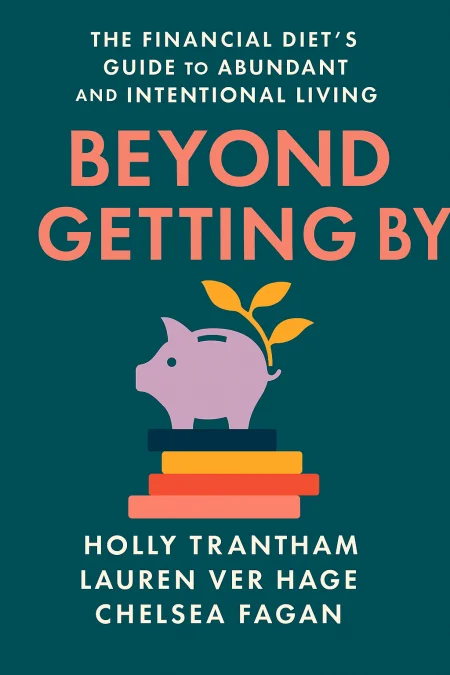
Beyond Getting By
The Financial Diet's Guide to Abundant and Intentional Living
byChelsea Fagan, Holly Trantham, Lauren Ver Hage
Book Edition Details
Summary
Toss aside the chains of consumerism and embrace a liberating approach to finance with "Beyond Getting By." This vibrant guide, born from the minds behind The Financial Diet, dismantles the myth of the money-driven life. It's not about amassing wealth; it's about transforming money into a vehicle for joy, creativity, and deeper connections. Packed with engaging exercises and wisdom from unexpected mentors like Freud and Warren, it encourages readers to craft their own budget philosophy and redefine success. Perfect for those who want to balance ambition with personal fulfillment, this book is a manifesto for living authentically and valuing every moment.
Introduction
The conventional narrative around personal finance and career success has become a trap for an entire generation. We've been sold the idea that financial wellness means endless optimization, that career achievement requires sacrificing everything else, and that the path to a meaningful life runs exclusively through maximizing income and accumulating wealth. This perspective has created a culture where being busy is worn as a badge of honor, where self-worth is measured by bank account balances, and where the pursuit of "having it all" has left many feeling depleted and disconnected from what actually matters. The fundamental flaw in this approach lies not in its ambition, but in its narrow definition of success and its failure to account for the systemic barriers that make traditional financial advice irrelevant for most people. Rather than offering another set of budgeting hacks or productivity tips, a more thoughtful examination reveals that true financial wellness requires dismantling the shame-based thinking that underlies most money advice, questioning the cultural myths about work and wealth that shape our choices, and developing a framework that prioritizes both security and abundance without sacrificing human connection or personal fulfillment. The path forward demands a careful analysis of how individual financial decisions intersect with broader social and economic systems, ultimately leading to a redefinition of what it means to live well in an economy designed to extract rather than nourish.
The Myth of Hustle Culture and Individual Financial Responsibility
The dominant financial advice industry operates on a foundation of moral judgment disguised as practical guidance. This system, exemplified by figures like Dave Ramsey, treats financial struggle as a personal failing rather than a predictable outcome of economic structures that concentrate wealth while depressing wages. The shame-based approach to money management creates a psychological framework where individuals blame themselves for systemic problems, leading to cycles of deprivation and self-criticism that ultimately undermine long-term financial health. The evangelizing of hustle culture represents a particularly insidious evolution of this thinking. By promoting the idea that financial success stems purely from individual effort and mindset, this ideology obscures the reality that most wealth is inherited, that opportunities are distributed unequally, and that the economy requires a large class of low-wage workers to function. The "bootstrap" mentality ignores how policies implemented over the past several decades have systematically dismantled the social safety nets that once allowed previous generations to build wealth through homeownership, unionized employment, and accessible education. This individualistic framework becomes especially problematic when applied to modern challenges like student debt, stagnant wages, and housing costs that have far outpaced income growth. Rather than acknowledging these as policy failures requiring collective solutions, the personal finance industry continues to suggest that individual discipline and sacrifice can overcome structural inequalities. The result is a generation of people working longer hours for less purchasing power while being told their financial struggles reflect personal inadequacy. Breaking free from this paradigm requires recognizing that sustainable financial wellness must account for both individual agency and systemic constraints. True financial education involves understanding how economic systems function, how policy decisions affect personal outcomes, and how individual financial strategies can be designed to work within existing constraints while advocating for broader changes that benefit everyone.
Building Abundant Living Through Intentional Money Management
Abundance thinking fundamentally differs from the scarcity mindset that drives most financial advice. Rather than operating from fear of not having enough, abundance involves recognizing that resources exist to meet genuine needs while distinguishing between wants driven by external pressures and those aligned with personal values. This approach requires developing a sophisticated understanding of how consumer culture manipulates desires and creates artificial urgency around spending decisions. The practical application of abundance thinking involves creating financial systems that support both present enjoyment and future security without the extremes of either deprivation or thoughtless consumption. This balance emerges through careful analysis of spending patterns, identification of core values, and the development of decision-making frameworks that account for long-term consequences while preserving space for spontaneity and pleasure. The goal is not to eliminate all discretionary spending, but to ensure that financial choices reflect authentic priorities rather than social pressures or marketing manipulation. Intentional money management extends beyond individual budgeting to include consideration of how spending decisions affect communities and systems. This might involve supporting businesses whose practices align with personal values, understanding the true costs of cheap goods produced through exploitative labor, and recognizing how individual financial choices collectively shape economic conditions. The abundance mindset acknowledges that personal financial wellness is interconnected with broader social and environmental health. The technical aspects of this approach involve developing systems for regular financial review, creating buffers for unexpected expenses, and establishing clear criteria for major financial decisions. However, the deeper work involves cultivating the emotional and psychological skills necessary to resist consumer pressures, maintain perspective during financial stress, and make choices that support long-term well-being rather than short-term relief or social signaling.
Redefining Success Beyond Career Achievement and Wealth Accumulation
The cultural equation of professional achievement with personal worth has created widespread anxiety and disconnection among people whose work provides income but little intrinsic satisfaction. This dynamic becomes particularly toxic when combined with the expectation that careers should provide not just financial security, but also identity, social connection, and life meaning. The resulting pressure leads to overwork, boundary erosion, and the sacrifice of relationships and personal interests in pursuit of external validation through job titles and salary figures. The alternative framework involves recognizing work as one component of a full life rather than its organizing principle. This perspective allows for strategic career decisions based on how employment serves broader life goals rather than treating career advancement as an end in itself. It acknowledges that some jobs are simply means to financial ends, while others may provide genuine fulfillment, and that both approaches have validity depending on individual circumstances and values. Redefining success also requires examining the social pressures that shape career ambitions, particularly for women who face conflicting expectations around professional achievement and family responsibilities. The "having it all" mythology creates impossible standards that lead to exhaustion and resentment, while failing to address the systemic issues that make work-life balance difficult for most people. A more realistic approach involves identifying what success means personally rather than accepting definitions imposed by others. This shift in perspective opens space for alternative measures of achievement: the quality of relationships, the development of skills and interests outside work, contributions to community, and the cultivation of inner resources that provide satisfaction independent of external recognition. It also allows for career decisions that prioritize flexibility, ethical alignment, and personal growth over maximum compensation, recognizing that the highest-paying opportunities often come with hidden costs that undermine overall well-being.
Creating Sustainable Work-Life Integration and Community Connection
The traditional separation between work and personal life has become increasingly artificial as technology erases boundaries and economic pressures extend working hours. Rather than trying to maintain strict divisions, sustainable integration involves creating systems that honor both professional responsibilities and personal needs while preventing either domain from completely overwhelming the other. This requires developing skills in boundary-setting, priority clarification, and resource allocation that account for the full complexity of modern life. Effective work-life integration depends on recognizing that different life phases may require different approaches. Periods of intense professional focus might temporarily reduce time available for other pursuits, while major life transitions may require stepping back from career advancement. The key is making these choices consciously rather than allowing them to happen by default, and ensuring that temporary imbalances don't become permanent patterns that undermine long-term well-being. Community connection serves as both a counterbalance to work-focused identity and a source of support that makes other life choices possible. Strong social networks provide emotional resources during difficult periods, practical assistance with daily challenges, and alternative sources of meaning and recognition beyond professional achievements. However, building and maintaining these connections requires time and energy that must be protected from the demands of work and other obligations. The practical aspects of sustainable integration involve creating systems for regular evaluation of how time and energy are being allocated, establishing non-negotiable commitments to relationships and personal interests, and developing the skills necessary to advocate for reasonable boundaries in work environments that may resist such limits. It also requires building financial resources that provide options during periods when work demands become unreasonable, allowing for job changes or temporary reductions in income without compromising basic security.
Summary
The pathway beyond merely getting by financially and professionally requires dismantling the shame-based, individualistic framework that dominates contemporary advice about money and career success, replacing it with an integrated approach that recognizes both personal agency and systemic constraints while prioritizing authentic values over external validation. This transformation involves not just changing individual behaviors, but developing a fundamentally different relationship with work, money, and success that honors the full complexity of human needs and the interconnected nature of personal and collective well-being.
Related Books
Download PDF & EPUB
To save this Black List summary for later, download the free PDF and EPUB. You can print it out, or read offline at your convenience.
By Chelsea Fagan
