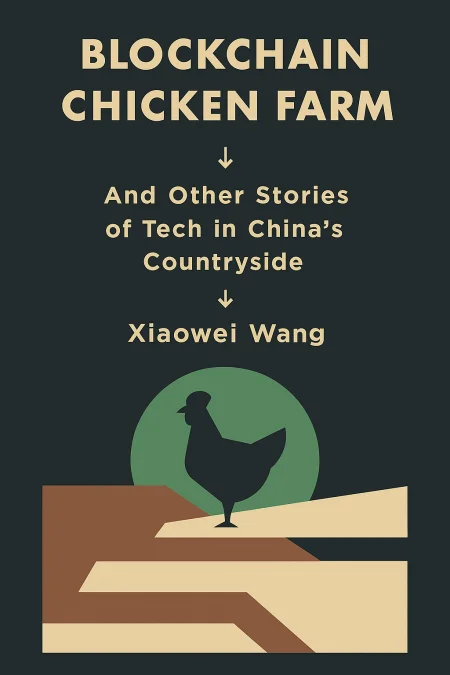
Blockchain Chicken Farm
And Other Stories of Tech in China's Countryside
Book Edition Details
Summary
In "Blockchain Chicken Farm," Xiaowei Wang takes readers on a vivid journey through the unexpected intersections of technology and tradition in rural China. This isn't just a tale of tech's pervasive reach; it's a revelation of how remote villages have become unlikely epicenters of innovation and ingenuity. Amidst the rice paddies and pig farms, AI-driven agriculture and bold e-commerce ventures challenge preconceived notions of rural conservatism. Wang artfully uncovers a world where counterfeit luxury thrives, and tech-savvy farmers redefine progress, proving that the future is as much about cultural adaptability as it is about digital advancement. With quirky recipes and astute insights, this book invites readers to witness a revolution in progress, where the old and new dance in a delicate balance, crafting a narrative that's both poignant and thought-provoking.
Introduction
In a small village in southern China, an elderly rice farmer checks his smartphone for weather updates while his grandson livestreams the harvest to thousands of urban viewers. This scene, repeated across countless rural communities, reveals a profound transformation that has reshaped not only China but the entire global economy. The digital revolution we often associate with Silicon Valley actually has its deepest roots in the Chinese countryside, where ancient farming traditions collide with artificial intelligence, where blockchain technology tracks free-range chickens, and where rural entrepreneurs have built e-commerce empires from their family kitchens. This remarkable story challenges our assumptions about technology, development, and the relationship between rural and urban worlds. It reveals how the hunger for authentic food in cities drove innovations in agricultural technology, how migrant workers became the backbone of global manufacturing, and how rural communities have both embraced and resisted the digital transformation sweeping across China. For anyone seeking to understand the forces shaping our interconnected world, from trade wars to artificial intelligence, from food security to surveillance capitalism, this journey through China's technological heartland offers essential insights into the human cost and promise of our digital age.
From Famine to Foundations: Early Tech Dreams and Agricultural Transformation
The seeds of China's technological revolution were planted not in gleaming research labs, but in the bitter memory of famine and the desperate pursuit of food security. In the aftermath of the Great Leap Forward's catastrophic failure, which left millions dead from starvation in the late 1950s, China's leaders faced a stark reality: the nation's survival depended on transforming its relationship with the land. The food coupon system that emerged from this crisis would persist into the 1990s, a constant reminder that technology and agriculture were matters of life and death, not mere economic opportunity. During the 1980s reform era, as Deng Xiaoping unleashed market forces across the countryside, something remarkable happened. The same villages that had endured collectivization's failures became laboratories for a uniquely Chinese form of capitalism. Township and Village Enterprises sprouted like bamboo after rain, creating an agile entrepreneurial ecosystem that would later inspire Silicon Valley's own startup culture. These rural enterprises weren't just copying Western industrial models; they were innovating out of necessity, creating flexible production networks that could respond rapidly to changing market demands. The memory of hunger haunted every technological choice. Unlike Western societies where innovation often emerged from abundance, China's tech development was driven by scarcity and the urgent need to feed a fifth of the world's population on just seven percent of its arable land. This fundamental constraint would shape everything from agricultural AI to mobile payment systems, creating technologies designed not for convenience but for survival. The elderly farmers who remembered the famines understood something their urban counterparts often missed: in China, technology wasn't about disrupting industries, it was about ensuring that such suffering would never happen again. This agricultural foundation created a unique technological DNA that emphasized scale, efficiency, and social stability over individual expression or privacy concerns. The villages that had learned to innovate under extreme resource constraints would eventually become the manufacturing base for the world's electronics, while their children would migrate to cities carrying rural values of collective responsibility and long-term thinking into China's emerging digital economy.
Digital Villages Rise: E-commerce, AI, and the New Rural Economy
By the 2010s, the same villages that had pioneered China's manufacturing boom found themselves at the center of another revolution. High-speed internet cables snaked through rice paddies, connecting ancient farming communities to global markets with unprecedented speed and scale. What emerged was not merely rural e-commerce, but a complete reimagining of the relationship between countryside and city, tradition and modernity, local production and global consumption. The transformation was visible everywhere: farmers using drones to spray pesticides with precision their grandfathers could never have imagined, elderly villagers learning to livestream their daily routines to urban audiences hungry for authentic rural experiences, and young people returning home from factory jobs in coastal cities to become e-commerce entrepreneurs in their family workshops. Alibaba's Taobao Villages program catalyzed this shift, but the real innovation came from rural communities themselves, who adapted digital tools to local needs and traditions in ways that often surprised their urban creators. Artificial intelligence entered the countryside not as a replacement for human judgment, but as an amplifier of traditional farming wisdom. AI systems learned to recognize sick pigs by analyzing farmers' decades of accumulated knowledge about animal behavior, while blockchain technology promised to restore trust between rural producers and urban consumers who had grown skeptical of food safety. Yet these technologies also brought new forms of dependency and surveillance, as traditional farming practices became increasingly subordinated to algorithmic management and platform capitalism. The rise of rural livestreaming revealed something profound about China's digital transformation: technology wasn't just changing how people worked, it was reshaping fundamental questions of identity, belonging, and social mobility. Young farmers could now reach audiences larger than their ancestors could have imagined, but success required performing versions of rural authenticity that often bore little resemblance to the complex realities of contemporary village life. The digital revolution had arrived in the countryside, but it came with strings attached to distant servers and urban sensibilities.
Global Supply Chains: Manufacturing, Surveillance, and Technological Dependencies
The factories that sprouted across China's rural landscape in the 2000s weren't just production facilities; they were nodes in a vast global nervous system that would reshape both work and surveillance on a planetary scale. Young women who left their villages for electronics assembly lines weren't just seeking better wages; they were becoming the human infrastructure for technologies that would eventually monitor their own movements and behaviors. The irony was stark: the same hands that assembled smartphones for global consumers would later be tracked by those devices as they moved through increasingly surveilled urban spaces. China's integration into global supply chains created unprecedented prosperity but also new forms of vulnerability. Rural communities that had survived for centuries on subsistence farming suddenly found their fortunes tied to the purchasing decisions of consumers thousands of miles away. When Apple released a new iPhone model, villages in Guangdong Province would hum with activity; when global demand softened, entire communities could face unemployment overnight. This dependency flowed in both directions, as American consumers discovered during trade wars and pandemic lockdowns that their daily lives were utterly dependent on Chinese rural production. The surveillance technologies that emerged from this manufacturing boom reflected the particular anxieties of rapid development and social transformation. Facial recognition systems weren't just tools of state control; they were responses to the fundamental challenge of managing massive internal migration and maintaining stability during unprecedented economic change. The same technologies that promised to modernize policing and urban management also reinforced existing inequalities, as rural migrants found themselves subject to digital monitoring that wealthier urban residents could more easily avoid. Perhaps most significantly, the global supply chains centered on Chinese rural manufacturing created new forms of technological nationalism on all sides. As China moved up the value chain from assembly to design and innovation, both Chinese and American leaders began to see technological dependency as a threat to national security. The result was not the borderless digital world that early internet enthusiasts had predicted, but a fractured landscape of competing technological ecosystems, each seeking to reduce dependence on the others while maintaining the economic benefits of global integration.
The Future Questioned: Innovation, Community, and Human Agency
As artificial intelligence promises to optimize everything from pig farming to human relationships, the rural communities that built China's technological infrastructure now face fundamental questions about the future of work, community, and human agency. The same villages that celebrated their first computers and internet connections now grapple with algorithms that threaten to replace not just manual labor but the accumulated wisdom of generations. Young people who once fled rural areas for factory jobs increasingly find themselves choosing between urban precarity and rural revival, as government policies and technological changes create new opportunities in their ancestral homes. The tension between efficiency and humanity plays out daily in China's rural communities. AI-powered farming systems can monitor thousands of animals with unprecedented precision, but they require farmers to trust black-box algorithms over their own sensory knowledge of their livestock and land. E-commerce platforms connect rural producers to global markets, but at the cost of subjecting traditional crafts and farming practices to the relentless logic of consumer ratings and algorithmic recommendation systems. The promise of technological liberation often feels more like technological domination. Yet these same rural communities also demonstrate remarkable creativity in appropriating and subverting technological systems designed elsewhere. Shanzhai culture, often dismissed as mere copying, actually represents a profound alternative to Western models of innovation based on individual genius and intellectual property protection. Rural makers modify, remix, and redistribute technologies according to their own needs and values, creating collaborative networks that challenge both state control and corporate extraction. The question is whether these alternative practices can scale up to provide genuine alternatives to techno-authoritarianism and surveillance capitalism. The future that emerges from China's rural digital revolution will likely determine not just China's trajectory, but the possibilities available to communities worldwide facing similar choices between technological efficiency and human agency. The villages that have already experienced the promises and perils of digitalization offer crucial lessons about maintaining community solidarity and ecological wisdom in an age of algorithmic management. Their struggles and innovations provide neither a utopian model nor a cautionary tale, but something more valuable: a complex, ongoing experiment in what it means to be human in a world increasingly shaped by artificial intelligence and global networks.
Summary
The story of China's digital transformation reveals a fundamental tension that extends far beyond national borders: the collision between technological efficiency and human community, between algorithmic optimization and ecological wisdom, between global connectivity and local belonging. This tension has played out most dramatically in China's rural areas, where ancient farming traditions have been simultaneously celebrated and subordinated by digital technologies designed in distant cities. The same villages that embraced e-commerce and AI as paths to prosperity now find themselves caught between the promises of technological liberation and the realities of algorithmic control. The historical arc from famine to digital abundance shows how technological choices are never merely technical, but always reflect deeper questions about power, community, and the kind of future we want to create. China's rural digital revolution offers three crucial insights for our global technological moment: first, that innovation often emerges not from abundance but from the creative responses of communities facing genuine constraints; second, that the most profound technological changes happen not in labs or boardrooms but in the daily practices of ordinary people adapting new tools to ancient needs; and third, that the alternative to technological domination lies not in rejection of technology but in communities maintaining agency over how technologies are developed, deployed, and governed. The future belongs not to those who build the most sophisticated algorithms, but to those who preserve space for human wisdom, ecological relationships, and community solidarity within our increasingly digital world.
Related Books
Download PDF & EPUB
To save this Black List summary for later, download the free PDF and EPUB. You can print it out, or read offline at your convenience.
By Xiaowei Wang
