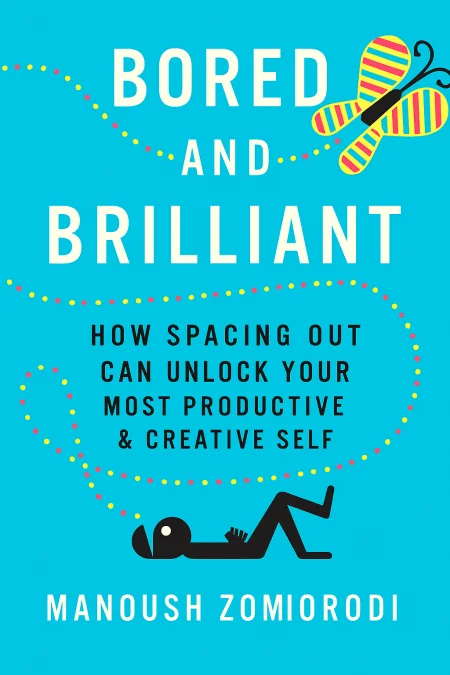
Bored and Brilliant
How Spacing Out Can Unlock Your Most Productive and Creative Self
Book Edition Details
Summary
In an era of constant connectivity, where every ping demands our attention, "Bored and Brilliant" invites you to embrace the art of doing nothing. Manoush Zomorodi, celebrated host of 'Note to Self,' transforms a groundbreaking experiment into a guide for reclaiming your creativity. This book explores the liberating power of boredom, unveiling its unexpected role in fostering innovation and clarity. With neuroscience and cognitive psychology as its foundation, Zomorodi offers practical strategies to detach from digital distractions, allowing your mind to wander and uncover fresh ideas. Discover a life less cluttered and more inspired, where brilliance thrives in the quiet spaces you create.
Introduction
Sarah stared at her phone for the third time in five minutes, mindlessly scrolling through social media while her three-year-old tugged at her sleeve, asking her to look at the butterfly he'd found. She glanced up briefly, muttered "that's nice, honey," and returned to her screen. Later that evening, as she tucked him into bed, he asked quietly, "Mommy, do you love your phone more than me?" The question hit her like a lightning bolt, revealing a truth she'd been avoiding: somewhere along the way, her device had become a barrier between herself and the life she actually wanted to live. This moment of reckoning is becoming increasingly common in our hyperconnected world. We live in an age where the average person checks their phone over 150 times a day, yet feels more scattered, anxious, and creatively depleted than ever before. The very tools designed to enhance our lives have created a new kind of poverty—a poverty of attention, wonder, and genuine human connection. The solution isn't to abandon technology altogether, but to reclaim our relationship with it. Through a deeper understanding of how our brains work, backed by neuroscience and psychology, we can learn to create space for boredom—that uncomfortable but essential state that sparks our greatest insights and innovations. When we step back from the constant stream of digital stimulation, we rediscover something profound: our capacity for original thinking, deep relationships, and authentic joy. This journey toward digital wellness isn't about deprivation; it's about abundance—the abundance that comes when we choose intention over impulse, presence over productivity, and wonder over the endless scroll.
The Hidden Costs of Digital Overload
Dr. Mary Helen Immordino-Yang began noticing something troubling in her research lab. As a neuroscientist studying adolescent development, she had been tracking teenagers from downtown Los Angeles, monitoring their social media use and multitasking habits. Two years later, when she tested their empathy levels and asked them to envision solutions to real-world problems, the results were striking. The teens who spent the most time juggling social media and homework showed significantly less empathy toward others. More concerning still, they struggled to imagine their own futures or generate creative solutions to the challenges in their communities. The teenagers weren't inherently less capable or caring—they had simply trained their brains to operate in a state of constant reaction rather than reflection. Every ping, notification, and rapid task-switch had gradually eroded their capacity for the deep, unfocused thinking that generates empathy and innovation. Their minds had become like busy intersections, efficiently directing traffic but never pausing to contemplate where all that traffic might be headed. Meanwhile, across the country, a British marketing executive named Cynan Clucas was experiencing his own digital reckoning. Despite running a successful company for fourteen years, he found himself increasingly unable to complete basic tasks. His once-organized desk had become a chaotic landscape of papers and coffee cups. Simple projects stretched on for weeks. When he finally sought medical help, fearing early-onset dementia, his doctor delivered an unexpected diagnosis: adult ADHD. But Cynan traced the timeline of his cognitive decline and realized it coincided perfectly with his increasing reliance on digital tools. He had outsourced so much of his thinking to apps and devices that his brain had simply forgotten how to focus. These stories illuminate a hidden epidemic of our time: the gradual erosion of our cognitive abilities not through any single dramatic event, but through thousands of tiny surrenders to the constant demand for our attention. Each quick check of email, each reflexive scroll through social feeds, each ping that pulls us away from sustained thought contributes to what researchers now call "continuous partial attention"—a state where we're always monitoring but never fully present. The cost isn't just productivity; it's the loss of our capacity for wonder, empathy, and the kind of deep thinking that makes us most human.
From App Addiction to Mindful Engagement
David Hohusen never intended to create a digital drug. As the designer behind Two Dots, a seemingly innocent puzzle game, he wanted to craft something beautiful and challenging. Yet within a year of its release, the game had generated five billion plays and fifteen million dollars in revenue. David had inadvertently tapped into the same psychological mechanisms that make slot machines so compelling: variable rewards, time-limited lives, and the endowed progress effect that makes us desperate to complete what we've started. The game's success revealed an uncomfortable truth about modern app design. "We don't make that much money from lives," David admitted. "But we knew limiting access would create this feeling of cheesecake—you can't have it all the time, which makes you want it more." The business model wasn't just about entertainment; it was about engineering desire. Every element, from the bouncing colorful dots to the twenty-minute wait between lives, was carefully calibrated to keep players coming back. David found himself in an ethical gray area, proud of his creative work yet troubled by emails from players who couldn't stop playing. The dilemma extends far beyond games. Tristan Harris, a former Google design ethicist, describes our current predicament as "a race to the bottom of the brain stem." Tech companies employ teams of neuroscientists, behavioral economists, and data analysts whose job is to maximize what they call "user engagement"—a euphemism for keeping us glued to screens. They've discovered that intermittent variable rewards, social approval feedback loops, and fear of missing out are more powerful than any drug in keeping us hooked. The notification system alone represents a masterpiece of behavioral manipulation, training us to expect constant stimulation and feel anxious without it. But awareness is the first step toward freedom. Camp Longacre, a summer camp in rural Pennsylvania, conducted a fascinating experiment by allowing teenagers to keep their phones rather than confiscating them. Initially, chaos ensued as campers disappeared into digital bubbles. However, with gentle guidance and modeling from counselors who demonstrated healthy tech use, something remarkable happened. The teenagers began self-regulating. They created their own rules, gave each other dirty looks for excessive phone use, and gradually found balance. One girl even asked to have her phone taken away because the constant connection was making her homesick. This transformation reveals a crucial insight: the solution to digital overwhelm isn't complete abstinence but conscious choice. When we understand the mechanisms designed to capture our attention, we can begin to make intentional decisions about when and how we engage with technology, reclaiming our agency in a world designed to erode it.
Rediscovering Boredom as Creative Catalyst
Dr. Sandi Mann was curious about an emotion everyone seemed to hate: boredom. As a workplace psychologist, she noticed that after anger, boredom was the second most suppressed emotion in professional settings. Yet something about this universal aversion puzzled her. Every emotion serves an evolutionary purpose, so why would we have evolved the capacity for boredom if it served no function? Determined to find out, she designed what might be history's most tedious experiment: asking people to copy phone numbers by hand for twenty minutes before completing a creativity test. The results were revelatory. People who had endured the mind-numbing task of copying phone numbers significantly outperformed a control group on creative challenges, generating more original uses for everyday objects. When Mann increased the boredom by having participants read phone numbers aloud rather than copy them, creativity soared even higher. The more tedious the preliminary task, the more imaginative people became afterward. Boredom, it seemed, wasn't the enemy of creativity—it was its secret catalyst. Neuroscientist Jonathan Smallwood helped explain why. When we're consciously focused on tasks, we engage what's called the "executive attention network." But when our minds wander during boring moments, we activate the "default mode network"—a system that connects disparate regions of the brain, allowing us to integrate past experiences, imagine future possibilities, and generate novel solutions. This isn't laziness; it's one of our most sophisticated cognitive processes. The default mode network is where we engage in "autobiographical planning," making sense of our experiences and charting paths forward. Consider J.R.R. Tolkien, grading exam papers during a scorching summer day. The tedium was crushing until he encountered a blank page left by a student. "Glorious! Nothing to read," he thought, and in that moment of boredom-induced liberation, he scribbled, "In a hole in the ground there lived a hobbit." That single sentence, born from the fertility of an unstimulated mind, would eventually become one of literature's most beloved works. Steve Jobs, too, credited boredom as essential to innovation, fondly recalling the long, empty summers of his youth when "out of curiosity comes everything." The tragedy of our hyperconnected age is that we've nearly eliminated these precious moments of cognitive downtime. Every potentially boring moment—waiting in line, riding the subway, walking between meetings—becomes an opportunity to check phones, consume content, or multitask. We've optimized away the very conditions that generate our best ideas, leaving us more informed than ever but less capable of transforming that information into insight.
Building Boundaries for Balanced Digital Living
Marina Abramović stood at the entrance of a New York armory, watching audience members reluctantly hand over their phones, watches, and any other devices before entering her performance space. For the next thirty minutes, they would sit in complete silence, experiencing something increasingly rare in modern life: undivided attention to the present moment. Many fidgeted, some left early, but those who stayed discovered something profound. Without the constant option to escape into digital distractions, they began to hear their own heartbeats, feel the rhythm of their breathing, and access a deeper level of awareness they had forgotten existed. The performance artist understood something most of us have lost: the difference between being connected to everything and being connected to ourselves. "You think you are disconnected when you put away your devices," she observed, "but the question is, what are you disconnected from? You're actually constantly disconnected from yourself by having all of these things." Her radical act of digital deprivation wasn't about rejecting technology but about creating space for the kind of presence that technology often prevents. This principle of intentional boundaries is being adopted by companies worldwide. The Boston Consulting Group, a firm known for its always-on culture, conducted an experiment requiring consultants to take regular time completely offline. Despite initial panic about client needs and career advancement, the results were transformative. Teams began communicating more effectively face-to-face, strategic thinking improved, and employee retention increased dramatically. When given permission to disconnect, people didn't become less productive—they became more creative, collaborative, and fulfilled. Susan Cain, author of "Quiet," advocates for what she calls "restorative breaks"—small moments throughout the day when we step away from stimulation and allow our minds to reset. These don't require dramatic gestures or extended retreats. They can be as simple as taking a walk without listening to podcasts, sitting quietly for five minutes before starting work, or designating certain spaces as phone-free zones. The key is recognizing that solitude isn't a luxury or a sign of antisocial behavior—it's a fundamental requirement for psychological health and creative thinking. The future belongs to those who can navigate both the connected and disconnected worlds with equal skill, choosing presence over productivity when the moment calls for it.
Summary
The journey from digital overwhelm to intentional engagement isn't about rejecting the remarkable tools of our age, but about reclaiming our role as their conscious directors rather than unconscious subjects. Throughout these stories of transformation—from teenagers rediscovering empathy to executives finding focus to artists accessing deeper creativity—we see that the solution lies not in the technology itself, but in our relationship to it. The most profound changes often begin with the smallest acts of rebellion: putting the phone in a drawer during dinner, taking a walk without podcasts, or simply allowing ourselves to be bored while waiting in line. The science is clear: our brains need periods of understimulation to generate their most original insights, process experiences meaningfully, and maintain our capacity for wonder. When we create boundaries around our digital consumption, we don't lose connection to the world—we gain connection to ourselves and to the people who matter most. The teenager who looks up from their phone to really see a sunset, the parent who chooses presence over productivity, the professional who discovers breakthrough solutions in moments of stillness—these aren't nostalgic fantasies but practical possibilities available to anyone willing to experiment with less. Your attention is not just your most valuable resource; it's the foundation of your experience, your relationships, and your creative potential. Every moment you choose to be fully where you are, you vote for the kind of life you want to live. The world will always be full of fascinating distractions, but your deepest satisfaction lies not in consuming them endlessly, but in the space between them—where boredom transforms into brilliance, where silence becomes fertile, and where the most ordinary moments reveal themselves to be quietly extraordinary.
Related Books
Download PDF & EPUB
To save this Black List summary for later, download the free PDF and EPUB. You can print it out, or read offline at your convenience.
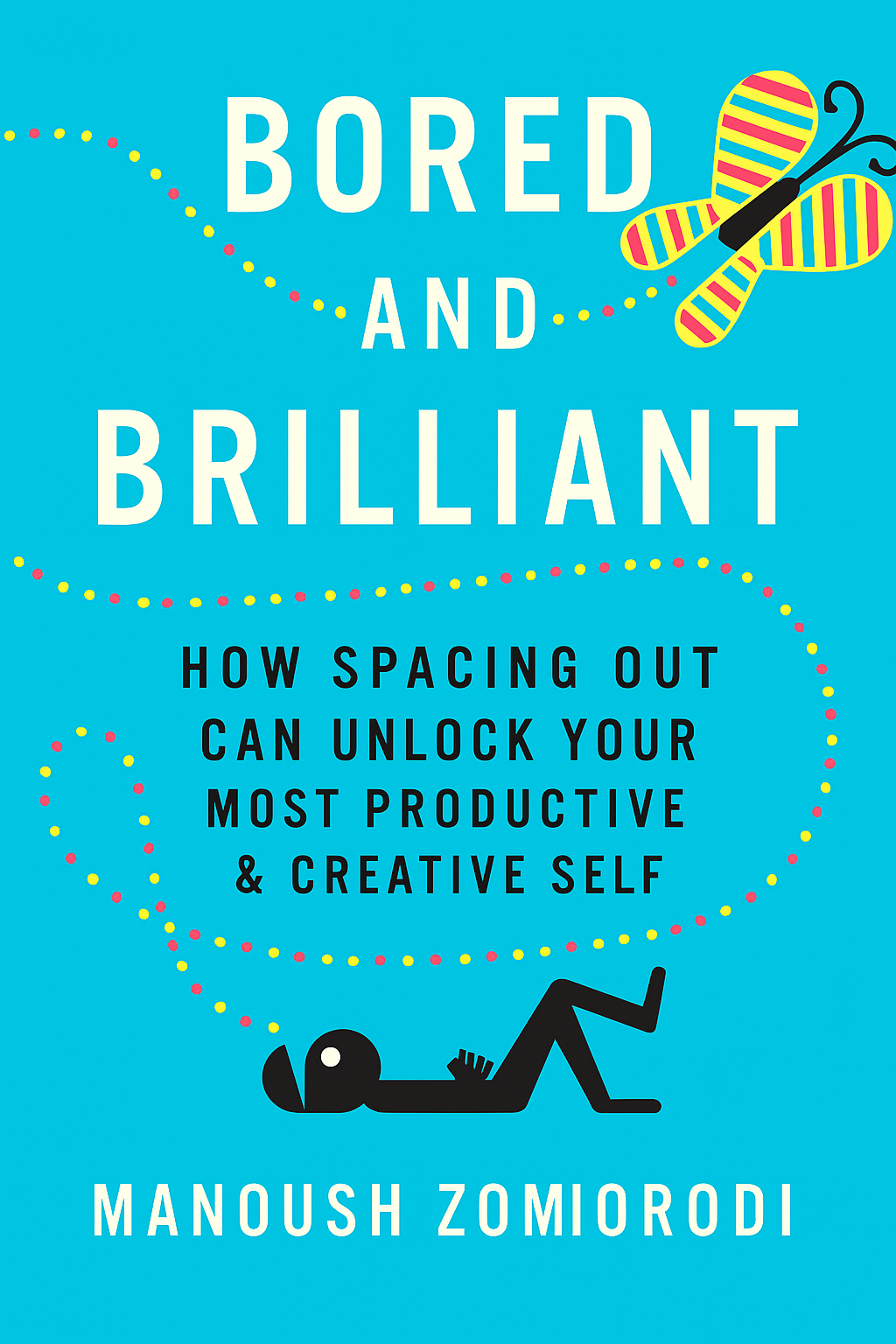
By Manoush Zomorodi
