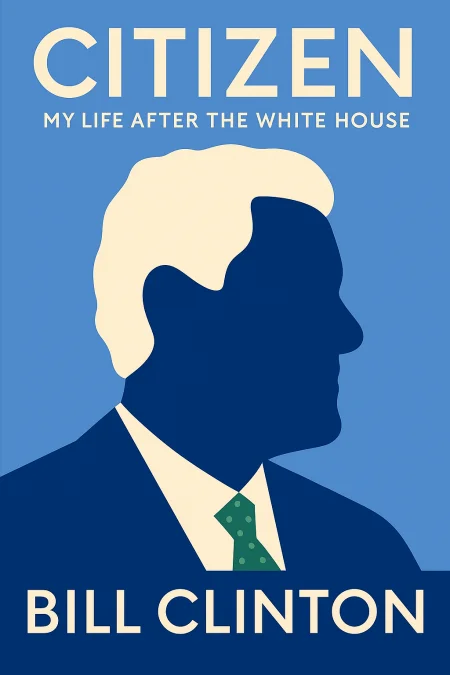
Citizen
My Life After the White House
Book Edition Details
Summary
In the vibrant tapestry of Bill Clinton's post-presidential life, "Citizen" unfurls as an eloquent testament to resilience and reinvention. No longer bound by the corridors of power, Clinton embarks on a global odyssey of service and advocacy, transforming setbacks into stepping stones. From the aftermath of the White House to aiding earthquake survivors in India, his journey is a masterclass in diplomacy and determination. The memoir deftly navigates seismic global events—9/11, the Iraq War, and the upheavals of the Great Recession—while intimately revealing Clinton's personal roles as a devoted family man and a supportive partner to Hillary. Against a backdrop of political tumult and societal shifts, this narrative offers a penetrating insight into a leader's unyielding dedication to fostering democracy and community. "Citizen" is not merely a memoir but a compelling chronicle of one man's steadfast commitment to leaving an indelible mark on the world stage.
Introduction
On a sweltering day in Rwanda in 2005, Bill Clinton stood in a rural health clinic watching a young mother receive antiretroviral drugs that would save her life. Just years earlier, these same medications would have cost more than most Rwandans earned in a decade. Now, thanks to negotiations Clinton's team had brokered with pharmaceutical companies, they cost less than a dollar a day. As he watched the woman smile with relief, Clinton experienced something he had rarely felt during eight years in the Oval Office: the immediate, tangible impact of his work on a single human life. This moment crystallized what would become the defining mission of his post-presidential years—transforming global systems to serve those who needed help most. Clinton's journey from the most powerful office in the world to becoming what many consider the most effective former president in American history reveals profound truths about leadership, service, and human potential. His story demonstrates how influence can be reimagined and redirected when formal authority ends, showing that the most meaningful victories often come not from wielding power over others, but from empowering them to transform their own circumstances. Through his experiences, readers discover how personal reinvention can become a catalyst for global change, how partnerships across traditional boundaries can solve seemingly impossible problems, and how the deepest satisfaction in life often emerges not from personal achievement, but from service to others. Clinton's post-presidential evolution offers a masterclass in turning setbacks into comebacks, relationships into resources, and good intentions into measurable impact on millions of lives worldwide.
Reinventing Purpose: From Oval Office to Global Service
The morning of January 20, 2001, marked one of the most dramatic transitions in modern American political history. At fifty-four, Bill Clinton became one of the youngest ex-presidents ever, facing decades of potential service ahead but stripped of the formal powers that had defined his adult life for over two decades. The silence that replaced the constant hum of Air Force One, the absence of daily intelligence briefings, and the sudden irrelevance of his opinions on matters of state created a void that lesser figures might have filled with comfortable retirement or lucrative corporate boards. Instead, Clinton chose a path that would redefine what it means to be a former president in the modern era. The early months were marked by practical concerns that seemed almost mundane after eight years of global leadership. Legal bills from various investigations had mounted into the millions, and the family faced the reality of earning a living for the first time in decades. Yet even as Clinton embraced the speaking circuit and began work on his memoirs, he was already envisioning something far more ambitious than a traditional post-presidential career. The September 11 attacks, occurring just months after he left office, crystallized Clinton's evolving sense of purpose. Unable to respond as commander-in-chief, he instead became an unofficial ambassador of American values, traveling the world to speak about the need for understanding between civilizations. His speeches in places like Georgetown University and international forums demonstrated his unique ability to acknowledge America's imperfections while defending its ideals, showing how former presidents could serve as bridges between nations without the burden of current political calculations. The establishment of his foundation in 2001 represented more than institutional building; it embodied a philosophy that would guide his next two decades of service. Clinton understood that the world's most pressing challenges—from global health crises to climate change—required new forms of collaboration that transcended traditional boundaries between governments, businesses, and nonprofits. His post-presidential years would prove that influence need not end with electoral defeat or term limits, but could be transformed into something even more powerful: the ability to solve problems that politics alone could never address.
Transforming Global Health Through Strategic Partnerships
When Clinton first witnessed the devastating impact of HIV/AIDS in sub-Saharan Africa, he encountered a crisis that perfectly illustrated the tragic gap between what was possible and what was happening. Effective antiretroviral treatments existed that could transform AIDS from a death sentence into a manageable chronic condition, yet these medications remained prohibitively expensive for the very populations that needed them most. Rather than accepting this as an inevitable tragedy of global inequality, Clinton saw an opportunity to apply the negotiating skills and relationship-building abilities honed over decades in politics to create market-based solutions for humanitarian problems. The creation of the Clinton Health Access Initiative represented a fundamental reimagining of how international aid could operate. Instead of simply raising money to purchase expensive drugs at market prices, Clinton's team negotiated directly with pharmaceutical companies, governments, and international organizations to restructure entire markets. By guaranteeing large-volume purchases, streamlining payment systems, and reducing regulatory barriers, they convinced generic drug manufacturers to slash prices from thousands of dollars per patient per year to less than a hundred dollars. This approach required Clinton to become part diplomat, part business negotiator, and part logistics coordinator, roles that drew on every aspect of his political experience. The results were nothing short of revolutionary. Countries like Rwanda, still recovering from the devastation of genocide, became models of effective healthcare delivery. Botswana went from having one of the world's highest HIV infection rates to achieving the UN target of getting 90 percent of people with HIV diagnosed, 90 percent of those on treatment, and 90 percent of those achieving viral suppression. The initiative's success lay not just in negotiating lower prices, but in building sustainable healthcare systems that could function independently of foreign aid, training local healthcare workers, strengthening supply chains, and creating monitoring systems that ensured medications reached the people who needed them. What distinguished Clinton's approach from traditional aid organizations was his insistence on partnership rather than charity. His team worked with local governments as equals, respecting their sovereignty while providing technical expertise and resources. This philosophy reflected Clinton's deep understanding that lasting change required not just resources, but the empowerment of people and institutions to solve their own problems. The millions of lives saved through these efforts stand as testament to the power of applying business principles to humanitarian challenges, proving that the most effective aid often comes not from giving people fish, but from revolutionizing the entire fishing industry to make it more accessible and sustainable for everyone involved.
Redefining Philanthropy: Innovation and Collaborative Action
Traditional philanthropy in the early 2000s often operated on a simple but limited model: wealthy donors wrote checks to worthy causes, attended elegant galas, and received thank-you letters describing the good their money had accomplished. Clinton fundamentally challenged this approach with the creation of the Clinton Global Initiative in 2005, an annual gathering that required attendees not just to open their wallets, but to make specific, measurable commitments to action. The concept was revolutionary in its emphasis on accountability, collaboration, and results rather than good intentions. The genius of the CGI model lay in its recognition that the world's most complex challenges couldn't be solved by any single sector acting alone. Instead of hosting another conference where participants listened to speeches and exchanged business cards, Clinton created a forum that brought together heads of state, corporate executives, nonprofit leaders, and individual activists to forge partnerships that leveraged each group's unique strengths. A pharmaceutical company might provide expertise in drug development and manufacturing, while a government offered distribution networks and regulatory approval, and a nonprofit contributed grassroots credibility and community connections. The commitment-based approach created a culture of accountability that was rare in the philanthropic world. Participants didn't just pledge money; they committed to specific, measurable outcomes with clear timelines and reporting requirements. This transparency encouraged ambitious goals while ensuring that resources were used effectively and that promises became reality. Clinton's personal involvement in following up on commitments, combined with the public nature of the pledges, created peer pressure that motivated participants to exceed their original goals. Over twelve years, CGI generated more than 3,600 commitments valued at over $100 billion, affecting the lives of more than 435 million people worldwide. These weren't abstract promises but concrete actions: building schools in Uganda, providing clean water systems in rural villages, creating job training programs for young people in urban areas, and developing innovative technologies to address climate change. The initiative's success demonstrated that collaboration could achieve what competition could not, proving that when diverse organizations combined their complementary strengths and resources, the impact was multiplied rather than simply added together. This model has since been replicated by organizations worldwide, fundamentally changing how philanthropic work is conceived and executed in the 21st century.
Leadership Beyond Politics: Legacy and Lasting Impact
As Clinton entered his seventies, his post-presidential legacy crystallized around a vision of leadership that transcended traditional partisan boundaries and national interests. His work had demonstrated that effective problem-solving in an interconnected world required new forms of collaboration between sectors, nations, and ideologies. The challenges he had chosen to tackle—global health, climate change, economic inequality, and disaster relief—could not be solved by any single government or organization, no matter how powerful. They required the kind of patient relationship-building, creative problem-solving, and persistent follow-through that had become Clinton's post-presidential trademark. The concept of what Clinton called "inclusive cooperation" reflected his deep understanding of both human nature and political reality. He recognized that people naturally form group identities and loyalties, but argued that these instincts could be channeled toward constructive rather than destructive ends. His foundation's work consistently brought together unlikely partners: pharmaceutical companies and AIDS activists, Republican and Democratic politicians, wealthy donors and grassroots organizers, developed and developing nations. The key was finding shared interests and common goals that transcended ideological differences and created mutual benefits for all parties involved. Clinton's approach to global citizenship offered a model not just for other former leaders, but for anyone seeking to create positive change in their community or beyond. His combination of personal relationships, data-driven analysis, and relentless follow-through showed how individual initiative could be scaled to address systemic problems. The millions of people who received life-saving medications, the communities that gained access to clean water and educational opportunities, and the innovative partnerships that continued to generate solutions long after his direct involvement represented a form of leadership more enduring than any political victory or policy achievement. Perhaps most significantly, Clinton's post-presidential career demonstrated that American leadership in the world need not depend solely on military or economic power. His ability to convene diverse stakeholders, his credibility as someone who had wielded ultimate authority and chosen to use it constructively, and his genuine optimism about human potential created a form of influence that enhanced rather than competed with traditional statecraft. His legacy suggests that in a world facing shared challenges that transcend national boundaries, the most effective leaders are those who can build bridges across traditional divides and inspire others to join in collective action for the common good.
Summary
Bill Clinton's transformation from president to global humanitarian leader reveals that true leadership lies not in the accumulation of power but in its conversion into lasting positive change for others, demonstrating that the most profound impact often comes not from the positions we hold but from the problems we choose to solve and the relationships we build to address them. His post-presidential journey offers three essential lessons for anyone seeking to make a meaningful difference in the world: first, that the most effective solutions to complex challenges emerge from unexpected partnerships between different sectors and perspectives, requiring leaders who can build bridges across traditional divides; second, that sustainable change comes not from charity but from restructuring systems and markets to work more fairly and efficiently for everyone involved; and third, that persistence, optimism, and genuine commitment to serving others can transform both individual lives and entire societies. For readers interested in leadership, social entrepreneurship, global development, or simply making a positive impact in their own communities, Clinton's example provides a powerful reminder that citizenship itself is a form of leadership, and that each of us has the capacity to contribute to what he calls "a more perfect union" for all humanity, regardless of our formal title or official authority.
Related Books
Download PDF & EPUB
To save this Black List summary for later, download the free PDF and EPUB. You can print it out, or read offline at your convenience.
By Bill Clinton
