
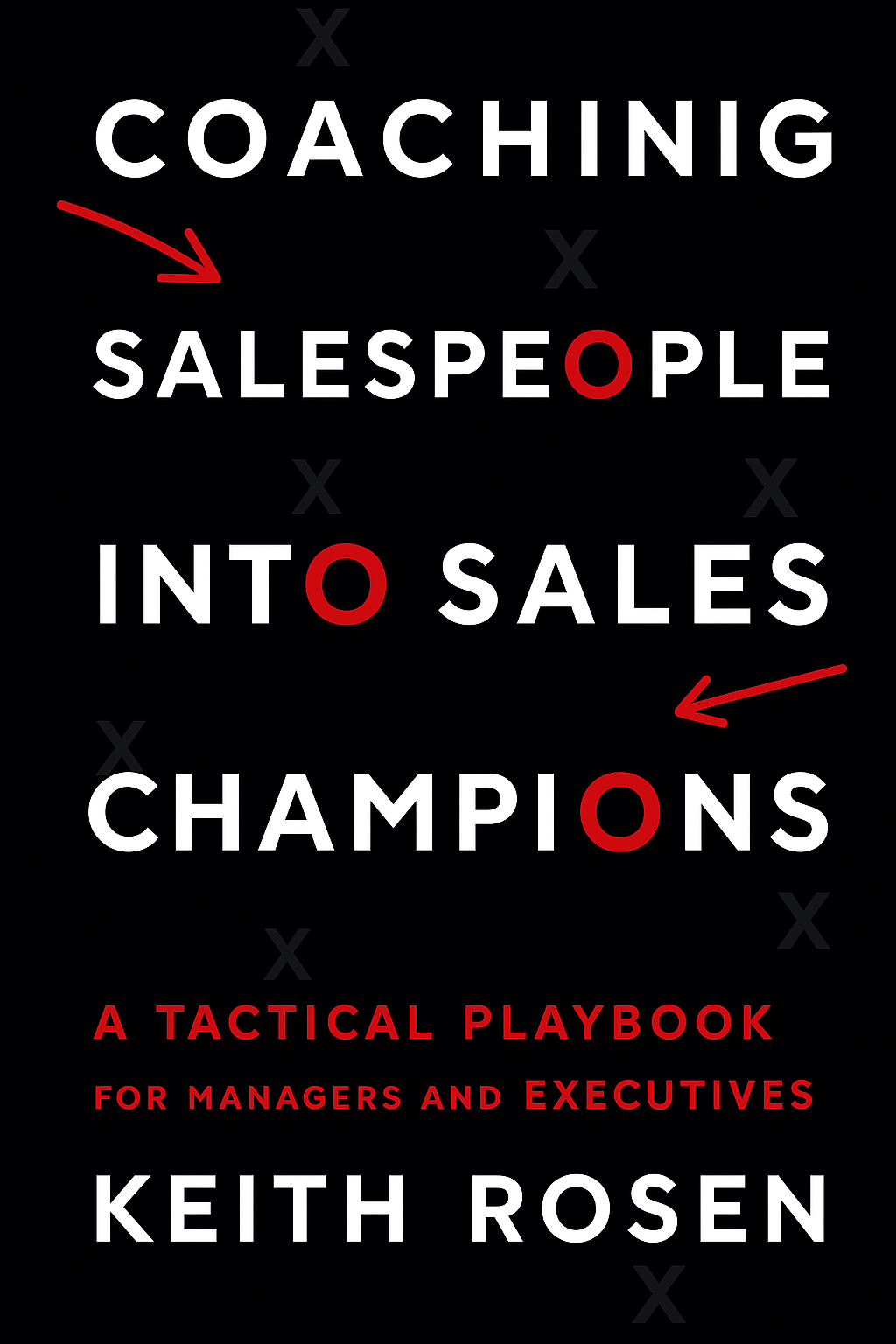
Coaching Salespeople into Sales Champions
A Tactical Playbook for Managers and Executives
Book Edition Details
Summary
For those who believe the essence of a thriving sales team lies in robust coaching rather than endless training, Keith Rosen's "Coaching Salespeople into Sales Champions" is the definitive guide. Forget traditional methods; this book unveils a revolutionary coaching blueprint that transforms managers into mentors capable of nurturing high-performing teams. With the L.E.A.D.S. Coaching Framework™, celebrated by global corporations, Rosen crafts a compelling narrative filled with real-world case studies, transformative strategies, and practical tools—such as a 30-Day Turnaround Strategy and an arsenal of coaching questions. Dive into the art of engaging conversations that empower salespeople to solve problems autonomously, while leveraging feedback to spark genuine behavioral change. This award-winning masterpiece isn’t just a book; it's your ultimate toolkit for developing sales champions and achieving business success at lightning speed.
Introduction
Every sales leader faces the same heartbreaking reality: watching talented individuals plateau, seeing promising team members lose their spark, and feeling trapped in endless cycles of pushing for results that never seem to stick. You've probably wondered why some leaders effortlessly inspire their teams to shatter quotas while others struggle with resistance, excuses, and mediocre performance. The answer isn't found in better products, favorable market conditions, or even hiring different people. The breakthrough lies in a fundamental shift from managing tasks to coaching potential, from demanding compliance to developing champions. The traditional management playbook that once dominated sales floors is not just outdated—it's actively sabotaging your team's success. Today's salespeople crave autonomy, purpose, and genuine development, not micromanagement and fear-based motivation. When you transform from a manager who tells people what to do into a coach who helps them discover their own solutions, everything changes. Your team becomes self-motivated, problems solve themselves, and performance soars naturally. This transformation requires courage to abandon old habits and embrace a completely new way of leading that multiplies your impact exponentially.
Master the Coaching Mindset That Transforms Teams
The foundation of extraordinary sales coaching lies not in what you do, but in how you think about your role and your people. Traditional managers operate from a mindset of control, believing their job is to direct, correct, and push their salespeople toward results. This approach creates dependency, stifles creativity, and ultimately caps performance at mediocre levels. The coaching mindset represents a revolutionary shift toward empowerment, curiosity, and collaborative problem-solving that unlocks potential you never knew existed. Michele, owner of DesignWorks marketing firm, discovered this truth when she found herself paralyzed by indecision about Jennifer, an underperforming salesperson. For months, Michele had been trapped in endless internal debates about whether to fire Jennifer, keep coaching her, or try different motivational tactics. Her mind was consumed with worst-case scenarios and fear-based thinking that prevented any meaningful action. Michele was living in an imaginary future filled with negative assumptions rather than dealing with present realities. The breakthrough came when Michele learned to make fear her ally rather than her enemy. Through coaching, she realized that fear was simply information signaling an opportunity for growth, not a reason for paralysis. She discovered the power of staying fully present in each moment, detaching from rigid outcomes, and becoming process-driven rather than results-obsessed. This shift allowed her to see possibilities where she once saw only problems. Michele embraced six universal principles: viewing fear as feedback, staying present instead of projecting, releasing attachment to specific outcomes, focusing on perfecting process, tapping into moment-to-moment creativity, and taking full accountability for her sphere of influence. To develop this transformational mindset, start by examining your relationship with fear and uncertainty when facing difficult team decisions. Practice staying curious rather than jumping to conclusions, and remember that the most powerful coaching happens when you trust the process rather than controlling outcomes. Ask yourself whether you're responding to present facts or future fantasies. Replace your need to have all the answers with genuine curiosity about your people's experiences and potential solutions.
Build Trust Through Vulnerability-Based Leadership
The greatest weakness of technically competent managers is their inability to welcome themselves to the human race. These leaders possess extensive product knowledge and proven track records, but their drive for perfection creates an invisible barrier between them and their team. They fear that showing any vulnerability will undermine their authority, when in reality, their invulnerability undermines their influence. True leadership strength comes not from appearing flawless, but from being authentically human in ways that create psychological safety for others to grow. Barry Kane, Director of Recruiting for a restaurant chain, experienced this transformation when he courageously asked his team to evaluate his communication style using a comprehensive assessment. Rather than viewing this feedback request as a threat to his authority, Barry positioned it as a genuine development opportunity. His willingness to be vulnerable and seek input created an immediate breakthrough in trust with his team. They began seeing him as someone committed to growth rather than someone pretending to have all the answers, which fundamentally changed the dynamic of every interaction. The transformation occurred when Barry realized that vulnerability is not weakness—it's the foundation of trust and the catalyst for high performance. When leaders acknowledge their own areas for improvement, they create psychological safety for their team to do the same. This openness leads to honest conversations about real challenges, more effective collaborative problem-solving, and a culture where people focus on solutions rather than self-protection. The result is a high-performance team built on mutual trust, shared commitment to growth, and authentic relationships that withstand pressure and setbacks. To build vulnerability-based leadership, start by acknowledging your own learning edges in front of your team without diminishing your competence or authority. Share a specific mistake you made and the valuable lesson you learned from it. Ask for genuine feedback on your management style and listen with curiosity rather than defensiveness. Create team meetings where everyone shares both a strength they bring and an area they want to develop. Remember that showing your humanity doesn't diminish your authority—it amplifies your influence and creates the foundation for extraordinary team performance.
Create Powerful Conversations That Drive Results
The quality of your conversations determines the quality of your results, yet most managers settle for surface-level discussions that focus on activities and numbers without ever addressing the underlying beliefs and motivations that drive performance. Powerful conversations go deeper, exploring fears, aspirations, and thought patterns to create lasting change from the inside out. The difference between mediocre managers and masterful coaches lies not in what they know, but in their ability to facilitate breakthrough conversations that unlock potential. Jerry, a seven-year veteran salesperson at LBI International, was struggling with time management despite strong sales performance. His manager Joe could have simply told him to "get more organized" or provided a generic time management system, but instead chose a coaching approach that would build Jerry's capacity for self-directed problem-solving. Joe began by listening deeply to understand Jerry's specific challenges, then asked powerful questions to help Jerry recognize patterns in his current approach and discover his own solutions. The conversation evolved naturally as Jerry realized he had been managing his time reactively rather than proactively, constantly making decisions about what to do next instead of following a predetermined plan. Through Joe's skillful questioning, Jerry discovered that treating every task like an appointment and scheduling specific time blocks for different activities would eliminate the constant decision-making fatigue that was draining his energy. The breakthrough came when Jerry took complete ownership of this solution, making it his idea rather than his manager's mandate, which ensured genuine buy-in and long-term behavior change. To facilitate powerful conversations, prepare with intention by helping salespeople organize their thoughts before meetings. Focus on asking questions that evoke self-discovery rather than providing immediate answers. Use clarifying statements like "What I'm hearing is..." to ensure understanding and demonstrate active listening. Create space for silence and reflection—count to five after asking important questions. Remember that your goal is not to solve their problems but to develop their problem-solving capabilities. End each conversation with clear commitments and next steps that they have chosen, creating accountability through ownership rather than compliance through pressure.
Summary
The journey from manager to sales champion coach represents more than a role change—it's a fundamental transformation in how you develop human potential and create lasting impact. As this transformation demonstrates, "You can't take someone where you haven't been yourself," which means your own growth becomes the catalyst for your team's success. The shift from pushing people toward results to pulling out their natural capabilities creates sustainable high performance built on trust, accountability, and shared purpose that withstands market pressures and competitive challenges. The path forward is clear and immediately actionable: begin today by choosing one principle to implement consistently in your daily interactions. Whether it's asking questions before giving answers, embracing your own vulnerability to build deeper trust, or staying present in difficult conversations rather than rushing to solutions, small changes in your approach will create significant shifts in your team's performance and engagement. Your salespeople are waiting for a coach who believes in their potential more than they believe in their problems—become that coach starting with your very next conversation, and watch champions emerge naturally from within your team.
Related Books
Download PDF & EPUB
To save this Black List summary for later, download the free PDF and EPUB. You can print it out, or read offline at your convenience.
By Keith Rosen
