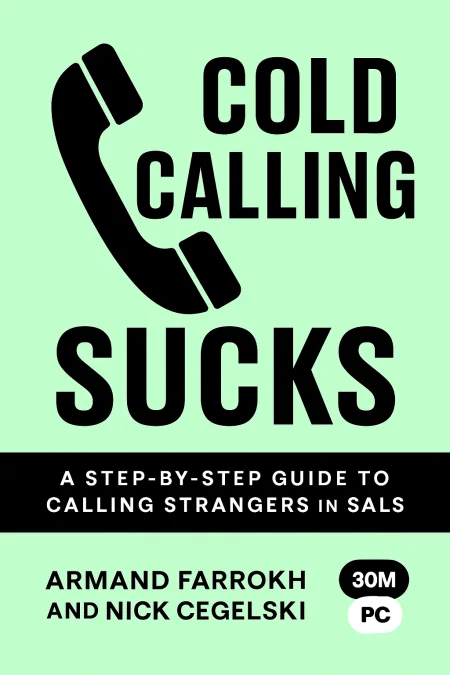
Cold Calling Sucks (And That's Why It Works)
A Step-by-Step Guide to Calling Strangers in Sales
byArmand Farrokh, Nick Cegelski
Book Edition Details
Summary
In the cutthroat arena of sales, where the bravest wield the phone like a sword, "Cold Calling Sucks (And That’s Why It Works)" is your battlefield manual. Armand Farrokh and Nick Cegelski, the masterminds behind the top sales podcast "30 Minutes to President's Club," redefine the game with this no-nonsense guide. Break away from the pack as they teach you to conquer the dread of dialing and turn rejection into opportunity. This isn't just a book—it's your secret weapon, packed with real-life data from over 300 million cold calls, industry-spanning examples, and innovative audio clips to master your tone. Prepare to transform cold calling from a dreaded task into your ticket to the sales leaderboard. Are you ready to embrace the challenge and rise above the rest? Your success story starts here.
Introduction
Success in sales comes down to one uncomfortable truth: your willingness to have conversations that others avoid. While most salespeople hide behind endless emails and social media outreach, the phone sits there like a heavyweight challenge that separates the average performers from the elite. Every day, prospects are bombarded with hundreds of generic messages, yet few salespeople dare to pick up the phone and cut through the digital noise with a real human voice. The resistance you feel toward cold calling isn't a bug in your system—it's a feature. That discomfort you experience before dialing is the exact same barrier that keeps 90% of your competition from ever reaching your prospects. When you understand that the pain of cold calling is precisely what makes it so powerful, you transform from someone who dreads the phone into someone who sees it as their secret weapon for building an unstoppable pipeline and claiming a spot in the President's Club.
Master the First 60 Seconds
The first sixty seconds of any cold call determine whether you'll have a meaningful conversation or join the ranks of forgotten telemarketers. This critical window is where most sales professionals fail, not because they lack skill, but because they open with the same tired phrases that immediately categorize them as unwelcome interruptions. Armand discovered this truth during his early days selling insurance, when he was struggling through 800 dials without booking a single meeting. Every call began with "How's your day going?" and ended with a harsh rejection or immediate hang-up. The prospects could smell his inexperience and desperation through the phone, treating him like just another telemarketer trying to waste their time. Everything changed when a successful colleague shared a simple but powerful shift: instead of asking about their day, lead with context that demonstrates you actually know something about them. Armand started saying, "We work with a few other partners in the Skadden LA office. Armand from Northwestern, heard my name tossed around?" This opener created an immediate sit-up moment, making prospects wonder if they should know him and treating him like a peer rather than a pest. The key to mastering those first sixty seconds lies in two fundamental components. First, your opener must include specific context about the prospect—a mutual connection, similar customers, or recent company news—anything that proves you're not making random calls. Second, follow with a problem proposition that describes their pain in such vivid detail that they can't ignore your solution, then briefly explain how you solve that specific problem. Practice these openers until they sound natural and conversational, not scripted. Record yourself and listen for uptones or robotic delivery that screams telemarketer. The goal isn't perfection—it's authenticity combined with preparation. Remember that earning the right to the next sixty seconds requires you to sound like someone worth listening to from the very first words out of your mouth.
Handle Objections Like Mr. Miyagi
Most objections aren't actually objections—they're emotional reactions to being interrupted by a stranger. When a prospect snaps "I'm not interested" or "We're all set," they're not carefully considering the merits of your solution. They're simply trying to end an unwelcome interruption as quickly as possible, much like someone claiming they don't love animals to avoid a charity pitch when they're trying to focus on something else. The biggest mistake salespeople make is trying to overcome these emotional reactions with logic and pressure. They immediately launch into their pitch or argue about why the prospect should be interested. This approach fails because you cannot defeat emotion with logic—you must first disarm the emotional reaction before any rational conversation can begin. Armand learned this lesson through painful experience, watching prospect after prospect shut down the moment he tried to push past their initial resistance. The breakthrough came when he started doing the opposite of what every other salesperson does: instead of fighting the objection, he agreed with it completely. When someone said "I'm not interested," he responded with "You're absolutely right—you probably would have reached out to us if you needed help." The Mr. Miyagi method involves three steps that redirect the energy of any objection. First, agree with their objection to remove all sales pressure and create a pattern break they don't expect. Second, incentivize them to share more about their situation by promising this will be their last cold call on the topic. Third, sell the test drive rather than the product—give them a reason to meet even if they never intend to buy. This approach works because it moves prospects from reacting to thinking, from fighting to considering. When you stop pushing and start pulling back, they often lean forward to fill the space. The key is slowing down your delivery and even laughing when appropriate, showing that you're comfortable and confident rather than desperate or rattled by their resistance.
Bypass Gatekeepers and Leave Strategic Voicemails
Gatekeepers aren't your enemy—they're simply doing their job of protecting their boss from random interruptions. Understanding their role means recognizing they have two conflicting responsibilities: keeping strangers out while ensuring important people get through. Your mission is to make them believe you belong in the second category. The story of Drake's aunt calling the USC ticket office perfectly illustrates this principle. When she called demanding tickets that the head of the ticket office supposedly held for her, the gatekeeper's initial instinct was to dismiss another fan with a ridiculous story. But her confident, almost indignant tone made him question whether blocking her might get him in serious trouble with his boss. Your approach should mirror this confidence through the Triple Bypass strategy. Start with the slide-by, asking to be connected using only your first name, as if the prospect should obviously know who you are. If pressed for more information, provide context about why you're calling—recent company news, mutual connections, or shared customers—without revealing your sales intent. Only if absolutely necessary should you use social proof to explain what you do, positioning yourself as someone who works with their peers. The key to all gatekeeper interactions is dosing information gradually, giving only what's required to get through while maintaining the assumption that you belong there. Never volunteer your full pitch or company details unless directly asked multiple times. For voicemails, abandon the hope of callbacks and focus on driving email replies instead. Leave exactly two voicemails: the first with pure context to pique curiosity, the second adding brief social proof. Keep them under 30 seconds, direct attention to your email, and always sound like you're calling a referral rather than a stranger. Your voicemail strategy should work hand-in-hand with your email sequence, creating multiple touchpoints that reinforce each other and dramatically increase your overall response rate.
Become a Cold Calling Machine
The difference between average and exceptional cold callers isn't just what happens during the call—it's everything that happens before you even pick up the phone. Elite performers understand that massive results come from making small improvements to three critical metrics: how many prospects answer, how many agree to meet, and how many actually show up for those meetings. Kenny, a hardworking sales rep, made 400 dials and booked zero meetings, not because he lacked effort or skill, but because he was calling bad numbers repeatedly, targeting companies too small to buy, and reaching people with no decision-making authority. His activity was impressive but completely misdirected, like trying to dig a hole with a spoon instead of grabbing a shovel. The transformation happened when Kenny learned to work smarter by dramatically improving his conversion rates. He started tracking bad numbers to avoid redialing them, researching companies to ensure they matched his ideal customer profile, and calling high-level decision makers instead of junior employees. These changes multiplied his results without requiring more dials. Becoming a machine means systematically optimizing every aspect of your cold calling process. Build lists of qualified companies first, then research to identify which ones have problems you can solve right now versus those that merely fit your general profile. Call mobile numbers and direct lines to avoid gatekeepers, and document your findings so you never waste time on the same dead ends twice. Master your calendar by protecting morning hours for cold calling when your energy is highest and resistance is lowest. Create time blocks dedicated solely to dialing, with all research completed the night before and every distraction eliminated. Aim for 40 dials per hour by maintaining momentum between calls and refusing to linger on rejections. The machine mentality means treating cold calling like a professional athlete treats training—with consistency, preparation, and relentless focus on measurable improvement rather than hoping for lucky breaks.
Summary
The uncomfortable truth about cold calling remains unchanged: it will always feel difficult, and that difficulty is precisely what makes it so effective. While your competitors send endless emails that get lost in crowded inboxes, your willingness to pick up the phone and have real conversations creates an immediate competitive advantage. As the book emphasizes, "Cold calling sucks, and that's why it works"—the very discomfort that causes most salespeople to avoid it is what clears the path for those brave enough to embrace it. Your success depends not on eliminating the discomfort but on building systems and skills that help you push through it consistently. Every rejection brings you closer to the next meeting, every difficult conversation builds your confidence for the next one, and every day you choose the phone over easier alternatives separates you further from the pack. Start tomorrow morning by making your first ten cold calls before you do anything else—no email checking, no research, no excuses. Let that early momentum carry you through the rest of your day and prove to yourself that you have everything needed to transform cold calling from your biggest obstacle into your most powerful tool for building an unstoppable pipeline and earning your place in the President's Club.
Related Books
Download PDF & EPUB
To save this Black List summary for later, download the free PDF and EPUB. You can print it out, or read offline at your convenience.
By Armand Farrokh
