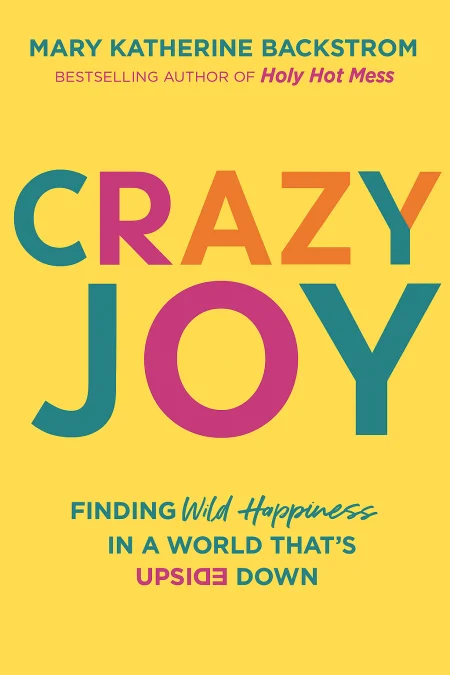
Crazy Joy
Finding Wild Happiness in a World That's Upside Down
Book Edition Details
Summary
In a world swirling with relentless comparisons and shifting milestones, MK's "Crazy Joy" disrupts the narrative of perpetual pursuit. Instead of chasing ever-elusive happiness tied to life's traditional markers—weddings, dream jobs, perfect homes—MK invites readers to embrace a life teeming with unexpected delight and grounded joy. Through her signature blend of wit and candor, she dismantles societal pressures, urging a release from the shackles of comparison. Discover the art of finding humor amid chaos and recognizing oneself as a masterpiece, even when life gets messy. With a refreshing take on joy, this book encourages a liberating journey towards genuine contentment, filled with laughter and moments that truly matter.
Introduction
Picture this: You're standing in your kitchen at 6 AM, coffee mug in hand, scrolling through social media while your kids argue over the last frozen waffle. Suddenly, you see a friend's perfectly curated post about their family's organic breakfast spread, complete with homemade granola and fresh-cut flowers. Your heart sinks a little. Why can't you get it together like that? Why does everyone else seem to have figured out this whole life thing while you're still microwaving yesterday's coffee and wondering if wearing yesterday's jeans counts as a fashion choice? If this scenario feels painfully familiar, you're not alone. We live in a world that constantly whispers we're not enough—not organized enough, not successful enough, not happy enough. We chase after joy like it's a limited-time offer, convinced that if we just get the right job, the perfect house, or lose those last ten pounds, then we'll finally arrive at happiness. But what if we've been looking in all the wrong places? This journey isn't about finding some elusive, Instagram-worthy version of joy. It's about discovering something far more valuable: the kind of messy, authentic, resilient joy that can survive Monday mornings, friendship breakdowns, and even global pandemics. It's about learning to be kind to ourselves in a world that profits from our insecurities, and finding the courage to show up as we are—quirks, flaws, and frozen waffles included. Through honest stories and gentle wisdom, we'll explore how real joy isn't something we chase, but something we cultivate right where we are, with the people who matter most. Get ready to laugh, cry, and maybe even learn to love the beautiful chaos of your perfectly imperfect life.
The Bear of Very Little Brain: Mental Health and Joy
There's something both hilarious and heartbreaking about admitting you're just a little bit crazy. Not in the charming, quirky way that makes for good romantic comedy material, but in the actual going-to-therapy-for-two-decades, collecting-mental-health-diagnoses-like-Pokemon-cards kind of way. When you live with bipolar disorder, OCD, PTSD, and ADHD, your emotional landscape looks less like a peaceful meadow and more like a theme park designed by someone with a twisted sense of humor. One day you wake up feeling like Eeyore, convinced your very existence is a burden to everyone around you. The next day you're bouncing off the walls like Tigger, applying for jobs at Medieval Times and adopting wild mustangs named Trigger because, obviously, that seems like a brilliant life choice at 2 AM. The manic episodes feel like being high on possibility itself—suddenly everything seems achievable, every dream feels within reach, and you have the energy of a thousand suns to make it all happen. But here's where it gets tricky. When your therapist suggests mood stabilizers to even out these wild swings, part of you rebels against the idea. Because as destructive as mania can be—hello, accidentally launching a congressional campaign via angry tweet—there's something intoxicating about those periods when you believe everything is possible. It's like being addicted to hope itself, even when that hope leads you to start a food truck business specializing exclusively in buttermilk biscuits. The real revelation comes when you start to understand that mental illness doesn't disqualify you from joy—it just means your path to finding it might look different from everyone else's. Those of us with complicated brain chemistry aren't broken; we're just operating with a different instruction manual. Our joy might require more intentionality, more support, more grace on the hard days. But when we finally learn to work with our minds instead of against them, when we find the right combination of therapy, medication, and self-compassion, something beautiful emerges. We discover that our sensitivity to life's extremes also makes us more attuned to its subtle wonders. Our struggles with darkness make us fierce protectors of light.
Weeds vs. Flowers: Redefining What Joy Really Means
Every afternoon on the playground, a little girl would gather tiny purple flowers that reminded her of Fraggles from that underground Muppet show. She'd bundle them carefully and present them to her mother like precious treasure, beaming with pride at her beautiful bouquet. Her mother, despite being an expert gardener who knew these were actually henbit weeds, would exclaim over their beauty every single time. It wasn't until a teacher crushed the child's joy by pointing out they were "just weeds" that the daily flower ritual ended. But here's what that wise mother understood that the teacher missed: the difference between flowers and weeds isn't really about beauty or worth—it's about resilience. Flowers are finicky things that require perfect soil, just the right amount of sunlight, and constant tending. They wilt when conditions aren't ideal, droop when they don't get enough attention, and require someone with green thumbs to help them thrive. Weeds, on the other hand, are scrappy little warriors. They push up through sidewalk cracks, flourish in acidic soil, and bloom cheerfully in places where more delicate plants would never survive. This distinction reveals something profound about the difference between happiness and joy. Happiness is like those beautiful, high-maintenance flowers—gorgeous when conditions are right, but entirely dependent on external circumstances. Not enough attention from your spouse and happiness starts to wilt. Bad day at work and it turns yellow and drops its petals. Happiness needs perfect weather, rich soil, and constant nurturing to survive. Joy, though, has that wild weed constitution. It blooms wherever it's planted and slurps up whatever life throws at it with surprising grace. Joy springs up in the most unlikely places—in the middle of a crisis, during mundane Tuesday afternoons, in moments when logic says there's nothing to be happy about. It has this mysterious ability to flourish in situations that would kill more delicate emotions. The mistake we often make is dismissing joy when it doesn't look like what we expected. We're so busy cultivating perfect gardens of happiness that we miss the hardy little blooms pushing up through the concrete of our actual lives. We overlook the laughter that bubbles up during difficult times, the warmth we feel in imperfect moments, the contentment that settles in our hearts even when everything isn't going according to plan. These aren't lesser versions of joy—they're the real thing, disguised as weeds in a world obsessed with prize-winning roses.
The Thief in Christmas Cards: Comparison and Self-Compassion
Picture this perfect evening ritual: curled up on the couch beside a crackling fireplace, sipping something warm while gazing at the beautiful Christmas cards lined up on the mantel. Family photos showcasing new babies, wedding announcements, vacation snapshots—visual evidence that your people are out there living their lives, growing and celebrating and thriving. Most nights, this scene fills the heart with gratitude and connection. But sometimes, on the hardest days, those same cards become weapons in a cruel internal battle. The voice starts quietly at first: "Look at all these people who got their act together enough to send out cards this year. How many years in a row have you failed at this simple task?" Then it gains momentum: "Check out that matching outfit situation. Meanwhile, you can't find clean underwear for your kids, let alone coordinate holiday finery." Before long, you're spiraling into a full comparison catastrophe, using every perfectly curated image as evidence of your own inadequacy. This is how joy gets stolen—not through dramatic heists, but through the quiet, persistent whispers of comparison. While you're distracted admiring other people's highlight reels, a thief slips through the door of your heart and makes off with your contentment, your peace, your ability to appreciate your own life. What should be a moment of connection becomes a moment of isolation, as you mentally exile yourself from the community of people who seem to have figured it all out. The cruelest part is how we become accomplices in this theft. We provide the ammunition by believing that everyone else's life is actually as perfect as their social media suggests. We forget that every family photo represents about fifteen minutes of cooperation preceded by an hour of chaos. We compare our behind-the-scenes reality with everyone else's carefully edited performance, and somehow convince ourselves this is a fair assessment. Breaking free from this trap requires developing what therapists call self-compassion—the radical act of treating yourself with the same kindness you'd show a good friend. Instead of using other people's success as a measuring stick for your failures, what if you celebrated their joy while also honoring your own journey? What if you could look at those Christmas cards and think, "Good for them" without adding "unlike me" to the end of the sentence? True joy isn't found in being better than everyone else—it's discovered in the moment when you realize comparison was never the point at all.
Mavericks and Magnolias: Finding Joy Through Crisis
When life hits you with its biggest waves, when crisis crashes over you like a wall of water, there's something both terrifying and oddly comforting about discovering that joy refuses to drown. In the middle of 2020, when the world felt like it was falling apart, four friends sat around a fire trying to make sense of the chaos. They were healthcare workers exhausted from fighting a pandemic without proper equipment, watching too much death, and dealing with a world that questioned the reality of what they witnessed every day. The conversation that night could have been purely tragic—and parts of it were. But somewhere between discussing the stress of treating pregnant patients during an unknown health crisis and lamenting the isolation of living through a global emergency, something unexpected happened. They started laughing. Not happy laughter, but the kind of desperate, healing laughter that emerges when life becomes so absurd that the only sane response is to acknowledge the insanity. They began blaming all their problems on their city, creating an increasingly ridiculous list of things Fort Myers had supposedly stolen from them: hair, luck, sanity, and yes, even nipples. It was dark humor at its finest—the kind that makes you laugh until you cry, or maybe cry until you laugh. There was something profoundly healing about naming the losses while refusing to be destroyed by them. This is what Steel Magnolias understood so perfectly in that cemetery scene where grief and laughter collide in the most unexpected way. When M'Lynn is falling apart after her daughter's funeral, when the pain feels unbearable and nothing makes sense anymore, it's the suggestion that she should "whack Ouiser" that breaks through the despair. Not because violence is funny, but because the absurdity of the moment punctures the darkness just enough to let some light in. Dark humor isn't about making light of serious situations—it's about survival. When your soul is drowning in crisis, laughter becomes the desperate gasp for air that keeps you alive. It's your joy fighting its way to the surface, refusing to be completely submerged no matter how deep the water gets. Like a surfer caught in the wash at Mavericks, sometimes the only way through the chaos is to hold your breath, trust your training, and wait for the moment when you can break through to breathe again. Joy in crisis isn't about denying the darkness; it's about insisting that light still exists, even when you can't see it. It's the soul's refusal to give up, the heart's stubborn insistence that this story isn't over yet.
Summary
The journey to genuine joy isn't about perfecting your life or eliminating all struggle—it's about learning to bloom where you're planted, weeds and all. Through honest exploration of mental health challenges, the resilience of true joy versus fleeting happiness, the destructive power of comparison, and the healing force of community even in crisis, a beautiful truth emerges: joy isn't something we chase or achieve, but something we cultivate in the midst of our beautifully imperfect lives. Real joy has weed-like resilience. It pushes through the cracks of our most difficult days, survives the harsh weather of comparison and criticism, and blooms in places where logic says nothing good should grow. It shows up in therapy sessions and friendship fires, in moments of dark laughter and unexpected grace. It doesn't require perfect circumstances or flawless execution—it only asks that we show up as ourselves, quirks and struggles included, and choose connection over isolation. The most profound shift happens when we stop waiting for joy to arrive and start noticing where it already exists. In the friend who listens without judgment, in the laughter that bubbles up during difficult times, in the quiet moments of self-compassion when we finally treat ourselves as kindly as we treat others. Joy isn't the absence of struggle—it's the presence of love, community, and hope that helps us navigate whatever comes our way. Stop chasing perfect happiness and start tending the hardy, resilient, absolutely crazy joy that's been trying to bloom in your life all along.
Related Books
Download PDF & EPUB
To save this Black List summary for later, download the free PDF and EPUB. You can print it out, or read offline at your convenience.
By Mary Katherine Backstrom
