
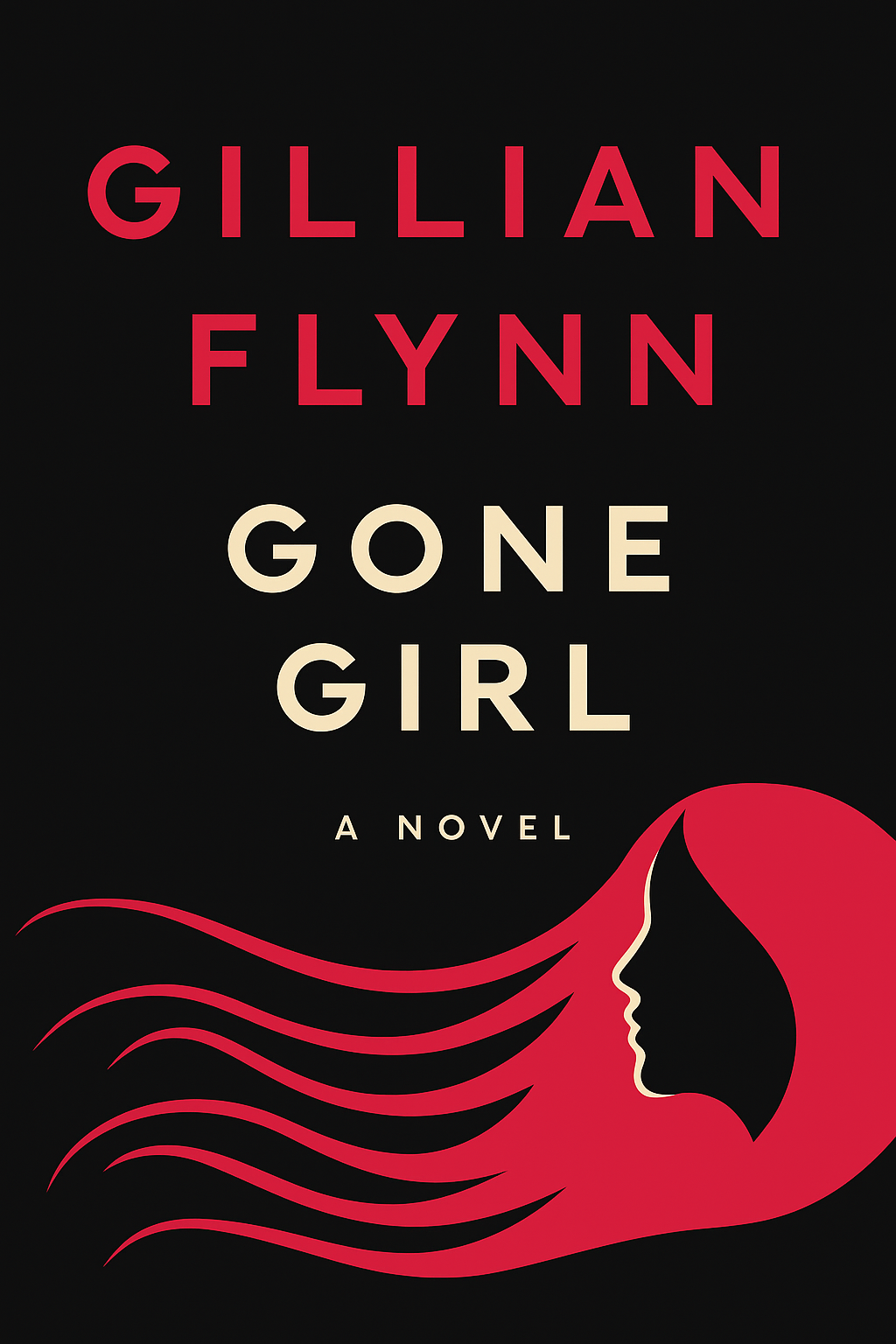
Gone Girl
A Novel
Book Edition Details
Summary
Nick and Amy Dunne seemed to have the perfect marriage, but when Amy vanishes on the morning of their fifth anniversary, the façade crumbles. As the media frenzy builds, fingers point squarely at Nick, who protests his innocence amidst a storm of accusations and hidden truths. With the world watching, the line between victim and villain blurs, inviting readers to question the very nature of love and trust. "Gone Girl" dives deep into the complexities of modern relationships and the dark undercurrents of marital bliss, leaving you to wonder: What truly lies beneath the surface of a perfect union?
Introduction
Picture this: You wake up one morning to find your spouse has vanished without a trace. The coffee is still warm, breakfast half-prepared, but they're simply gone. As hours turn to days, the police arrive, neighbors whisper, and suddenly you realize that everyone is looking at you differently. The person who should be receiving comfort becomes the prime suspect. This nightmare scenario isn't just the stuff of thriller novels—it reflects a disturbing truth about how quickly our assumptions can transform love into suspicion, and how the facades we maintain in relationships can crumble under pressure. This haunting exploration delves into the psychology of modern marriage, the performance of perfection we stage for others, and the dangerous games people play when love turns toxic. Through the lens of a missing person case, we witness how media narratives shape public opinion, how our closest relationships can harbor the deepest deceptions, and how the pressure to appear "normal" can drive people to extraordinary lengths. The story serves as a mirror, reflecting our own capacity for self-deception and the masks we wear even with those we claim to love most. What emerges is a chilling examination of trust, manipulation, and the terrifying realization that we may never truly know the people closest to us.
The Perfect Facade: When Love Becomes Performance
Nick Dunne seemed to have it all—a beautiful wife, a comfortable life, and the kind of marriage that others envied from the outside. Amy Elliott Dunne was brilliant, accomplished, and the inspiration behind a beloved children's book series. They met at a glamorous New York party, fell in love over shared wit and chemistry, and built what appeared to be an ideal partnership. Friends admired their banter, their apparent compatibility, their ability to complement each other's strengths. Yet beneath this polished surface, their relationship had become an elaborate performance, each playing a role they thought the other wanted to see. The cracks began to show when life's pressures mounted. Job losses, family illness, and financial stress stripped away the romantic veneer that had sustained them through easier times. Nick found himself increasingly unable to meet Amy's expectations, while Amy grew frustrated with what she perceived as Nick's emotional distance and lack of effort. They began to communicate through passive-aggressive gestures rather than honest conversation, each keeping score of the other's failures while maintaining the appearance of marital bliss for the outside world. What started as small compromises and white lies evolved into a complex web of deception. Nick began to resent Amy's need for perfection, while Amy felt increasingly invisible and unappreciated. They were two people living parallel lives under the same roof, going through the motions of marriage while feeling increasingly isolated from each other. The very qualities that had initially attracted them to each other—Amy's intelligence and high standards, Nick's laid-back charm—became sources of conflict and misunderstanding. This dynamic reveals how easily marriages can slip into patterns of performance rather than genuine intimacy. When couples prioritize appearing happy over actually being happy, they create a dangerous disconnect between their public and private selves, setting the stage for deeper betrayals and more devastating consequences.
Amy's Masterpiece: The Art of Calculated Revenge
On the morning of their fifth wedding anniversary, Amy Elliott Dunne disappeared without a trace. But this wasn't a random crime or a moment of desperation—it was the culmination of months of meticulous planning by a woman who had discovered her husband's affair and decided that ordinary divorce wasn't punishment enough. Amy had always been brilliant, methodical, and utterly ruthless when crossed, and she channeled all of these qualities into crafting the perfect revenge. Every detail was orchestrated with surgical precision. She staged the crime scene in their home, creating just enough evidence of a struggle to suggest foul play without making it obvious. She planted clues that would lead investigators directly to Nick, from suspicious financial transactions to a diary filled with fabricated fears about her husband's growing violence. Amy even went so far as to fake a pregnancy, knowing it would make Nick appear even more monstrous in the eyes of the public and the media. But perhaps most chilling was how Amy used her intimate knowledge of Nick against him. She knew his weaknesses, his patterns, his inability to perform grief in the way society expected. She understood that his natural tendency to appear detached and uncomfortable would make him look guilty, and she counted on the media's hunger for a villain to do the rest. Amy had studied enough true crime cases to know exactly how these stories played out, and she positioned herself as the perfect victim while ensuring Nick would be cast as the perfect perpetrator. Her disappearance wasn't just about punishing Nick for his betrayal—it was about reclaiming control of their narrative and proving her intellectual superiority once and for all. This masterpiece of manipulation demonstrates how intimate knowledge of another person can become the most dangerous weapon of all, and how the desire for control can transform love into something unrecognizable and terrifying.
Nick's Trap: Infidelity, Media, and Public Judgment
As the investigation into Amy's disappearance intensified, Nick found himself trapped in a nightmare where his every action was interpreted through the lens of guilt. His failure to cry at press conferences, his awkward smiles at inappropriate moments, and his general discomfort with the media circus all painted him as a callous husband who cared more about his image than his missing wife. The discovery of his affair with Andie, a young student, provided the perfect motive in the eyes of both the police and the public. The media descended like vultures, turning his private tragedy into public entertainment. Cable news shows dissected his every gesture, analyzing his facial expressions and body language as if they were definitive proof of guilt or innocence. Social media amplified every rumor and theory, creating a feedback loop of speculation that bore little resemblance to actual facts. Nick became the villain in a story that millions of people felt qualified to judge, despite knowing nothing about the reality of his situation. What made Nick's situation even more desperate was how perfectly Amy had anticipated his responses. She knew he would lie about the affair initially, making him appear deceptive. She knew he would struggle with the emotional performance expected of a grieving husband. She even predicted that he would eventually find the clues she had planted, leading him to locations that would only further implicate him in her disappearance. This media frenzy exposes our collective fascination with other people's tragedies and our tendency to reduce complex human situations to simple narratives of good versus evil. Nick's experience reveals how quickly public opinion can solidify around incomplete information, and how the gap between who we are and who we appear to be can become the very thing that destroys us.
The Ultimate Game: Psychological Warfare and Eternal Bondage
Just when it seemed Nick's fate was sealed, Amy made her dramatic return, appearing bloodied and traumatized, claiming to have escaped from a kidnapper who had held her captive for weeks. Her story was perfectly crafted: she had been abducted by an obsessed ex-boyfriend who had imprisoned her and repeatedly assaulted her until she managed to kill him in self-defense and flee. The public, so ready to condemn Nick just days before, immediately embraced Amy as a hero and survivor. But Nick knew the truth. In private moments, Amy revealed the full extent of her manipulation, describing how she had orchestrated every detail of her disappearance and return. She had used her ex-boyfriend's obsession, manipulated him into helping her, and then murdered him when he was no longer useful. The pregnancy she claimed to have lost during her ordeal had never existed, just another lie in her elaborate web of deception. The most chilling revelation was Amy's final trap: she was now actually pregnant with Nick's child, having used stored genetic material from a fertility clinic they had visited years earlier. This ensured that Nick could never truly leave her or expose her crimes without destroying his own child's future. Amy had not only escaped justice for her actions but had guaranteed that Nick would remain bound to her forever, complicit in her lies and trapped in a marriage that had become a prison for them both. This ultimate psychological warfare reveals the terrifying potential that lies within intimate relationships when love transforms into a battle for control and dominance. Amy's final victory demonstrates how the people closest to us often have the greatest power to destroy us, precisely because they understand our vulnerabilities so intimately.
Summary
This chilling examination of a marriage's dissolution reveals the terrifying ease with which love can transform into something unrecognizable when built on deception and performance rather than genuine intimacy. The story serves as a stark warning about the dangers of prioritizing appearance over authenticity, showing how the pressure to maintain perfect facades can corrupt the very relationships we're trying to protect. When couples become actors in their own lives, performing roles they think their partners want to see, they create a dangerous distance that can ultimately prove insurmountable. The media's role in shaping public perception reminds us how quickly society rushes to judgment, especially when tragedy strikes those who fail to perform grief or innocence in expected ways. We must resist the urge to reduce complex human experiences to simple narratives of guilt and innocence, recognizing that real people rarely fit the templates we create for them. Most importantly, this story challenges us to examine our own relationships with brutal honesty, asking whether we truly know the people we claim to love and whether they truly know us. The courage to be vulnerable and authentic with our partners, even when it's uncomfortable or unflattering, may be the only way to build relationships strong enough to weather life's inevitable storms. In a world that rewards performance over authenticity, choosing genuine intimacy becomes both a radical act and our greatest protection against the kind of devastating deception that destroys lives from within.
Related Books
Download PDF & EPUB
To save this Black List summary for later, download the free PDF and EPUB. You can print it out, or read offline at your convenience.
By Gillian Flynn
