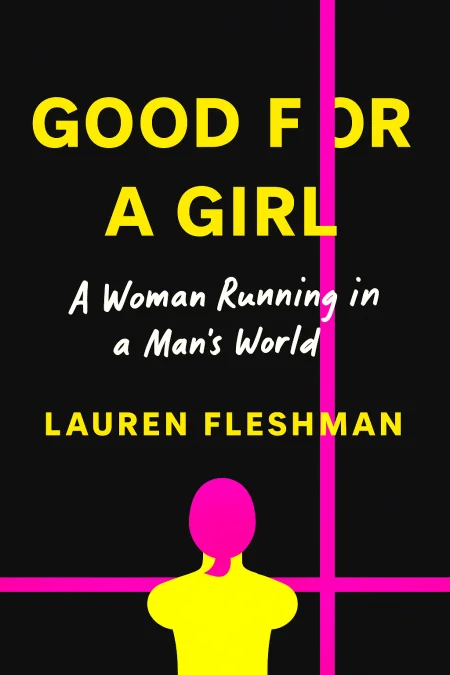
Good for a Girl
A Woman Running in a Man's World
Book Edition Details
Summary
In the high-octane arena of competitive sports, Lauren Fleshman emerges as a fearless crusader for change. Her book, "Good for a Girl," is a riveting tapestry of personal triumph and poignant advocacy, illuminating the urgent need to reshape a world designed by and for men. Fleshman, a luminary in the running realm and a vocal advocate for female athletes, weaves a narrative that’s both intimate and incendiary. She exposes the systemic neglect of young women in sports, revealing the silent struggles they face—from alarming dropout rates to mental health battles. With the vigor of a seasoned champion, Fleshman challenges outdated norms, passionately calling for a revolution in sports that centers and celebrates female athletes. Her story is not just a memoir, but a manifesto for a more inclusive future, where girls are empowered to stride boldly into their potential.
Introduction
Lauren Fleshman's voice echoes with defiance as she crosses the finish line, arms raised in victory, embodying the complex reality of being a female athlete in a world designed for men. Her story unfolds against the backdrop of American distance running, where she emerged as one of the most decorated runners of her generation—winning five NCAA championships at Stanford and two national titles as a professional. Yet beneath the medals and records lies a more profound narrative about what it truly means to compete, to survive, and to thrive as a woman in sport. Fleshman's journey reveals the hidden struggles that countless female athletes face: the pressure to shrink their bodies during crucial developmental years, the battle against systems that view women's natural physiology as obstacles to overcome, and the courage required to speak truth to power in an industry that often silences dissent. Through her transformation from a determined young runner to an advocate for systemic change, readers will discover the untold cost of athletic excellence for women, the revolutionary potential of centering female experiences in sport, and the profound wisdom that emerges when someone refuses to accept that being "good for a girl" is good enough.
From Playground Champion to Female Athlete
Lauren's athletic story began in the most natural way possible—with a father who refused to treat his daughter differently than he would a son. Frank Fleshman, with his ice-blue eyes and booming voice, instilled in young Lauren the belief that she could do anything. When neighborhood boys tried to exclude her from their games, Frank's advice was characteristically direct: kick them in the balls and drag them to him if they gave her any trouble. This early lesson in claiming her space would prove prophetic. The innocence of childhood athletic prowess shattered when Lauren encountered Rocky, whose voice had dropped and whose times had plummeted far beyond her reach. This marked her first collision with biological reality—the moment she discovered that puberty would create diverging paths for male and female athletes. The revelation hit like a cold wave: she was no longer just a fast kid, she was now a girl competing against boys who were becoming men. Yet this realization also opened a door to her true calling. When her middle school PE teacher offered her a choice between collecting 150 soda cans as punishment or competing in the city track meet, Lauren discovered the world of organized running. Her first race revealed both her natural talent and the intoxicating feeling of moving among peers who shared her passion for speed and competition. The transition from playground games to formal sport brought Lauren into contact with Coach DeLong, whose enthusiasm for her potential matched his understanding of what she might achieve. His vision of training camps, team traditions, and the broader world of competitive running painted a picture of belonging that Lauren had never imagined. She was entering a realm where her size wouldn't hold her back, where her heart and determination could be her greatest assets.
Rising Through College Sports Despite the System
Stanford University represented the pinnacle of Lauren's athletic and academic aspirations, but the financial reality nearly derailed her dreams before they began. When Coach Vin Lananna offered her zero scholarship money initially, citing budget constraints, Lauren faced her first adult negotiation about her worth. The eventual arrangement—no money for the first year, with the promise of support if she proved herself—embodied the precarious nature of women's sports, where talent alone wasn't enough to guarantee opportunity. The collegiate environment revealed the hidden complexities of being a female athlete in a system built for men. While Lauren thrived academically and athletically in her early years, she watched teammates struggle with eating disorders, mysterious injuries, and performance plateaus that defied explanation. The coaching staff, despite their good intentions, lacked the knowledge to address the unique challenges facing developing women. When problems arose, they were often attributed to lack of "integrity" rather than systemic failures. Lauren's own relationship with her changing body became a central battleground. The pressure to maintain a certain weight and appearance while her body naturally developed led her into dangerous territory with food restriction and body monitoring. She learned to view her period as an inconvenience rather than a sign of health, and celebrated when it disappeared entirely. These choices, made in the name of performance optimization, would later reveal themselves as symptoms of a much larger problem within women's sports. Despite these challenges, Lauren's talent continued to shine through. Her breakthrough NCAA championship performance, with its characteristic bold front-running style, established her as one of the premier distance runners in the country. Yet even in moments of triumph, she carried the weight of representing not just herself, but all the women who might follow. The contradiction between celebrating her success while witnessing her teammates' struggles created a cognitive dissonance that would eventually demand resolution.
Professional Racing and Industry Battles
The transition to professional athletics exposed the harsh economic realities facing female athletes in a male-dominated industry. When Lauren sat across from sports marketing executives who spoke openly about objectifying women to appeal to male audiences, she confronted the uncomfortable truth about her market value. The contracts offered to her were fraction of what her male counterparts received, despite comparable achievements, revealing how the industry valued women primarily as aesthetic objects rather than athletic performers. Lauren's decision to challenge Nike's marketing approach with her "Objectify Me" campaign marked a turning point in her relationship with power. By insisting on being photographed in her normal training clothes rather than nude or sexualized poses, she demonstrated that success could be redefined on her own terms. The campaign's positive reception proved that audiences were hungry for authentic representations of female strength, challenging the industry's assumptions about what sells. The pressure to maintain her professional status while dealing with injuries and the natural fluctuations of performance created a constant state of anxiety. The industry's unforgiving timeline, which demanded peak performance at predetermined moments, clashed with the reality of human biology. Lauren's stress fractures and the mysterious injuries that plagued many of her peers began to form a pattern that suggested something deeper was wrong with how women's bodies were being pushed in pursuit of excellence. Her collaboration with training partners like Kim Smith from New Zealand revealed alternative approaches to body image and performance. Kim's easy relationship with food and her matter-of-fact attitude toward her body provided Lauren with a different model of what it meant to be a professional athlete. These relationships became lifelines in an environment that often isolated women from each other through competition and comparison.
Coaching Change and Building Better Sport
Lauren's retirement from professional competition opened the door to her most meaningful contribution: reimagining what sport could be for women. As founder of Littlewing Athletics, she created a professional training environment that prioritized health alongside performance. The team's approach included comprehensive medical support, mental health resources, and most importantly, education about female physiology and development cycles that had been ignored for decades. The decision to center women's experiences rather than adapt them to male templates required rejecting conventional wisdom about training and competition. Lauren's coaching philosophy emphasized listening to athletes' bodies, respecting menstrual cycles as indicators of health, and creating space for the natural performance fluctuations that characterize women's athletic development. This approach produced not just faster times, but healthier, more empowered athletes who maintained their love of the sport throughout their careers. Lauren's advocacy extended beyond her individual team to address systemic problems in women's sports. Through writing, speaking, and direct confrontation with governing bodies, she challenged policies that penalized pregnancy, ignored eating disorders, and failed to protect young athletes from exploitation. Her work with brands like Oiselle demonstrated alternative business models that could support women's athletics while maintaining authenticity and values. The success of her athletes validated the approach—all six of her track athletes ran lifetime bests and qualified for Olympic Trials in 2021, while maintaining their health and their passion for running. More importantly, they developed the confidence and knowledge to advocate for themselves in future athletic and professional endeavors. Through Littlewing, Lauren proved that excellence and empowerment were not mutually exclusive.
Summary
Lauren Fleshman's journey reveals that true revolution in women's sports begins not with demanding equal treatment within broken systems, but with reimagining what those systems could become when designed for women from the ground up. Her transformation from a young athlete desperate to prove herself worthy in a man's world to a coach and advocate building better alternatives demonstrates the power of refusing to accept "good enough" as the ceiling for women's athletic experience. The legacy she represents suggests that the future of women's sports lies not in adapting female athletes to male templates, but in honoring the complexity and strength of women's bodies and experiences as assets rather than obstacles to overcome.
Related Books
Download PDF & EPUB
To save this Black List summary for later, download the free PDF and EPUB. You can print it out, or read offline at your convenience.
By Lauren Fleshman
