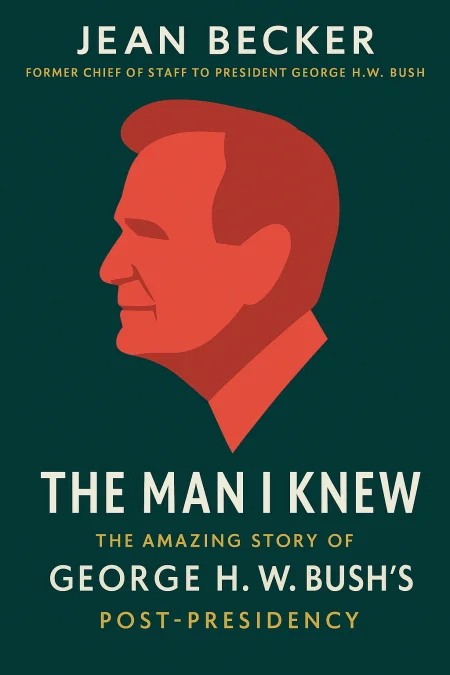
The Man I Knew
The Amazing Story of George H. W. Bush's Post-Presidency
Book Edition Details
Summary
From the pinnacle of global power to the poignant serenity of a private citizen, George H.W. Bush's post-presidential life unfolds with a richness that defies expectations. In "The Man I Knew," Jean Becker, his devoted chief of staff, offers a window into the heart of a man who embraced life's second act with unyielding spirit and grace. Witness the touching camaraderie between Bush and his once-rival, Bill Clinton, and marvel at his adventurous streak as he skydives into his twilight years. Through triumphs and trials, including the bittersweet joy of watching his sons ascend to governorships and the presidency, Bush's story is one of resilience, humor, and a legacy reborn. Dive into this intimate narrative, where the former president's humanity shines brighter than ever.
Introduction
In the final moments of his life, as Jean Becker sat beside the forty-first President of the United States, George Herbert Walker Bush managed one last act of characteristic selflessness. Despite being on his deathbed, when he heard her slight cough, his eyes flew open and he squeezed her hand, asking with genuine concern, "Are you okay?" These would be his final words to the woman who had served as his chief of staff for twenty-five years, witnessing firsthand one of the most remarkable post-presidential journeys in American history. After losing his bid for reelection in 1992 to Bill Clinton, Bush faced what many former presidents struggle with: the sudden transition from being the most powerful person in the world to a private citizen. Yet what followed was not a retreat into obscurity, but rather a renaissance of purpose and service that would define the final quarter-century of his life. From forming an unlikely friendship with the man who defeated him, to literally jumping out of airplanes well into his nineties, Bush demonstrated that life after the presidency could be just as meaningful and impactful as the years in office. Through his extraordinary post-presidential years, readers will discover how true leadership transcends political office, how grace in defeat can become a pathway to greater influence, and how a commitment to service can transform both personal setbacks and national divisions into opportunities for healing and growth. Bush's story reveals that the most enduring legacy comes not from the positions we hold, but from how we choose to lift others up when the spotlight fades.
From Electoral Defeat to Personal Renewal
The morning after losing the 1992 election, George Bush faced a reality that few Americans can truly comprehend. Having served as president during some of the most pivotal moments in modern history—the fall of the Berlin Wall, the end of the Cold War, and the Gulf War—he suddenly found himself without the trappings of power that had defined his existence for four years. The transition was jarring and deeply personal, going from 91 percent approval ratings after Desert Storm to electoral defeat in what felt like a political lifetime compressed into mere months. The early days back in Houston were marked by a profound sense of displacement. There was no household staff waiting with morning coffee, no schedule packed with world-changing decisions, no constant stream of advisors seeking his counsel on matters of national importance. Instead, there were mundane domestic challenges that highlighted just how removed he had become from ordinary life. When Barbara Bush attempted simple household tasks and ended up with vegetables dripping from the kitchen ceiling, it became clear that even the simplest routines required relearning after years of being insulated from daily life. Yet beneath the surface adjustments lay a deeper emotional reckoning. Bush admitted that he cried more when his beloved dog Ranger died than he had when he lost the election, a recognition that grief had been accumulating—for his mother's death, for the end of his political career, for an entire chapter of his life that had closed. The man who had guided America through the end of the Cold War now found himself wondering what purpose remained in this new phase of life. The transformation began gradually, rooted in Bush's fundamental belief that wallowing in self-pity served no one. By 1994, he had thrown himself back into public life with characteristic energy, giving 111 speeches and visiting twenty-two foreign countries. More importantly, he began to see his electoral defeat not as an ending, but as a liberation—a chance to serve in ways that the constraints of office had never allowed, and an opportunity to discover that his greatest contributions might still lie ahead.
Service Beyond Politics: Humanitarian Leadership and Global Impact
Bush's post-presidency became defined by an extraordinary commitment to humanitarian causes that transcended political boundaries and personal comfort zones. When the devastating 2004 tsunami struck South and Southeast Asia, killing over 228,000 people, Bush partnered with Bill Clinton—the man who had defeated him twelve years earlier—to lead private sector relief efforts. This collaboration marked the beginning of what would become known as the "Odd Couple," a friendship that surprised political observers but perfectly embodied Bush's belief that service to others superseded partisan differences. The partnership revealed Bush's unique approach to leadership in his later years. Rather than seeking the spotlight, he focused on practical results, working quietly behind the scenes to coordinate relief efforts and ensure that aid reached those who needed it most. His willingness to defer to Clinton during their travels, to help him navigate stairs and boats as Bush's own mobility declined, demonstrated a grace and humility that transcended their political history. When Hurricane Katrina devastated the Gulf Coast, they suited up again, ultimately raising over $130 million for relief efforts and establishing a model for how former presidents could work together for the common good. Bush's commitment to service extended far beyond disaster relief. His founding of Points of Light, which began as a campaign theme and evolved into a global movement promoting volunteerism, reflected his deep conviction that every person had an obligation to contribute to their community. He personally signed letters recognizing Daily Points of Light until his death, eventually honoring over 6,500 individuals for their volunteer service. This wasn't mere ceremony—it was a reflection of his belief that recognizing good work encouraged more of it. Perhaps most remarkably, Bush maintained this commitment to service even as his own physical capabilities diminished. Well into his nineties, confined to a wheelchair but still sharp mentally, he continued to make phone calls to comfort the grieving, write notes to encourage the struggling, and show up for causes that mattered to him. His approach was deeply personal—he believed that leadership meant being present for others, whether they were world leaders seeking his counsel or ordinary Americans who simply needed to know that someone cared about their struggles.
Character in Action: Values That Transcended Partisanship
The final measure of George Bush's post-presidency lies not in the grand gestures or public accolades, but in the countless small acts of kindness that defined his daily interactions with others. His chief of staff observed that he possessed an almost supernatural ability to think of "the other guy"—whether offering rides to strangers after events, inviting houseguests to Walker's Point with such frequency that they sometimes lost count of who was staying where, or making phone calls to people experiencing their darkest moments simply because he knew they needed to hear from a friend. This instinct for compassion manifested in ways both profound and whimsical. When he learned about a young boy in the Philippines through a charity program, he began a three-year correspondence under the pseudonym "George Walker," never revealing his true identity but providing encouragement and support that would change the child's life trajectory. When a Secret Service agent's child was diagnosed with leukemia, Bush shaved his head in solidarity with the entire security detail, creating a viral moment that touched hearts across America. These weren't calculated political moves—they were expressions of a fundamental belief that everyone deserved dignity and support. Bush's approach to leadership in his later years demonstrated that true influence comes not from position or power, but from character and consistency. His friendship with Barack Obama, which began with a simple invitation to speak at his presidential library, evolved into a relationship built on mutual respect and shared commitment to service. When Obama visited Bush just days before his death, their conversation reflected the kind of bipartisan respect that seems increasingly rare in modern politics—a reminder that leadership transcends party lines when it's rooted in genuine care for others. The aircraft carrier that bears his name, the CIA headquarters named in his honor, and the school of public service that trains future leaders all represent institutional legacies. But perhaps his greatest legacy lies in the example he set for how to live with purpose after leaving the pinnacle of power. He showed that retirement need not mean retreat, that defeat need not define a life, and that service to others remains possible regardless of age or circumstance.
Final Years: A Legacy of Dignity and Grace
The closing chapter of George H.W. Bush's extraordinary life unfolded with the same dignity and grace that had characterized his post-presidential years. As his health declined, he faced the challenges of aging with remarkable equanimity, never complaining about his limitations or seeking sympathy for his struggles. His approach to mortality reflected the same courage he had shown as a young naval aviator shot down over the Pacific and the same sense of duty that had driven his decades of public service across multiple administrations and roles. Bush's final years were punctuated by moments that captured the essence of his character and the depth of affection he had earned across political divides. His emotional appearances at veterans' events, where he would be moved to tears by the sight of young servicemen and women, demonstrated his continued connection to causes larger than himself. His correspondence with world leaders never ceased, even as his handwriting became shakier and his energy more limited. He understood that relationships built over decades of service represented a form of American soft power that transcended any single presidency. The outpouring of respect and genuine affection that accompanied Bush's death in November 2018 testified to the remarkable transformation he had undergone since leaving office twenty-five years earlier. Republicans and Democrats alike praised not just his service, but his character and his example. World leaders traveled to Washington to pay their respects, and ordinary Americans lined the streets to honor a man they had come to see not just as a former president, but as a symbol of what was best about American leadership and values. Bush's funeral became a celebration of a life well-lived and a reminder of the principles that had guided his post-presidential renaissance. The eulogies emphasized themes of service, humility, and love of country that had defined his later years, while the genuine emotion displayed by political figures from across the spectrum revealed how his example had touched even those who had never shared his political views. His final journey home to Texas was marked by scenes of spontaneous tribute that demonstrated how completely he had rehabilitated his legacy through the simple act of living his values consistently and without fanfare.
Summary
George H.W. Bush's post-presidential legacy stands as perhaps the most compelling example in modern American history of how grace in defeat can ultimately triumph over temporary political setbacks and transform both personal disappointment and national divisions into opportunities for healing and service. His transformation from a defeated politician to a beloved elder statesman demonstrates that true leadership is measured not by electoral success or the power of office, but by the positive impact one has on others and the example one sets for future generations through consistent character and selfless action. The lessons from Bush's remarkable second act offer invaluable guidance for anyone facing setbacks, transitions, or the challenge of finding purpose beyond formal achievement. His example teaches us that defeat need not define us, that relationships and service matter more than partisan victories, and that there are always opportunities to lift others up regardless of our formal position or authority. Bush showed that character, more than any political accomplishment, becomes the ultimate measure of a life's worth, and that the most important legacy we can leave is not what we accomplished for ourselves, but how we used our remaining time and influence to make the world a better place. For anyone interested in leadership, public service, or simply living a life of meaning and purpose, Bush's post-presidential years provide an inspiring roadmap for turning life's inevitable challenges into opportunities for growth, service, and lasting positive impact on others.
Related Books
Download PDF & EPUB
To save this Black List summary for later, download the free PDF and EPUB. You can print it out, or read offline at your convenience.
By Jean Becker
